
Serving Jeddah & Makkah
Home care guide11 min readJeddah

Keeping Cleaning Tools Clean: Mops, Sponges, Cloths and Vacuum Filters

A dirty cleaning tool carries dirt and smells from one place to another and undoes hours of good cleaning.

You may clean the house hard and then find the floor smells odd after mopping, the cloths leave streaks on glass, or the vacuum blows fine dust back into the air. The cause is often the tools themselves: a mop that holds damp old residue, a kitchen sponge that has become a store for smells, microfibre washed with fabric softener that no longer picks up dust, and a full vacuum filter that no longer traps anything.

In Jeddah the problem is worse because high humidity slows drying, so smells and mould grow quickly on tools, and fine dust fills filters and brushes faster. This guide explains how to wash, dry and store each tool, how often to replace it, and what to dedicate to the kitchen, bathroom, floors and glass so dirt does not cross over.

The advice is general home care and each tool or appliance has its own manufacturer instructions. Our advertised services cover home, apartment and villa cleaning in Jeddah and Makkah, and we do not sell cleaning tools.

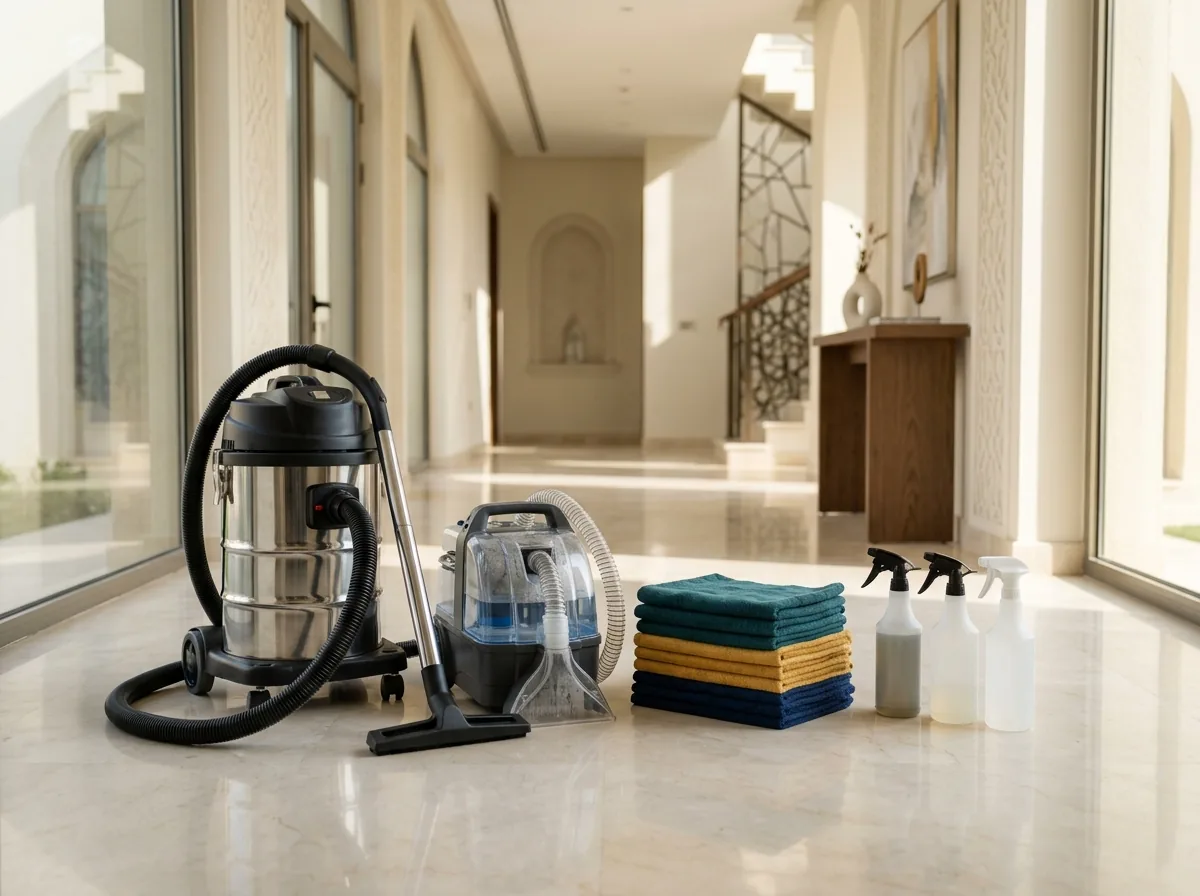
Mops, sponges and microfibre cloths neatly stored and clean in a Jeddah home

Quick Summary

  • Keep separate tools for the kitchen, bathroom, floors and glass.
  • Wash microfibre without fabric softener and dry it fully so it keeps working.
  • Replace kitchen sponges every one to two weeks or when they smell or tear.
  • Rinse the mop head after use and hang it to dry rather than leaving it in the bucket.
  • Empty the vacuum bin and clean or replace the filter regularly.

Washing microfibre properly

Microfibre picks up dust with very fine fibres, and fabric softener coats them in an oily film that reduces pick-up, while very hot water and bleach also damage them. Wash in lukewarm water with mild detergent, preferably alone or with non-linting fabrics so they do not collect fluff.

Separate cloths by use: those used in the bathroom or on grease are washed apart from those used on glass or furniture, because some greases and bathroom cleaners leave residue that causes later streaks.

Dry them in the air or on low heat and make sure they are completely dry before storing, since damp folded cloth smells heavy within two days in Jeddah. If a cloth turns rough or stops absorbing after a proper wash, replace it.

Quick rules for microfibre

  • no fabric softener, bleach or very high heat
  • different colours for glass, kitchen and bathroom
  • wash heavily soiled pieces separately
  • replace when it stops picking up

Kitchen sponges and dish brushes

The kitchen sponge holds moisture and food residue more than almost any tool, so smells rise quickly in humid summer. Squeeze it well after each use and keep it somewhere dry and raised where air circulates, not in the sink or standing water.

Replace it every one to two weeks, or at once if it smells, crumbles or changes colour. Do not use the same sponge to wipe shelves and surfaces after washing dishes, because grease and dirt transfer to the surfaces.

Plastic brushes and bristle brushes are washed in hot water and detergent, sometimes soaked in diluted vinegar, and dried head down. Replace them when the bristles bend or change.

Rubber gloves and wiping cloths

Cleaning gloves hold moisture inside, so turn them inside out and dry them after use and hang them up, with separate pairs for the bathroom and kitchen. Disposable wiping cloths or cotton rags are washed after each use or replaced and are not reused wet.

Remember that leaving a damp item in a bag or basket turns it into a smell source within hours, so give used items a ventilated laundry basket.

The mop head and the bucket

After each use rinse the mop head in clean water until it runs clear, wring it hard and hang it to dry away from the floor. If the head is machine washable do so periodically in lukewarm water without fabric softener and make sure it dries completely before use.

Never leave the head soaking in the bucket, because standing water turns foul quickly and the smell passes to the next mopping. Empty the bucket after use, wash it and dry it upside down.

Change the mopping water whenever it gets dirty, because mopping with grey water redistributes dirt on marble and porcelain where marks show. If possible use two buckets, one for washing and one for rinsing.

Signs a mop needs replacing

  • a smell that stays despite washing
  • fibres crumbling or shedding
  • stains that will not lift and a slimy feel
  • it no longer absorbs water

Floor brushes and hand brooms

Hard brushes used in bathrooms and outdoor floors are washed in hot water and detergent and dried raised, and are not used on soft floors like parquet or polished marble because they scratch. Dust brushes and hand brooms are shaken outdoors and washed monthly with water and mild soap.

Use separate tools for the bathroom, so you never wipe the kitchen with something used in the bathroom. A colour code for each zone helps you avoid mixing.

Cleaning solutions and dilutions

Do not keep diluted cleaning solutions for long in open bottles or in sunlight, because they weaken and can react. Write the preparation date on the bottle, and never mix different products, especially bleach with acidic cleaners or ammonia, since this releases harmful gases.

Use clearly labelled bottles out of children's reach and store them somewhere cool and dry.

Filters, dust bin and brushes

Empty the dust bin after each use or when it is two-thirds full, outdoors or inside a bag to avoid spreading dust. Clean the washable filter following the manual in lukewarm water and dry it fully for over 24 hours before refitting, since a damp filter grows mould and cuts suction.

Remove hair and threads wound around the brush roll with small scissors or a tool made for it, because they cut suction and heat the motor. Check hoses for blockages by looking through them or passing a soft rod.

Replace filters and bags as the manufacturer advises, usually sooner in homes with heavy dust or pets. A HEPA filter should not be washed unless the instructions say so.

Storing tools after cleaning

Keep dry tools away from damp floors, hang mops and brooms so they do not touch the ground, and give them a rack or holder. Leave the tool cupboard door slightly open to let air move, and add a moisture absorber if it is closed and small.

Before the guest season or a big seasonal clean, check your tools and replace the worn ones so you do not begin with dirty equipment, and note what to buy.

Habits that keep tools clean

  • wash and dry after each use
  • hang tools rather than leaving them on the floor
  • check stock every two months and replace worn items
  • ventilate the tool cupboard
Plan

Care schedule for cleaning tools

Wash and replacement timings that keep tools effective and clean.

ToolWash or emptyReplace
Kitchen spongeRinse and squeeze dailyEvery 1 to 2 weeks
Microfibre clothAfter every 1 to 3 usesWhen it loses pick-up or turns rough
Mop headAfter every useEvery 2 to 3 months or when it smells
Mop bucketWash and dry after every useIf cracked or constantly smelly
Washable vacuum filterEvery 1 to 2 monthsAs the maker advises
Vacuum dust binEmpty after each use—
FAQ

Common questions about cleaning tool hygiene

Short answers to what homeowners ask most.

How often should I change a kitchen sponge?+

Every one to two weeks, or at once if it smells or tears. Squeeze it well after use and keep it dry and raised.

Can I wash microfibre with fabric softener?+

No, softener coats the fibres and reduces their ability to pick up dust. Use mild detergent, lukewarm water and dry fully.

Why does my mop smell?+

Moisture and dirt stay in the head or it soaks in standing water. Wash after every use, hang it to dry, and replace it if the smell persists.

How do I clean a vacuum filter?+

Follow the manual: a washable filter is rinsed in lukewarm water and dried for over 24 hours before refitting, while a HEPA filter is not washed unless instructed.

Should I use the same tools in the kitchen and bathroom?+

No. Keep separate colour-coded tools and cloths so dirt and germs do not travel between areas.

Can I mix cleaners to make them stronger?+

No, some mixtures such as bleach with ammonia or acids release harmful gases. Use each product alone as directed.

Do you sell cleaning tools?+

No, this is an informational guide. Our advertised services cover home, apartment and villa cleaning in Jeddah and Makkah, and you can message us on WhatsApp to see what suits you.

Need help cleaning your home in Jeddah?

Send us the property type, size and what you want cleaned on WhatsApp and we will arrange the details and preparation that suit you.

CallWhatsAppGet Quote