
Serving Jeddah & Makkah
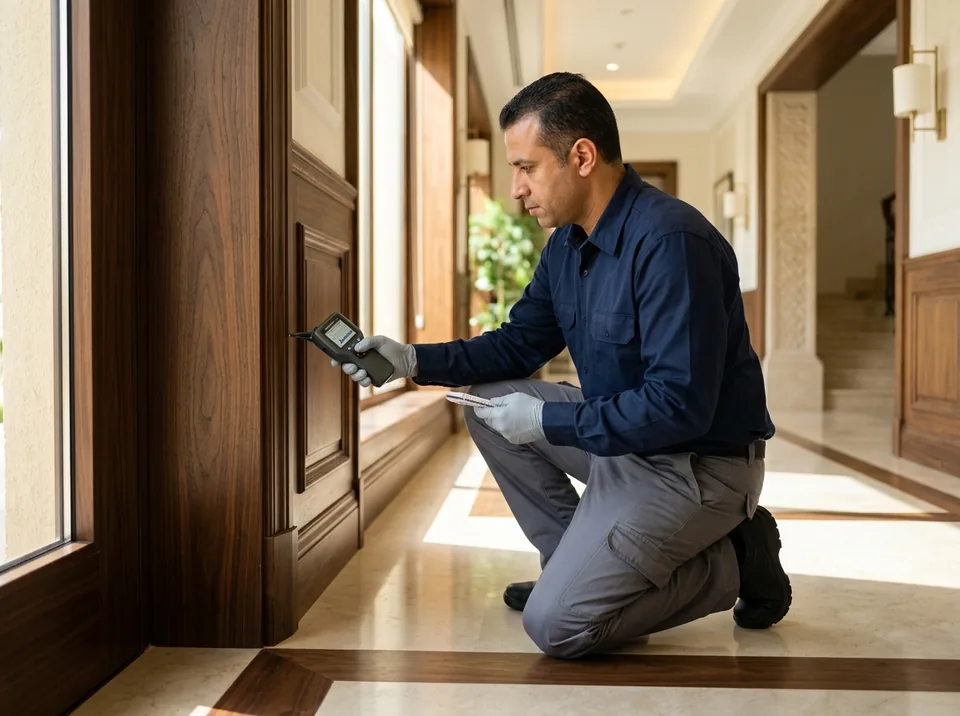
Termite control technician in Jeddah inspecting wooden door frames and floor joints
Structural Diagnostic & Protection Standard

Every treatment plan is determined after an on-site structural and moisture assessment, with clear boundaries between pest control treatment and independent plumbing or carpentry repairs.

JeddahStructural Timber & Sub-Floor Protection — Jeddah

Termite Control in Jeddah: Diagnosing Hidden Wood Hollowing & Sub-Slab Pathways

Subterranean termites operate silently behind wooden door frames, baseboards, and parquet flooring, thriving in the humid coastal sub-slab soil conditions of Jeddah. We perform thorough on-site inspections to trace mud tubes and moisture pockets, applying targeted sub-floor and perimeter treatments that protect your interior woodwork responsibly.

Detailed Mud Tube & Acoustic Wood Inspection
Targeted Sub-Slab & Perimeter Protocols for Occupied Homes
Sub-Floor Moisture & Entry Pathway Assessment
SFDA-Registered Public Health & Termiticide Products
Real-World Problem Analysis

Why Subterranean Termites Pose a Silent Structural Threat in Jeddah Properties

Subterranean termites behave fundamentally differently from ordinary household insects that forage openly across floors and countertops. Living in organized colonies beneath the concrete slab and sub-floor sand fill, worker termites feed continuously on cellulose found in timber, MDF, paper backing on gypsum board, and cardboard boxes. Because their soft bodies dehydrate rapidly when exposed to dry indoor air or light, they construct concealed mud tunnels through microscopic slab cracks, expansion joints, and utility pipe penetrations, entering wooden door frames and skirting boards from the hidden wall-facing side.

Across many residential and commercial inspections we conduct in Jeddah, property owners remain unaware of an active infestation until a wooden door casing suddenly caves in under light finger pressure, paint begins to blister over hollowed timber, or branching brown soil tubes appear behind a built-in wardrobe. Spraying over-the-counter aerosol insecticides on visible mud tubes never eliminates the subterranean colony beneath the tiles; instead, repellent sprays cause workers to seal off that tunnel and shift their feeding activity to adjacent rooms or cabinetry, making professional structural diagnosis essential.

Interior Doorways & Bathroom Adjacent Frames01

Hollowed Wooden Door Frames and Skirting Boards on Ground Floors

Residents notice a dull, papery sound when tapping the lower section of a wooden door frame, accompanied by dry soil particles crumbling from the seam where the jamb meets the floor tile. This typically occurs where wooden door posts extend through the tile layer into damp sub-slab sand or near bathroom moisture, providing termites direct, concealed access into the timber core.

Master Bedrooms, Dressing Rooms & Kitchens02

Concealed Infestations Behind Built-In Wardrobes and Kitchen Cabinets

When inspecting the back panel of a fixed wardrobe or moving heavy furniture placed against an exterior wall or plumbing wall, homeowners discover networks of crusted brown mud tubes and shredded MDF backing. The dark, unventilated gap behind built-in cabinetry creates an undisturbed microclimate where termites can progress from baseboards into shelving and stored fabrics.

Living Halls, Ground-Floor Majlis & Storage Rooms03

Warped Parquet Flooring and Damaged Cardboard Storage

Sections of wooden parquet or laminate flooring develop localized spongy spots or unusual creaking underfoot, or boxes stored directly on a storeroom floor are found cemented to the tiles with dried mud and hollowed cardboard. Termites utilize moisture trapped beneath floor underlayment to feed across wide horizontal surfaces while leaving the top veneer intact.

Field Observation & Identification Guide

Identification & Symptoms Guide: Recognizing Subterranean Termites vs. Other Wood Pests

Early recognition of physical and biological termite indicators allows property owners to intervene before interior woodwork requires costly replacement. The guide below outlines primary field signs and how to distinguish subterranean termites from carpenter ants and wood-boring beetles.

Broad Straight Waist + Beaded Antennae

Clinical anatomical reference schematic for preliminary visual distinction

Isoptera — Subterranean & Drywood Termites
Typical Size Range:
4–8 mm workers/soldiers | 10–12 mm winged swarmers (alates)
Movement & Activity Pattern:
Travels concealed inside protective mud tubes or within wooden door frames and baseboards.
Anatomical Profile: Broad straight waist (no pinch), straight beaded antennae, pale cream soft body in workers, and 4 equal-length wings in swarmers.
Key Distinguishing Sign: Pencil-width mud shelter tubes and hollowed-out wood beneath intact paint layers.
Important Note on Visual Indicators & Confirmation:Technical Note: Wood decay caused by chronic moisturerot, fungal growth, or other wood-infesting insects can resemble termite damage. Visual clues should always be confirmed through a direct on-site inspection to verify whether activity is active or historical.
Definitive Biological Sign

Subterranean Mud Tubes (Shelter Tubes)

Pencil-width or flatter brown tunnels constructed from soil, saliva, and digested wood particles climbing foundation walls, expansion joints, plumbing risers, or the backs of cabinets.

Inspection Note: These shelter tubes maintain the high humidity subterranean termites require while traveling between sub-slab soil and wood.
Structural Damage Sign

Internal Wood Hollowing & Paper-Thin Veneers

Tapping a wooden door frame or baseboard with a screwdriver handle produces a hollow echo, and firm pressure may break through an intact coat of paint into mud-lined galleries.

Inspection Note: Termites consume the softer springwood along the grain while leaving the outer painted surface untouched to seal in moisture.
Defensive Activity Sign

Soil-Plugged Pinholes and Wall Joint Seams

Tiny specks of dried brown earth sealing nail holes, mitre joints in door architraves, gypsum corner beads, or hairline cracks between floor tiles and walls.

Inspection Note: When a small section of an active mud seal is scraped open, worker termites typically reseal the breach quickly to protect colony humidity.
Seasonal Colony Maturity Sign

Winged Swarmers (Alates) or Discarded Wings

Clusters of small winged reproductive termites or piles of translucent, equal-length wings shed near windowsills, light fixtures, or door thresholds, especially after humid weather.

Inspection Note: Indoor swarming indicates a well-established subterranean colony situated beneath or immediately adjacent to the structure.

Diagnostic Comparison: Subterranean Termites vs. Carpenter Ants & Wood-Boring Beetles

Comparison CriterionSubterranean TermitesCarpenter Ants & Wood-Boring Beetles (Powderpost)
Relationship with WoodActively digest cellulose in timber, MDF, paper, and cardboard as their primary food source.Carpenter ants excavate damp wood only to create nesting cavities without eating it; beetle larvae feed inside dry wood.
Appearance of Internal GalleriesIrregular galleries layered along the wood grain, heavily plastered with dried mud and soil specks.Carpenter ant galleries are smooth, clean, and sandpapered in appearance with zero soil or mud lining.
External Debris & FrassConstructs cohesive brown mud tubes; does not expel loose piles of wood shavings or fine flour-like dust.Produces coarse sawdust-like shavings (carpenter ants) or fine talcum-like wood powder beneath round exit holes (beetles).
Body Waist, Antennae & WingsBroad, un-constricted waist, straight beaded antennae, and four wings of identical size and shape.Ants have a pinched narrow waist, elbowed antennae, and front wings noticeably larger than hind wings.
Connection to Sub-Slab Soil & MoistureMaintains a continuous connection to sub-floor soil and moisture pockets beneath the building slab.Can infest isolated furniture pieces or upper-level timber without requiring a soil-to-floor bridge.
Root Causes & Environmental Drivers

Why Termite Infestations Develop and Spread in Jeddah Buildings

Subterranean termite activity is never a reflection of surface housekeeping. Instead, infestations arise when sub-floor moisture conditions and structural pathways allow soil-dwelling colonies to reach untreated cellulose inside the building.

01

Sub-Slab Sand Moisture and Concealed Plumbing Seepage

Slow, unnoticeable leaks in sub-floor drainage or water supply lines, as well as water seeping through degraded bathroom and kitchen tile grout into the underlying sand bed, create permanent moisture zones that sustain subterranean termite colonies year-round.

Common Vulnerable Spots: Beneath bathroom and kitchen floors, laundry zones, and service shafts.
02

Direct Wood-to-Soil or Sub-Tile Door Frame Contact

In many construction practices, wooden door bucks and jambs are installed before tiling so that the bottom ends of the timber extend through the mortar bed into the damp sand fill below the tiles, offering termites an invisible highway straight into the door frame.

Common Vulnerable Spots: Ground-floor interior doorways, wooden bathroom frames, and storeroom entrances.
03

Unsealed Expansion Joints and Concrete Slab Micro-Cracks

Worker termites can squeeze through concrete fractures as narrow as 1 millimeter. Structural expansion joints, cold joints between wall footings and floor slabs, and gaps around PVC plumbing conduits serve as primary vertical entry corridors.

Common Vulnerable Spots: Courtyard expansion joints, ground-floor perimeters, manholes, and utility risers.
04

Buried Formwork Timber and Cellulose Debris Near Foundations

Wooden concrete shuttering scraps left in foundation backfill, decaying tree roots in courtyard planters, or cardboard stacked on damp storeroom floors act as initial food reservoirs that build colony populations right beneath the property.

Common Vulnerable Spots: Villa perimeter gardens, setback corridors, under-stair storage, and foundation edges.
Diagnostic-First Inspection Protocol

Our Structured On-Site Termite Assessment & Diagnostic Workflow

Because the vast majority of subterranean termite activity happens beneath floor tiles and behind wall finishes, every intervention begins with a methodical inspection to map entry pathways and damage zones before treatment.

01

Acoustic and Visual Inspection of Door Frames, Skirting & Parquet

Our technician systematically checks wooden door casings, architraves, baseboards, and parquet flooring using sounding tools and high-intensity lighting to detect internal hollowing, blistered paint, and soil seals along floor transitions.

Client Value:Identifies both visibly damaged timber and early-stage adjacent spread before treatment begins.
02

Tracing Mud Tubes and Sub-Slab Entry Corridors

We inspect concealed areas behind built-in wardrobes, beneath kitchen sinks, inside utility shafts, and around exterior perimeter walls to trace shelter tubes back to their origin points in slab joints or soil.

Client Value:Targets the actual structural entry route rather than merely wiping away surface symptoms.
03

Evaluating Sub-Floor Moisture Pockets and Plumbing Proximity

The inspection team assesses signs of elevated wall dampness, efflorescence, degraded bathroom grout, or nearby plumbing lines that may be supplying the moisture essential for subterranean termite survival.

Client Value:Alerts you to underlying moisture or plumbing issues that must be corrected to prevent future re-attraction.
04

Checking Built-In Cabinetry, Storerooms, and Exterior Grounds

We examine fixed bedroom wardrobes, storage rooms containing cardboard or paper archives, and outdoor garden beds or wooden pergolas adjacent to the building envelope to evaluate overall colony pressure.

Client Value:Prevents secondary satellite activity in annexes or storage areas from going unnoticed.
05

Formulating the Sub-Slab & Perimeter Treatment Plan

Based on field findings, the technician outlines the exact treatment methodology—such as sub-slab perimeter injection, door-jamb treatment, or exterior trenching—and explains the scope and preparation requirements clearly.

Client Value:Provides complete clarity on procedures and pricing factors without exaggerated claims or unnecessary drilling.
Case-Driven Treatment Selection

Professional Treatment Methods for Subterranean Termite Control

Effective subterranean termite control relies on establishing a treated zone between the underlying soil colony and the cellulose materials inside your building, delivering specialized non-repellent or barrier termiticides directly into sub-slab foraging pathways. Ordinary surface spraying designed for cockroaches or ants cannot penetrate floor tiles to stop a subterranean colony.

We select and customize the treatment protocol according to whether the property is an occupied finished home, a villa undergoing renovation, or a pre-finish construction site, taking floor finishes and embedded utilities into careful consideration.

Factors Determining the Site Treatment Plan:

  • Building occupancy status: fully finished and occupied residence vs. active renovation or pre-tiling site.
  • Infestation footprint: localized to specific door frames vs. spreading beneath tiles and behind built-in wardrobes.
  • Flooring and finish type: ceramic tile grout lines, marble slabs, wooden parquet, or exposed exterior concrete joints.
  • Sub-floor utility routing: locations of water pipes, electrical conduits, and drainage lines to ensure safe drilling.
  • Presence of active moisture seepage or exterior garden beds directly abutting foundation walls.
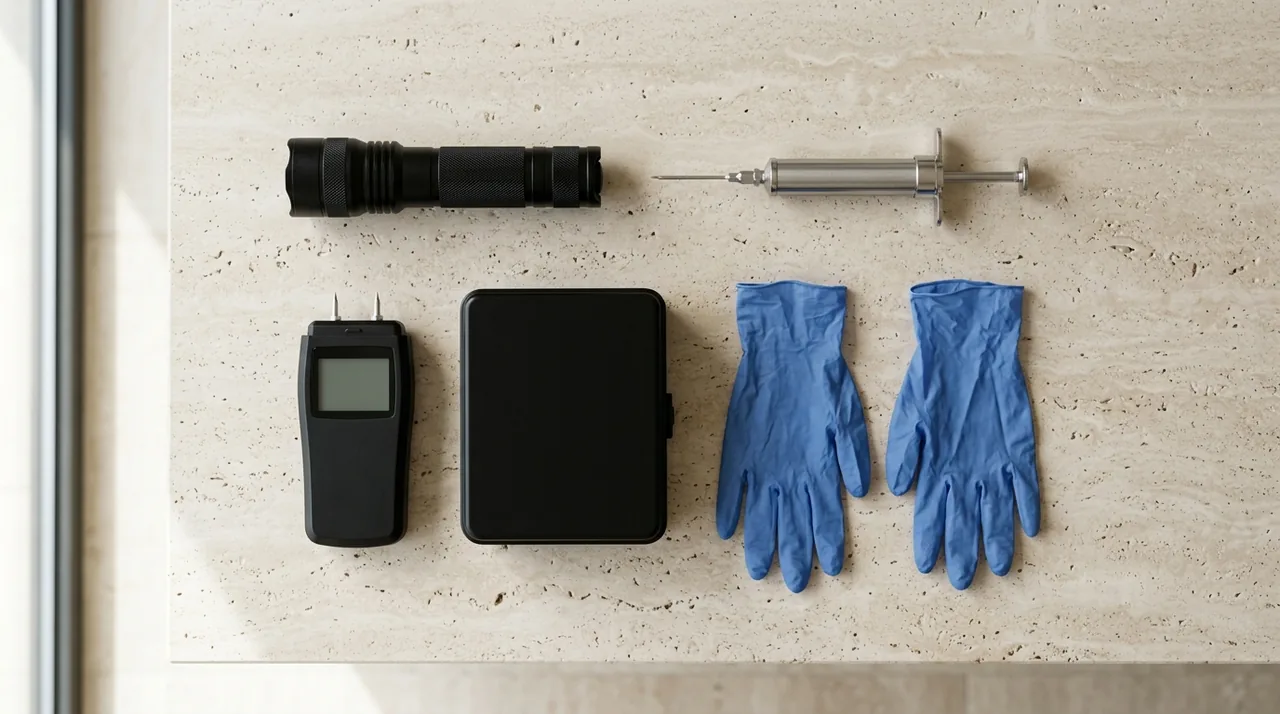
Diagnostic inspection tools and precision sub-slab injection equipment for termite control

Precision inspection instruments and calibrated sub-slab injection tools deliver targeted treatment beneath floor tiles.

Precision Sub-Slab Grout-Line & Door-Base Injection

Occupied apartments, villas, and offices exhibiting activity in door frames, baseboards, or floor joints.

Small, discrete holes are drilled through tile grout lines at calculated intervals along affected walls and around the base of wooden door frames. Specialized termiticide solution is injected under controlled pressure into the sub-slab sand bed, after which holes are neatly sealed with color-matched grout.

Safety Consideration: Utility lines are verified prior to drilling, and active ingredients remain confined beneath the floor slab away from living surfaces.

Targeted Void & Timber-Interface Treatment

Infested wooden door casings, window frames, baseboards, and wall-to-cabinet interfaces.

Precise localized applications are directed into active feeding galleries, wall-frame seams, and hollow door bucks to eliminate foraging workers within the timber interface without drenching interior room surfaces.

Safety Consideration: Confined strictly to structural voids and frame junctions, followed by surface wiping and room ventilation.

Exterior Perimeter Trenching & Foundation Barrier Treatment

Villas and ground-floor buildings surrounded by courtyard soil, planters, or tiled setbacks.

The soil or perimeter joints immediately adjacent to exterior foundation walls, expansion joints, and inspection chambers are treated to form an external protective zone that blocks foraging termites from entering the structure.

Safety Consideration: Applied with strict distance precautions around underground water storage tanks and domestic water lines.

Renovation & Pre-Tiling Sub-Floor Soil Treatment

Properties undergoing floor tile replacement, kitchen remodeling, or pre-slab construction stages.

When old tiles or damaged door frames are removed during renovation, exposed sub-floor sand beds and wall junctions receive direct, uniform treatment before new flooring or woodwork is installed.

Safety Consideration: Coordinated with your contractor’s schedule so treated soil layers remain undisturbed prior to tiling or pouring.
Clear Service Scope Distinction

Defined Service Scope: What Our Termite Control Includes & Where Civil Works Begin

We maintain strict transparency regarding what is included in professional termite control versus independent carpentry, tiling, or plumbing contracting so you can plan your property maintenance accurately.

1. Initial Consultation & Case Review

Included in Service

Reviewing your description and any photos of mud tubes or damaged woodwork, answering preliminary questions, and scheduling an on-site diagnostic visit in Jeddah or Makkah.

Scope Note: Phone or photo reviews provide initial context but never replace physical on-site inspection.

2. Comprehensive On-Site Structural Inspection

Included in Service

Inspecting door frames, skirting boards, parquet floors, wardrobe backs, utility shafts, and exterior perimeters to map termite entry routes and moisture contributors.

Scope Note: Inspection is non-destructive to accessible areas and does not involve demolishing walls or dismantling fixed kitchens.

3. Targeted Sub-Slab & Localized Treatment Execution

Included in Service

Performing precision grout-line drilling where required, pressurized sub-slab termiticide injection, localized door-frame interface treatment, and cosmetic sealing of injection points.

Scope Note: Executed using approved public-health and termiticide formulations in accordance with label specifications.

4. Post-Treatment Follow-Up & Activity Verification

Included per Service Plan

Scraping away old mud tubes to monitor against re-building and conducting scheduled follow-up verification if any residual foraging appears within treated zones.

Scope Note: We never make unrealistic promotional claims like "15-year unconditional warranties without inspection"; follow-up terms are documented honestly based on site conditions.

5. Preventive Guidance & Civil/Carpentry Boundaries

Advisory Included (Civil Works Separate)

Providing clear technical recommendations on plumbing leak repair, expansion joint sealing, and safe timing for timber replacement.

Scope Note: Our scope covers pest control assessment and treatment; replacing hollowed wooden doors, dismantling/reinstalling parquet or kitchens, and repairing leaking pipes are independent carpentry and plumbing tasks.

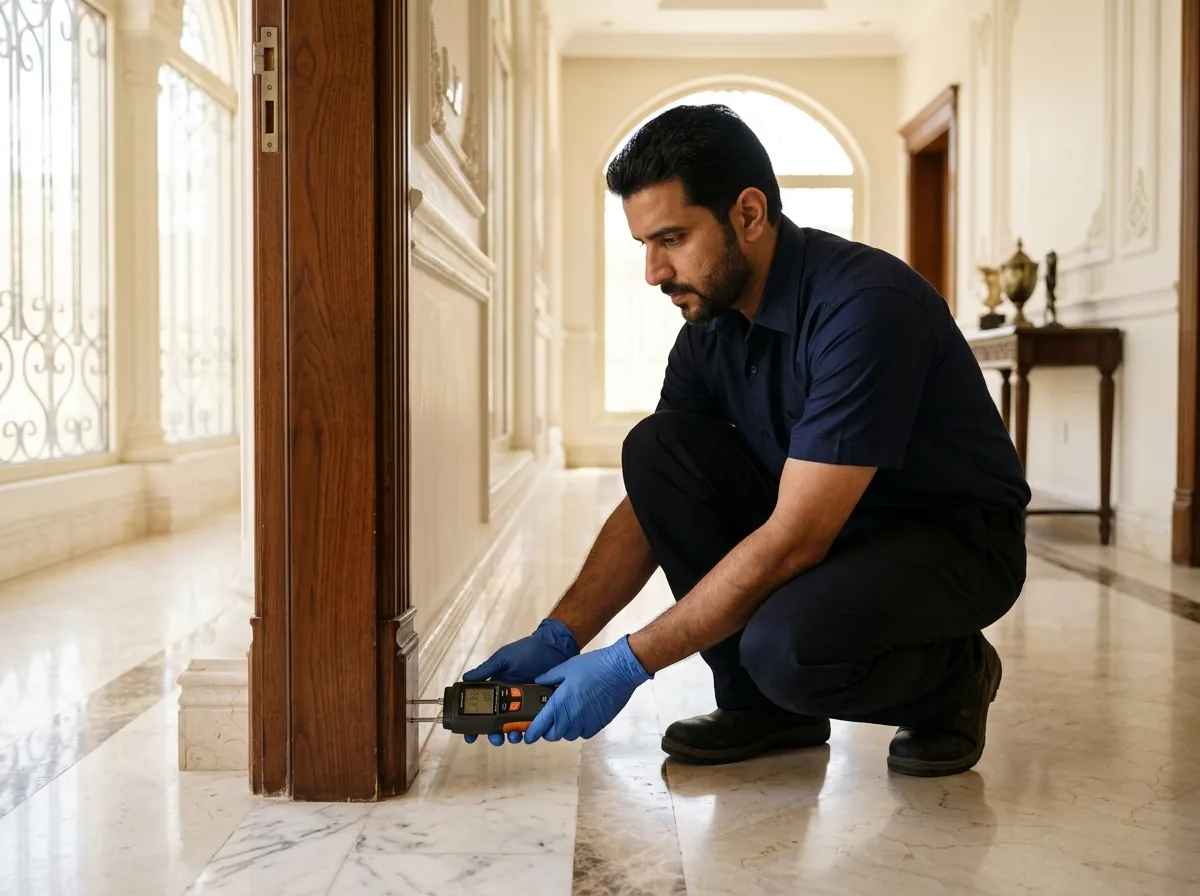
Targeted subterranean termite treatment along door frames and floor joints in Jeddah
A four-stage technical breakdown of the concealed routes evaluated during our inspection

Critical Pathway Diagram: How Subterranean Termites Travel from Soil to Interior Wood

Stage 01

Damp Sub-Slab Sand Fill & Soil Nest

  • •Colony establishes in moist sand bed beneath the concrete slab and floor tiles.
  • •Moisture from plumbing seepage or bathroom grout sustains worker survival.
  • •Workers forage horizontally beneath tiles searching for slab penetrations.
  • •Stable sub-floor temperatures permit continuous year-round feeding activity.
Stage 02

Expansion Joints & Utility Penetrations

  • •Entry through concrete shrinkage cracks as narrow as 1 millimeter.
  • •Ascent along gaps surrounding PVC drainage and water supply pipes.
  • •Exploitation of unsealed expansion joints between courtyards and rooms.
  • •Construction of protective mud tubes inside hollow concrete block walls.
Stage 03

Wooden Door Frames & Baseboards

  • •Direct invasion of wooden door bucks embedded beneath floor tile level.
  • •Consumption of timber from the concealed wall-facing side inward.
  • •Horizontal spread behind wooden skirting boards along room perimeters.
  • •Preservation of the thin outer paint layer while hollowing the core.
Stage 04

Built-In Wardrobes, Parquet & Storage

  • •Extension from baseboards into the MDF backing of fixed wardrobes and kitchens.
  • •Lateral movement beneath foam underlayment of wooden parquet flooring.
  • •Climbing wall cavities to reach gypsum board paper backing and ceiling trim.
  • •Infestation of cardboard boxes, books, and fabrics resting against floors.

This diagram illustrates the progression of subterranean termites from damp sub-slab sand fill through structural joints into interior door frames and cabinetry.

Specialized Technical Reference

In-Depth Technical Guide to Subterranean Termite Diagnosis & Structural Protection

To help homeowners, facility managers, and renovation supervisors make informed technical decisions, the following educational modules explain the biology, moisture mechanics, and treatment engineering of subterranean termite control.

How to identify silent structural feeding before wooden casings or floors collapse

Detecting Subterranean Termite Mud Tubes & Hidden Hollowing Inside Door Frames and Parquet

Subterranean termites possess thin, soft cuticles that lose moisture rapidly when exposed to ambient indoor air or direct light. Unlike household ants that march openly across kitchen counters and tile floors, worker termites cannot survive prolonged exposure outside their humid nest environment. To bridge the gap between sub-slab soil and indoor wood sources, they engineer enclosed earthen tunnels known as mud tubes (or shelter tubes), compounded from soil particles, wood fragments, saliva, and fecal cement.

During a professional inspection, technicians distinguish between several types of shelter tubes: utility or working tubes that run along foundation walls, pipe chases, and wardrobe backs to transport food back to the colony; exploratory tubes that branch out slightly across concrete surfaces seeking new timber contacts; and drop tubes suspended from structural voids. Once termites enter the base of a wooden door jamb or baseboard, they excavate galleries along the softer grain of the wood while plastering the interior walls with moist soil.

This cryptic feeding behavior explains why severe termite damage often goes unnoticed for months. A wooden door frame, architrave, or parquet plank can appear freshly painted and structurally sound on the outside while its interior has been reduced to fragile, paper-thin laminations. By performing systematic acoustic sounding (tapping along the frame height to detect transitions from solid to hollow resonance) and inspecting the lower millimeter where timber meets tile grout, early-stage infestations can be intercepted before complete structural failure.

  • Inspect the bottom junctions of wooden door frames where they meet floor tiles for crusted brown soil deposits or blistering paint.
  • Tap gently along the vertical length of wooden door casings with a screwdriver handle to listen for hollow, papery acoustic changes.
  • Check wooden or MDF skirting boards (baseboards) for slight separation from the wall, warping, or crumbling edges under light pressure.
  • Pay attention to localized soft spots,new creaking sounds, or slight buckling across ground-floor wooden parquet and laminate flooring.
  • Never scrape away discovered mud tubes prior to a professional inspection, as their location reveals the exact sub-slab entry point.
Why most indoor termite outbreaks originate near bathrooms, kitchens, and slab transitions

The Sub-Slab Soil & Moisture Connection: Plumbing Leaks, Expansion Joints & Ground Contact

Moisture is the primary environmental catalyst governing subterranean termite survival and colony expansion beneath buildings. While timber and paper provide the cellulose fuel, damp sub-slab sand fill provides the humid microclimate required by the queen, brood, and foraging workers. Consequently, field data consistently shows that a large majority of indoor termite infestations originate in or immediately adjacent to bathrooms, kitchens, laundry rooms, and exterior courtyard walls.

When water seeps gradually through degraded bathroom tile grout or from a pinhole leak in a sub-floor drainage pipe, it saturates the sand bed trapped between the concrete slab and the floor tiles. Because this sub-tile layer is shielded from sunlight and air circulation, the moisture remains trapped indefinitely. Subterranean termites detect these moisture gradients and concentrate their foraging tunnels around the damp zone, ascending through the nearest plumbing collar gap or wall-to-slab seam.

In addition to plumbing moisture, structural expansion joints and shrinkage cracks in the concrete slab act as vertical highways from the underlying soil. A fracture measuring just one millimeter wide is sufficient for worker termites to pass through. Even more critically, expansion joints filled with bitumen-impregnated fiberboard or cellulose filler strips provide both an entry corridor and an immediate food source, underscoring why effective termite management must address both sub-slab chemical barriers and moisture/joint remediation.

  • Maintain intact cementitious or epoxy tile grout in bathrooms and kitchens to prevent wash water from saturating sub-floor sand beds.
  • Inspect walls backing onto bathrooms for low-level paint peeling, dampness, or salt efflorescence that may nourish hidden termite activity.
  • Ensure annular gaps around water supply and drainage pipes beneath sinks and vanities are tightly sealed with durable mortar or sealant.
  • Direct air-conditioning condensate drain lines away from building foundations and courtyard expansion joints.
  • Combine termite treatment with specialized leak detection if chronic sub-floor dampness persists in an infested room.
Understanding the engineering differences between treating a furnished home and an open renovation site

Occupied Building Perimeter/Sub-Floor Treatment vs. Pre-Finish Soil Assessment

Property owners often wonder how subterranean termites living beneath concrete and ceramic tiles can be controlled without tearing up the entire floor. The answer lies in distinguishing between pre-construction soil treatment and post-construction sub-slab intervention. During pre-construction or full floor replacement, the bare sand bed and foundation trenches are fully exposed, allowing technicians to apply a uniform horizontal and vertical termiticide barrier before concrete is poured or tiles are laid.

In an occupied, finished residence (Post-Construction), spraying liquid pesticides on top of ceramic tiles or marble is completely ineffective because the tile glaze blocks the solution from reaching the sub-slab sand where termites travel. Instead, professional post-construction control relies on precision sub-slab injection: drilling small holes directly through the grout lines along affected wall perimeters and around infested door frames, injecting termiticide directly into the underlying sand bed to create a continuous treated zone, and sealing the holes with matching grout.

When a property is undergoing partial renovation—such as replacing rotted wooden door frames, remodeling a kitchen, or re-tiling a ground-floor hall—both approaches can be strategically combined. Treating the exposed wall buck and sub-floor sand bed immediately after the carpenter removes a damaged door frame and before the new frame is installed provides deep, direct protection at the exact point of historical vulnerability.

  • In occupied homes, sub-slab injection holes are positioned along tile grout lines to preserve tile integrity and blend seamlessly once sealed.
  • Never install a new wooden door frame into an opening where an old frame was destroyed by termites without treating the sub-floor and wall junction first.
  • If planning ground-floor tile replacement or kitchen remodeling, schedule sub-floor soil treatment after demolition and prior to new tiling.
  • Post-construction protocols focus on severing the soil-to-wood bridge beneath the floor while minimizing disruption to household routines.
  • Our technicians map and explain all proposed injection points with the property owner before any drilling commences.
Practical safeguards for high-value fixed cabinetry and interior timber fit-outs

Protecting Built-In Wardrobes, Wooden Kitchens & Decorative Wall Cladding

Custom built-in wardrobes, wooden kitchen cabinets, and decorative timber or WPC wall panels represent some of the highest-value interior investments in modern homes. Because these fixtures are permanently anchored flush against walls and conceal baseboards from view, they create an ideal dark, undisturbed corridor for subterranean termites. Workers emerging from a wall-to-floor seam behind a wardrobe can consume the thin MDF or plywood backing panel for months before any sign becomes visible inside the front shelves.

The risk is particularly acute when built-in bedroom closets or decorative wall panels are mounted on walls shared with bathrooms or exterior garden planters. Moisture migrating through the masonry combines with stagnant air behind the cabinet backing, accelerating termite feeding. Left unchecked, termites progress from the cabinet carcass into stored clothing, linen, leather goods, shoeboxes, and important paper documents stored on lower shelves.

Protecting fixed cabinetry requires a dual strategy: first, injecting the sub-slab perimeter along the base of the wall supporting the cabinet to cut off ascending workers from the soil; and second, inspecting and treating the internal rear corners, kickplates, and wall mounting points with targeted, non-staining formulations. Where severe structural hollowing has occurred behind fixed cladding, selective panel removal by a carpenter may be coordinated so hidden mud tubes on the masonry wall can be treated thoroughly.

  • Periodically inspect the lower rear corners and backing panels of built-in wardrobes using a bright flashlight to spot mud lines or bulging MDF.
  • Never mount fixed wooden wardrobes or wall cladding onto a wall showing active dampness until the moisture source is repaired and dried.
  • Avoid storing cardboard boxes, paper archives, or shoeboxes directly on the bottom floor of closets or ground-floor storerooms.
  • When installing new kitchens or utility cabinets in termite-prone ground floors, consider aluminum, PVC, or solid masonry kickplates instead of untreated wood.
  • Coordinate with a carpenter to temporarily detach a single plinth or backing panel if inspection indicates hidden termite activity behind wall cladding.
Client Readiness Checklist

Customer Preparation Checklist: Before, During & After Termite Treatment

Following these practical steps before and after our visit helps our technicians access critical wall-to-floor junctions safely and maximizes the long-term effectiveness of the treatment.

1. Before the Visit

Leave Mud Tubes Intact and Avoid Spraying Household Aerosols

Please do not scrape off mud tubes or spray supermarket bug sprays on affected door frames before our inspection. Repellent sprays scatter worker termites into adjacent walls and obscure active foraging trails.

Clear Wall Perimeters and Share Known Sub-Floor Pipe Locations

Move portable furniture, rugs, and stored boxes away from affected door frames and baseboards, and inform our technician of any known sub-slab water pipes, underfloor heating, or electrical conduits.

2. During Service

Keep Children and Pets Out of Active Treatment Rooms

While precision drilling and sub-slab injection equipment are operating, children, pets, and individuals with respiratory sensitivities must remain outside the immediate work area.

Provide Access to Storage Rooms, Shafts, and Courtyard Perimeters

Ensure our team can access ground-floor storerooms, under-stair closets, and exterior setback corridors so all potential soil-to-building bridges can be evaluated and treated.

3. Post-Service Care

Ventilate Treated Rooms and Delay Heavy Wet Floor Mopping

Ventilate the treated spaces thoroughly as advised by the technician, and avoid flooding floors with water or harsh chemical detergents over newly sealed injection points for 48 to 72 hours.

Repair Identified Plumbing Leaks and Elevate Cardboard Storage

Promptly fix any bathroom grout seepage or plumbing leaks noted during inspection, and replace floor-level cardboard boxes in storerooms with metal shelving or sealed plastic bins.

Safety Standards & Responsible Practice

Safety Protocols & Regulatory Compliance in Termite Management

Controlling subterranean termites inside occupied homes requires disciplined application techniques that deliver the active termiticide to sub-floor soil layers while protecting indoor air quality and living surfaces. We follow strict operational controls to prevent unnecessary surface exposure.

In professional pest management, no chemical product should ever be marketed as "100% safe without precautions." True safety is achieved by selecting registered formulations, adhering strictly to manufacturer label concentrations, and confining applications beneath slabs and inside structural voids.

Sub-Slab Confinement and Sealed Injection Points

By injecting termiticide directly into the sand fill beneath the tile layer and sealing the grout holes immediately afterward, active ingredients remain isolated from everyday family and pet contact.

Protection of Underground Water Tanks and Plumbing Lines

Before performing any sub-slab drilling or exterior perimeter trenching, technicians verify the position of underground potable water cisterns (khazzans) and utility pipes to prevent cross-contamination.

Clear Ventilation and Room Re-Entry Guidance

Clients receive explicit post-service instructions regarding room ventilation duration and surface drying times before returning carpets, bedding, or children to treated rooms.

Calibrated Injection Equipment and Personal Protective Gear

Trained technicians utilize pressure-regulated sub-slab injectors with backflow prevention shields to prevent splash-back onto walls, furniture, or interior finishes.

Saudi Regulatory Alignment Note:All termite control operations utilize public-health and termiticide formulations registered with the Saudi Food and Drug Authority (SFDA) and are conducted in alignment with municipal public-health standards established by the Ministry of Municipalities and Housing (MOMAH / Balady).

Factors That Determine Termite Control Pricing in Jeddah

Because subterranean termite infestations vary widely in structural footprint and floor construction, accurate pricing is based on a technical on-site assessment rather than arbitrary flat rates:

Total Linear Meters of Affected Perimeter and Wall Junctions

The volume of termiticide solution and drilling labor required for sub-slab injection scales directly with the linear meterage of walls and expansion joints needing treatment.

Number of Infested Wooden Door Frames and Rooms

Treating localized activity around one or two interior door casings requires a different resource allocation than treating widespread damage across an entire ground floor.

Flooring Material and Interior Finish Complexity

Working through standard ceramic tile grout lines differs in time and technical precision from navigating marble floors, wooden parquet underlayment, or walls lined with fixed cabinetry.

Property Stage: Occupied Residence vs. Renovation Site

Precision sub-slab injection in a furnished, occupied home involves different equipment and preparation steps compared to open-soil treatment during renovation or pre-tiling.

Exterior Courtyard, Garden, and Annex Requirements

If inspection reveals active termite foraging in outdoor planters, setback corridors, or detached annexes that require an external perimeter barrier, this expands the scope of work.

Follow-Up Verification Requirements for Severe Cases

Extensive or multi-room infestations connected to chronic moisture zones may require scheduled follow-up inspections to verify complete cessation of mud-tube construction.

Following our on-site assessment, you receive a transparent breakdown of the recommended treatment scope and cost before any work begins, with zero hidden charges.

Request Assessed Quote
Local Environmental Context — Jeddah

Termite Control Challenges in Jeddah: Coastal Water Tables, Soil Humidity & Villa Gardens

Jeddah’s coastal geography and year-round warm humidity create uniquely favorable conditions for subterranean termite colonies. In many coastal, central, and northern districts of Jeddah, the high water table and persistent dampness in the sub-slab sand fill keep the soil beneath ground-floor tiles continuously moist, allowing termite colonies to forage actively throughout the year without seasonal dormancy.

Furthermore, the prevalence of residential villas featuring irrigated courtyard planters against perimeter walls, combined with extensive interior use of wooden parquet, decorative wall cladding, and custom built-in wardrobes, makes proactive sub-slab inspection and perimeter protection essential for preserving property value in Jeddah.

Key Local Factors in Jeddah

  • High coastal soil moisture and shallow water tables sustaining active sub-slab termite colonies beneath ground floors.
  • Irrigated villa garden beds and courtyard planters directly abutting exterior foundation walls.
  • Widespread installation of wooden parquet flooring and decorative WPC/MDF wall panels that conceal early mud tubes.
  • Degradation of exterior courtyard expansion joints due to humidity and salinity, creating easy slab entry points.
  • Condensation and AC drainage lines discharging moisture near building foundations and utility penetrations.

Property Types Served in Jeddah

  • Private residential villas and compounds with landscaped courtyards
  • Ground-floor apartments and duplexes with private entrances
  • Commercial offices, clinics, and showrooms with parquet floors and timber fit-outs
  • Residential and commercial storerooms holding paper archives or cardboard inventory
  • Villas and apartments undergoing floor renovation or door frame replacement
Scheduling & Dispatch

Our inspection and treatment teams cover all districts of Jeddah with pre-scheduled appointments tailored to household privacy and property occupancy.

Need This Service in Makkah?

Switch directly to our dedicated Makkah page for this exact pest service.

Structural Timber & Sub-Floor Protection — Jeddah in Makkah
Interactive Pest Service Finder (6 Quick Steps)

Pest Service Finder

Select your city, apparent pest issue, property type, and location to reach the right specialized service page or prepare a structured inspection inquiry.

Note: This tool provides preliminary service routing and does not replace on-site professional inspection.
1

Step 1 — Select Your City:

2

Step 2 — Apparent Pest or Issue Type:

3

Step 3 — Property Type:

4

Step 4 — Where Is the Problem Observed?

Steps 5 & 6 — Preliminary Match & Next Action

Recommended Service Page: Termites (White Ants) Control in Jeddah

We matched your selection to Termites (White Ants) Control in Jeddah (Apartment — Kitchen). View the full service guide for inspection steps and safety protocols, or send your inquiry now.

View Termites (White Ants) in Jeddah
Direct Technical Answers

Frequently Asked Questions About Termite Control in Jeddah

Clear, technically accurate answers regarding subterranean termite inspection, sub-slab treatment, and wood protection

No. Over-the-counter aerosol sprays only kill the few worker termites directly hit at the surface while leaving the main colony of thousands of termites untouched beneath the floor tiles. Worse yet, repellent aerosols cause termites to abandon that specific tunnel and shift their feeding activity silently to adjacent door frames, baseboards, or built-in wardrobes.

Protect Your Property’s Woodwork & Foundations in Jeddah from Silent Termite Damage

Do not wait until wooden door frames collapse or mud tubes spread behind built-in wardrobes and parquet floors. Contact our technical team today to schedule a thorough on-site termite assessment.

Methodical Sub-Slab Diagnosis — Targeted Occupied-Home Protocols — SFDA & Municipal Standards Alignment.

Unified Service Request Builder

Share Your Request Details for Scheduling & Transparent Pricing

Enter your basic contact details, select your city (Jeddah or Makkah), and choose the service you need. This form organizes your inquiry for immediate coordination.

We respect your privacy. Your information is used strictly to respond to your service inquiry.
CallWhatsAppGet Quote