

Detecting Subterranean Termite Mud Tubes & Hidden Hollowing Inside Door Frames and Parquet
Subterranean termites possess thin, soft cuticles that lose moisture rapidly when exposed to ambient indoor air or direct light. Unlike household ants that march openly across kitchen counters and tile floors, worker termites cannot survive prolonged exposure outside their humid nest environment. To bridge the gap between sub-slab soil and indoor wood sources, they engineer enclosed earthen tunnels known as mud tubes (or shelter tubes), compounded from soil particles, wood fragments, saliva, and fecal cement.
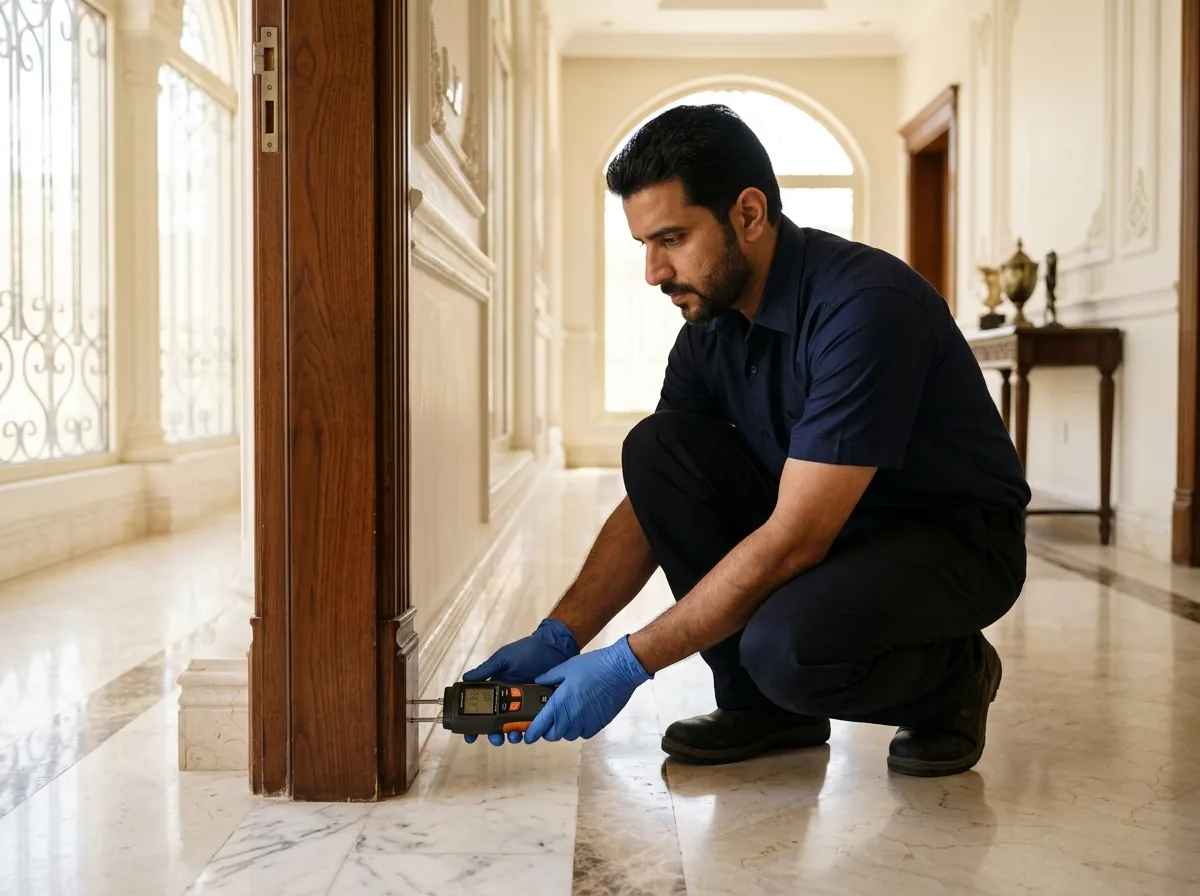
During a professional inspection, technicians distinguish between several types of shelter tubes: utility or working tubes that run along foundation walls, pipe chases, and wardrobe backs to transport food back to the colony; exploratory tubes that branch out slightly across concrete surfaces seeking new timber contacts; and drop tubes suspended from structural voids. Once termites enter the base of a wooden door jamb or baseboard, they excavate galleries along the softer grain of the wood while plastering the interior walls with moist soil.
This cryptic feeding behavior explains why severe termite damage often goes unnoticed for months. A wooden door frame, architrave, or parquet plank can appear freshly painted and structurally sound on the outside while its interior has been reduced to fragile, paper-thin laminations. By performing systematic acoustic sounding (tapping along the frame height to detect transitions from solid to hollow resonance) and inspecting the lower millimeter where timber meets tile grout, early-stage infestations can be intercepted before complete structural failure.
- Inspect the bottom junctions of wooden door frames where they meet floor tiles for crusted brown soil deposits or blistering paint.
- Tap gently along the vertical length of wooden door casings with a screwdriver handle to listen for hollow, papery acoustic changes.
- Check wooden or MDF skirting boards (baseboards) for slight separation from the wall, warping, or crumbling edges under light pressure.
- Pay attention to localized soft spots,new creaking sounds, or slight buckling across ground-floor wooden parquet and laminate flooring.
- Never scrape away discovered mud tubes prior to a professional inspection, as their location reveals the exact sub-slab entry point.