
Serving Jeddah & Makkah
Foraging Trail Tracking & Queen Colony Elimination in JeddahJeddah

Ant Control in Jeddah Targeting Concealed Tile & Courtyard Colonies

Lasting ant control in Jeddah goes far beyond wiping visible workers off kitchen marble. Warm coastal humidity, irrigated villa garden beds, and sandy sub-base soil beneath patio pavers allow massive ant colonies to thrive underground and forage indoors through microscopic grout fissures. Our technicians trace pheromone trails back to their concealed entry points and apply slow-acting, non-repellent baits that foraging workers carry directly to the queen.

Inspection & Safety Reassurance:We avoid repellent aerosol sprays that cause multi-queen ant colonies to split (budding) and spread across additional rooms; instead, we target the reproductive queen inside the nest.
Diagnostic Differentiation: Household Ants vs. Termites
Slow-Acting Colony Transfer Baits Reaching the Queen
Indoor Kitchen Grout & Outdoor Patio Paver Protection
Clear, Odorless Applications Safe for Active Kitchens
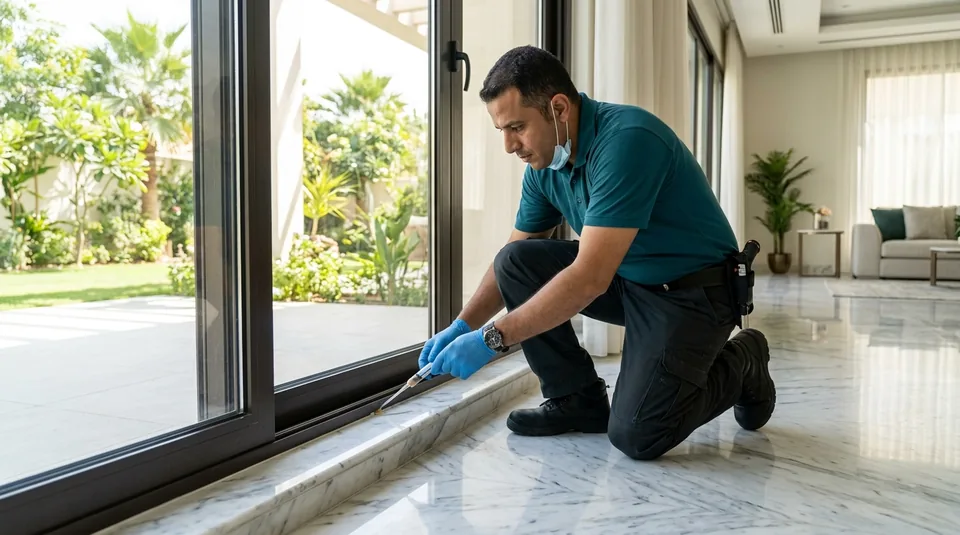
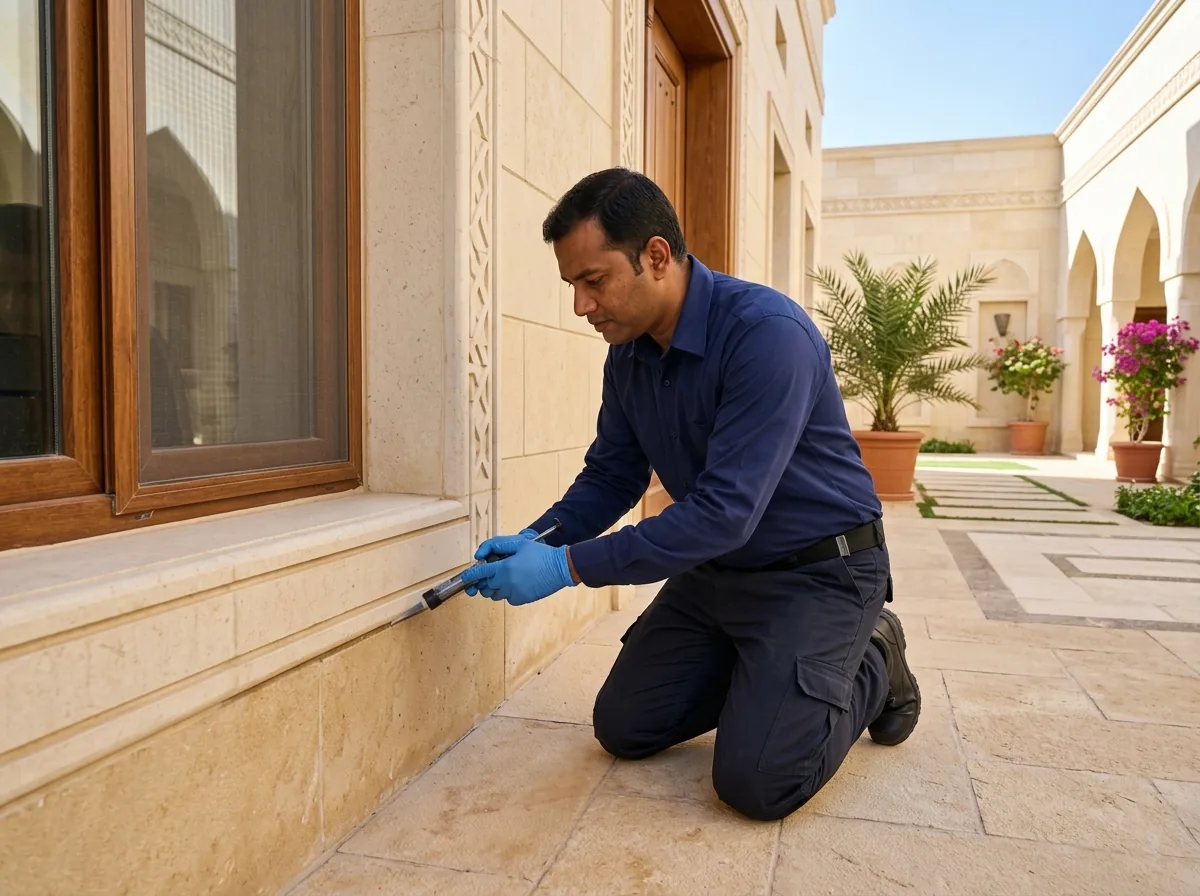
Specialist technician inspecting kitchen countertop joints and patio thresholds for ant trails in Jeddah

Tracing foraging trails to micro-fissures in tile grout, window sills, and courtyard pavers in Jeddah.

Real-World Problem Analysis

Why Do Ant Trails Reappear in Jeddah Kitchens and Courtyards After Spraying?

Homeowners across Jeddah frequently find that spraying visible ant lines with supermarket insecticide or wiping countertops with scented cleaners only stops activity for 24 to 48 hours before a fresh trail emerges from an adjacent grout line. The biological reality is that the foraging worker ants seen marching across kitchen marble represent only 5% to 10% of the total colony. The remaining 90%—including the egg-laying queens, brood-tending workers, and larvae—remain safely sheltered deep beneath floor tiles, behind wall ceramics, or under courtyard paving stones.

Even worse, common indoor species such as Pharaoh ants and ghost/sugar ants maintain multiple reproductive queens within a single colony. When exposed to a pungent, repellent surface spray, the colony perceives an environmental threat and undergoes an emergency defense reaction called "colony budding" (fractionation). Individual queens break away with groups of workers through wall voids and electrical conduits to establish multiple new satellite nests in bedrooms, bathrooms, and upper floors—multiplying the infestation.

Kitchen Backsplashes, Sinks & Pantry Shelves01

Persistent Sugar Ant Trails Along Kitchen Countertops & Pantries

Lines of tiny amber, translucent, or dark-brown ants swarming within minutes around honey jars, sugar bowls, coffee stations, or sink moisture, emerging from pinpoint holes in deteriorated silicone sealant or ceramic tile grout.

Villa Patios, Interlock Pavers & Garden Borders02

Sand Mounds Between Courtyard Pavers & Ground-Floor Thresholds

Small volcano-shaped piles of fine excavated sand appearing between outdoor patio tiles, interlock joints, and sliding glass door tracks as black garden and pavement ants expand subterranean chambers and forage into ground-floor living rooms.

Bedrooms, Hallways & Wall Conduits03

Ants Emerging from Electrical Outlets, Switches & Door Frames

Foraging ants utilizing hollow electrical conduits inside masonry walls and gaps behind wooden door architraves as protected highways to travel between rooms and apartment floors far from the kitchen.

Field Observation & Identification Guide

Ant Identification Guide & Critical Termite Differentiation

Accurately identifying the foraging ant species—and confirming that the insects are household ants rather than wood-destroying subterranean termites—is essential before selecting any treatment protocol.

Pinched Waist + Elbowed Antennae

Clinical anatomical reference schematic for preliminary visual distinction

Hymenoptera — Household Ants (Formicidae)
Typical Size Range:
2–4 mm (small kitchen ants) | 5–10 mm (larger black/carpenter ants)
Movement & Activity Pattern:
Moves in visible organized foraging trails along countertops, tile grout lines, and thresholds.
Anatomical Profile: Three distinct body segments with a sharply pinched narrow waist, elbowed antennae, and hard dark exoskeleton.
Key Distinguishing Sign: Pinched waist and elbowed antennae clearly distinguish household ants from broad-waisted termites.
Important Note on Visual Indicators & Confirmation:Non-Diagnostic Technical Notice: The visual indicators and comparison criteria below are provided for general educational guidance. Sightings of small insects, winged swarmers, or loose soil grains cannot replace a physical on-site inspection by a qualified pest technician to confirm the exact species and rule out termite activity.
Behavioral & Foraging Indicator

Organized Chemical Pheromone Trails Along Structural Edges

Household ants travel in disciplined, single-file or multi-lane columns along countertop edges, baseboards, and window frames. Scout workers deposit invisible trail pheromones that guide hundreds of nestmates directly between the food source and the hidden nest entrance.

Inspection Note: Leaving active trails undisturbed before our visit allows the technician to trace the exact entry fissure.
Sub-Tile Excavation Indicator

Fine Excavated Sand & Debris Piles Along Grout Lines

As ants excavate and enlarge nesting galleries in the sand bed beneath ceramic tiles or patio pavers, worker ants carry out fine sand grains, white grout dust, and insect fragments, depositing them in neat loose piles beside hairline cracks.

Inspection Note: Loose sand piles indicate ant excavation, whereas hard, cemented mud tubes stuck to walls point to subterranean termites.
Colony Maturity Indicator

Winged Reproductive Swarmers (Alates) Near Windows and Lights

Mature ant colonies periodically release winged males and queens to mate and establish new nests, often congregating around windows or indoor light fixtures. Homeowners frequently mistake these winged ants for termite swarmers.

Inspection Note: A technician can immediately distinguish winged ants by their pinched waist, elbowed antennae, and unequal wing lengths.
Environmental Stress Indicator

Clustering Around Moisture Sources and Electrical Faceplates

During hot weather, ants aggressively seek moisture around faucet bases, water dispensers, dishwasher seals, and indoor plant pots, while certain small species are drawn to warm electrical switch boxes.

Inspection Note: Electrical outlets require specialized dry bait placements and enclosed stations—never liquid sprays.

Critical Diagnostic Comparison: Household Ants vs. Subterranean Termites

Comparison CriterionHousehold & Garden Ants (Formicidae)Subterranean Termites / White Ants (Isoptera)
Body Shape & WaistlineDistinctly pinched, narrow waist (petiole) separating thorax and abdomen; dark black, brown, or amber body.Broad, straight-sided creamy-white or translucent body with no constricted waistline.
Antennae & Wing StructureElbowed (bent) antennae; front wings are noticeably longer and larger than the hind wings.Straight, beaded antennae; all four wings are identical in size and shape and shed easily.
Foraging Behavior & ExposureForages openly in visible trails across sunlit countertops, floors, and patio tiles day and night.Strictly photophobic and cryptic; travels exclusively inside mud tubes, soil, or hollowed wood.
Diet & Property ImpactFeeds on sugars, honey, oils, proteins, and crumbs; contaminates food and causes nuisance without eating wood.Feeds on cellulose in wooden door frames, cabinetry, cartons, and furniture, causing severe structural damage.
Professional Remediation ProtocolSlow-acting sugar/protein gel and granular baits combined with non-repellent crevice and perimeter treatments.Specialized sub-slab soil injection, wooden frame drilling, and continuous termiticide barrier systems.
Root Causes & Environmental Drivers

Why Ant Colonies Establish Inside Jeddah Homes and Courtyards

Ants succeed because their social structure allows thousands of workers to exploit microscopic structural gaps in search of water, carbohydrates, proteins, and thermally stable nesting voids.

01

Deteriorated Tile Grout and Countertop Silicone Joints

Over time, routine floor washing and thermal expansion create hairline fissures in floor tile grout and kitchen backsplash silicone. These tiny openings give ants direct access to the undisturbed sand bedding layer beneath your floors.

Common Vulnerable Spots: Kitchen countertop perimeters, sink rims, floor-to-wall skirting joints, and bathroom tiles.
02

Irrigated Courtyard Planters and Sub-Paver Sand Beds

Watered garden beds, lawn perimeters, and interlocking patio pavers retain soil moisture and harbor sap-sucking plant insects (aphids and mealybugs) that excrete sweet honeydew—supporting huge outdoor ant populations.

Common Vulnerable Spots: Villa courtyards, interlock pathways, perimeter boundary walls, and potted veranda plants.
03

Microscopic Sugar, Honey, and Grease Residues

Scout ants possess extraordinary olfactory sensitivity. A sticky ring under a honey jar, a few grains of sugar near a coffee maker, or pet food bowls left on the floor quickly trigger mass recruitment trails.

Common Vulnerable Spots: Pantry shelves, coffee and tea corners, fruit baskets, pet feeding areas, and trash bin bases.
04

Thermal Migration Away from Extreme Outdoor Heat

When summer sun heats outdoor paving stones and rocky soil, subterranean ant colonies migrate inward toward air-conditioned rooms and condensation around indoor plumbing pipes.

Common Vulnerable Spots: Ground-floor door thresholds, window frames, AC drainage lines, and under-sink cabinets.
Diagnostic-First Inspection Protocol

Our 5-Step Diagnostic Trail & Colony Assessment Process

Because killing foraging workers on the surface never stops the queen, our technicians perform a systematic inspection to trace trails back to their structural origin and determine nutritional preferences.

01

Species Identification & Termite Exclusion

We examine active workers (or winged swarmers) under magnification to identify the exact ant species—such as Pharaoh ants, ghost/sugar ants, or black pavement ants—and rule out wood-destroying termites.

Client Value:Ensures the right bait matrix is chosen and prevents colony budding in multi-queen species.
02

Pheromone Trail Tracing to Structural Exit Points

We follow active foraging columns along countertops, baseboards, and window sills to pinpoint the exact grout pinholes, silicone gaps, or electrical conduits serving as nest exits.

Client Value:Places baits directly at the colony doorstep for rapid uptake and transfer to the queen.
03

Nutritional Preference Profiling (Carbohydrate vs. Protein/Lipid)

Ant colonies shift their dietary preference between sugars (for adult worker energy) and proteins/oils (for queen egg production and larval growth). We test and match the bait matrix accordingly.

Client Value:Maximizes immediate feeding acceptance so foraging ants ignore household food residues.
04

Courtyard, Patio Paver & Perimeter Inspection

We inspect exterior interlock pavers, garden beds, boundary walls, and ground-floor thresholds to locate outdoor parent nests that continuously send satellite trails indoors.

Client Value:Stops outdoor colonies from re-invading the home after indoor trails are eliminated.
05

Custom Baiting & Non-Repellent Barrier Plan

We map out where transparent gel dots, enclosed bait stations, granular baits, and non-repellent perimeter treatments will be applied, and brief you on post-treatment care.

Client Value:Clear roadmap for complete colony collapse without disrupting your daily kitchen use.
Case-Driven Treatment Selection

Professional Ant Control Methods: Colony Transfer Baits & Non-Repellent Barriers

Our ant remediation strategy harnesses the colony’s own cooperative feeding behavior—known biologically as trophallaxis. Foraging worker ants do not consume solid food on the spot; instead, they ingest liquid and gel matrices into their "social stomach" (crop) and return to the nest to regurgitate nourishment directly to the reproductive queens, brood-tending workers, and developing larvae. By using specialized non-repellent, delayed-action baits, foraging ants unknowingly deliver the active ingredient straight to the heart of the concealed colony.

Where outdoor courtyard nests and perimeter entry points are involved, we combine granular colony baits with non-repellent crack-and-crevice and threshold applications. Unlike supermarket sprays that ants detect and avoid, non-repellent formulations are undetectable to foraging workers, allowing them to cross treated zones and transfer the effect horizontally throughout the nest without triggering colony splitting.

Factors Determining the Site Treatment Plan:

  • Identified ant species and whether the colony is monogyne (single queen) or polygyne (multiple queens).
  • Primary nesting substrate (behind kitchen ceramic tiles, inside wall electrical conduits, or beneath outdoor patio pavers).
  • Current nutritional phase of the colony (carbohydrate/sugar demand vs. protein/lipid brood demand).
  • Presence of young children, pets, or active food preparation zones requiring enclosed or micro-dot applications.
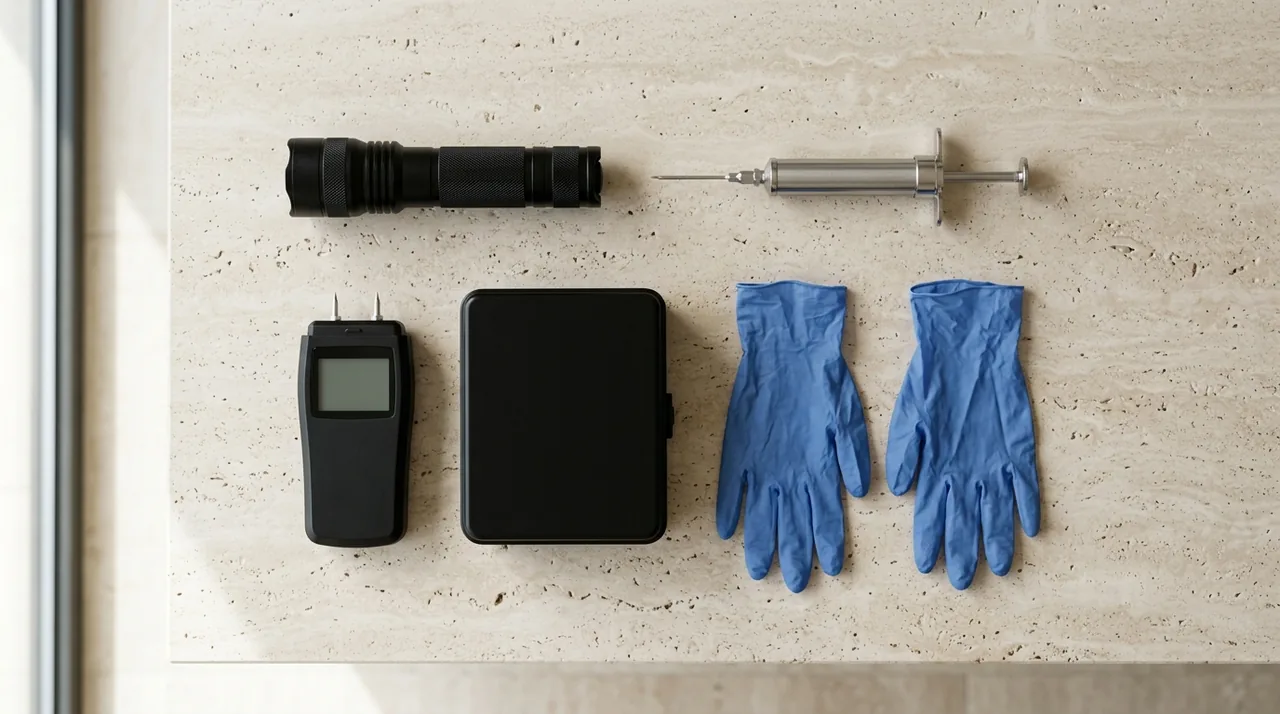
Precision ant baiting applicators, inspection magnifiers, and crevice treatment kit

Micro-applicators allow our technicians to place transparent gel baits directly at grout pinholes without staining marble or tile surfaces.

Transparent Slow-Acting Carbohydrate & Protein Gel Baits

Small indoor sugar ants, ghost ants, and Pharaoh ants on kitchen countertops, backsplashes, and pantries.

Placement of tiny, crystal-clear, odorless gel droplets directly adjacent to foraging trails and grout exit holes. Workers feed avidly and transport the bait inside wall and sub-floor voids to feed the queen.

Safety Consideration: Applied in micro-dots inside crevices and corners away from food contact surfaces; completely nonvolatile and odorless.

Targeted Granular Colony Baits for Courtyards & Planters

Black garden ants, pavement ants, and outdoor nests between patio pavers and garden borders.

Application of attractive solid bait granules around excavated sand mounds and planter edges, which foraging workers carry down into deep subterranean chambers.

Safety Consideration: Placed selectively into paver joints and ornamental beds away from child play areas.

Non-Repellent Perimeter, Threshold & Crevice Application

Ground-floor door thresholds, window frames, baseboards, and exterior wall-to-paver junctions.

Low-pressure application of an undetectable, non-repellent formulation into structural cracks and entry thresholds, eliminating crossing workers and transferring via social grooming without scattering the nest.

Safety Consideration: Directed strictly into structural seams and exterior perimeters rather than misted into indoor air.

Tamper-Resistant Enclosed Ant Bait Stations

Pantry shelves, children’s bedrooms, floors, and areas near electrical outlets.

Discreet enclosed stations containing dual-matrix baits that allow worker ants to enter, feed, and exit back to the colony while keeping the bait matrix physically shielded.

Safety Consideration: Provides physical containment in households with toddlers or curious pets.
Clear Service Scope Distinction

Service Scope: What Is Included in Our Ant Control Visit

Our service addresses both indoor foraging trails and outdoor parent colonies through a structured 5-phase operational scope.

Initial Assessment

Core Inclusion

Reviewing sighting locations, food items targeted by the ants, seasonal patterns, and any prior DIY sprays or home remedies recently applied.

Scope Note: Prior repellent sprays must be disclosed so the technician can bypass contaminated surfaces.

Trail & Nest Inspection

Core Inclusion

Inspecting kitchen countertops, grout lines, pantry shelves, bathrooms, electrical faceplates, window sills, door thresholds, and accessible courtyard pavers.

Scope Note: Includes diagnostic verification to distinguish household ants from subterranean termites.

Targeted Treatment Execution

Core Inclusion

Applying transparent gel baits, enclosed bait stations, outdoor granular baits, and non-repellent crevice/perimeter treatments tailored to each zone.

Scope Note: Treatment methods are matched to room sensitivity; open cookware and food surfaces are never sprayed.

Follow-Up Review

Case-Dependent

For complex multi-queen indoor infestations (such as Pharaoh ants) or extensive villa courtyards, a follow-up check may be scheduled to replenish bait points and confirm queen elimination.

Scope Note: Colony transfer takes several days to reach deep queens; gradual decline is expected and normal.

Preventive & Sealing Guidance

Core Inclusion

Identifying specific grout fissures, silicone gaps, and courtyard threshold cracks that should be sealed once ant activity has completely ceased.

Scope Note: Important: Grout holes should only be sealed after the baiting cycle finishes so foraging ants are not trapped beforehand.

Comprehensive ant trail baiting and courtyard perimeter treatment in Jeddah
Our inspection and treatment workflow connects four critical zones to ensure slow-acting baits reach the reproductive center of the colony.

Ant Trail & Colony Map: From Visible Workers to the Hidden Queen

Zone 01 — Kitchen Surfaces

Countertop Seams, Sinks & Pantry Shelves

  • •Tracing active sugar and protein ant trails around sinks, coffee stations, and pantries.
  • •Pinpointing microscopic exit holes in backsplash grout and silicone joints.
  • •Applying clear, odorless gel droplets directly along pheromone trails for rapid uptake.
Zone 02 — Wall Highways

Baseboards, Door Frames & Electrical Outlets

  • •Inspecting floor-to-wall skirting gaps and wooden door architrave seams.
  • •Checking electrical switches and sockets used as internal wall highways.
  • •Placing dry bait formulations and enclosed stations safely near conduit exits.
Zone 03 — Entry Thresholds

Exterior Doors, Sliding Tracks & Window Sills

  • •Examining gaps beneath main entrance thresholds and patio sliding door tracks.
  • •Applying an undetectable non-repellent barrier along exterior window and door seams.
  • •Identifying structural cracks to be sealed once colony activity ceases.
Zone 04 — Courtyard Nests

Patio Paver Joints & Garden Planters

  • •Locating volcano-shaped sand excavation mounds between outdoor patio and interlock tiles.
  • •Inspecting irrigated planter borders and tree trunks for parent ant colonies.
  • •Deploying granular colony baits and targeted crevice treatments across the courtyard.

Killing surface workers never solves an ant problem; turning foraging workers into bait carriers eliminates the concealed queen.

Specialized Technical Reference

Deep Technical Guide: Ant Colony Dynamics, Termite Differentiation & Bait Science

Achieving permanent ant control requires understanding subterranean nest architecture, chemical trail communication, and why non-repellent transfer baits outperform surface sprays.

Why visible worker ants represent only the tip of the subterranean colony

Tracking Foraging Trails vs. Eliminating Hidden Queen Colonies Behind Tiles & Countertops

When you observe a steady line of ants marching across a kitchen granite countertop or along a living room baseboard, you are looking exclusively at the colony’s oldest caste: the foraging workers. Biologically, these visible foragers make up only 5% to 10% of the total colony population. The remaining 90%—comprising one or more egg-laying queens, nurse workers, eggs, larvae, and pupae—reside inside protected chambers excavated within the sand bedding layer beneath your floor tiles or inside hollow voids behind ceramic wall tiles.

Ants coordinate their foraging through highly specific chemical pheromones. When a scout ant discovers a drop of honey, spilled juice, or water condensation, it returns to the nest while depositing an invisible trail pheromone from its abdominal glands. Hundreds of nestmates follow this chemical highway with pinpoint precision, reinforcing the scent trail as long as the food source remains available—which explains why ants march in tight, predictable columns along structural edges and corners.

Because the queen never leaves the nest to forage, wiping down counters with bleach or spraying visible workers on the surface has zero impact on the colony’s reproductive engine; the queen simply lays more eggs to replace lost workers. Professional ant control turns the ants’ own pheromone highway against them: by placing palatable, slow-acting gel bait directly along active trails and grout exit holes, we recruit foraging workers to carry the active compound deep into sub-tile chambers that no spray can ever reach.

  • Reproductive ant queens remain sheltered inside sub-floor or wall voids for years and rely entirely on workers for nutrition.
  • The sand bedding layer (Dafan) beneath ceramic and porcelain floor tiles provides a thermally stable network of interconnected tunnels.
  • Adult worker ants cannot swallow solid food particles; they ingest liquids and rely on nest larvae to process solid proteins.
  • Scrubbing ant trails with vinegar or detergent only disrupts the pheromone line temporarily, prompting workers to emerge from an adjacent crack.
  • Pinpointing the exact grout pinhole or silicone gap shortens bait transport time and accelerates colony collapse.
How to distinguish nuisance kitchen and garden ants from wood-destroying termites

Critical Identification: Household Foraging Ants vs. Subterranean Termites

One of the most important diagnostic questions during any residential inspection is confirming whether insects emerging near wooden door frames, baseboards, or floor joints are common household ants or subterranean termites (white ants / Ardha). Although termites are colloquially called "white ants" in Arabic, ants and termites belong to completely different insect orders with distinct anatomy, behavior, structural risks, and treatment requirements.

Anatomically, household and garden ants possess a sharply constricted, pinched waistline (petiole) between the thorax and abdomen, distinctly elbowed (bent) antennae, and hard, dark exoskeletons ranging from black and brown to reddish-amber. Furthermore, worker ants forage openly in daylight and artificial light across exposed countertops and floors. In contrast, subterranean termite workers are creamy-white and soft-bodied with a broad, straight waist, straight beaded antennae, and a strict aversion to light and open air—meaning termite workers never march openly across kitchen marble.

Confusion peaks when mature colonies release winged reproductive swarmers (alates). Here, wing and body inspection provides an immediate answer: winged ants have front wings that are significantly longer than their hind wings alongside a pinched waist, whereas winged termites have four translucent wings of equal length that shed rapidly around windowsills. Additionally, excavating ants push out loose, dry piles of sand grains between patio pavers, while subterranean termites construct hard, cemented mud tubes over walls and hollow out wooden door frames from the inside.

  • Insects marching openly in single-file trails toward sugar, grease, or water are household ants, not termites.
  • Hard mud tubes attached to walls or papery, hollowed-out wooden door frames indicate subterranean termites requiring specialized injection.
  • Large black ants emerging near damp wood are typically garden or carpenter ants excavating galleries rather than eating cellulose.
  • Loose, volcano-shaped sand piles between courtyard pavers are created by excavating pavement/garden ants, not termites.
  • Accurate on-site identification prevents unnecessary structural drilling when the issue is a foraging ant colony.
Stopping exterior parent colonies from continuously re-invading ground-floor rooms

Garden Perimeters, Patio Paver Joints, Window Sills & Ground-Floor Entry Points

In villas, duplexes, and ground-floor apartments, indoor ant trails are frequently extensions of massive parent colonies established outdoors in the courtyard, side walkways, and garden planters. The compacted sand bed beneath outdoor ceramic tiles and interlocking pavers protects ants from direct sunlight while retaining moisture from patio washing and landscape irrigation, allowing colonies to grow into tens of thousands of individuals.

Outdoor activity typically reveals itself as small craters of fine sand pushed up between paver joints or along garden curbs. When summer temperatures spike or outdoor food becomes scarce, foraging columns follow structural foundations upward, slipping beneath main entrance thresholds, sliding patio door tracks, ground-floor window frames, and exterior air-conditioning pipe penetrations to reach indoor kitchens and living areas.

Our exterior and threshold protocol breaks this supply chain through a dual defense: first, we apply specialized granular colony baits around active courtyard mounds and planter borders so outdoor workers carry the bait deep into subterranean chambers; second, we treat exterior door thresholds, window perimeters, and wall-to-paver joints with an undetectable, non-repellent residual formulation that eliminates foraging columns before they cross indoors.

  • Trimming tree branches and shrubs back from exterior walls and window frames removes physical bridges used by foraging ants.
  • Managing aphids and mealybugs on courtyard plants eliminates the sweet honeydew secretions that attract large ant colonies.
  • Re-grouting eroded patio tile joints and sealing gaps beneath marble door thresholds reduces exterior nesting opportunities.
  • Keeping outdoor pet food bowls and trash receptacles sealed deprives courtyard colonies of easy protein and sugar sources.
  • Adjusting garden drip irrigation to prevent constant soil saturation near building foundations discourages perimeter nesting.
The science of colony fractionation versus trophallaxis and horizontal transfer

Why Contact Sprays Trigger Colony Budding & How Non-Repellent Slow-Acting Baits Work

When homeowners spray an active ant trail with a fast-acting supermarket aerosol (typically formulated with repellent pyrethroids), the few dozen workers hit by the mist die immediately. However, the hidden colony inside the wall detects the repellent chemical barrier and the sudden loss of returning foragers as an acute survival crisis. In polygynous (multi-queen) species such as Pharaoh ants and ghost ants, this chemical stress triggers a defensive behavior known as "colony budding" or fractionation.

During budding, individual queens abandon the original nest accompanied by groups of workers and brood, migrating through internal wall voids, plumbing risers, and electrical conduits to establish multiple independent satellite colonies across bedrooms, bathrooms, and upper floors. Consequently, spraying a single kitchen trail with a repellent aerosol often turns one localized nest into five or six dispersed infestations throughout the home.

Professional ant management avoids budding by using non-repellent, slow-acting bait matrices. A scientifically formulated ant bait must not kill the foraging worker on contact; instead, it allows the worker to feed, return to the nest laying recruitment pheromones, and share the liquid bait mouth-to-mouth with nestmates, larvae, and queens via trophallaxis. Over several days, the active ingredient circulates throughout every caste in the nest, sterilizing or eliminating the queens and collapsing the entire colony from within.

  • A delayed action of 24 to 72 hours is essential so foraging workers can complete multiple trips and feed the queen before dying.
  • Heavy ant clustering around gel droplets during the first day confirms high bait palatability and active social transfer.
  • Non-repellent liquid perimeter treatments remain invisible to ants, transferring horizontally via physical contact and grooming.
  • Spraying household aerosols or bleach near professional gel placements ruins the treatment by repelling ants away from the bait.
  • Alternating carbohydrate-based and protein/lipid-based baits ensures full uptake as the colony’s brood nutritional needs shift.
Client Readiness Checklist

How to Prepare Before, During & After Ant Control Treatment

Because professional ant control relies on worker ants actively carrying bait back to the hidden queen, following these guidelines ensures fast and complete colony collapse.

1. Before the Visit

Do Not Spray Insecticides or Bleach Over Active Ant Trails

Leave visible ant trails undisturbed before our technician arrives. Active trails allow us to trace the exact grout exit hole, and avoiding sprays keeps workers calm and ready to accept bait immediately.

Clean Sticky Spills with Plain Water & Seal Open Foods

Wipe away honey, syrup, sugar granules, and grease films using plain water, and store sweet foods and pet kibble in airtight containers so our professional bait is the sole high-value food source.

2. During Service

Show the Technician All Indoor & Courtyard Sightings

Point out every room where ants have appeared—even intermittently—such as upstairs bathrooms, bedroom electrical switches, window sills, or outdoor patio planters.

Keep Children and Pets Away from Treated Courtyard Perimeters

While liquid non-repellent barriers are being applied along outdoor patio joints or door thresholds, keep children and pets indoors until the treated surfaces are completely dry.

3. Post-Service Care

Allow Ants to Feed on Gel Dots—Do Not Kill or Wipe Them

You will likely see increased ant clustering around the clear gel droplets during the first 24–48 hours. Do not kill these ants or wipe the gel; let them consume the bait and transport it back to the queen.

Wait Until Activity Stops Completely Before Sealing Grout Holes

Wait 7 to 14 days until all ant trails have vanished before sealing tile grout or silicone cracks. Sealing exit holes too early traps the colony inside the wall and forces them to chew new exits.

Safety Standards & Responsible Practice

Safety Standards & Responsible Practices in Ant Management

Ant trails frequently cross kitchen countertops, dining tables, pantry shelves, and children’s play areas. Consequently, we reject indiscriminate broadcast spraying of pungent chemicals indoors and never make false promises of "100% chemical-free miracle sprays." Instead, we practice targeted Integrated Pest Management (IPM) designed to minimize occupant and environmental exposure.

By utilizing pinpoint placements of non-volatile, odorless gel baits and tamper-resistant stations indoors, we eliminate the colony at its source using micro-quantities of active ingredients while keeping indoor air clean and kitchen surfaces safe.

Odorless, Non-Volatile Kitchen Baiting

Clear gel baits placed inside backsplash crevices and cabinet corners release zero airborne fumes and leave no chemical mist on cookware.

Child & Pet Protection via Enclosed Stations & Crevice Placement

Using tamper-resistant bait stations and deep crack injection keeps active matrices inaccessible to children and household pets.

Prevention of Colony Budding & Chemical Overuse

Eliminating the queen through targeted social transfer prevents colony splitting and avoids repeated heavy liquid spraying across rooms.

Strict Adherence to Product Labels & Drying Intervals

Applying indoor and outdoor formulations strictly within their approved zones and communicating clear drying times for exterior thresholds.

Saudi Regulatory Alignment Note:All ant control formulations and operational procedures comply with Saudi regulatory frameworks, utilizing public-health pest control products registered with the Saudi Food and Drug Authority (SFDA) and adhering to municipal guidelines set by the Ministry of Municipalities and Housing (MOMAH / Balady).

Factors Affecting Ant Control Pricing in Jeddah

Our pricing is structured transparently around the physical scope of the property and the biological complexity of the ant infestation.

Ant Species & Colony Structure (Single-Queen vs. Multi-Queen)

Multi-queen indoor species like Pharaoh ants distributed across several rooms require denser bait placement and monitoring compared to a single-trail garden ant intrusion.

Treatment Scope (Kitchen Only vs. Full Property & Courtyard)

Treating an apartment kitchen and bathrooms requires less time and material volume than treating a standalone villa with multiple kitchens, living areas, and expansive outdoor paving.

Courtyard Size, Interlock Pavers & Landscaped Planters

Properties with large tiled courtyards, interlock driveways, and irrigated garden perimeters require dedicated granular baiting and exterior barrier applications.

Prior DIY Repellent Spray Scattering

If over-the-counter aerosol sprays have caused the colony to split and migrate into bedrooms, electrical conduits, and upper floors, broader inspection and baiting are needed.

Number of Kitchens, Pantries & Wet Areas

Residences with main kitchens, prep kitchens (dirty kitchens), multiple pantries, and laundry rooms require additional diagnostic and baiting points.

Follow-Up Visit Requirements for Severe Infestations

Deeply entrenched multi-colony infestations may include a scheduled follow-up review to replenish baits and verify complete nest collapse.

We provide a clear, upfront quotation after evaluating your property layout and infestation scope, with no hidden fees.

Request Assessed Quote
Local Environmental Context — Jeddah

Ant Control in Jeddah: Landscaped Villa Courtyards, Coastal Soil & Kitchen Grout

Jeddah’s warm coastal climate and high year-round humidity create ideal conditions for both tiny indoor sugar ants and outdoor courtyard ant colonies. In many Jeddah villas and ground-floor residences, irrigated garden planters, palm borders, and sandy sub-base soil beneath interlocking patio pavers support massive subterranean nests of black garden and pavement ants. As outdoor colonies expand, workers excavate sand between paver joints and march indoors across sliding glass door tracks and ground-floor window sills.

Indoors, Jeddah’s ambient coastal moisture accelerates the wear of cement tile grout and silicone sealant around kitchen sinks and marble countertops. Tiny ghost ants and Pharaoh ants exploit these hairline gaps to establish hidden satellite nests directly behind kitchen backsplashes. Our Jeddah ant control protocol pairs crystal-clear indoor gel baiting with comprehensive courtyard paver and garden-border treatments.

Key Local Factors in Jeddah

  • Moist coastal sand beds beneath villa patio pavers and interlock tiles supporting large outdoor ant nests.
  • Irrigated courtyard planters and garden vegetation producing honeydew that attracts persistent ant trails.
  • Humidity-weakened kitchen tile grout and sink silicone allowing tiny sugar ants to nest behind backsplashes.
  • Ground-floor patio doors and low window sills serving as primary entry bridges from gardens into living rooms.

Property Types Served in Jeddah

  • Private villas and palaces with landscaped gardens, interlock courtyards, and outdoor kitchens
  • Residential apartments and modern open-plan kitchens experiencing tiny sugar ant trails
  • Duplexes and ground-floor residences with direct patio and garden access
  • Furnished apartments and offices requiring completely odorless, clear gel treatments
Scheduling & Dispatch

We offer flexible inspection and treatment scheduling across all Jeddah districts. Remember to leave active trails unwiped prior to our arrival for accurate nest tracing.

Need This Service in Makkah?

Switch directly to our dedicated Makkah page for this exact pest service.

Foraging Trail Tracking & Queen Colony Elimination in Jeddah in Makkah
Interactive Pest Service Finder (6 Quick Steps)

Pest Service Finder

Select your city, apparent pest issue, property type, and location to reach the right specialized service page or prepare a structured inspection inquiry.

Note: This tool provides preliminary service routing and does not replace on-site professional inspection.
1

Step 1 — Select Your City:

2

Step 2 — Apparent Pest or Issue Type:

3

Step 3 — Property Type:

4

Step 4 — Where Is the Problem Observed?

Steps 5 & 6 — Preliminary Match & Next Action

Recommended Service Page: Household Ants Control in Jeddah

We matched your selection to Household Ants Control in Jeddah (Apartment — Kitchen). View the full service guide for inspection steps and safety protocols, or send your inquiry now.

View Household Ants in Jeddah
Direct Technical Answers

Frequently Asked Questions About Ant Control in Jeddah

Clear technical answers about how colony-transfer baits work, distinguishing ants from termites, and post-treatment care.

Seeing a surge of ants clustering around the gel droplets during the first 24 to 48 hours is the best indicator that the treatment is working! It means foraging workers find the bait highly attractive and are actively transporting it into the hidden nest to feed the queen. Do not kill these ants or wipe away the gel—allow them to finish carrying the bait inside.

Eliminate Ant Trails & Concealed Colonies in Jeddah at the Source

Stop scattering ant colonies with temporary surface sprays. Schedule a diagnostic inspection to target hidden queens behind kitchen tiles and beneath courtyard pavers.

Ant vs. Termite Diagnosis • Clear Odorless Colony-Transfer Baits • Kitchen & Courtyard Protection • Practical Exclusion Guidance

Unified Service Request Builder

Share Your Request Details for Scheduling & Transparent Pricing

Enter your basic contact details, select your city (Jeddah or Makkah), and choose the service you need. This form organizes your inquiry for immediate coordination.

We respect your privacy. Your information is used strictly to respond to your service inquiry.
CallWhatsAppGet Quote