
Tracking Foraging Trails vs. Eliminating Hidden Queen Colonies Behind Tiles & Countertops
When you observe a steady line of ants marching across a kitchen granite countertop or along a living room baseboard, you are looking exclusively at the colony’s oldest caste: the foraging workers. Biologically, these visible foragers make up only 5% to 10% of the total colony population. The remaining 90%—comprising one or more egg-laying queens, nurse workers, eggs, larvae, and pupae—reside inside protected chambers excavated within the sand bedding layer beneath your floor tiles or inside hollow voids behind ceramic wall tiles.
Ants coordinate their foraging through highly specific chemical pheromones. When a scout ant discovers a drop of honey, spilled juice, or water condensation, it returns to the nest while depositing an invisible trail pheromone from its abdominal glands. Hundreds of nestmates follow this chemical highway with pinpoint precision, reinforcing the scent trail as long as the food source remains available—which explains why ants march in tight, predictable columns along structural edges and corners.
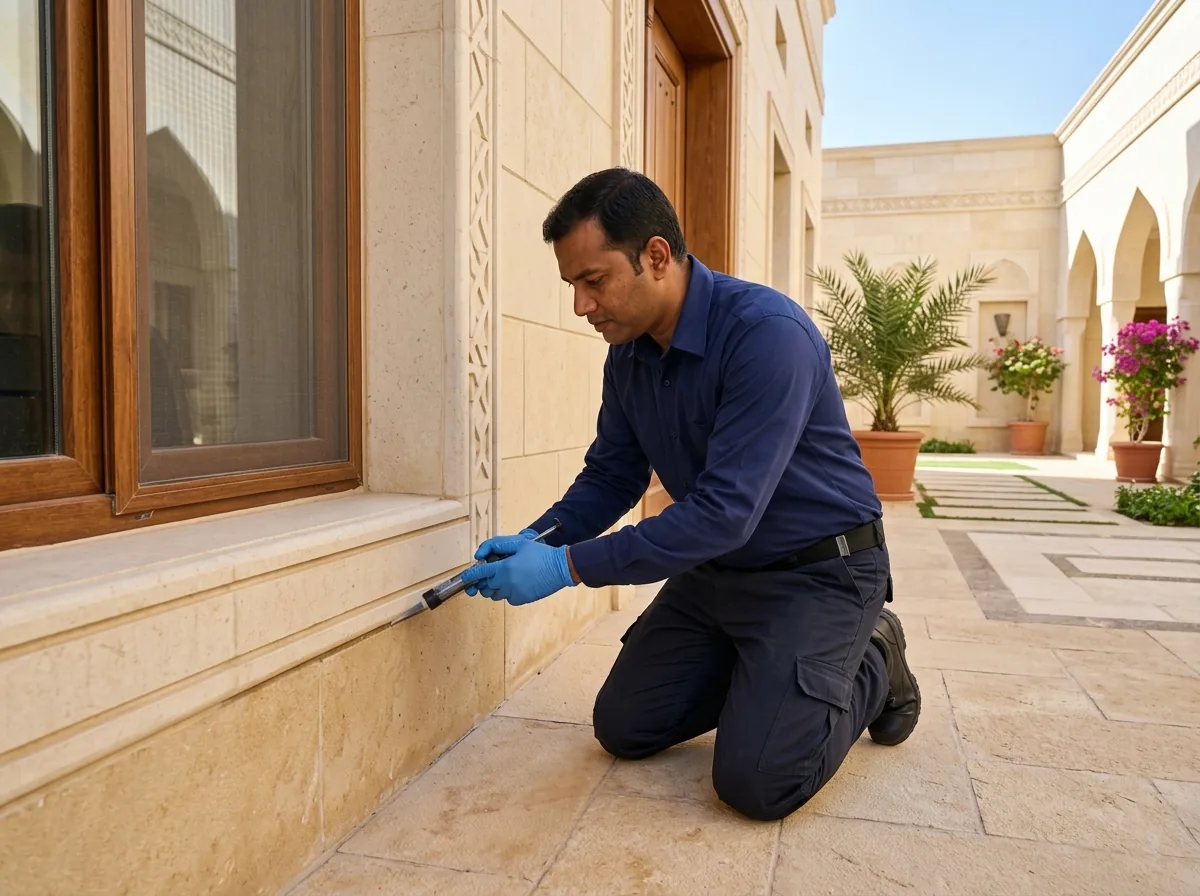
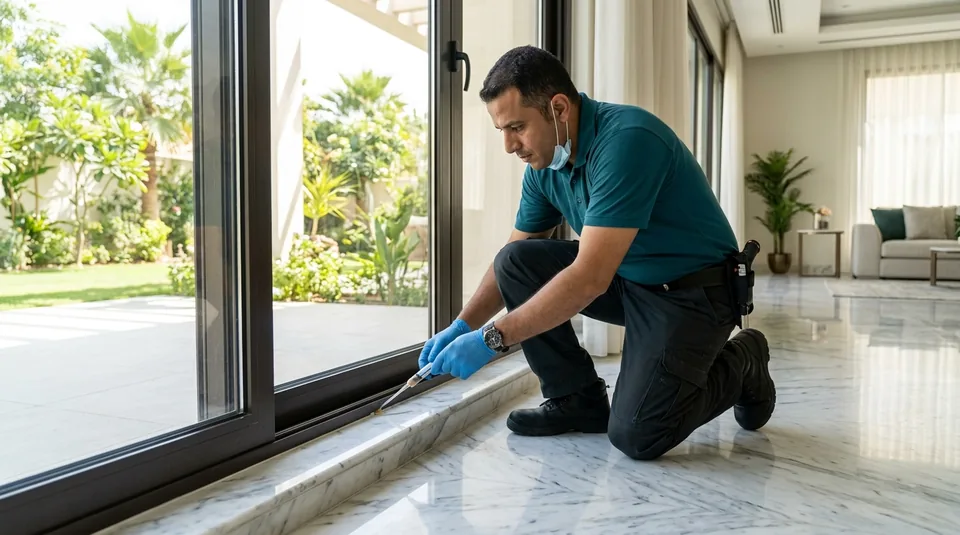
Because the queen never leaves the nest to forage, wiping down counters with bleach or spraying visible workers on the surface has zero impact on the colony’s reproductive engine; the queen simply lays more eggs to replace lost workers. Professional ant control turns the ants’ own pheromone highway against them: by placing palatable, slow-acting gel bait directly along active trails and grout exit holes, we recruit foraging workers to carry the active compound deep into sub-tile chambers that no spray can ever reach.
- Reproductive ant queens remain sheltered inside sub-floor or wall voids for years and rely entirely on workers for nutrition.
- The sand bedding layer (Dafan) beneath ceramic and porcelain floor tiles provides a thermally stable network of interconnected tunnels.
- Adult worker ants cannot swallow solid food particles; they ingest liquids and rely on nest larvae to process solid proteins.
- Scrubbing ant trails with vinegar or detergent only disrupts the pheromone line temporarily, prompting workers to emerge from an adjacent crack.
- Pinpointing the exact grout pinhole or silicone gap shortens bait transport time and accelerates colony collapse.