
Serving Jeddah & Makkah
Diagnostic Kitchen & Drain Cockroach Management in MakkahMakkah

Cockroach Control in Makkah via Targeted Harbor & Drain Inspection

Managing cockroaches in Makkah demands a structured approach tailored to multi-story residential buildings, shared plumbing shafts, and intensive seasonal kitchen operations. Our technicians inspect refrigerator compressors, oven housings, and cabinet joints while treating inspection chambers and floor drains to break the reproductive cycle at its source.

Inspection & Safety Reassurance:We do not rely on foul-smelling random surface sprays that scatter pests deeper into walls; every visit begins with species identification and harbor mapping.
Accurate German vs. American Species Diagnosis
Precision Gel Baiting Without Full Cabinet Emptying
Targeted Bathroom Drain & Manhole Treatment
Practical Structural Sealing & Prevention Advice
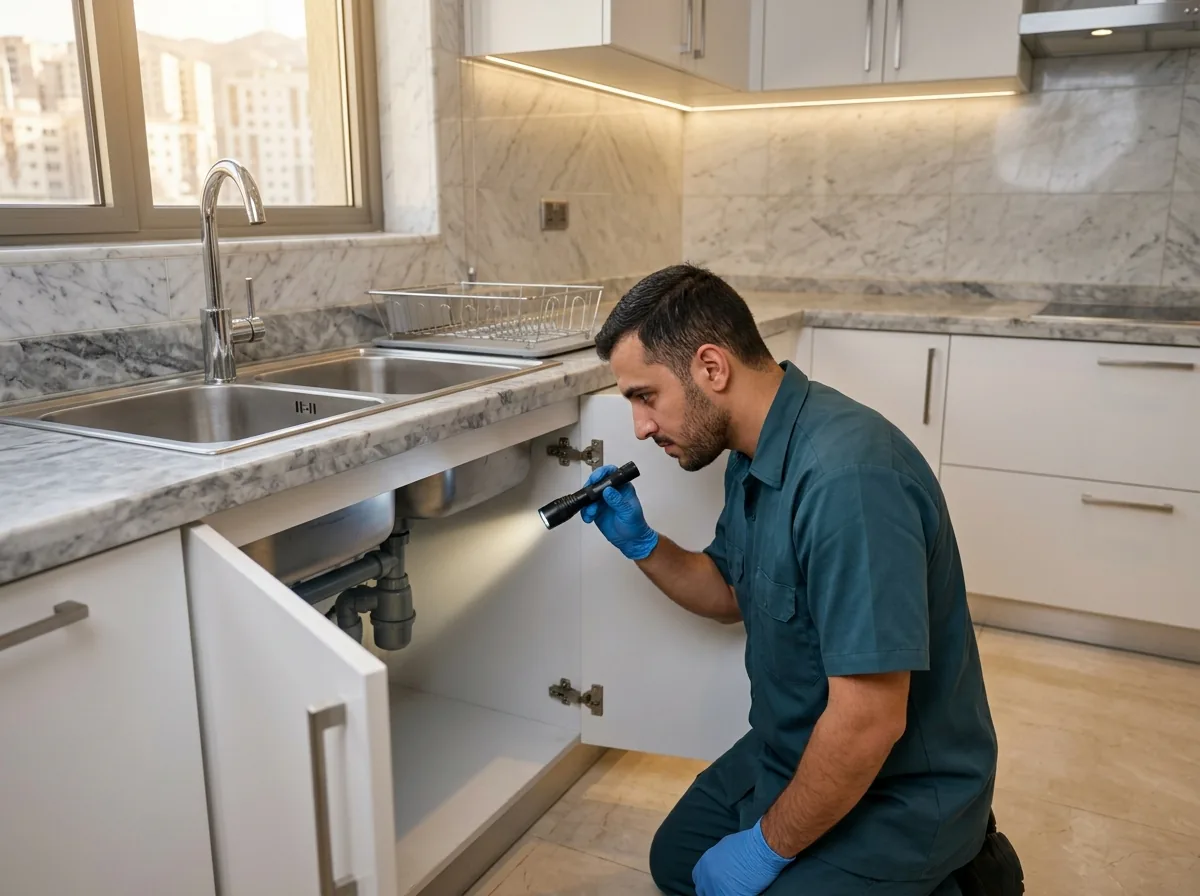
Specialist technician inspecting kitchen cabinets and plumbing entry points for cockroach control in Makkah

Detailed inspection of cabinet hinges, appliance motors, and plumbing connections in Makkah.

Real-World Problem Analysis

Why Do Cockroaches Keep Returning to Makkah Homes Despite Regular Cleaning?

Many homeowners and tenants in Makkah experience frustrating cockroach rebounds just days after using supermarket aerosol sprays or heavy household disinfectants. The core reason is that the roaches spotted scurrying across countertops at night represent only a tiny fraction of the active population hiding inside deep structural crevices. When a strong-smelling repellent spray is applied to open floors, hidden cockroaches sense the chemical barrier and scatter upward into wall voids, electrical conduits, and appliance motors, spreading the infestation into previously unaffected rooms.

Furthermore, confusing different cockroach species leads to treating the wrong areas entirely. Small German cockroaches breed continuously inside the kitchen itself—clustering inside warm cabinet hinges, coffee makers, and refrigerator compressors—whereas large American cockroaches live inside damp sewage inspection chambers and enter through unsealed floor drains. Ignoring these biological and behavioral differences reduces conventional spraying to a temporary symptom mask that leaves protected egg capsules untouched.

Kitchen Hinges, Drawers & Appliance Motors01

Small Tan Cockroaches Multiplying Inside Kitchen Cabinets & Appliances

Spotting small light-brown cockroaches with dark stripes darting away when kitchen lights are switched on at night or when cutlery drawers are opened. These colonies typically establish dense harborages around warm refrigerator compressors, microwave control panels, built-in ovens, and hydraulic cabinet hinges where warmth and microscopic food residues accumulate.

Bathroom Floor Drains, Utility Rooms & Manholes02

Large Reddish-Brown Cockroaches Emerging from Bathroom Drains & Courtyards

Encountering large adult cockroaches in bathrooms, ground-floor hallways, or laundry rooms, particularly during warm nights or when a bathroom has gone unused for several days. This pattern almost always points to dried-out P-traps in floor drains, missing one-way drain valves, or cracked external inspection chamber covers.

Under-Sink Cabinets & Wall Pipe Penetrations03

Re-Infestation Through Under-Sink Plumbing Gaps & Shared Shafts

Cockroaches reappearing inside the cabinet beneath the kitchen sink despite spotless housekeeping. Unsealed annular gaps around water supply and drainage pipes entering the wall act as highways allowing German and American cockroaches to migrate between adjacent apartments or from vertical plumbing risers.

Field Observation & Identification Guide

Cockroach Identification Guide: Key Signs & Species Comparison

Recognizing early infestation indicators and identifying the dominant species allows our technicians to focus treatment directly on the true breeding harborages rather than spraying open surfaces.

12–40 mm

Clinical anatomical reference schematic for preliminary visual distinction

Blattodea (German, American & Oriental Cockroaches)
Typical Size Range:
12–15 mm (German) | 35–40 mm (American)
Movement & Activity Pattern:
Rapid nocturnal runner that seeks warm, humid crevices when lights turn on.
Anatomical Profile: Flattened oval body, long filamentous antennae, 6 spiny running legs, and two dark parallel pronotal stripes on German roaches.
Key Distinguishing Sign: Presence of oblong egg capsules (oothecae) and pepper-like fecal specks near hinges and drains.
Important Note on Visual Indicators & Confirmation:Non-Diagnostic Technical Notice: Visual descriptions and comparison tables provided on this page are for educational orientation only. Brief sightings, droppings, or skin irritation cannot conclusively confirm a specific pest species without an on-site physical inspection of harborages and egg capsules by a qualified technician.
Visual Harbor Indicator

Pepper-Like Fecal Spotting Near Hinges and Drawer Corners

German cockroaches leave tiny dark droppings resembling ground black pepper or coffee grounds clustered inside cabinet hinges, along top drawer runners, and at wall-countertop junctions. These spots contain aggregation pheromones that signal other roaches to shelter in the exact same micro-location.

Inspection Note: High concentrations of pepper-like spotting pinpoint active daytime resting centers that require precision gel placement.
Active Reproduction Indicator

Egg Capsules (Oothecae) Attached to Crevices or Carried by Females

Cockroaches encase their eggs inside leathery, purse-shaped capsules called oothecae. Female German cockroaches carry the capsule protruding from their abdomen until just before 30–40 nymphs hatch, while American cockroaches glue their dark capsules inside damp crevices near plumbing.

Inspection Note: Because intact egg capsules resist contact sprays, follow-up monitoring and growth regulators are essential to stop emerging nymphs.
Population Pressure Indicator

Daytime Sightings of Wingless Nymphs

Cockroaches are strictly nocturnal insects that avoid light. Seeing small, dark, wingless nymphs or adults foraging during daylight hours typically indicates that hidden crevices are overcrowded, forcing weaker individuals out to compete for water and food.

Inspection Note: Daytime activity signals an established colony that requires comprehensive multi-point baiting across all thermal zones.
Olfactory Indicator in Heavy Infestations

Musty, Oily Odor Inside Enclosed Under-Sink Cabinets

When large numbers of cockroaches aggregate in poorly ventilated spaces such as under-sink cabinets, pantries, or behind refrigerators, their cuticular hydrocarbons and pheromones produce a distinct musty, oily smell that clings to cardboard packaging and wood.

Inspection Note: Replacing corrugated cardboard storage boxes with sealed plastic containers removes both shelter and pheromone trails.

Diagnostic Comparison: German Cockroach vs. American Cockroach

Comparison CriterionGerman Cockroach (Blattella germanica)American Cockroach (Periplaneta americana)
Adult Size & Visual AppearanceSmall (1.1 to 1.6 cm), tan to light brown with two distinct dark parallel stripes behind the head.Large (3.5 to 5.0 cm), glossy reddish-brown with a yellowish figure-eight margin on the pronotum.
Primary Habitat & Harboring ZonesBreeds indoors inside warm kitchens: cabinet hinges, refrigerator motors, ovens, microwaves, and coffee machines.Lives in damp, dark infrastructure: sewage manholes, inspection chambers, floor drains, plumbing shafts, and courtyards.
Reproductive Rate & Egg CapsulesRapid breeding cycle; female carries the ootheca (30–40 eggs) until hatching, shielding nymphs from surface hazards.Longer developmental cycle; female deposits the capsule (14–16 eggs) in humid cracks near water sources.
Typical Entry & Spread MechanismIntroduced via grocery cartons, paper bags, used appliances, or shared plumbing conduits between apartments.Crawls up through dry floor drain traps, broken manhole covers, unsealed pipe gaps, and beneath exterior doors.
Optimal Professional Control StrategyPrecision non-repellent gel baits in hinges/motors combined with Insect Growth Regulators (IGRs) and sticky monitors.Targeted treatment of inspection chambers and drain perimeters, combined with one-way drain valves and gap sealing.
Root Causes & Environmental Drivers

Environmental & Structural Factors Driving Cockroach Activity in Makkah

Cockroach infestations are rarely caused by surface dirt alone; even immaculate kitchens provide the three survival pillars cockroaches seek: steady appliance warmth, hidden moisture, and narrow structural crevices.

01

Continuous Thermal Havens Inside Kitchen Appliance Motors

Refrigerator compressors, deep freezers, dishwashers, built-in ovens, and espresso machines generate uninterrupted warmth between 25°C and 33°C. These enclosed motor housings act as year-round incubators that accelerate German cockroach nymph development.

Common Vulnerable Spots: Behind refrigerators, beneath dishwashers, and inside microwave and oven ventilation cavities.
02

Micro-Leaks and Condensation Beneath Sinks

While cockroaches can survive for weeks on microscopic grease film or paper glue, they cannot survive long without water. Slow P-trap weeping, condensation on cold water pipes, or wet mop storage provides all the hydration a colony needs.

Common Vulnerable Spots: Under-sink plumbing cabinets, behind washing machines, and around water heaters.
03

Dry Floor Drain Traps and Unprotected Manhole Covers

When water evaporates from floor drain traps in guest bathrooms or laundry rooms, the water seal disappears. Without a mechanical one-way drain cover, the pipe becomes a direct vertical tunnel from the sewage inspection chamber into the living space.

Common Vulnerable Spots: Bathroom floor drains, utility balconies, ground-floor storage rooms, and courtyard manholes.
04

Unsealed Pipe Penetrations and Corrugated Cardboard Storage

Gaps where drainage and water pipes pass through masonry walls allow roaches to travel freely between units. Storing beverages or dry goods in corrugated cardboard boxes provides corrugated flutes that mimic natural cockroach harborage dimensions.

Common Vulnerable Spots: Wall penetrations under kitchen sinks, pantry shelves, and top-of-cabinet storage spaces.
Diagnostic-First Inspection Protocol

Our 5-Step Diagnostic Inspection Process Before Treatment

We never apply a generic spray routine. Every service starts with a structured field inspection to map harborages and distinguish indoor breeding colonies from external drain intrusion.

01

Species Identification & Life-Stage Profiling

The technician examines live or dead specimens, fecal spotting patterns, and egg capsules to determine whether the property faces an indoor German cockroach colony, an American cockroach drain issue, or both.

Client Value:Prevents wasted effort treating drains when the actual breeding center is inside upper kitchen hinges.
02

Thermal & Mechanical Harbor Inspection in the Kitchen

Using angled inspection lights, we check refrigerator motor compartments, oven frames, dishwasher bases, drawer runners, and hydraulic cabinet hinges where gravid females hide.

Client Value:Locates deep, concealed breeding pockets that routine household cleaning cannot reach.
03

Floor Drain, Plumbing Riser & Manhole Assessment

We inspect all bathroom and kitchen floor drains, check water trap levels, and examine accessible courtyard inspection chambers (manholes) for American cockroach congregations.

Client Value:Cuts off the external supply line that otherwise re-infests the property after indoor treatment.
04

Structural Gap & Conduit Mapping

We identify unsealed gaps around under-sink drainage pipes, deteriorated silicone joints along countertops, and hollow plinth voids beneath base cabinets.

Client Value:Provides clear, actionable guidance on sealing entry points to prevent neighbor-to-neighbor migration.
05

Tailored Treatment Plan & Follow-Up Scheduling

We explain exactly which formulations will be placed in each zone, how to maintain treated areas without disturbing baits, and whether a follow-up visit is recommended to break the egg-hatch cycle.

Client Value:Full transparency on safety protocols, realistic timelines, and post-treatment expectations.
Case-Driven Treatment Selection

Professional Treatment Methods & Integrated Cockroach Control

Our methodology follows Integrated Pest Management (IPM) principles that exploit cockroach foraging and social behavior rather than flooding floors with smelly liquid chemicals. For German cockroaches inside kitchens, we apply high-palatability, non-repellent gel baits directly into cabinet hinges, crevices, and appliance motor perimeters. Foraging roaches consume the bait and return to their concealed harborages, transferring the active ingredient to nymphs and resting adults through trophallaxis and coprophagy (the cascade or domino effect).

For American cockroaches and sewage-linked intrusions, we perform targeted crack-and-crevice applications around plumbing penetrations, floor drain perimeters, and inside external inspection chambers. Where active reproduction is present, we integrate Insect Growth Regulators (IGRs) that disrupt molting and sterilize maturing nymphs, bringing about complete colony collapse over the reproductive cycle.

Factors Determining the Site Treatment Plan:

  • Target cockroach species (German, American, or mixed infestation) and primary harborage locations.
  • Infestation density, presence of juvenile nymphs, and concentration of unhatched oothecae.
  • Property environment (active family kitchen, furnished apartment, food storage pantry, or villa courtyard).
  • Household sensitivity considerations including infants, elderly residents, asthma sufferers, or pets.
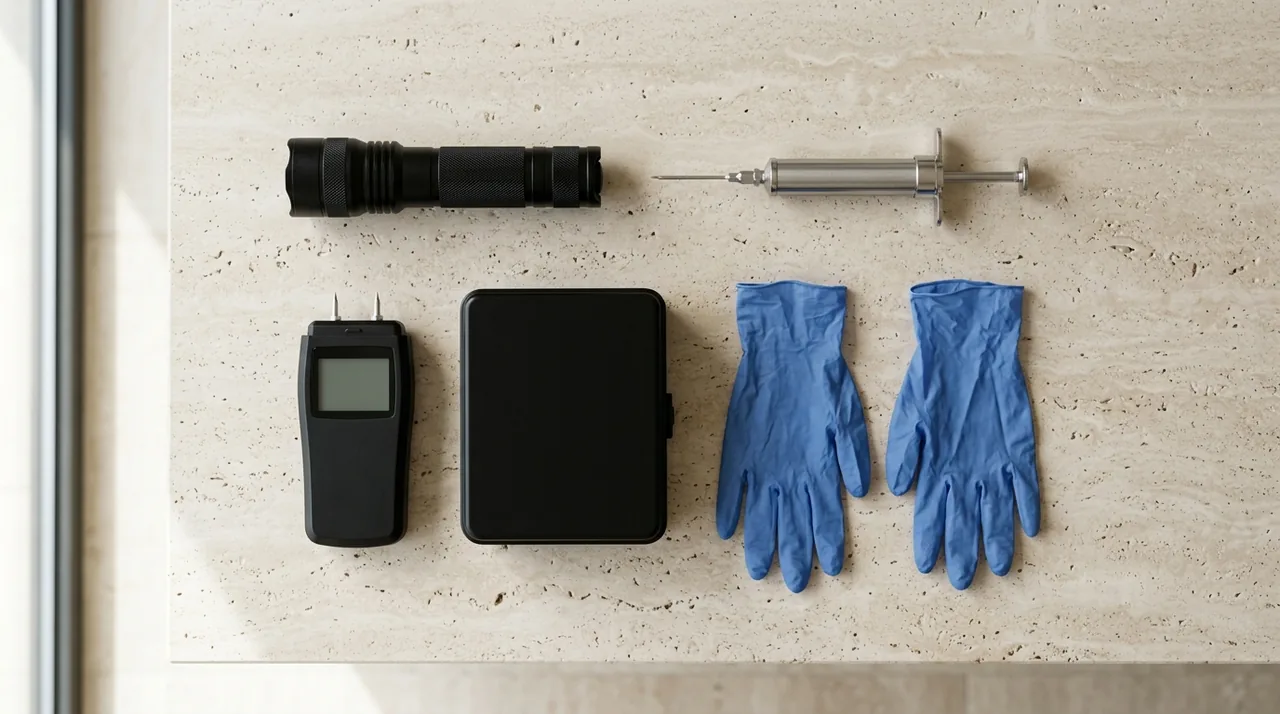
Professional cockroach diagnostic and precision gel baiting equipment kit

Precision bait applicators, angled inspection mirrors, and crevice tools allow targeted placement without contaminating kitchen countertops.

Precision Micro-Dot Gel Baiting

Primary method for German cockroaches inside kitchen cabinets and around electrical appliances.

Placement of tiny, highly attractive gel droplets inside cabinet hinges, drawer joints, and warm motor housings. The delayed mode of action allows foraging roaches to return to the nest and pass the compound to hidden developmental stages.

Safety Consideration: Applied strictly inside concealed cracks and hinges away from food preparation surfaces; zero airborne mist or odor.

Insect Growth Regulators (IGRs)

Moderate to heavy indoor infestations with ongoing egg-capsule hatching.

Specialized physiological compounds that mimic juvenile insect hormones, preventing nymphs from successfully molting into reproductive adults and halting the generational cycle.

Safety Consideration: Targets insect-specific chitin synthesis and hormonal pathways; applied in concealed rear crevices.

Targeted Drain, Crevice & Manhole Application

American cockroach control in inspection chambers, floor drains, and structural wall voids.

Controlled, low-pressure treatment of external sewage inspection chambers, pipe entry collars, and deep floor crevices to establish a protective barrier against ascending drain cockroaches.

Safety Consideration: Directed exclusively into enclosed infrastructure and crevices rather than broadcast across open living floors.

Non-Toxic Pheromone & Sticky Monitoring Stations

Baseline population tracking and post-treatment verification.

Placement of discreet adhesive monitors beneath refrigerators, behind washing machines, and inside pantries to capture roaming insects and verify the decline of emerging nymphs.

Safety Consideration: Pesticide-free mechanical traps ideal for sensitive pantry corners and ongoing assessment.
Clear Service Scope Distinction

Service Scope: What Is Included in Our Cockroach Control Visit

Our service covers the entire remediation workflow from initial species diagnosis to post-treatment exclusion guidance, with clear boundaries on what each phase entails.

Initial Assessment

Core Inclusion

Reviewing sighting locations, nocturnal vs. daytime activity patterns, and any recent aerosol sprays or home remedies used that might interfere with bait palatability.

Scope Note: Identifies whether heavy grease buildup or chemical residues need cleaning prior to bait placement.

Comprehensive On-Site Inspection

Core Inclusion

Detailed inspection of kitchen cabinets, hinges, appliance motor bays, under-sink plumbing penetrations, bathroom floor drains, and accessible property inspection chambers.

Scope Note: Covers accessible visual and crevice inspection without destructive structural dismantling.

Targeted Treatment Execution

Core Inclusion

Application of precision gel baits in kitchen harborages, combined with targeted crevice, drain perimeter, and manhole treatment according to the diagnosed species.

Scope Note: Formulations are selected per zone; we never spray exposed cookware, dishes, or food cutting surfaces.

Follow-Up Review

Case-Dependent

For moderate-to-severe German cockroach infestations, a follow-up visit (typically 10–14 days later) is scheduled to inspect nymph emergence from prior egg capsules and replenish gel points.

Scope Note: Oothecae require biological time to hatch; the second review ensures newly hatched nymphs are eliminated before maturity.

Preventive & Exclusion Guidance

Core Inclusion

Providing a specific checklist of under-sink pipe gaps to seal with silicone, floor drains requiring one-way valves, and moisture/storage adjustments.

Scope Note: Major plumbing repairs or masonry work remain property maintenance responsibilities, guided by our exact findings.

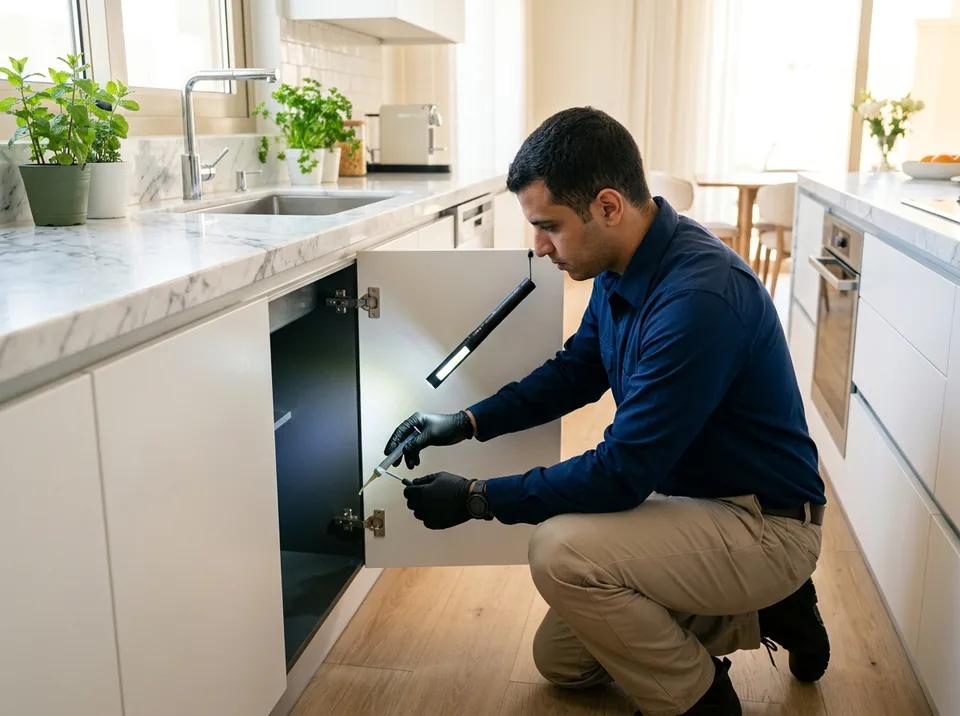
Targeted inspection and treatment of kitchen cockroach harborages and drains in Makkah
Our diagnostic inspection focuses on four primary micro-environments inside and around your property to ensure no breeding pocket is overlooked.

Critical Harbor & Entry Map: Where Cockroaches Hide and How We Target Them

Zone 01 — Thermal Havens

Refrigerator Compressors, Ovens & Microwaves

  • •Inspecting rear refrigerator motor compartments where warmth attracts gravid females and nymphs.
  • •Checking built-in oven frames, dishwasher bases, and espresso machine undersides.
  • •Applying micro-dots of non-repellent gel along external housing seams away from wiring.
Zone 02 — Cabinetry & Hinges

Hydraulic Hinges, Drawer Runners & Pantry Corners

  • •Examining metal cup hinges that serve as the number-one daytime shelter for German cockroaches.
  • •Injecting precision bait into underside countertop joints and drawer guide channels.
  • •Placing non-toxic sticky monitors in pantry corners to track population reduction.
Zone 03 — Moisture Hubs

Under-Sink Plumbing & Wall Penetrations

  • •Inspecting annular gaps around water supply and drain pipes entering masonry walls.
  • •Treating dark, humid corners beneath kitchen basins, laundry tubs, and water heaters.
  • •Identifying slow condensation points and advising on silicone or foam collar sealing.
Zone 04 — Drainage Network

Bathroom Floor Drains & Inspection Chambers

  • •Checking bathroom and utility floor drains for missing covers or dried-out water traps.
  • •Opening and treating accessible courtyard inspection chambers (manholes) against American cockroaches.
  • •Recommending mechanical one-way drain valves to block upward pest movement permanently.

Combining indoor thermal-zone gel baiting with drain and manhole exclusion stops both German and American cockroach cycles.

Specialized Technical Reference

Deep Technical Guide: Cockroach Biology, Concealed Harborages & Colony Elimination

Sustainable cockroach control requires understanding the biological differences between indoor and drain-dwelling species and why targeted bait transfer outperforms surface spraying.

Why misidentifying the species leads to treating the wrong part of the property

Differentiating German Kitchen Cockroaches vs. American Drain/Manhole Cockroaches

Misidentifying the cockroach species is the single most common reason household and non-specialist treatments fail. The German cockroach (Blattella germanica) is a small insect measuring 1.1 to 1.6 cm in length, easily recognized by its tan coloration and two dark longitudinal stripes immediately behind its head. Crucially, German cockroaches rarely live in outdoor sewage manholes; they are strictly indoor pests that establish dense, self-sustaining colonies inside warm kitchen cabinets, drawer joints, and electrical appliances.

By contrast, the American cockroach (Periplaneta americana) is a much larger insect reaching 3.5 to 5.0 cm, featuring a glossy reddish-brown body and a pale yellow margin around its pronotum. American cockroaches thrive inside dark, humid subterranean infrastructure—specifically sewage inspection chambers, municipal drains, plumbing risers, and damp utility shafts. When a homeowner encounters a large American cockroach inside a kitchen or bathroom at night, the insect has almost always crawled up through an unprotected floor drain or unsealed pipe gap rather than hatched inside a cutlery drawer.

This biological distinction dictates two completely different remediation strategies. Treating only outdoor manholes when a kitchen suffers from German cockroaches leaves the indoor cabinet colony completely untouched. Conversely, placing gel dots inside upper kitchen cupboards will not stop large American cockroaches from emerging out of a dry bathroom floor drain. Our technicians diagnose the exact species distribution first so that every zone receives the right intervention.

  • Female German cockroaches carry their egg capsule (ootheca) until just hours before hatching, protecting 30–40 nymphs from external hazards.
  • Juvenile German cockroach nymphs are small, dark, and wingless with a pale dorsal patch, often mistaken for a separate beetle or bug species.
  • Adult American cockroaches possess fully developed wings and can glide or fly short distances when temperatures and humidity are high.
  • German cockroaches complete their nymphal development in just a few weeks in warm kitchens, allowing populations to multiply rapidly.
  • Ground-floor villas and apartments frequently experience mixed infestations requiring simultaneous kitchen baiting and manhole treatment.
How modern kitchen fixtures and thermal microclimates shelter concealed colonies

Harboring Inside Warm Kitchen Hinges, Refrigerator Motors, Ovens & Under-Sink Cabinets

German cockroaches have flattened, compressible bodies and sensitive mechanoreceptors that drive them to seek narrow crevices where both their dorsal and ventral surfaces touch solid material—a behavior known scientifically as thigmotaxis. A crack just 1.5 to 3 millimeters wide inside a hydraulic metal cabinet hinge, beneath a loose countertop laminate strip, or along a wooden drawer runner provides ideal physical security away from household cleaning tools.

Beyond narrow geometry, modern kitchen appliances create thermal microclimates that function as year-round incubators. Refrigerator compressors, deep freezer motors, built-in ovens, dishwashers, microwave digital panels, and countertop espresso machines radiate steady warmth between 28°C and 33°C alongside trace moisture from steam and condensation. Microscopic films of cooking oil, starch, and sugar settle around these units, allowing cockroaches to feed, mate, and molt without ever crossing open kitchen floors.

Spraying liquid insecticides into or around electrical appliances creates serious shock and contamination risks while failing to reach deep internal voids. Instead, our technicians use precision syringe and bait-gun applicators to deposit pinhead-sized droplets of palatable gel bait right at the warm perimeter seams of motor housings, inside hinge cups, and beneath drawer slides, turning the roaches’ favorite shelters into targeted control points.

  • Soft-close hydraulic cabinet hinges contain hollow internal cups where gravid females shelter with their egg capsules.
  • Digital display boards on ovens, microwaves, and water dispensers attract tiny first-instar nymphs seeking warmth.
  • Enclosed dead spaces beneath base cabinets (behind the kickboard/plinth) accumulate moisture and undisturbed debris.
  • Countertop coffee machines and toasters retain internal water reservoirs and crumbs that require dry inspection.
  • Peeling shelf liners and corrugated cardboard boxes inside pantries release aggregation pheromones that anchor colonies.
Securing sewage infrastructure to cut off American cockroach entry routes

Addressing Bathroom Floor Drains, Inspection Chambers & Plumbing Risers

Private courtyard inspection chambers (manholes) and building drainage networks serve as the primary reservoir for American cockroaches. Inside these enclosed subterranean boxes, constant humidity, organic residue, and stable temperatures allow hundreds of adult and nymphal cockroaches to congregate year-round. When chamber populations peak or summer heat intensifies, cockroaches travel upward through lateral branch pipes leading directly to indoor bathroom floor drains, laundry rooms, and kitchen gullies.

Entry into living spaces typically occurs through three structural vulnerabilities: first, evaporation of the water seal inside floor drain P-traps (siphons) in infrequently used guest bathrooms; second, traditional grated drain covers that lack a mechanical one-way flap; and third, unsealed mortar gaps around flexible drain hoses under kitchen sinks, bidets, and washing machines.

Our drain and manhole protocol addresses both the active pest reservoir and the physical pathway. We open accessible inspection chambers on the property to treat internal walls and rim ledges with targeted residual formulations, apply crack-and-crevice treatments around indoor pipe penetrations, and advise property owners on installing one-way silicone or mechanical drain valves and sealing annular pipe gaps.

  • Pouring water weekly into seldom-used guest bathroom drains restores the P-trap water barrier against ascending pests.
  • Replacing open grates with one-way mechanical drain valves blocks cockroaches while allowing normal water drainage.
  • Sealing the gap where washing machine and dishwasher discharge hoses enter the wall standpipe stops hidden entry.
  • Inspecting external manhole covers in villa courtyards ensures broken rims or gaps are properly seated and sealed.
  • Closing gaps around under-sink water and drain pipes with silicone or expanding foam blocks inter-apartment migration.
Understanding chemical repellency versus secondary colony transfer

Why Random Supermarket Sprays Scatter Infestations & How Targeted Gel Baiting + Growth Regulation Works

When homeowners spot cockroaches in the kitchen, the instinctive reaction is to spray commercial aerosol cans along baseboards and inside cupboards. While synthetic pyrethroid aerosols quickly knock down the few visible insects they hit directly, they trigger a counterproductive phenomenon known as chemical repellency and colony scattering. Hidden cockroaches detect the irritating vapors and flee deep into wall voids, electrical conduits, false ceilings, and adjacent bedrooms—transforming a localized kitchen issue into a property-wide infestation.

Moreover, repeated exposure to over-the-counter surface sprays selects for physiological and behavioral resistance in German cockroach populations, while the spray mist never penetrates leathery egg capsules hidden in crevices. Worse still, spraying smelly aerosols or bleach over cabinet surfaces contaminates the environment and renders any subsequent professional bait unpalatable to foraging insects.

Professional non-repellent gel baits operate on the exact opposite principle: they are odorless, non-volatile, and formulated with food matrices that outcompete household crumbs. Foraging cockroaches consume the gel and return calmly to their hidden harborages before symptoms begin several hours later. Inside the crowded crevice, the active ingredient spreads horizontally to nymphs and resting females that never leave the nest through natural grooming, fecal consumption (coprophagy), and feeding on affected individuals—achieving secondary and tertiary colony elimination.

  • Delayed-action gel baits exploit cockroach social clustering to reach deep harborages that sprays cannot touch.
  • Combining gel baits with Insect Growth Regulators (IGRs) prevents nymphs from reaching reproductive maturity.
  • Odorless, non-volatile gel applications allow kitchens to be treated safely without disruptive chemical fumes.
  • Avoiding DIY aerosol sprays before and after professional baiting is essential to preserve bait attractiveness.
  • Rotating active ingredient classes prevents bait aversion in long-standing or heavily pressured cockroach colonies.
Client Readiness Checklist

How to Prepare Your Property Before, During & After Treatment

Following these practical steps removes competing food sources and protects the applied gel baits so the colony feeds on them rapidly.

1. Before the Visit

Remove Competing Grease, Crumbs & Standing Water

Wipe down kitchen counters, stove sides, and floor edges to remove food crumbs and oil films before our visit. Eliminating alternative food sources compels cockroaches to feed immediately on the professional gel bait.

Store Open Food in Sealed Containers & Clear Under-Sink Access

Place open dry goods into airtight containers and temporarily clear items stored directly beneath the kitchen sink so the technician can inspect and treat wall pipe penetrations thoroughly.

2. During Service

Keep Children and Pets Out of Active Work Zones

While the technician is pulling out appliances, inspecting behind motors, or opening external inspection chambers, keep children and pets in a separate room for safety.

Point Out Small Countertop Appliances with Sightings

Inform the technician if you have noticed tiny roaches around coffee makers, water dispensers, toasters, or microwave vents so those units can be inspected and baited safely.

3. Post-Service Care

Do Not Wipe Off Gel Dots or Spray Aerosols Over Them

Leave the tiny gel droplets inside hinges and corners untouched. Never spray commercial insecticide aerosols, bleach, or strong degreasers near bait placements, as chemical odors contaminate the bait and repel cockroaches.

Empty Nightly Trash, Dry Sinks & Keep Drain Covers Closed

Remove kitchen trash bags every evening, wipe the sink basin dry before bedtime, and keep bathroom floor drain covers closed to deprive surviving insects of moisture.

Safety Standards & Responsible Practice

Safety Standards & Responsible Practices in Domestic Kitchens

Because the kitchen is where family meals are prepared, occupant safety governs every step of our cockroach control protocol. We strictly prohibit the use of unverified chemical mixtures, agricultural pesticides, or high-volatility fumigants inside residential properties, and we never make exaggerated claims of "magic instant eradication sprays." Instead, we rely on targeted, low-exposure formulations designed specifically for indoor public-health use.

By placing non-volatile gel baits inside concealed hinges and structural crevices rather than misting chemicals into the air, we preserve indoor air quality and protect kitchen surfaces. When drain or manhole treatments are required, applications are confined to enclosed plumbing infrastructure with clear ventilation guidelines.

Non-Volatile Gel Priority in Food Zones

Using precision gel matrices inside kitchen cabinets eliminates airborne droplets and prevents chemical contact with dishes, utensils, and countertops.

Household, Child & Pet Protection

Placing baits inside deep hinges, behind heavy appliances, and within enclosed pipe collars out of reach of children and domestic pets.

Strict Adherence to Label Concentrations & MSDS

Applying public-health formulations strictly according to manufacturer Material Safety Data Sheets without unauthorized mixing or overdosing.

Long-Term Reduction Through Exclusion (IPM)

Reducing long-term chemical reliance by addressing the structural gaps, dry drain traps, and moisture sources that allow infestations to recur.

Saudi Regulatory Alignment Note:All pest control products and field procedures are selected and executed in alignment with Saudi regulatory standards, utilizing public-health pesticides registered with the Saudi Food and Drug Authority (SFDA) and adhering to municipal public-health pest management guidelines established by the Ministry of Municipalities and Housing (MOMAH / Balady).

Factors Affecting Cockroach Control Pricing in Makkah

Treatment costs are determined transparently based on the physical layout of the property and the biological nature of the infestation rather than arbitrary flat rates.

Target Species (German Kitchen Colony vs. American Drain Intrusion)

German cockroach infestations inside intricate kitchen cabinetry and appliances require intensive micro-dot baiting, IGR integration, and follow-up monitoring, whereas American cockroach treatments focus primarily on drains and manholes.

Property Size, Number of Kitchens & Bathrooms

A standard apartment with a single kitchen and two bathrooms requires less inspection time and material volume than a multi-level villa with main and prep kitchens, staff quarters, and numerous bathrooms.

Number of External Inspection Chambers (Manholes)

Ground-floor residences and villas with private courtyards require opening and treating multiple perimeter sewage inspection chambers to stop American cockroach migration.

Infestation Severity & Prior DIY Spray Scattering

Long-standing infestations that have been repeatedly sprayed with repellent aerosols often spread beyond the kitchen into bedrooms and hallways, requiring wider bait distribution.

Follow-Up Visit Requirements for Egg-Capsule Cycles

Established German cockroach colonies often require a scheduled two-visit program to eliminate nymphs that hatch from protected oothecae 10–14 days after the initial service.

Storage Density & Built-In Appliance Complexity

Kitchens with extensive pantries, multiple built-in ovens, dishwashers, and dense storage require more detailed inspection and monitoring points.

We provide a clear scope and cost breakdown after assessing your property details (via on-site inspection or preliminary video/photo review), with no hidden charges.

Request Assessed Quote
Local Environmental Context — Makkah

Cockroach Control in Makkah: Multi-Story Plumbing Risers & Seasonal Kitchen Demand

Makkah presents distinct urban and operational dynamics shaped by high ambient temperatures, dense multi-story residential buildings, and intensive seasonal kitchen usage during Ramadan, Hajj, and Umrah. Extended cooking hours, bulk food storage, and extra refrigerators or deep freezers operating in homes and hospitality apartments generate continuous heat and condensation behind appliances—creating ideal breeding microclimates for German cockroaches.

Additionally, many residential buildings in Makkah share vertical plumbing shafts, ventilation ducts, and central sewage inspection chambers. When one unit sprays repellent aerosols or when a building manhole becomes overcrowded in summer heat, cockroaches migrate vertically along unsealed pipe penetrations into neighboring kitchens and bathrooms. Our Makkah protocol emphasizes under-sink conduit sealing, shared drain defense, and targeted non-repellent gel baiting.

Key Local Factors in Makkah

  • Intensive seasonal cooking and bulk dry-food/carton storage during Ramadan, Hajj, and Umrah peak periods.
  • Vertical and horizontal cockroach migration through shared plumbing shafts in multi-story residential buildings.
  • High ambient heat driving large American cockroaches from external manholes toward cool indoor floor drains.
  • Continuous thermal zones behind extra freezers, water dispensers, and heavy-duty kitchen equipment.

Property Types Served in Makkah

  • Family apartments in multi-story residential buildings across Makkah neighborhoods
  • Standalone villas and family houses with large food storage pantries and courtyards
  • Hospitality and seasonal residences requiring rapid, low-odor kitchen remediation
  • Large household kitchens, annexes, and family gathering properties (Estirahat)
Scheduling & Dispatch

We offer flexible inspection and treatment appointments across all Makkah districts, scheduled around your household kitchen routine to maximize gel bait uptake.

Need This Service in Jeddah?

Switch directly to our dedicated Jeddah page for this exact pest service.

Diagnostic Kitchen & Drain Cockroach Management in Makkah in Jeddah
Interactive Pest Service Finder (6 Quick Steps)

Pest Service Finder

Select your city, apparent pest issue, property type, and location to reach the right specialized service page or prepare a structured inspection inquiry.

Note: This tool provides preliminary service routing and does not replace on-site professional inspection.
1

Step 1 — Select Your City:

2

Step 2 — Apparent Pest or Issue Type:

3

Step 3 — Property Type:

4

Step 4 — Where Is the Problem Observed?

Steps 5 & 6 — Preliminary Match & Next Action

Recommended Service Page: Cockroaches Control in Makkah

We matched your selection to Cockroaches Control in Makkah (Apartment — Kitchen). View the full service guide for inspection steps and safety protocols, or send your inquiry now.

View Cockroaches in Makkah
Related Problem-Solution & Diagnostic Guides

Technical & Diagnostic Guides to Help You Make the Right Decision in Makkah

Cockroach Diagnostic Guide10 min read

Why Small Cockroaches Appear in Kitchen Cabinet Hinges & Appliances Despite Daily Cleaning—And How to Stop Them

Distinguishing German kitchen cockroaches from American drain cockroaches, why supermarket aerosol sprays scatter infestations, and how precision syringe gel baiting breaks the egg-case cycle.

  • Tiny tan cockroaches and pinhead nymphs clustering inside metal cabinet hinges and warm appliance motors
  • Dark pepper-like droppings and empty light-brown egg capsules (oothecae) in drawer corners
Read Full Diagnostic Guide
Pest Identification & Decision Guide10 min read

Bed Bugs vs. Fleas in Mattresses & Carpets: Practical Field Identification & Treatment Guide for Jeddah & Makkah

Field comparison of nocturnal crawling bed bugs in mattress seams versus jumping fleas in carpet fibers, explaining inspection checkpoints, thermal steam integration, and follow-up protocols.

  • Tiny dark fecal spots, shed skins, or flat reddish-brown insects tucked inside mattress piping and headboards
  • Fast-jumping minute insects springing from carpet pile or patio thresholds toward ankles and lower legs
Read Full Diagnostic Guide
Termite & Wood Protection Guide10 min read

Early Signs of Subterranean Termites in Wooden Door Frames, Baseboards & Parquet in Jeddah & Makkah

How to detect mud tubes, hollow-sounding wood, and sub-slab moisture triggers early, differentiate subterranean termites from household ants, and apply structural perimeter treatments.

  • Pencil-thick dried mud tubes climbing foundation walls, doorframes, or behind wooden skirting boards
  • Wood sounding hollow or papery when tapped while the outer paint layer still looks intact
Read Full Diagnostic Guide
Direct Technical Answers

Frequently Asked Questions About Cockroach Control in Makkah

Practical, transparent answers regarding preparation, gel bait mechanics, drain defense, and treatment timelines.

When treating German cockroaches with precision non-volatile gel baits and monitoring traps, you do not need to empty all dishes or vacate the home because the gel is placed in tiny dots inside hinges and crevices with zero airborne mist. If your property requires liquid crack-and-crevice or drain/manhole treatment, our technician will advise you on clearing the under-sink cabinet and observing brief ventilation times.

Resolve Kitchen & Drain Cockroach Infestations in Makkah Properly

Stop scattering cockroaches with temporary supermarket sprays. Schedule a diagnostic inspection to target hidden cabinet harborages, appliance motors, and drainage entry points.

Upfront On-Site Diagnosis • Odorless Precision Kitchen Gel Baits • Manhole & Drain Protection • Practical Exclusion Advice

Unified Service Request Builder

Share Your Request Details for Scheduling & Transparent Pricing

Enter your basic contact details, select your city (Jeddah or Makkah), and choose the service you need. This form organizes your inquiry for immediate coordination.

We respect your privacy. Your information is used strictly to respond to your service inquiry.
CallWhatsAppGet Quote