
Serving Jeddah & Makkah
Precision Bedroom & Upholstery Inspection — JeddahJeddah

Bed Bug Treatment in Jeddah Through Micro-Harborage Inspection and Multi-Stage Control

Effective bed bug control in Jeddah requires locating microscopic harborages along mattress piping, upholstered headboards, wooden bed slats, and baseboard joints rather than relying on surface sprays. We conduct a structured physical inspection to identify active stages and cemented eggs before executing a targeted, family-conscious treatment plan.

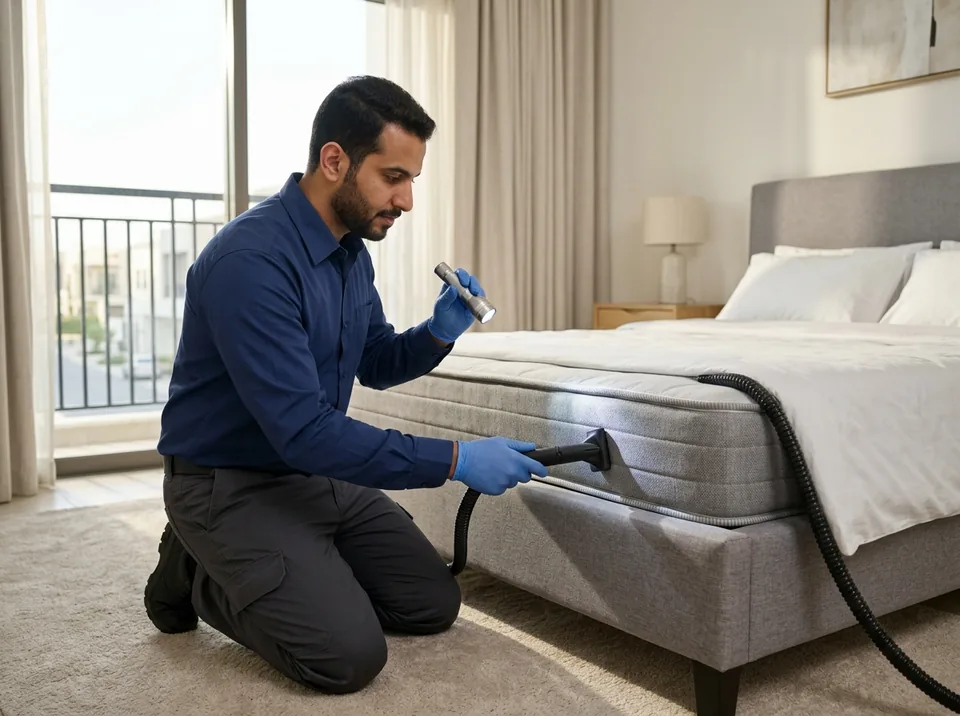
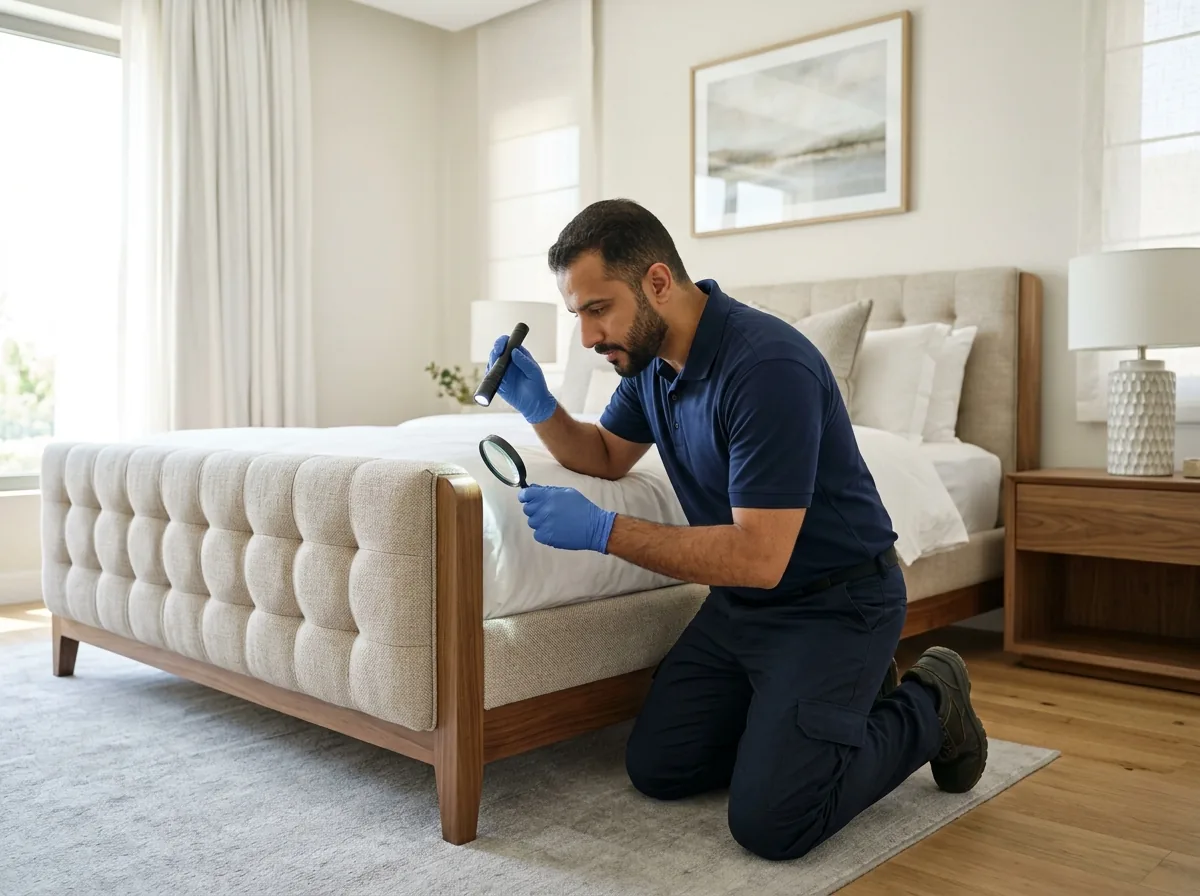
Technician inspecting mattress piping and bed frame crevices for bed bugs in Jeddah
Diagnostic & Treatment Summary

Verified Service in Jeddah

Detailed Mattress Seam & Frame Inspection
Targeted Crack & Crevice Application
Lifecycle-Timed Follow-Up Protocol
SFDA-Aligned Public Health Standards
Safety & Inspection Note:No products are applied before a physical inspection confirms harborages. Every household receives clear preparation checklists for laundering fabrics and strict ventilation re-entry timelines.
Real-World Problem Analysis

Why Bed Bugs in Jeddah Require Precision Inspection Rather Than Supermarket Sprays

Bed bugs (Cimex lectularius) are among the most distressing indoor pests faced by households in Jeddah because their presence has nothing to do with general housekeeping or food sanitation. Unlike cockroaches or ants that forage for kitchen crumbs, bed bugs are nocturnal blood-feeding ectoparasites attracted exclusively to body heat and exhaled carbon dioxide during sleep. Immediately after feeding, they retreat into tight structural crevices no wider than the edge of a credit card, leaving families dealing with disrupted sleep and anxiety without ever spotting a live insect during daylight hours.

A major reason infestations persist for months is the widespread misuse of over-the-counter aerosol sprays. When retail repellent sprays are applied to the surface of a mattress or bed frame, they rarely reach deep structural joints; instead, they agitate the colony and trigger forced dispersal. Bed bugs flee their primary harborage around the bed and scatter behind wooden baseboards, electrical faceplates, door frames, wardrobes, and adjacent rooms, turning a localized single-bed issue into a multi-room infestation.

Furthermore, female bed bugs coat their microscopic eggs in a fast-drying cement substance that glues them firmly inside fabric seams and unfinished wood grain. Because the outer eggshell acts as a natural barrier against most liquid applications during an initial visit, any service promising instant, single-spray total eradication of all eggs is ignoring basic entomology. Reliable resolution requires combining physical inspection, targeted crevice applications, high-heat laundering, and a scheduled follow-up synced to the egg hatch cycle.

Master Bedrooms & Luggage Closets in Jeddah01

Post-Travel Luggage Transfer or Returning from Hotel Stays

Many infestations begin silently after a business trip, holiday, or hosting overnight travelers. A single mated female or several translucent nymphs can hitchhike inside suitcase zipper folds or garment bags. When luggage is unpacked directly on top of a bed or stored beneath a bed frame, the insects crawl into mattress piping overnight and establish a breeding cluster that goes unnoticed until several weeks later.

Upholstered Sofas & Daily Seating Zones02

Cross-Contamination to Living Room Sofas and Majlis Cushions

When residents experience sleep discomfort in a bedroom, a natural reaction is to grab their pillow and blanket to sleep temporarily on the living room sofa or majlis floor seating. Unfortunately, this transfers bed bugs and eggs directly into deep upholstery tufts, zipper seams, and the black non-woven dust cover underneath sofas, creating a secondary stronghold in the main family living area.

Furnished Coastal Apartments & Relocations in Jeddah03

Second-Hand Furniture, Stored Mattresses, or Furnished Apartment Turnover

In air-conditioned buildings where indoor temperatures remain moderate, adult bed bugs can survive for extended periods without feeding. Bringing in a pre-owned wooden bed frame, pulling an old mattress out of storage, or moving into a furnished apartment with frequent tenant turnover can reawaken dormant harborages as soon as new occupants settle in.

Field Observation & Identification Guide

Field Identification Guide: Physical Signs of Bed Bugs in Your Room

Confirming a bed bug infestation requires looking for physical evidence left inside tight harborages within a 1.5-to-2-meter radius of where people sleep, as both translucent nymphs and reddish-brown adults hide in dark clusters throughout the day.

4–5 mm

Clinical anatomical reference schematic for preliminary visual distinction

Cimicidae (Common Bed Bug — Cimex lectularius)
Typical Size Range:
4–5 mm adult (apple-seed size) | 1–2 mm translucent nymphs
Movement & Activity Pattern:
Crawls steadily (never flies or jumps); clusters in mattress piping, seams, and bed frame joints.
Anatomical Profile: Wingless, flat broad-oval reddish-brown body, short head with 4-segmented antennae, and 6 crawling legs (does not jump).
Key Distinguishing Sign: Shed translucent exoskeletons and tiny dark spots along mattress seams and headboard joints.
Important Note on Visual Indicators & Confirmation:Important Non-Diagnostic Disclaimer: Skin bites, welts, or itching alone cannot be used to medically or technically diagnose a bed bug infestation. Human skin reactions vary widely—some individuals show no reaction at all, while others react similarly to mosquitoes, fleas, carpet beetles, or fabric allergens. Confirmation of bed bugs relies strictly on physical inspection of mattresses, furniture seams, and structural crevices.
Visual Staining Indicator

Dark Fecal Spotting Along Seams and Wood Joints

Clusters of tiny black or dark brown dots—resembling marks left by the tip of a felt-tip marker—found along mattress piping, corner tufts, wooden bed slats, and screw holes. These spots consist of digested blood excreted by bed bugs as they return to their resting crevices.

Inspection Note: Unlike loose dirt or dust, these spots bleed slightly into fabric fibers like ink rather than brushing off dry.
Colony Growth Indicator

Translucent Cast Skins (Exuviae) in Crevices

Before reaching adulthood, a bed bug nymph must feed and molt through five developmental stages, shedding a pale, papery golden-tan exoskeleton each time. Discovering accumulations of these hollow insect-shaped shells inside headboard joints or under mattress tags confirms an active, multi-week breeding population.

Inspection Note: Cast skins remain trapped in crevices even when live insects move deeper into the frame during daylight.
High-Resistance Breeding Focus

Pearly-White Cemented Eggs in Deep Fabric Folds

Tiny, pinhead-sized (roughly 1 mm), elongated milky-white capsules tucked individually or in small batches inside deep stitching, velcro strips, or rough wood grain. They are coated with a natural adhesive secreted by the female, meaning they will not fall off simply by shaking sheets or brushing the mattress.

Inspection Note: Hatched eggshells remain attached in place and appear translucent with a tiny hinged cap opening at one end.
Definitive Physical Confirmation

Live Reddish-Brown Adults or Pale Nymphs

Adult bed bugs are wingless, dorsoventrally flattened, oval insects measuring 4 to 5 mm long—roughly the size and color of an apple seed. Newly hatched nymphs are only 1.5 mm long and appear nearly colorless or straw-yellow until they take a blood meal, after which they turn bright crimson.

Inspection Note: Bed bugs only crawl; they lack wings for flying and do not have hind legs adapted for jumping.

Diagnostic Comparison: Bed Bugs vs. Other Indoor Bedroom Pests

Comparison CriterionBed Bugs (Cimex lectularius)Fleas / German Cockroach Nymphs
Movement & LocomotionCrawls steadily along surfaces and seams; never jumps or flies.Fleas jump forcefully from carpets; cockroach nymphs dart rapidly when exposed to light.
Primary Hiding ZonesMattress piping, upholstered headboards, wooden bed slats, and bedside furniture joints.Fleas reside deep inside carpet pile and pet bedding; cockroaches favor warm, humid kitchen/bathroom voids.
Body Shape & AppearanceFlat, broad oval body (apple-seed shaped), reddish-brown, short antennae.Fleas are laterally compressed (flat side-to-side) and tiny; cockroach nymphs have long sweeping antennae and cerci.
Typical Activity PatternStrictly nocturnal while the host is stationary asleep; hides tightly in daytime.Fleas jump onto ankles and lower legs at any hour when walking across infested rugs.
Egg CharacteristicsCemented firmly inside stitching and wood crevices; does not roll off.Flea eggs are smooth and roll loosely deep into carpet fibers; cockroaches produce multi-egg capsules (oothecae).
Root Causes & Environmental Drivers

Why Bed Bug Infestations Develop and Spread in Jeddah

Bed bugs do not originate from outdoor soil, moisture, or kitchen waste. Every indoor infestation traces back to passive human-mediated transport combined with complex furniture designs that shelter the initial hitchhikers.

01

Passive Hitchhiking on Luggage, Clothing, and Travel Bags

Frequent domestic and international travel, hotel stays, and short-term rentals allow bed bugs to crawl into suitcase seams, laptop bags, and folded garments, bringing them straight into clean residential bedrooms.

Common Vulnerable Spots: Luggage storage closets, under-bed storage zones, and master bedroom wardrobes.
02

High Guest Turnover and Shared Sleeping Arrangements

In Jeddah, furnished apartments, coastal holiday rentals, and shared staff accommodations experience regular occupant rotation, increasing the chance of undetected bed bugs remaining in bed frames between stays.

Common Vulnerable Spots: Guest bedrooms, multi-bed family rooms, and convertible sofa beds.
03

Complex Upholstered Headboards and Box-Base Bed Designs

Modern beds featuring deep button-tufted fabric headboards, wall-mounted cushioned panels, and enclosed divan storage bases create hundreds of dark internal pockets that routine household vacuuming cannot reach.

Common Vulnerable Spots: Button tufts, headboard wall brackets, and non-woven bottom dust covers.
04

Second-Hand Furniture and Shared Structural Wall Conduits

Introducing a single uninspected used mattress, wooden nightstand, or upholstered armchair—or living in a multi-unit building where DIY repellent sprays push bugs behind shared baseboards and electrical conduits—facilitates spread.

Common Vulnerable Spots: Wooden baseboards, electrical outlet surrounds, and door frame trim.
Diagnostic-First Inspection Protocol

Our 5-Step Pre-Treatment Inspection & Diagnostic Process

We never walk into a bedroom and spray blindly. Every bed bug service begins with a systematic physical inspection to map all primary and secondary harborages across the room.

01

Case History & Room-to-Room Transfer Mapping

Our technician reviews when symptoms first appeared, which beds or sofas have been used for sleeping over the past month, whether bedding was moved between rooms, and whether any retail sprays were applied that could have scattered the insects.

Client Value:Ensures secondary harborages in living room sofas or children’s rooms are identified early rather than missed.
02

Micro-Inspection of Mattress Piping, Tags, and Corner Tufts

Using high-lumen angled flashlights and crevice tools, we examine the entire perimeter piping of the mattress (top and bottom), manufacturer labels, side handles, and pillow-top folds for live nymphs, fecal spotting, and cemented eggs.

Client Value:Provides accurate confirmation of activity level and determines how to isolate and protect the mattress.
03

Bed Frame Disassembly, Slat Check & Headboard Inspection

We lift the mattress to inspect wooden support slats, corner joints, screw recesses, and the rear side of upholstered headboards—where over half of an established bed bug population typically hides outside the mattress itself.

Client Value:Uncovers deep breeding clusters hidden inside structural joints that surface checks completely overlook.
04

Two-Meter Perimeter Sweep (Nightstands, Curtains & Baseboards)

We inspect bedside tables, drawer runners, curtain headers near the head of the bed, picture frames, carpet edges, and wooden baseboards within a two-meter radius of the sleeping area.

Client Value:Stops peripheral bed bugs from re-infesting the bed after the frame and mattress are treated.
05

Treatment Plan Formulation & Follow-Up Scheduling

Based on physical findings, the technician explains which targeted methods will be applied to each surface type, confirms preparation compliance, and establishes the timeline for the follow-up hatch inspection.

Client Value:Complete clarity on scope, safety precautions, realistic expectations, and transparent pricing before work starts.
Case-Driven Treatment Selection

Professional Bed Bug Treatment Methods & Integrated Control

No single formulation or tool is appropriate for every surface inside a bedroom. What works effectively inside deep wooden joints and baseboard gaps is different from how mattress seams and sensitive upholstery must be handled. We apply an Integrated Pest Management (IPM) protocol that combines precision crack-and-crevice applications with physical and thermal controls.

All public-health formulations are directed strictly into structural harborages and nocturnal travel pathways, avoiding broad wetting of mattress tops or fabrics that come into direct contact with human skin during sleep.

Factors Determining the Site Treatment Plan:

  • Severity and spatial distribution (confined to one bed frame vs. dispersed to sofas and baseboards).
  • Bed construction style (open metal/wood slats vs. heavy button-tufted upholstery and enclosed box bases).
  • Household sensitivity factors (presence of infants, elderly residents, pregnant women, or asthma concerns).
  • History of prior DIY aerosol applications that may have driven insects into wall voids or electrical trim.
  • Level of room preparation, clutter removal under beds, and completion of high-heat fabric laundering.
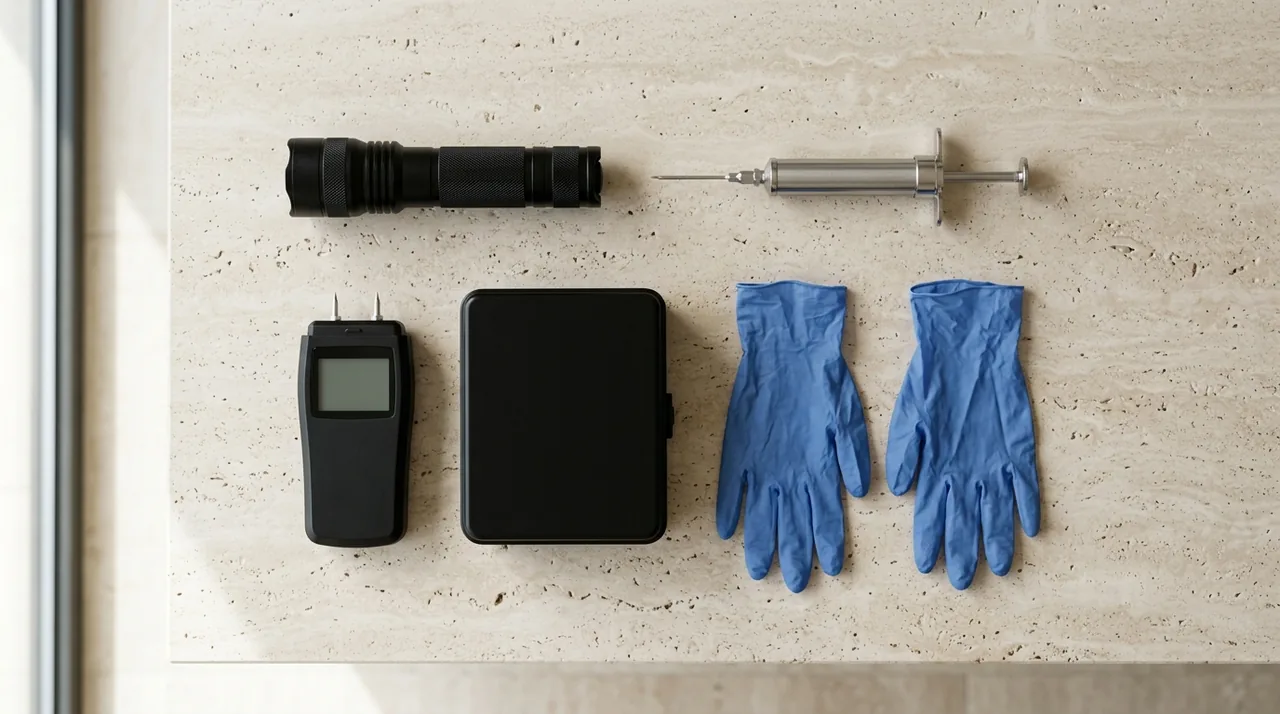
Professional inspection kit and precision crevice application equipment for bed bug treatment in Jeddah

Precision crevice injectors, inspection lighting, and calibrated equipment for targeted indoor bed bug control.

Precision Crack & Crevice Residual Application

Wooden and metal bed frames, slat joints, screw recesses, baseboards, and furniture frames.

Using specialized pin-stream and crevice nozzles, approved residual formulations are injected directly into tight structural joints, wood intersections, and behind baseboards where bed bugs shelter during the day and crawl at night.

Safety Consideration: Confined strictly to hidden structural crevices away from direct sleeping surfaces, subject to mandatory drying and ventilation intervals.

High-Temperature Dry Steam Treatment for Upholstery Seams

Mattress piping, pillow-top folds, upholstered headboards, and sofa seams.

Slow-pass application of low-vapor, high-temperature steam along fabric seams, button tufts, and stitching lines delivers immediate thermal contact mortality to exposed nymphs, adults, and surface-level eggs without saturating the core.

Safety Consideration: Residue-free physical treatment ideal for sensitive fabric zones; treated upholstery must be allowed to air-dry completely.

Targeted Desiccant Dust Application in Dry Structural Voids

Hollow furniture cavities, gaps behind wooden baseboards, and de-energized outlet perimeters.

Micro-application of professional insecticidal desiccant dusts into dry, enclosed structural gaps where liquid sprays are unsuitable, providing long-term physical disruption to the waxy outer cuticle of crawling bed bugs.

Safety Consideration: Applied exclusively inside enclosed, non-airborne voids so particles remain undisturbed and out of living space air.

Mattress Isolation Guidance & Lifecycle Follow-Up Treatment

Moderate to established infestations requiring multi-stage verification.

Guidance on fitting zippered bed bug-proof mattress encasements to trap any deep internal stages and eliminate exterior seam harborages, paired with a scheduled follow-up visit to target newly hatched first-instar nymphs.

Safety Consideration: Reduces reliance on repeated heavy chemical applications while protecting mattress investments long-term.
Clear Service Scope Distinction

Service Scope: Our 5-Phase Bed Bug Control Protocol

We believe in complete transparency regarding what our service includes. Resolving bed bugs successfully requires coordinated action between our technician’s targeted crevice treatments and the household’s laundering and isolation protocols.

1. Assessment & Preparation Verification

Pre-Treatment Gate

Reviewing affected rooms, verifying that bedding has been stripped and under-bed storage cleared, and confirming the inventory of furniture items included in the treatment plan.

Scope Note: If beds and floors are heavily piled with loose clothing and unbagged belongings, the technician will guide the client on clearing access first so crevices can be reached safely.

2. Detailed Structural & Upholstery Inspection

Included On-Site

Inspecting mattress seams, lifting removable bed slats, checking headboards, nightstands, and adjacent sofas or baseboards to pinpoint all active harborages and egg clusters.

Scope Note: Covers lifting standard mattresses and slats; complex carpentry dismantling of built-in wall paneling requires prior coordination.

3. Targeted Crevice & Seam Treatment

Core Execution

Treating all identified wooden joints, bed frames, headboard backs, upholstery folds, and baseboard crevices using the appropriate combination of methods for each surface.

Scope Note: Personal clothing, bed sheets, pillows, and children’s plush toys are never sprayed with pesticides; washable textiles must be treated via high-heat laundering.

4. Scheduled Follow-Up Review

Lifecycle Essential

Conducting a follow-up inspection and targeted touch-up application (typically 10 to 14 days after the initial visit) to eliminate newly hatched nymphs before they mature into egg-laying adults.

Scope Note: Because bed bug eggs possess natural resistance to initial liquid applications, a second scheduled visit in moderate-to-heavy cases is a scientific necessity, not a sign of initial failure.

5. Post-Treatment & Travel Prevention Guidance

Ongoing Protection

Providing clear instructions on re-entry timing, when to re-dress beds, which surfaces not to wet-mop during the residual period, and how to inspect luggage after future trips.

Scope Note: Helps prevent accidental re-introduction of bed bugs from external travel or visitors after the existing infestation is resolved.

Detailed inspection and treatment of bed frames and mattress seams in Jeddah
This structural diagram outlines the four concentric zones our technicians inspect during a bedroom assessment to ensure no hidden cluster is left behind.

Bedroom Inspection Map: The 4 Critical Bed Bug Harborage Zones

Zone 1: The Mattress

Perimeter Piping, Corner Tufts & Label Folds

  • •Top and bottom perimeter piping seams running along all four edges of the mattress.
  • •Underneath manufacturer fabric tags, side carrying handles, and air vents.
  • •Deep folds and stitching lines on pillow-top and Euro-top mattresses.
  • •Bottom contact points where the mattress rests directly against wooden slats.
Zone 2: The Bed Frame

Upholstered Headboards, Wooden Slats & Hardware Joints

  • •Rear wall-facing cavity of upholstered headboards and deep button tufts.
  • •Unfinished wooden support slats, end caps, and center support beams.
  • •Screw holes, metal corner brackets, and dowel joints holding the frame together.
  • •Black non-woven dust cover stapled underneath box bases and storage drawers.
Zone 3: Bedside Furniture

Nightstands, Bedroom Seating & Adjacent Textiles

  • •Underside of nightstand drawers, wooden runners, and rear backing panels.
  • •Upholstered bedroom armchairs, cushions, and dressing table stools.
  • •Upper pleat folds of window curtains hanging adjacent to the head of the bed.
  • •Suitcases, travel bags, and fabric storage bins kept under or near the bed.
Zone 4: Room Perimeter

Baseboards, Wall Trim & Electrical Surrounds

  • •Micro-gaps behind wooden, MDF, or tile baseboards along the bed wall.
  • •Behind picture frames, mirrors, and decorative wall hangings above the bed.
  • •Perimeter gaps around electrical outlet faceplates and light switches.
  • •Peeling wallpaper edges or hairline plaster cracks near bedroom corners.

Over 85% of a bed bug population resides within 1.5 to 2 meters of the host’s sleeping position, radiating outward from mattress piping into the bed frame and surrounding room joints.

Specialized Technical Reference

In-Depth Technical Guide: Bed Bug Biology, Transmission & Integrated Control

Understanding how bed bugs hide, why their cemented eggs resist single-visit sprays, and how thermal laundering complements crevice treatment empowers households to achieve lasting control.

الفحص الدقيق لثنايا المراتب، ظهر السرير المنجد، الألواح الخشبية، وزوايا الغرف

Micro-Harborage Inspection: Mattress Piping, Upholstered Headboards, Bed Slats & Baseboards

Bed bugs exhibit a strong behavioral trait known as thigmotaxis—an instinctive drive to squeeze into tight crevices where both their dorsal (back) and ventral (belly) surfaces touch a solid substrate simultaneously. Because of this behavior, bed bugs rarely loiter on open, flat mattress tops. Instead, they wedge themselves underneath the raised cord piping along the edges of the mattress, inside deep corner stitching, and behind woven manufacturer labels. During a professional inspection, our technicians use angled illumination and seam-lifting tools to examine every centimeter of these folds.

Crucially, inspecting the mattress alone is never enough. Field assessments consistently show that more than half of an established bed bug colony hides in the bed frame and headboard rather than the mattress itself. Unfinished wooden bed slats offer porous grain that grips insect claws and holds pheromone aggregation markers, while the rear cavity of wall-mounted upholstered headboards and the stapled black dust cover underneath box bases provide dark, undisturbed breeding sanctuaries.

When an infestation has been present for several weeks—or when household aerosol sprays have been used—bed bugs radiate outward into the surrounding room structure. Lifting removable slats, inspecting nightstand drawer slides, and checking the gap behind wooden baseboards ensures that peripheral harborages are identified and treated alongside the bed.

  • Full 360-degree inspection of top and bottom mattress piping seams, handles, and fabric labels.
  • Removal and inspection of wooden support slats (bed slats) and their seating pockets along the side rails.
  • Detailed examination of button-tufted upholstered headboards and rear wall-mounting brackets.
  • Inspection of the non-woven bottom dust cover beneath box bases, divans, and bedroom sofas.
  • Perimeter tracing along wooden baseboards, nightstand drawer joints, and wall frames within two meters of the bed.
طبيعة بيض بق الفراش ودورة الفقس ولماذا تتطلب بعض الحالات زيارة متابعة مجدولة

Understanding Resistant Bed Bug Eggs (البيض الملتصق) & Why Multi-Stage Follow-Up Is Essential

A mated female bed bug lays between one and five eggs per day inside hidden crevices, coating each 1 mm egg in a transparent cement-like secretion that bonds it firmly to fabric fibers or rough wood surfaces. From a pest control standpoint, the outer shell (chorion) of a bed bug egg is remarkably dense and impermeable, shielding the developing embryo from desiccation and preventing most liquid public-health insecticides from penetrating inside. Consequently, while a thorough initial treatment eliminates active adults and crawling nymphs, a percentage of viable eggs tucked deep inside crevices can survive the first visit.

At typical air-conditioned indoor temperatures in Saudi homes (22°C to 27°C), bed bug eggs incubate and hatch within 6 to 14 days. Once hatched, the tiny, translucent first-instar nymph emerges and must seek out a blood meal before it can molt into the second stage. This biological window is the exact reason why professional bed bug management pairs long-lasting residual crevice applications with a scheduled follow-up visit.

Honest, science-based pest control never promises that a single quick spray will instantly sterilize 100% of hidden bed bug eggs in an established infestation. By scheduling a follow-up inspection and targeted touch-up treatment 10 to 14 days after the initial service, our technicians intercept newly hatched nymphs while they are at their most vulnerable stage—well before they can mature into adults and lay a new generation of eggs.

  • Bed bug eggs are coated in a natural cement glue that prevents them from falling off when sheets are shaken.
  • The dense eggshell acts as a physical barrier that reduces penetration by standard liquid applications.
  • Eggs typically hatch within 6 to 14 days depending on ambient room temperature.
  • Newly hatched first-instar nymphs require five molting stages over several weeks before they can reproduce.
  • A timed 10–14 day follow-up visit targets newly emerged nymphs to break the reproductive cycle completely.
كيف ينتقل بق الفراش إلى المنازل النظيفة عبر حقائب السفر وتبدل الضيوف والأثاث المنقول

How Bed Bugs Enter Clean Homes via Luggage, Guest Turnover & Second-Hand Furniture

One of the most damaging misconceptions about bed bugs is that they are caused by poor hygiene or dirty rooms—a stigma that often causes families to feel embarrassed and delay calling a specialist while the population multiplies. Scientifically, bed bugs care nothing about dust or food crumbs; they require only blood and tight hiding spots. Even the cleanest luxury villa or apartment can acquire bed bugs when a suitcase rests overnight against an infested hotel headboard or luggage rack during travel.

Beyond personal travel, infestations frequently enter residences through high guest turnover, shared sleeping quarters, or sending heavy blankets and rugs to commercial laundries where items from multiple households are stacked together. Purchasing second-hand bedroom furniture, used mattresses, or upholstered armchairs is another primary vector, as dormant adults and nymphs can remain hidden inside wood joints for weeks waiting for a host.

To protect your home after treatment, we advise keeping returning suitcases off beds and carpets—unpacking them instead on hard ceramic tile floors—washing travel clothes immediately, and inspecting any newly acquired or second-hand furniture with a flashlight before bringing it into a bedroom.

  • Bed bugs are not linked to household cleanliness; they feed solely on blood and travel as passive hitchhikers.
  • Placing suitcases on beds during hotel stays or upon returning home is the primary transmission pathway.
  • Used bed frames, mattresses, and upholstered sofas can harbor dormant bed bugs inside internal joints.
  • Moving pillows and blankets from an affected bedroom to living room sofas spreads the infestation indoors.
  • Unpacking travel bags on hard tile floors and immediately laundering trip garments prevents bedroom introductions.
التكامل بين المعالجة الموضعية للشقوق والبخار الحراري وبروتوكول غسيل المفروشات

Combining Professional Crevice Treatment with High-Heat Steam & Fabric Laundering Protocols

Successful and safe bed bug resolution relies on a clear division of labor between professional structural treatments and household thermal fabric care. Because spraying bed sheets, pillowcases, blankets, and everyday clothing with liquid pesticides is unsafe and unacceptable, thermal energy is the primary method for sanitizing washable textiles. All life stages of bed bugs—including cemented eggs—succumb rapidly when exposed to sustained temperatures of 55°C to 60°C or higher.

When stripping an infested bed, linens and nearby clothing should be placed directly into sealed plastic bags inside the bedroom before carrying them through hallways to the washing machine. This simple containment step prevents nymphs or adults from dropping onto hallway rugs or living room floors along the way. Once washed at 60°C and dried on high heat, clean fabrics should be sealed inside fresh plastic bags until the bedroom treatment and follow-up are complete.

For non-washable items such as thick mattresses, upholstered headboards, and living room sofas, our targeted crevice treatments work hand-in-hand with high-temperature dry steam and professional upholstery extraction. This integrated approach eliminates both deep structural harborages and surface seam stages without exposing sleeping surfaces to heavy chemical residues.

  • Washing compatible linens at 60°C+ followed by 30 minutes in a hot dryer eliminates both active bugs and eggs.
  • Always bag stripped bed sheets inside the affected bedroom before carrying them through the house to the laundry.
  • Store clean, heat-treated bedding and clothes in sealed plastic bags until room treatment is finalized.
  • High-heat dry steam treats sensitive mattress piping and upholstery tufts where liquid sprays are inappropriate.
  • Fitting zippered bed bug mattress encasements after treatment locks down the mattress against future harboring.
Client Readiness Checklist

Customer Preparation Checklist: Before, During & After Treatment

Proper room preparation and high-heat laundering account for half of the success in eliminating bed bugs. Following these six steps prevents untreated clothing or linens from re-seeding the room after professional treatment.

1. Before the Visit

Strip Beds and Launder Washable Linens at High Heat (60°C+)

Before our technician arrives, remove all bed sheets, pillowcases, duvet covers, and bed skirts. Wash them in hot water (at least 60°C for compatible fabrics) and run them through a high-heat dryer cycle for 30 minutes, then seal them immediately inside clean plastic bags outside the room.

Clear Under-Bed Storage and Pull Furniture 15–20 cm from Walls

Remove storage boxes, shoes, and suitcases from underneath beds so they can be inspected separately, and pull beds and nightstands slightly away from the wall to give the technician full access to headboards and baseboards.

2. During Service

Vacate Treated Bedrooms and Keep Pets Out During Application

All family members and household pets must remain outside the bedrooms being inspected and treated throughout the visit so the technician can lift mattresses, inspect frames, and apply crevice treatments safely.

Disclose Any Temporary Sleeping Spots or Recently Moved Items

Inform the technician if anyone has slept on living room sofas, floor mattresses, or spare beds over the past two weeks, or if pillows and blankets were moved between rooms, so those areas can be inspected immediately.

3. Post-Service Care

Observe the Full Drying and Ventilation Re-Entry Interval

Do not re-enter the treated bedrooms to sleep or put clean sheets back on the mattresses until the technician’s specified waiting period has elapsed, the rooms have been thoroughly ventilated, and all treated zones are completely dry.

Avoid Wet-Wiping Treated Wooden Crevices and Baseboards

To preserve the active residual barrier inside bed frame joints and along baseboards for newly hatching nymphs, avoid scrubbing or washing those specific structural crevices with soap or disinfectants during the follow-up window.

Safety Standards & Responsible Practice

Safety Standards & Responsible Practices in Sleeping Areas

Treating bedrooms and children’s sleeping environments demands the highest level of technical responsibility because occupants spend seven to eight hours every night in close proximity to beds and mattresses. We strictly prohibit the use of agricultural pesticides, unapproved chemical mixtures, or hazardous fumigant tablets (such as aluminum phosphide) inside residential properties.

Rather than making unscientific claims of "100% chemical-free magic sprays," we practice transparent safety: using registered public-health products at calibrated rates, confining liquid and dust applications to hidden structural crevices away from direct skin-contact zones, and enforcing clear re-entry and ventilation protocols.

No Chemical Saturation of Direct Sleeping Surfaces

We never drench the center sleeping surface of mattresses or pillows where faces and skin rest; chemical applications are restricted to frames, slats, and crevices while thermal steam and encasements protect the mattress.

Strict Prohibition of Agricultural or Unlicensed Compounds

We operate exclusively with public-health formulations designed for indoor residential environments, rejecting harsh odor-heavy agricultural concentrates or illegal fumigants.

Clear Re-Entry Waiting Times & Ventilation Protocols

Every client receives explicit instructions on how many hours the bedroom must remain closed for drying, followed by required window and exhaust ventilation before children or adults reoccupy the space.

Tailored Precautions for Infants, Elderly & Asthma-Sensitive Residents

In rooms occupied by infants, pregnant women, or individuals with respiratory sensitivities, we prioritize mechanical dismantling, high-heat steam, mattress isolation, and ultra-targeted crack placement with extended ventilation.

Saudi Regulatory Alignment Note:Saudi Regulatory Alignment: All public-health pesticide selections and indoor residential application protocols are aligned with Saudi Food and Drug Authority (SFDA) registration standards for public-health pest control products and Ministry of Municipalities and Housing (MOMAH / Balady) municipal guidelines.

Factors Affecting Bed Bug Treatment Pricing in Jeddah

Because bedroom layouts, furniture complexity, and infestation depth vary significantly from one home to another, we provide transparent quotes based on clear operational factors rather than guesswork:

Number of Bedrooms, Beds & Upholstered Items Involved

Inspecting and treating a single bedroom with one bed requires different labor, time, and material volume compared to a multi-bedroom apartment where bed bugs have also spread to living room sofas.

Furniture Complexity & Upholstered Headboard Design

Heavy wall-mounted button-tufted headboards, divan storage bases with multiple drawers, and canopy frames require substantially more dismantling and seam inspection time than simple metal or wooden frames.

Infestation Severity & Colony Distribution Depth

Early-stage activity confined to mattress piping is more straightforward to contain than long-standing infestations that have migrated behind wooden baseboards, curtain headers, and wardrobes.

Requirement for Scheduled Multi-Stage Follow-Up Visits

When physical inspection reveals established clusters of cemented eggs, incorporating a scheduled 10-to-14-day follow-up visit is essential to eliminate newly hatched nymphs and determines the service package.

Integration with Post-Treatment Steam & Upholstery Cleaning

Clients who opt to combine bed bug control with subsequent deep hot-water extraction or steam sanitization of sofas and mattresses receive a coordinated multi-service plan.

Property Type & Operational Scope

Whether servicing a residential apartment, a multi-floor villa, or a furnished rental unit across Jeddah districts, pricing reflects the actual room count and inspection workload.

You will always receive a clear explanation of the recommended scope and exact pricing after assessment—with no hidden fees or unnecessary add-ons.

Request Assessed Quote
Local Environmental Context — Jeddah

Bed Bug Challenges in Jeddah: Furnished Apartments, Travel Hubs & Coastal Living

As Saudi Arabia’s primary Red Sea commercial port and aviation gateway through King Abdulaziz International Airport, Jeddah experiences continuous year-round domestic and international travel. This constant movement across hotels, coastal resorts, furnished apartments, and residential districts makes passive hitchhiking on luggage the number-one pathway by which bed bugs enter clean family homes in Jeddah.

Additionally, Jeddah’s warm coastal climate and year-round reliance on indoor air conditioning maintain stable room temperatures (22°C–27°C) that allow bed bugs to feed, mate, and hatch eggs continuously without any winter dormancy. Modern residential apartments across Jeddah also frequently feature thick upholstered headboards and enclosed storage beds that conceal early breeding clusters.

Our Jeddah bed bug team addresses these local realities with discreet, punctual service tailored for both long-term family residences and furnished apartment operators, focusing on thorough seam-by-seam inspection and structured follow-up.

Key Local Factors in Jeddah

  • Frequent international and domestic luggage movement introducing hitchhiking bed bugs into master bedrooms and closets.
  • High tenant and short-stay rotation in furnished apartments and coastal hospitality units across Jeddah.
  • Widespread use of deep button-tufted upholstered headboards and enclosed box-spring bases that hide early-stage colonies.
  • Lateral migration between adjacent apartments via baseboard gaps and utility conduits when occupants use repellent DIY sprays.
  • Uninterrupted year-round egg hatching and nymph development driven by stable indoor air-conditioned temperatures.

Property Types Served in Jeddah

  • Family residential apartments and owned condominiums across all Jeddah districts
  • Private villas, duplexes, and attached domestic staff quarters
  • Furnished apartments, serviced suites, and short-term rental units
  • Staff housing compounds and shared residential dormitories
  • Private coastal chalets and family rest houses (istirahat)
Scheduling & Dispatch

We provide flexible inspection and treatment appointments across North, Central, and South Jeddah, with coordinated follow-up reminders timed to the 10–14 day hatch window.

Need This Service in Makkah?

Switch directly to our dedicated Makkah page for this exact pest service.

Precision Bedroom & Upholstery Inspection — Jeddah in Makkah
Interactive Pest Service Finder (6 Quick Steps)

Pest Service Finder

Select your city, apparent pest issue, property type, and location to reach the right specialized service page or prepare a structured inspection inquiry.

Note: This tool provides preliminary service routing and does not replace on-site professional inspection.
1

Step 1 — Select Your City:

2

Step 2 — Apparent Pest or Issue Type:

3

Step 3 — Property Type:

4

Step 4 — Where Is the Problem Observed?

Steps 5 & 6 — Preliminary Match & Next Action

Recommended Service Page: Bed Bugs Control in Jeddah

We matched your selection to Bed Bugs Control in Jeddah (Apartment — Kitchen). View the full service guide for inspection steps and safety protocols, or send your inquiry now.

View Bed Bugs in Jeddah
Related Problem-Solution & Diagnostic Guides

Technical & Diagnostic Guides to Help You Make the Right Decision in Jeddah

Pest Identification & Decision Guide10 min read

Bed Bugs vs. Fleas in Mattresses & Carpets: Practical Field Identification & Treatment Guide for Jeddah & Makkah

Field comparison of nocturnal crawling bed bugs in mattress seams versus jumping fleas in carpet fibers, explaining inspection checkpoints, thermal steam integration, and follow-up protocols.

  • Tiny dark fecal spots, shed skins, or flat reddish-brown insects tucked inside mattress piping and headboards
  • Fast-jumping minute insects springing from carpet pile or patio thresholds toward ankles and lower legs
Read Full Diagnostic Guide
Cockroach Diagnostic Guide10 min read

Why Small Cockroaches Appear in Kitchen Cabinet Hinges & Appliances Despite Daily Cleaning—And How to Stop Them

Distinguishing German kitchen cockroaches from American drain cockroaches, why supermarket aerosol sprays scatter infestations, and how precision syringe gel baiting breaks the egg-case cycle.

  • Tiny tan cockroaches and pinhead nymphs clustering inside metal cabinet hinges and warm appliance motors
  • Dark pepper-like droppings and empty light-brown egg capsules (oothecae) in drawer corners
Read Full Diagnostic Guide
Termite & Wood Protection Guide10 min read

Early Signs of Subterranean Termites in Wooden Door Frames, Baseboards & Parquet in Jeddah & Makkah

How to detect mud tubes, hollow-sounding wood, and sub-slab moisture triggers early, differentiate subterranean termites from household ants, and apply structural perimeter treatments.

  • Pencil-thick dried mud tubes climbing foundation walls, doorframes, or behind wooden skirting boards
  • Wood sounding hollow or papery when tapped while the outer paint layer still looks intact
Read Full Diagnostic Guide
Direct Technical Answers

Frequently Asked Questions About Bed Bug Treatment in Jeddah

Clear, honest answers to common technical and practical questions families ask before scheduling a bed bug inspection.

In the vast majority of cases, no. Discarding structurally sound mattresses and furniture is expensive, dragging unsealed items through hallways can spread bed bugs to other rooms, and placing a brand-new mattress onto an untreated bed frame or room will simply result in the new mattress becoming infested within days. Professional crevice treatment combined with high-heat seam care and a zippered mattress encasement usually saves your furniture unless the mattress is heavily torn and structurally ruined.

Restore Peaceful Sleep in Jeddah with Methodical Bed Bug Control

Stop scattering bed bugs with retail surface sprays. Contact our team today to arrange a thorough mattress seam and bed frame inspection with a clear, responsible treatment plan.

Detailed Crevice Inspection • Targeted Frame & Seam Treatment • Clear Preparation & Ventilation Guidance.

Unified Service Request Builder

Share Your Request Details for Scheduling & Transparent Pricing

Enter your basic contact details, select your city (Jeddah or Makkah), and choose the service you need. This form organizes your inquiry for immediate coordination.

We respect your privacy. Your information is used strictly to respond to your service inquiry.
CallWhatsAppGet Quote