
Serving Jeddah & Makkah
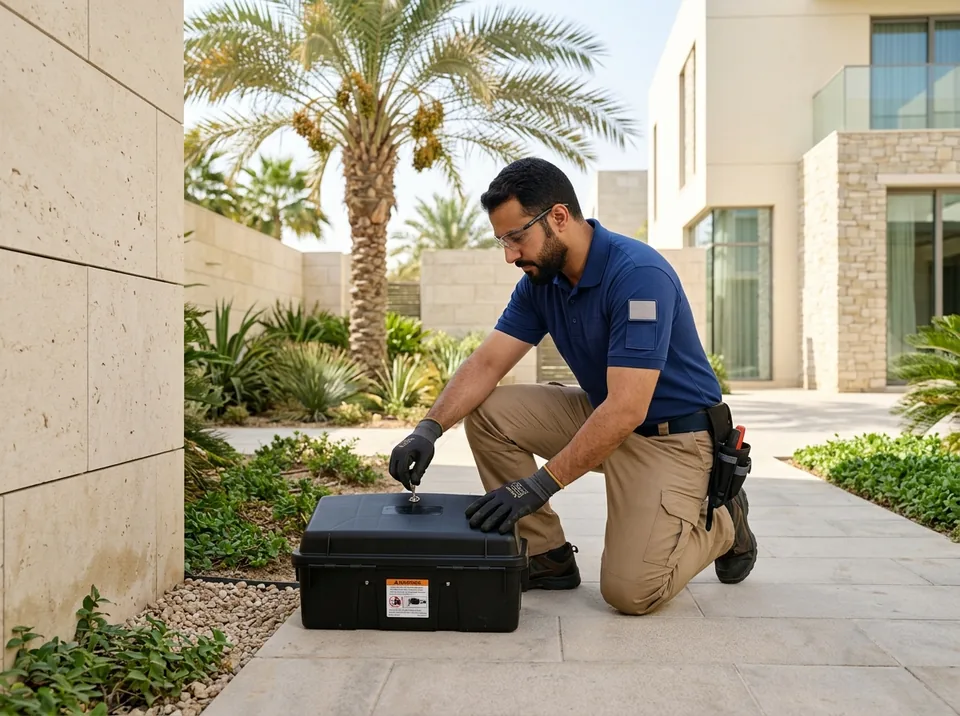
Rodent control technician in Jeddah inspecting wall perimeters and placing a locked tamper-resistant station
Structural Diagnostic & Protection Standard

All exterior rodenticide applications are strictly confined inside locked, tamper-resistant stations to protect children and pets, paired with non-toxic mechanical trapping indoors and a clear structural exclusion report.

JeddahIntegrated Rodent Management & Exclusion — Jeddah

Rodent Control in Jeddah: Tracking Movement Paths, Locked Stations & Entry-Point Audits

Rats and mice exploit AC conduit gaps, garage door clearances, and courtyard drainage access across Jeddah properties to invade kitchens, false ceilings, and storerooms. We deliver structured rodent management combining indoor mechanical trapping, locked tamper-resistant exterior stations, and detailed entry-point exclusion audits.

Key-Locked Tamper-Resistant Exterior Stations
Odor-Preventing Indoor Mechanical Trapping Protocols
Comprehensive AC Conduit, Pipe & Drain Entry Audit
SFDA-Registered Public Health Products & Municipal Alignment
Real-World Problem Analysis

Why Mice and Rats Create Dual Electrical and Hygiene Hazards in Jeddah Properties

A rodent problem extends far beyond the unsettling sight of a mouse darting behind an appliance or the sound of nocturnal scratching above a gypsum ceiling. Mice and rats possess continuously growing chisel-like incisors that compel them to gnaw on hard surfaces every day to keep their teeth worn down. Inside residential and commercial buildings, this constant gnawing targets electrical wiring insulation, fiber-optic cables, dishwasher drain hoses, and PVC/PPR water pipes—creating serious risks of sudden electrical short circuits, appliance breakdowns, and concealed water leaks.

At the same time, rodents contaminate food preparation counters, pantry shelving, and storage cartons with droppings, urine trails, and dander as they travel between drains, waste areas, and indoor kitchens. Across many callouts we handle in Jeddah, property owners have previously attempted to solve the issue by tossing loose poison pellets into false ceilings or placing exposed bait trays on floors. Loose poisons endanger children and pets, and when a poisoned rat dies inside an inaccessible ceiling void or wall cavity, it creates weeks of severe decomposition odor and secondary fly infestations—making professional, exclusion-driven rodent management essential.

Suspended Gypsum Ceilings, AC Duct Chases & Roof Voids01

Nocturnal Scratching and Running Sounds Above False Ceilings

Late at night when the house is quiet, residents hear distinct scurrying, gnawing, and dragging noises directly above bedroom or hall gypsum-board ceilings. This is the classic signature of the agile Roof Rat (Rattus rattus), which climbs exterior pipes, boundary walls, or overhanging tree branches and enters the ceiling void through unsealed split-AC copper pipe penetrations.

Under-Sink Cabinets, Behind Refrigerators & Food Storerooms02

Rice-Sized Droppings and Shredded Packaging Inside Kitchens & Pantries

Homeowners discover tiny, dark, pointed droppings inside cutlery drawers, beneath kitchen sinks, or behind the oven, accompanied by chewed corners on grain bags and cardboard boxes. This indicates an indoor population of House Mice (Mus musculus), which can squeeze through gaps as small as 6 millimeters around plumbing pipes and nest inside appliance insulation.

Exterior Setbacks, Inspection Chambers & Waste Storage Zones03

Large Burrowing Rats Around Courtyards, Garages, and Manholes

Heavy-bodied rats are spotted running along courtyard perimeter walls at dusk, or excavated soil burrows appear beside paving tiles, garden beds, and damaged manhole covers. This activity typically involves the Norway Rat (Rattus norvegicus), which inhabits underground drainage corridors and pushes into ground-floor garages and annexes through broken drain grates or door gaps.

Field Observation & Identification Guide

Identification & Symptoms Guide: Distinguishing House Mice, Roof Rats & Norway Rats

Because rodents are primarily nocturnal and secretive, most infestations are confirmed through physical tracks and biological evidence rather than daytime sightings. Use the diagnostic guide below to recognize key signs and understand how our technicians differentiate species.

Entry Threshold: 6–10 mm (Mouse) | 12–15 mm (Rat)

Clinical anatomical reference schematic for preliminary visual distinction

Commensal Rodents (House Mouse & Roof/Norway Rats)
Typical Size Range:
7–10 cm body (House Mouse) | 16–24 cm body (Adult Rat) excluding tail
Movement & Activity Pattern:
Nocturnal wall-hugging movement; mice can squeeze through gaps as small as 6–10 mm.
Anatomical Profile: Gnawing mammals with continuously growing incisors, prominent ears/whiskers, and a long balancing tail.
Key Distinguishing Sign: Gnaw marks on packaging/cables, scratching sounds in false ceilings, and spindle-shaped droppings.
Important Note on Visual Indicators & Confirmation:Technical Note: Small droppings left by large cockroaches or house geckos (lizards) are sometimes mistaken for mouse droppings by homeowners. A physical on-site inspection ensures accurate species identification and proper trap/station sizing.
Primary Biological Indicator

Fecal Droppings Along Runways & Storage Areas

Dark pellets concentrated along wall junctions, inside cabinet corners, behind appliances, or near food packages. Fresh droppings are dark and slightly soft; old droppings turn gray and crumbly.

Inspection Note: Dropping size and shape identify the culprit: tiny pointed pellets (3–6 mm) for house mice vs. larger spindle- or capsule-shaped pellets (12–20 mm) for rats.
Physical Damage Indicator

Paired Incisor Gnaw Marks on Wood, Plastic & Wiring

Rough-edged gouges or grooved tooth marks on the bottom corners of wooden doors, kitchen kickplates, PVC drain pipes, electrical cables, and plastic food containers.

Inspection Note: Freshly gnawed wood appears light in color with sharp splinters, whereas older gnaw marks darken and become smooth over time.
Habitual Runway Indicator

Greasy Rub Marks (Smears) Along Walls and Pipes

Dark, oily smudges left along baseboards, wall corners, pipe penetrations, and ceiling joists where dirt and sebaceous oils from rodent fur rub repeatedly against surfaces.

Inspection Note: Rodents have poor eyesight and navigate by keeping their whiskers and bodies in contact with vertical walls (thigmotaxis).
Harborage & Breeding Indicator

Shredded Nesting Material or Exterior Soil Burrows

Wadded balls of shredded paper, cardboard, fabric, or fiberglass insulation tucked behind refrigerators or inside storerooms, or smooth-entranced soil burrows (5–8 cm diameter) along exterior slabs.

Inspection Note: Active nesting material indicates an established indoor harborage where females may be raising litters.

Field Identification Matrix: House Mouse vs. Roof Rat & Norway Rat

Comparison CriterionHouse Mouse (Mus musculus)Roof Rat (Rattus rattus) & Norway Rat (Rattus norvegicus)
Adult Body Weight & ProportionsSmall and slender (15–30 grams); large ears relative to head, with a tail roughly equal to head-and-body length.Much larger (150–450 grams); Roof Rats are sleek with tails longer than their bodies, while Norway Rats are stocky with tails shorter than their bodies.
Dropping Size & ShapeVery small (3 to 6 mm), roughly the size of a small rice grain, with sharply pointed ends.Large (12 to 20 mm); curved and spindle-shaped in Roof Rats, or thick and blunt-ended like a capsule in Norway Rats.
Minimum Entry Gap RequiredCan compress its skull to pass through openings as small as 6 millimeters (pencil diameter).Requires openings of 12 to 15 millimeters or wider (roughly the gap beneath an unsealed door or around an AC pipe).
Preferred Harborage & Movement ZonesIndoors inside kitchen cabinets, appliance motor compartments, cardboard boxes, and ground-level furniture.Roof Rats climb into false ceilings, attics, and trees; Norway Rats burrow in courtyard soil, sub-grade drains, and ground-floor storerooms.
Behavioral Response to New Traps & StationsInquisitive and bold within a small foraging territory (3–10 meters), often investigating new traps quickly.Exhibits strong neophobia (fear of new objects), requiring strategic placement along established runways over a wide foraging range.
Root Causes & Environmental Drivers

Why Rodents Infiltrate Residential & Commercial Buildings in Jeddah

Mice and rats enter structures seeking three survival essentials: climate-controlled shelter, reliable food sources, and water. Minor construction gaps and utility penetrations provide the entryways they need:

01

Unsealed Split-AC Conduit Holes and Utility Pipe Penetrations

Core-drilled wall openings where copper refrigerant lines, condensate tubes, and plumbing pipes pass through exterior walls or service shafts are the single most common rodent entry route—especially when left unsealed or plugged only with soft polyurethane foam.

Common Vulnerable Spots: Behind wall-mounted split AC units, beneath kitchen sinks, and inside vertical utility shafts.
02

Clearance Gaps Beneath Garage Doors, Courtyard Doors & Broken Drain Grates

Gaps exceeding 1 centimeter under automatic garage doors or courtyard service doors, along with cracked plastic floor-drain grates and deteriorated manhole covers, allow nocturnal rats and mice direct entry from street level or sewer lines.

Common Vulnerable Spots: Garage thresholds, annex entrances, ground-floor bathroom floor drains, and courtyard manholes.
03

Accessible Food Storage and Cardboard Clutter in Storerooms

Storing rice sacks, flour, dry pet food, or birdseed in paper or thin plastic bags on storeroom floors, combined with uncovered outdoor waste bins and stacked cardboard boxes, supplies both high-calorie food and insulated nesting material.

Common Vulnerable Spots: Home pantries, ground-floor storage rooms, courtyard bird cages, and outdoor bin enclosures.
04

Overhanging Trees, Climbing Vines, and Exterior Cables

Tree branches, bougainvillea vines, and wooden pergolas touching exterior walls or rooflines act as natural aerial bridges that allow agile roof rats to bypass ground barriers and enter upper floors and false ceilings.

Common Vulnerable Spots: Villa courtyard gardens, boundary walls covered in vines, and roof overhangs.
Diagnostic-First Inspection Protocol

Our Structured On-Site Rodent Inspection & Exclusion Audit Process

Effective rodent control is an investigative discipline, not random trap scattering. Every service begins with a systematic inspection to identify the rodent species, map its active runways, and pinpoint structural entry breaches:

01

Species Identification & Activity Mapping via Physical Signs

Our technician inspects dropping morphology, gnaw marks, rub smears, and sound locations to determine whether the site is dealing with house mice, climbing roof rats, or burrowing Norway rats.

Client Value:Ensures traps and stations are correctly sized and positioned for the specific target species.
02

Tracing Nocturnal Runways Between Harborages and Food Sources

We trace the concealed wall-hugging pathways rodents use to travel between nesting voids (false ceilings, appliance backs, or burrows) and feeding or drinking zones.

Client Value:Places capture and control devices directly across high-traffic choke points for faster interception.
03

Structural Entry-Point & Exclusion Audit

We examine AC wall penetrations, under-sink pipe collars, door bottom clearances, floor drain grates, and exterior inspection chambers to identify how rodents are entering the building envelope.

Client Value:Gives you a clear, actionable checklist of structural gaps that must be sealed to stop outdoor re-infestation.
04

Household Safety & False-Ceiling Risk Evaluation

The technician evaluates room usage, the presence of young children or domestic pets, and suspended ceiling structures to strictly avoid any method that could cause safety hazards or indoor carcass odors.

Client Value:Protects children and pets while preventing the nightmare of decaying rodents inside inaccessible ceilings.
05

Custom Deployment of Locked Exterior Stations & Indoor Mechanical Traps

Based on the audit, we install key-locked tamper-resistant stations along exterior perimeters and targeted mechanical capture devices indoors, explaining follow-up and sanitation steps clearly.

Client Value:Delivers an organized, transparent control plan combining immediate population knockdown with long-term prevention.
Case-Driven Treatment Selection

Professional Rodent Control Methods & Integrated Management Protocols

Our Integrated Rodent Management methodology enforces a strict operational boundary between indoor living spaces and exterior perimeters. Inside living rooms, kitchens, storerooms, and suspended gypsum ceilings, we prioritize non-toxic mechanical trapping and physical capture so that rodents are caught in retrievable locations—eliminating the risk of poisoned rats dying inside walls or ceiling voids.

Along exterior building perimeters, courtyards, garage walls, and manhole zones, we deploy heavy-duty, key-locked tamper-resistant bait stations that intercept foraging outdoor rodents before they can breach the structure.

Factors Determining the Site Treatment Plan:

  • Target species identified: small house mouse vs. climbing roof rat vs. burrowing Norway rat.
  • Activity location: indoor kitchens and false ceilings vs. exterior courtyards, gardens, and garages.
  • Presence of children, cats, dogs, or ornamental birds on the property.
  • Property category: private family residence, food storage warehouse, or regulated commercial facility.
  • Severity of structural entry gaps and surrounding neighborhood rodent pressure.
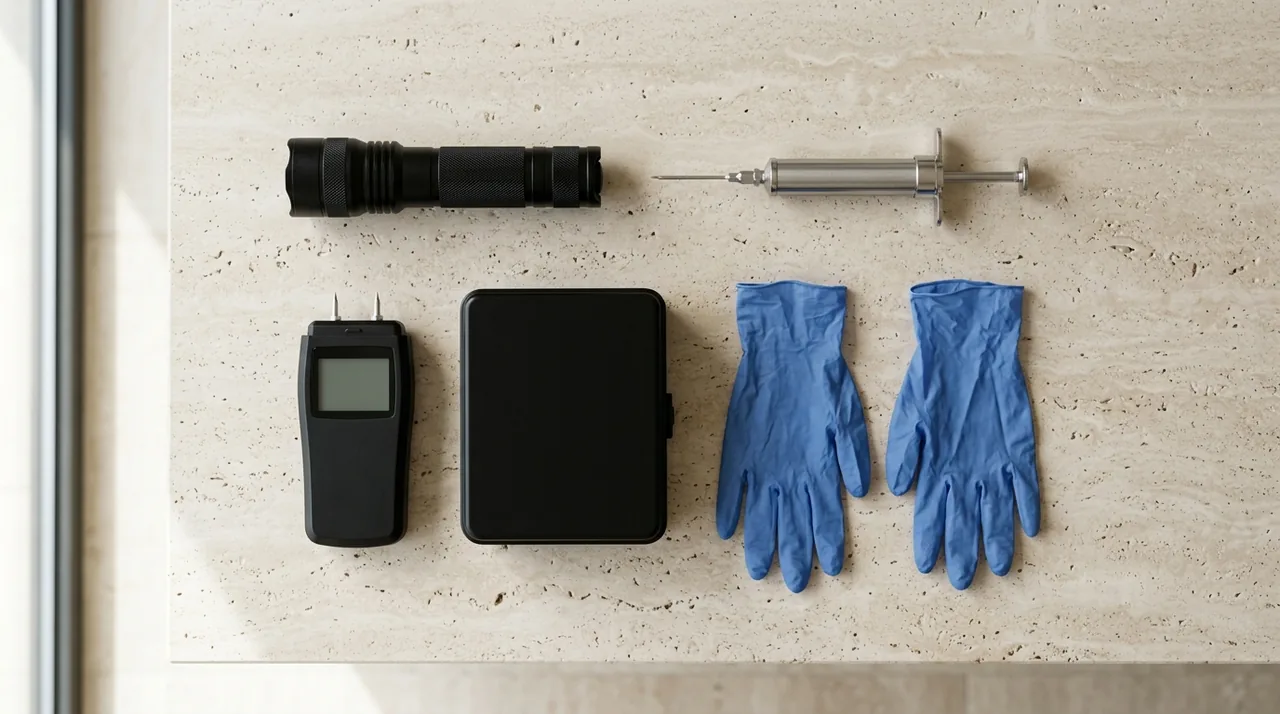
Professional rodent inspection tools, locked tamper-resistant bait stations, and mechanical capture devices

Key-locked tamper-resistant exterior stations and enclosed mechanical traps provide controlled, safety-first rodent management.

Key-Locked Tamper-Resistant Exterior Bait Stations

Exterior courtyard walls, building perimeters, garages, and setback corridors.

Weather-resistant, heavy-duty polymer stations anchored along exterior wall junctions and secured with a proprietary key lock. Inside, rodenticide blocks are fastened onto internal securing rods inside a baffled labyrinth so bait cannot be shaken loose or reached by children or pets.

Safety Consideration: Zero loose pellets or exposed bait trays are ever used; active bait remains locked inside the station.

High-Sensitivity Indoor Mechanical Traps & Multi-Catch Stations

Indoor kitchens, pantries, storage rooms, and accessible false-ceiling service hatches.

Professional-grade mechanical snap traps and enclosed multi-catch devices positioned inside protective housings or concealed appliance voids along active runways, ensuring rapid, retrievable capture.

Safety Consideration: Prevents hidden carcass decomposition and odors inside ceilings while keeping living areas free of chemical rodenticides.

Enclosed Professional Monitoring & Glue Boards (Protected Placements)

Narrow, dust-free indoor clearances beneath appliances and kitchen kickplates for house mice.

Industrial-grade adhesive monitoring boards placed inside covered tunnels or beneath low-clearance equipment to intercept small house mice and verify directional movement.

Safety Consideration: Positioned strictly inside covered sleeves or inaccessible appliance gaps away from pets and children.

Minor Gap Proofing & Structural Exclusion Guidance

Annular gaps around AC pipes, plumbing penetrations, and utility conduits.

Packing accessible minor pipe gaps with gnaw-resistant stainless steel mesh/copper wool and sealant where included in scope, paired with a detailed exclusion guide for larger civil, door, or drain repairs.

Safety Consideration: Physical exclusion permanently blocks entry pathways, reducing long-term reliance on chemical baits.
Clear Service Scope Distinction

Defined Service Scope: What Our Rodent Control Includes & Where Civil Contracting Begins

We believe in complete clarity regarding what is delivered during our rodent control visits and how our pest management scope interfaces with independent civil, plumbing, or carpentry maintenance.

1. Initial Case Intake & Assessment Scheduling

Included in Service

Reviewing your report of sightings, droppings, or nocturnal ceiling noises, and scheduling an on-site inspection appointment in Jeddah or Makkah.

Scope Note: Helps our team prepare the appropriate mix of ceiling inspection gear, mechanical traps, and exterior stations.

2. On-Site Runway & Structural Entry-Point Inspection

Included in Service

Inspecting kitchens, storerooms, accessible false-ceiling hatches, courtyards, and manhole perimeters to identify the rodent species, active runways, and entry breaches.

Scope Note: False ceilings are inspected via existing maintenance access panels without cutting or demolishing gypsum board.

3. Deployment of Locked Stations & Mechanical Trapping Systems

Included in Service

Installing key-locked tamper-resistant stations in appropriate exterior zones, setting enclosed indoor mechanical traps along runways, and plugging minor accessible pipe gaps where applicable.

Scope Note: No loose or unenclosed poison pellets are ever thrown into ceilings, rooms, or open gardens.

4. Follow-Up Review & Station Servicing

Included per Service Plan

Inspecting deployed traps and stations during scheduled follow-up visits, safely removing captured rodents, replenishing exterior station blocks if consumed, and verifying activity reduction.

Scope Note: Long-term elimination depends on implementing recommended food sanitation and sealing structural entry gaps.

5. Exclusion Advisory & Civil/Maintenance Boundaries

Advisory Included (Civil Works Separate)

Providing a clear walkthrough of structural vulnerabilities—such as broken manhole covers, wide garage door gaps, or unsealed masonry holes—that require permanent sealing.

Scope Note: Our scope is rodent control and exclusion guidance; heavy masonry work, replacing cast-iron manhole covers, repairing garage doors, or cutting/patching gypsum ceilings are independent contracting tasks.

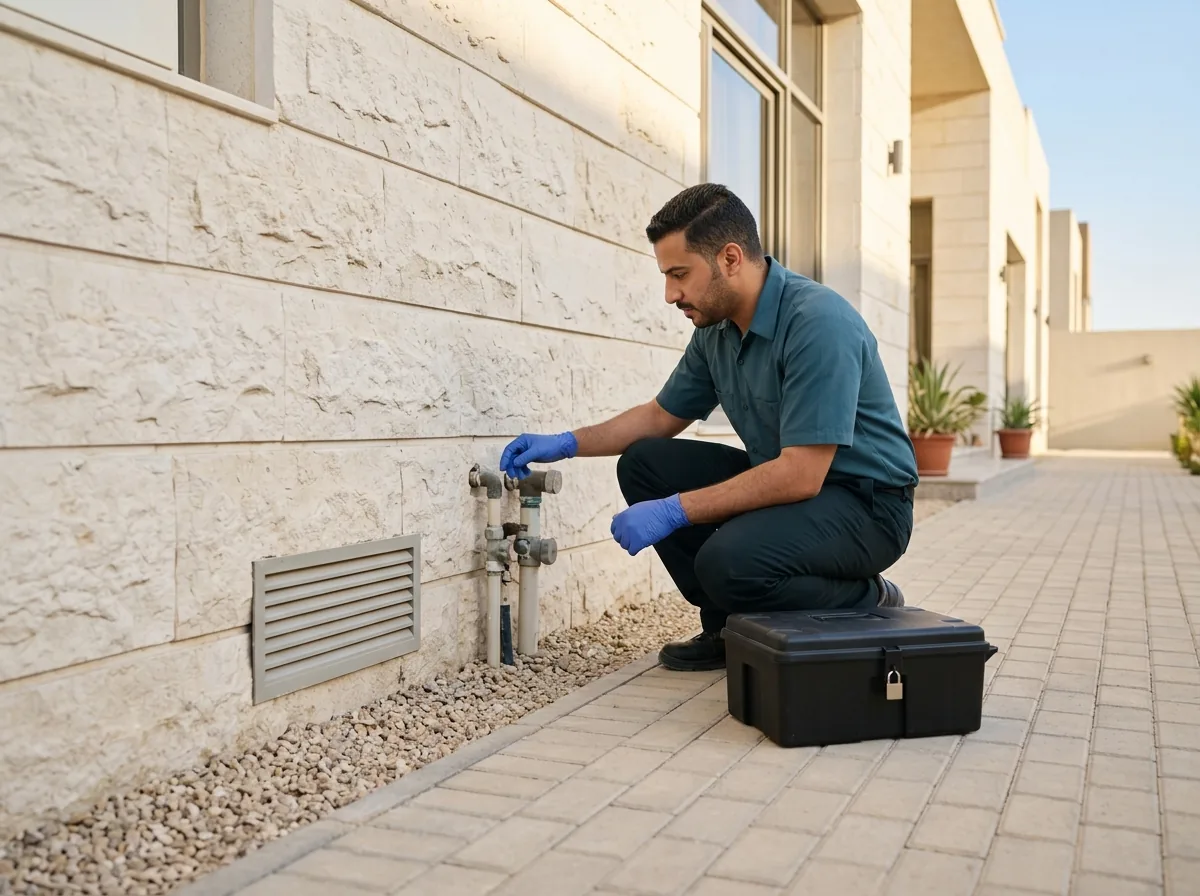
Rodent exclusion inspection and locked station deployment in Jeddah
How exterior containment, structural exclusion, and indoor mechanical capture work together

Four-Ring Rodent Defense Diagram: From Exterior Perimeter to Indoor Ceilings

Ring 01

Exterior Perimeter & Courtyard Defense

  • •Anchor key-locked tamper-resistant stations along boundary walls and garages.
  • •Inspect manhole perimeters and outdoor drainage access points.
  • •Eliminate soil burrows, timber piles, and courtyard harborage clutter.
  • •Trim tree limbs and climbing vines back from rooflines and walls.
Ring 02

Structural Entry-Point Exclusion

  • •Seal annular gaps around split-AC copper pipes and drain tubes.
  • •Close plumbing and gas pipe penetrations beneath kitchen sinks.
  • •Install heavy-duty door sweeps on garage and courtyard doors.
  • •Secure floor drain grates and exterior ventilation louvers with metal mesh.
Ring 03

Indoor Mechanical Trapping & Ceiling Control

  • •Position high-sensitivity mechanical traps along wall-junction runways.
  • •Target false-ceiling rodents at accessible maintenance hatches without poison.
  • •Deploy protected low-profile monitors behind refrigerators and ovens.
  • •Ensure every indoor placement safeguards children and domestic pets.
Ring 04

Sanitation, Food Hardening & Verification

  • •Store grains, flour, and pet food in gnaw-proof rigid containers.
  • •Elevate storage cartons onto metal racks off storeroom floors.
  • •Conduct follow-up trap and station checks to confirm zero residual activity.
  • •Clean old droppings and greasy rub marks that attract new rodents.

Sustainable rodent control requires intercepting outdoor pressure, sealing structural entry breaches, and removing indoor rodents cleanly without ceiling odors.

Specialized Technical Reference

In-Depth Technical Guide to Rodent Identification, Safe Containment & Structural Exclusion

To help homeowners and facility managers understand the science behind safe, odor-free rodent resolution, the following technical modules detail species diagnostics, tamper-resistant station engineering, entry-point exclusion, and ceiling management.

Why mouse traps fail against rats, and how physical evidence reveals the exact culprit

Identifying House Mice vs. Roof Rats & Norway Rats by Droppings, Gnaw Marks & Movement Paths

One of the most frequent reasons DIY rodent control fails is mistaking a young rat for a house mouse—or vice versa. The House Mouse (Mus musculus) is not a juvenile rat; it is a distinct species with completely different physical capabilities and foraging habits. An adult house mouse weighs only 15 to 30 grams, leaves tiny rice-sized droppings (3–6 mm) with pointed tips, and can squeeze its skull through a gap as narrow as 6 millimeters. Mice are naturally curious explorers that establish compact territories (often just 3 to 10 meters wide) inside kitchen cabinets, behind warm refrigerator motors, and inside pantry boxes.

By contrast, urban rat infestations involve two primary heavy-bodied species. The Roof Rat (Rattus rattus)—also known as the black rat or ship rat—weighs 150 to 250 grams, has a sleek body with a tail longer than its head and body combined, and leaves curved, spindle-shaped droppings measuring 12 to 15 millimeters. It is an agile climber that travels along overhead pipes, utility cables, and trees to nest inside suspended gypsum ceilings (false ceilings). The Norway Rat (Rattus norvegicus)—often called the brown or sewer rat—is a heavy, blunt-nosed rodent weighing 250 to 450 grams with a tail shorter than its body and thick, capsule-shaped droppings up to 20 millimeters long. It prefers ground-level living, excavating soil burrows beside courtyard slabs and emerging from drainage manholes.

Recognizing these distinctions is critical for successful control. Setting a small wooden mouse trap along a rat runway will merely snap on a rat’s toe or snout, teaching the rat to avoid all traps thereafter (trap shyness). Furthermore, whereas mice investigate new objects rapidly, both roof rats and Norway rats exhibit pronounced neophobia—an instinctive avoidance of any unfamiliar box or trap placed in their path for several days until they become habituated to its presence.

  • Examine dropping size carefully: 3–6 mm rice-like pellets inside kitchen drawers indicate house mice; 12–20 mm olive-pit-sized pellets indicate rats.
  • Note the vertical zone of activity: scurrying sounds inside suspended ceilings and AC ducts point strongly to climbing Roof Rats.
  • Check exterior soil and paving edges: 5–8 cm excavated burrows beside courtyard tiles or manholes indicate ground-dwelling Norway Rats.
  • Inspect overhead pipes and wall corners for dark, greasy rub marks (smears) left by the oily fur of rats traveling the same route nightly.
  • Always match mechanical trap size and trigger tension to the diagnosed species to ensure humane, decisive capture without inducing trap shyness.
How engineered exterior stations prevent accidental poisoning while maximizing bait acceptance

Locked Tamper-Resistant Monitoring & Bait Stations for Child & Pet Safety

Placing open saucers of poisoned wheat grain, loose pellets, or unenclosed wax blocks around courtyards, gardens, or indoor rooms is a dangerous and outdated practice. Brightly colored rodenticide pellets can easily attract curious toddlers, domestic cats, dogs, or garden birds. Even worse, rats and mice frequently hoard loose food items—carrying unsecured poison pellets away from the tray and dropping them inside kitchen drawers, shoes, or bedding.

Professional rodent management eliminates these hazards through the mandatory use of Key-Locked Tamper-Resistant Bait Stations for all exterior rodenticide placements. Constructed from high-impact, UV-stabilized polypropylene or galvanized metal, these stations can only be opened using a specialized technician key. Internally, the station features an engineered labyrinth (baffled entry corridor) that allows target rodents to enter through side openings while physically blocking a child’s fingers or a pet’s snout from reaching the internal bait chamber.

Inside the locked chamber, solid rodenticide blocks are threaded onto steel or heavy plastic securing rods so rodents must feed inside the station and cannot drag the bait outside. Beyond safety, the dark, enclosed interior satisfies the rodent’s natural preference for feeding under cover away from predators, while shielding the bait from rain, courtyard wash water, and dust—keeping the formulation palatable and effective.

  • All exterior bait stations are secured with tamper-resistant mechanical locks that can only be opened by our service technician’s key.
  • Bait blocks are anchored onto internal securing rods inside a baffled chamber, preventing rodents from carrying bait out into the yard.
  • Stations are positioned flush against exterior perimeter walls and anchored to prevent tipping or displacement by pets or weather.
  • Enclosed housing protects bait formulations from humidity, garden irrigation, and dust, maintaining freshness and efficacy.
  • Internal consumption tracking allows technicians to measure exterior rodent pressure and identify which direction rodents are approaching from.
Closing the hidden structural doorways that allow outdoor rodents to re-infest your building

Structural Exclusion Guidance: Utility Pipe Gaps, AC Conduit Holes, Garage Doors & Drain Grates

In professional pest management, trapping or baiting without addressing structural entry points provides only temporary relief. When an indoor mouse or rat is removed, residual scent trails and pheromone markings remain along the entry pathway. If the physical hole through the exterior wall or floor drain remains open, new rodents from the surrounding neighborhood or drainage network will eventually follow those scent cues right back into your home.

Field audits across villas, apartments, and commercial units consistently reveal four primary entry vulnerabilities: First, core-drilled wall holes where split-AC copper refrigerant pipes and condensate hoses pass through exterior walls—often left wide open behind the indoor unit or stuffed with soft yellow polyurethane foam that rodents chew through effortlessly. Second, unsealed annular gaps around PVC drainage and water supply pipes beneath kitchen sinks and laundry areas. Third, bottom clearance gaps exceeding 6 to 12 millimeters beneath automatic garage doors and courtyard service doors. Fourth, cracked plastic floor-drain covers in ground-floor bathrooms or damaged exterior manhole lids.

Effective rodent exclusion requires materials that rodent incisors cannot gnaw through. Ordinary silicone caulk, expanding polyurethane foam, plastic screens, or rubber weatherstripping used alone will be shredded quickly by a determined rat. Instead, small pipe collars should be tightly packed with coarse stainless-steel wool or woven copper mesh backed by cementitious mortar or elastomeric sealant, exterior doors should be fitted with heavy-duty brush or metal-reinforced door sweeps, and broken plastic drain covers must be replaced with bolted metallic grates.

  • Inspect both the interior and exterior sides of split-AC pipe penetrations, replacing exposed foam with rodent-proof mesh and mortar.
  • Ensure the bottom clearance beneath garage doors and exterior courtyard doors does not exceed 6 mm; install heavy-duty door sweeps where needed.
  • Check dark cabinets beneath kitchen sinks and behind dishwashers to ensure gaps around drainpipes are sealed with solid collars or mortar.
  • Replace cracked or loose plastic floor-drain grates in ground-floor bathrooms, kitchens, and courtyards with secured metal grates.
  • Fit fine-gauge galvanized hardware cloth (metal mesh) over exterior exhaust vents and roof ventilation openings to block climbing roof rats.
Preventing the severe hygiene and odor crisis of decaying rodents inside suspended gypsum ceilings

Why Uncontrolled Poisoning Inside Ceilings Causes Odor Hazards & Why Mechanical Trapping + Exclusion Prevails Indoors

When homeowners hear rats running above a suspended gypsum-board ceiling (false ceiling), a common impulse is to pop open a recessed spotlight or AC access hatch and toss poison pellets into the ceiling void. While this seems convenient, it almost always triggers a far worse secondary crisis. Anticoagulant rodenticides take roughly 3 to 7 days to take effect. As the poisoned rat weakens, it retreats deep into the narrowest, most inaccessible corner of the ceiling framing, wall cavity, or insulation layer to die.

In warm climates, an adult rat carcass weighing 200 to 400 grams decomposing inside an unventilated gypsum ceiling produces an overpowering, foul putrefaction odor that seeps through light fixtures and AC vents into bedrooms and living halls for two to four weeks. In addition to the stench, decaying carcasses attract blowflies, flesh flies, and dermestid beetles, frequently resulting in maggots or flies emerging through ceiling seams and forcing costly gypsum demolition to locate the carcass.

To prevent this entirely, our indoor and false-ceiling protocol strictly avoids throwing loose rodenticides into ceiling voids. Instead, we place high-sensitivity mechanical traps inside retrievable enclosures right at accessible ceiling maintenance hatches (Access Panels) and along the vertical utility chases where roof rats descend for food and water, while simultaneously sealing their exterior entry holes. Every captured rodent is cleanly and immediately removed from the property—delivering complete resolution with zero indoor odor or biological contamination.

  • Never toss loose poison pellets, grain packets, or wax blocks into suspended gypsum ceilings or behind fixed kitchen cabinetry.
  • Address false-ceiling rodent activity by positioning retrievable mechanical traps directly adjacent to existing ceiling access hatches.
  • Remember that roof rats nesting in ceilings typically travel out or down along specific pipe chases nightly to forage and drink, where they can be intercepted.
  • Once mechanical trapping confirms that indoor ceiling activity has ceased, permanently seal the exterior AC hole or shaft gap they used to enter.
  • Combine clean indoor mechanical capture with key-locked exterior perimeter stations to stop new rats before they reach the roofline.
Client Readiness Checklist

Customer Preparation Checklist: Before, During & After Rodent Control

Rodents are cautious foragers. Removing competing food sources and providing clear access to wall junctions significantly accelerates trap and station success:

1. Before the Visit

Seal All Accessible Food, Grains, and Pet Food in Rigid Containers

Before our visit, transfer open bags of rice, flour, snacks, fruit, and dry pet or bird food into hard plastic, glass, or metal containers—or place them inside the refrigerator—to eliminate competing food sources.

Clear Access Under Sinks, Behind Appliances, and Around Ceiling Hatches

Remove stored clutter from beneath kitchen sinks, beside refrigerators and ovens, along storeroom wall edges, and directly below false-ceiling maintenance hatches so our technician can inspect and place devices.

2. During Service

Keep Children and Pets in a Separate Room During Installation

Ensure children, cats, and dogs remain away from work areas while the technician inspects behind appliances and installs traps and locked stations, and inform us of all pets on the premises.

Share Exact Locations and Times of Nocturnal Noises or Sightings

Point out the exact ceiling corners, cabinets, or courtyard walls where scratching sounds, droppings, or sightings occurred so we can target primary runways immediately.

3. Post-Service Care

Do Not Move or Disturb Placed Stations and Mechanical Traps

Leave all locked stations and mechanical traps in their exact installed positions flush against walls. Moving devices away from wall junctions disrupts rodent runway interception and triggers rat neophobia.

Implement Structural Sealing Recommendations and Nightly Waste Control

Promptly install recommended door sweeps, drain grates, or AC hole seals, and ensure kitchen trash is removed nightly into tightly lidded exterior waste bins.

Safety Standards & Responsible Practice

Safety Standards & Regulatory Compliance in Professional Rodent Control

Because rodents are mammals, chemical rodenticides carry inherent toxicity risks to humans, pets, and non-target wildlife if misused. For this reason, we strictly prohibit unsafe, amateur practices such as scattering loose poison grain on open trays, tossing wax blocks into false ceilings, or leaving unsecured baits in gardens.

We never make misleading claims such as "100% harmless rodent poisons." Instead, real safety is engineered through strict physical containment inside key-locked stations outdoors, reliance on non-toxic mechanical capture indoors, and adherence to registered public-health products.

Mandatory Key-Locked Tamper-Resistant Stations for Exterior Baiting

Whenever rodenticides are deployed along exterior perimeters, they are locked inside heavy-duty, tamper-resistant stations with internal securing rods that prevent children, cats, or birds from accessing or shaking out the bait.

No Loose Rodenticides Inside Living Spaces or False Ceilings

Inside kitchens, bedrooms, storage areas, and suspended ceilings, we rely on mechanical traps and non-toxic monitoring to prevent food contamination and eliminate the hazard of inaccessible decomposing carcasses.

Hygienic Handling and Disposal Protocols

Technicians wear protective gloves and follow sanitary handling procedures when servicing traps, removing captured rodents, and inspecting contaminated runways.

Mapped Station Placement & Clear Client Briefings

Property owners and facility supervisors are briefed on the exact locations of all installed stations and traps, along with clear safety instructions between service visits.

Saudi Regulatory Alignment Note:All rodent management operations utilize public-health rodenticide formulations registered with the Saudi Food and Drug Authority (SFDA) and comply with municipal public-health and environmental safety requirements set by the Ministry of Municipalities and Housing (MOMAH / Balady).

Factors That Determine Rodent Control Pricing in Jeddah

Controlling a single house mouse in a compact apartment requires a very different equipment and follow-up configuration than managing an established rat population across a landscaped villa or commercial warehouse. Pricing is determined transparently after inspection based on:

Target Rodent Species (House Mice vs. Roof Rats or Norway Rats)

Rat control requires larger heavy-duty exterior stations, rat-sized mechanical traps, and careful management of bait shyness (neophobia) compared to standard house mouse treatments.

Property Footprint, Courtyards, and Attached Annexes

The total perimeter length, number of rooms, false-ceiling access zones, and outdoor courtyard or garage areas dictate how many stations and traps are needed for full runway coverage.

Quantity of Key-Locked Tamper-Resistant Stations & Traps Deployed

Service cost reflects the number of durable, key-locked exterior bait stations and specialized indoor mechanical multi-catch or snap traps installed on-site.

Infestation Severity and Harborage Accessibility

Resolving multi-level activity across false ceilings, service shafts, and heavily stocked storage rooms requires greater diagnostic and servicing time than a localized kitchen sighting.

Scope of Minor Point-of-Entry Proofing

If the service plan includes plugging accessible minor utility pipe or AC conduit gaps with gnaw-resistant mesh and sealant during the visit, this is factored by the number of penetrations.

Follow-Up Servicing & Commercial Monitoring Frequency

One-time residential control with scheduled follow-up verification differs in structure from ongoing monthly rodent monitoring contracts for warehouses, restaurants, and commercial facilities.

Before any deployment begins, our technician provides a clear breakdown of the recommended trap/station configuration, follow-up schedule, and total service cost with no hidden fees.

Request Assessed Quote
Local Environmental Context — Jeddah

Rodent Control Realities in Jeddah: Villa Gardens, Coastal Drainage Corridors & Warehouses

Jeddah’s urban layout and coastal climate shape rodent activity in distinct ways. In residential districts featuring villas with landscaped courtyard gardens, palm trees, and wooden pergolas, agile Roof Rats (Rattus rattus) thrive outdoors and use overhanging branches and split-AC conduits to climb into suspended gypsum ceilings. Meanwhile, high humidity and shallow water tables in coastal drainage corridors and inspection chambers frequently push heavy-bodied Norway Rats toward ground-floor garages, courtyard paving, and utility rooms.

Additionally, as a major commercial and logistics hub, Jeddah’s warehouses, retail stores, and residential pantries experience constant movement of boxed goods and food supplies—creating frequent opportunities for House Mice (Mus musculus) to hitchhike indoors inside cardboard pallets and establish nests behind kitchen appliances.

Key Local Factors in Jeddah

  • Roof rats climbing courtyard trees, bougainvillea vines, and AC piping to invade suspended gypsum ceilings.
  • Norway rats emerging from damp inspection chambers and coastal drainage lines through corroded or broken grates.
  • Clearance gaps beneath automatic garage doors and courtyard gates allowing nocturnal rodent entry.
  • House mice introduced into home storerooms and commercial warehouses via cardboard cartons and bulk supplies.
  • Outdoor AC condensate puddles and garden irrigation providing constant drinking water for courtyard rodents.

Property Types Served in Jeddah

  • Private residential villas and compounds with gardens, courtyards, and garages
  • Apartments and duplexes across all Jeddah neighborhoods
  • Commercial warehouses, logistics storerooms, and home pantries
  • Corporate offices, medical clinics, and retail showrooms
  • Restaurants, cafes, and food-handling facilities requiring tamper-resistant monitoring
Scheduling & Dispatch

Our inspection and rodent management teams serve all neighborhoods of Jeddah with pre-arranged appointments that respect household privacy and commercial operating hours.

Need This Service in Makkah?

Switch directly to our dedicated Makkah page for this exact pest service.

Integrated Rodent Management & Exclusion — Jeddah in Makkah
Interactive Pest Service Finder (6 Quick Steps)

Pest Service Finder

Select your city, apparent pest issue, property type, and location to reach the right specialized service page or prepare a structured inspection inquiry.

Note: This tool provides preliminary service routing and does not replace on-site professional inspection.
1

Step 1 — Select Your City:

2

Step 2 — Apparent Pest or Issue Type:

3

Step 3 — Property Type:

4

Step 4 — Where Is the Problem Observed?

Steps 5 & 6 — Preliminary Match & Next Action

Recommended Service Page: Mice & Rodents Control in Jeddah

We matched your selection to Mice & Rodents Control in Jeddah (Apartment — Kitchen). View the full service guide for inspection steps and safety protocols, or send your inquiry now.

View Mice & Rodents in Jeddah
Related Problem-Solution & Diagnostic Guides

Technical & Diagnostic Guides to Help You Make the Right Decision in Jeddah

Rodent Control & Exclusion Guide9 min read

Scratching Sounds in Gypsum False Ceilings & Courtyard Rodents: Safe Trapping & Structural Exclusion Guide

Why tossing loose poison into false ceilings creates inaccessible carcass odor hazards, and how locked tamper-resistant stations, mechanical trapping, and utility pipe exclusion solve rodent entry.

  • Nocturnal scratching, gnawing, or scurrying noises inside gypsum false ceilings and AC duct chases
  • Gnaw marks on electrical cables, flexible plumbing hoses, door sweeps, or storage cartons
Read Full Diagnostic Guide
Cockroach Diagnostic Guide10 min read

Why Small Cockroaches Appear in Kitchen Cabinet Hinges & Appliances Despite Daily Cleaning—And How to Stop Them

Distinguishing German kitchen cockroaches from American drain cockroaches, why supermarket aerosol sprays scatter infestations, and how precision syringe gel baiting breaks the egg-case cycle.

  • Tiny tan cockroaches and pinhead nymphs clustering inside metal cabinet hinges and warm appliance motors
  • Dark pepper-like droppings and empty light-brown egg capsules (oothecae) in drawer corners
Read Full Diagnostic Guide
Pest Identification & Decision Guide10 min read

Bed Bugs vs. Fleas in Mattresses & Carpets: Practical Field Identification & Treatment Guide for Jeddah & Makkah

Field comparison of nocturnal crawling bed bugs in mattress seams versus jumping fleas in carpet fibers, explaining inspection checkpoints, thermal steam integration, and follow-up protocols.

  • Tiny dark fecal spots, shed skins, or flat reddish-brown insects tucked inside mattress piping and headboards
  • Fast-jumping minute insects springing from carpet pile or patio thresholds toward ankles and lower legs
Read Full Diagnostic Guide
Direct Technical Answers

Frequently Asked Questions About Rodent Control in Jeddah

Clear technical answers on safe trapping, child- and pet-proof stations, ceiling odors, and rodent exclusion

Throwing poison inside suspended gypsum ceilings causes rats to die in inaccessible ceiling corners or wall cavities. In warm weather, a decomposing rat carcass produces severe, lingering putrefaction odors for weeks and attracts blowflies and maggots into living rooms. Instead, we use retrievable mechanical traps at accessible ceiling hatches combined with entry-point exclusion so rodents are removed cleanly with zero odor.

Resolve Mouse & Rat Problems in Jeddah Safely Without Ceiling Odors or Loose Poisons

Protect your family, electrical wiring, and food storage with methodical rodent management. Contact our team today to schedule an on-site runway inspection, locked station deployment, and structural entry-point audit.

Key-Locked Tamper-Resistant Stations — Odor-Free Indoor Mechanical Trapping — Detailed Exclusion Guidance.

Unified Service Request Builder

Share Your Request Details for Scheduling & Transparent Pricing

Enter your basic contact details, select your city (Jeddah or Makkah), and choose the service you need. This form organizes your inquiry for immediate coordination.

We respect your privacy. Your information is used strictly to respond to your service inquiry.
CallWhatsAppGet Quote