
Underground Reinforced Concrete Tanks vs. Overhead Fiberglass & Polyethylene Tanks
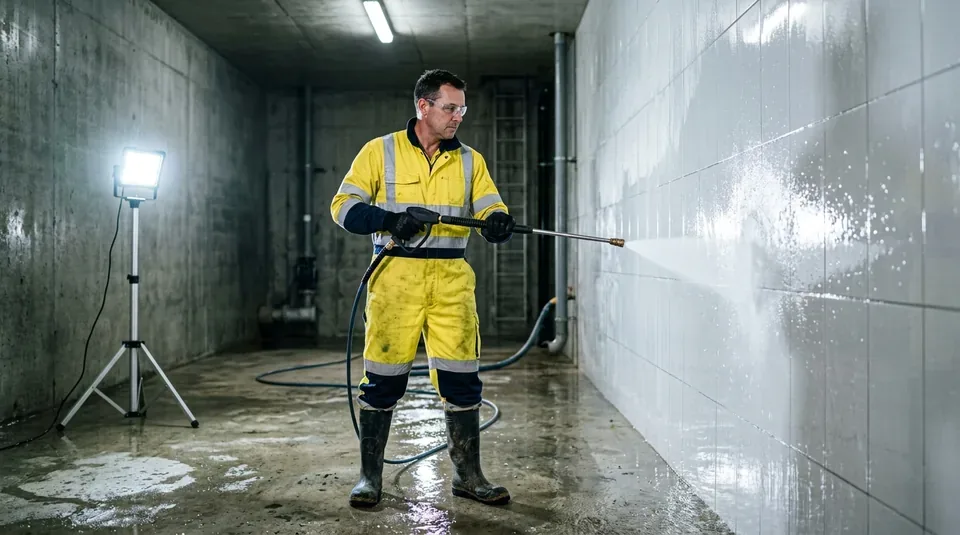
Residential and commercial buildings in Jeddah typically rely on a dual-tank water storage architecture: a primary underground reinforced concrete reservoir located beneath the courtyard, setback, or parking area, paired with one or more overhead tanks mounted on the roof. Underground tanks are lined with food-grade epoxy, cementitious waterproofing mortar, or ceramic tiles, and because they receive the initial inflow from municipal mains or water tankers, they capture the heaviest load of coarse sand, clay silt, and rust particulates.
Overhead rooftop tanks, by contrast, are manufactured from multi-layer high-density polyethylene (HDPE) or fiberglass (GRP). Positioned outdoors under intense sun and heat, these tanks face different challenges: if their top inspection lid becomes loose, cracked, or missing, sunlight and windblown dust enter the warm water, triggering rapid green algae growth and bacterial biofilm along the smooth synthetic walls, in addition to fine silt pumped up from the lower reservoir.
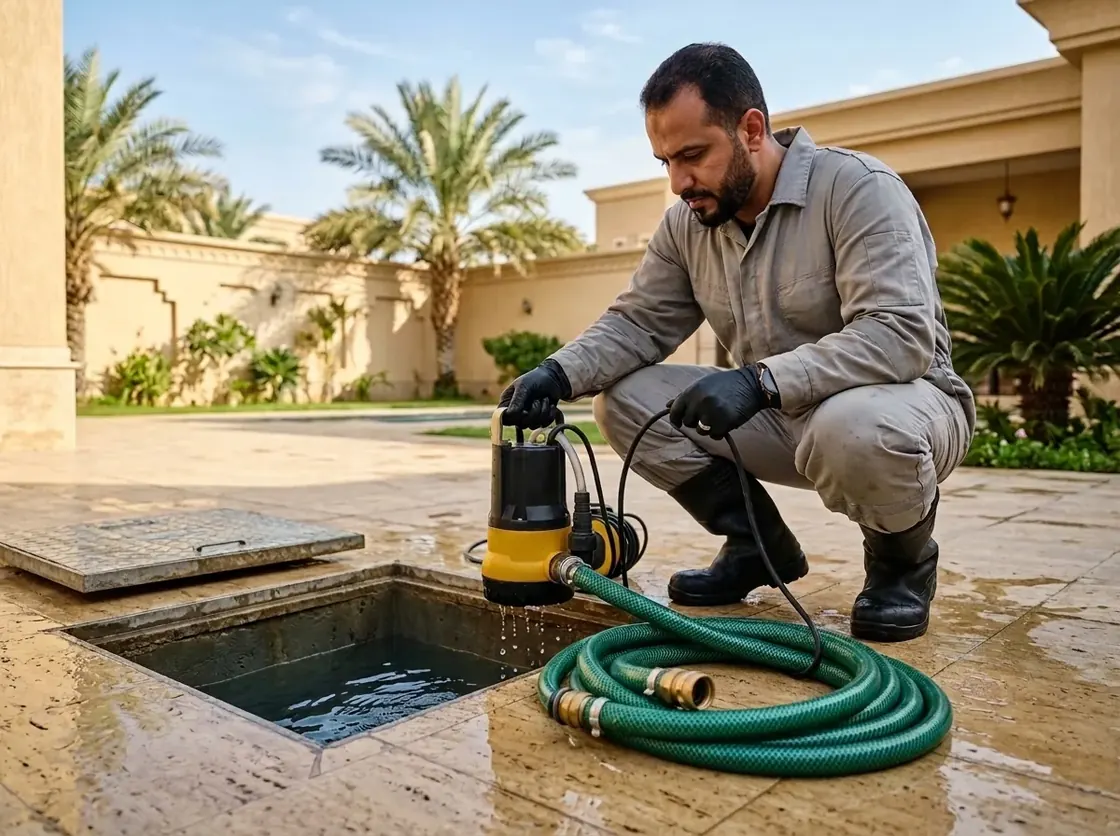
Our technicians apply distinct cleaning protocols for each tank type. In underground concrete reservoirs, we deploy heavy-duty submersible pumps, manual sludge removal, and careful wall brushing tailored to the waterproofing material. In overhead polyethylene and fiberglass tanks, we use soft non-abrasive brushes and sponges that lift algae and biofilm without scoring the smooth interior plastic—preventing microscopic scratches where future algae could anchor—while ensuring both tanks work together as a clean, sealed system.
- Servicing underground reinforced concrete reservoirs (epoxy-coated, cement-waterproofed, or ceramic-tiled).
- Cleaning overhead horizontal and vertical polyethylene and fiberglass rooftop tanks of all capacities.
- Using soft, non-scoring sponges and brushes inside synthetic rooftop tanks to protect smooth interior walls.
- Eliminating sunlight-driven green algae blooms and checking rooftop tank lids for tight closure.
- Synchronizing underground and overhead tank cleaning in a single visit to prevent cross-contamination.