
Serving Jeddah & Makkah
Home care guide8 min readJeddah

How to Safely Clean Pigeon and Bird Droppings from Balconies and Outdoor AC Units in Jeddah

Dry droppings are more than an eyesore: sweeping them the wrong way throws fine dust into the air you breathe, and lasting results come from closing off the roosting spot rather than scrubbing again and again.

In Jeddah apartment blocks and villas, a balcony ledge or the gap behind an outdoor AC unit quickly becomes a favourite roost for pigeons: shade in summer, shelter from the wind and a stable flat surface. Over time droppings, feathers and nest material build up, stain floors and railings, and leave a sharp smell.

This guide explains how to deal with it safely: what protective gear you need, how to dampen droppings before removing them, how to clean and disinfect the area, what is specific to the outdoor AC unit, and how to stop birds returning without harming them.

It is general home-cleaning information. If the quantity is large, the spot is high up or hard to reach, it is better to hire people trained to work at height.

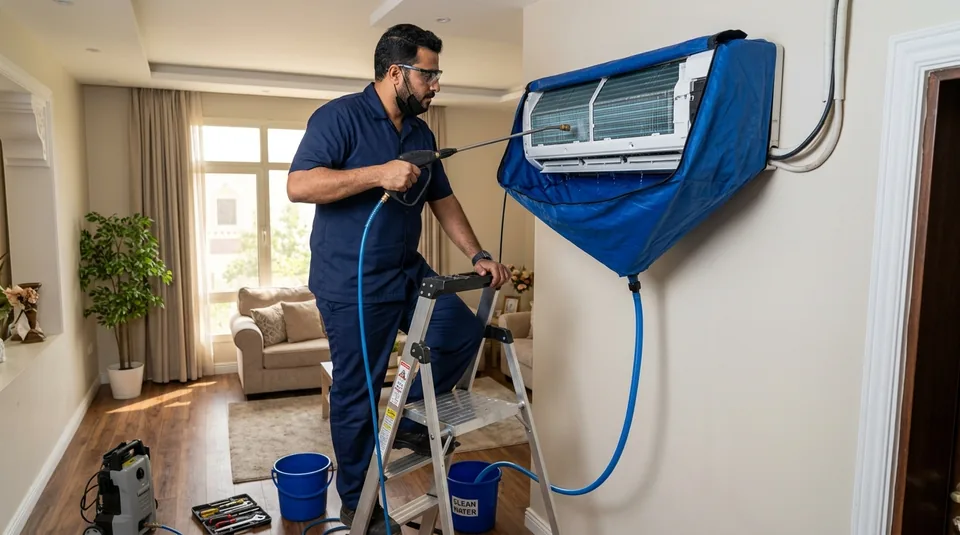
Outdoor air-conditioner unit on a building wall in Jeddah being inspected before cleaning

Quick Summary

  • Never dry-sweep droppings; dampen them first and remove with disposable materials.
  • Wear gloves, a dust-rated mask and eye protection, and keep the area ventilated.
  • Switch off power to the AC unit before cleaning near it and never pressure-wash electrical parts.
  • Lasting prevention means blocking roosting spots, not chasing birds aggressively.
Causes

Why birds gather on Jeddah balconies and outdoor AC units

Understanding why birds settle saves you weeks of repeat cleaning, because they keep returning to whatever place gives them the same comfort every time.

Shade and a sheltered ledge

Birds look for a flat, stable surface with shade from midday heat and shelter from coastal wind. The covered top of an outdoor AC unit, the corner behind a railing and the gap between the unit and the wall all offer exactly that combination.

The quieter and less disturbed the spot, the more likely birds are to nest or roost daily. That is why the problem often shows up on rarely used balconies, or ones where stored items stay untouched for weeks.

Signs the spot has become a regular roost

  • Droppings piled in one place, some old and dry, some fresh.
  • Small feathers, twigs and threads collected behind the unit or on a shelf.
  • Cooing or early-morning movement at the same ledge.
  • White streaks running down the outer wall or onto the balcony below.

Water and food scraps

Dripping AC condensate, plant trays and forgotten containers give birds a drinking spot close by, and scattered bread or grain draws them even more. Sometimes a neighbour is feeding birds, so they appear on your balcony for no obvious reason.

Spotting these sources needs no special tools: watch where birds actually gather and note what is there in terms of water, food or shelter.

What draws birds close to the home

  • Condensate dripping from an AC drain onto a fixed surface.
  • Exposed food or seed thrown out for birds.
  • Empty shelves and planters that suit perching and nesting.
  • A shaded corner behind a cover or curtain that is never opened.
Health

Before you start: health and safety precautions

Dry bird droppings can carry germs and fungi, and the main risk is the dust thrown up by sweeping or blowing, so the job starts with preparation rather than a brush.

Why you should never dry-sweep

Dry droppings crumble into fine particles that float and are easily inhaled. A common mistake is using an ordinary vacuum cleaner or a leaf blower, which simply returns those particles to the air instead of capturing them.

The simple rule is: dampen, lift, then seal in a bag. If a young baby, someone with asthma or chest allergies, or a person with a weak immune system lives at home, they should stay away during the work and someone else should do it.

Basic protective equipment

  • Thick rubber gloves that are discarded or washed thoroughly after use.
  • A mask rated for fine dust rather than a light cloth mask.
  • Protective glasses to keep splashes away from your eyes.
  • Closed shoes and clothes you can wash straight after.
  • Strong bin bags and disposable wipes or cloths.

Situations you should not tackle yourself

Some situations go beyond ordinary home cleaning: very large deposits built up over months, active nests with eggs or chicks, or places reachable only from an outside ledge or an unstable ladder.

Your safety from a fall matters more than any clean balcony. If birds are moving in and out of central-AC or ventilation openings, call a qualified specialist instead of trying alone.

When to stop and call a specialist

  • A nest with eggs or chicks that should not be disturbed without expert advice.
  • Droppings inside a ventilation duct or central-AC opening.
  • Any job that means leaning over a high edge or outside the railing.
  • Breathing symptoms or fever after exposure to the dust.
Steps

Safe cleaning steps in order

Three stages in sequence: dampen and remove, then disinfect and rinse, then dry and inspect, keeping the balcony ventilated and water away from electrical parts.

Stage one: dampen and lift the deposits

Start by lightly spraying water with a little dish soap onto the droppings until they are saturated without running, then leave a few minutes to soften. Lift the larger lumps with a cloth or small plastic scraper and place them straight into a bag.

Do not scrub hard on a rough surface because droppings spread into the pores. Lift what you can in one motion, then re-dampen the stuck residue.

Order of work for stage one

  • Open the door and window for fresh air and keep children and pets away.
  • Mist the droppings lightly and wait until they soften.
  • Lift with disposable tools into a bag, tie it, then double-bag it.
  • Do not use an ordinary vacuum or compressed air.

Stage two: disinfect and rinse

After the lumps are gone, wipe the surface with a cleaning solution, then apply a household disinfectant suitable for outdoor surfaces according to the label and its stated contact time. Never mix two chemical products, bleach in particular.

Rinse with a damp cloth, or a hose at low pressure on floors and railings only, and let the water drain through the balcony outlet away from neighbours.

Mistakes that repeat at this stage

  • High pressure that sprays particles upward or towards neighbours.
  • Leaving the disinfectant on too briefly or rinsing it off at once.
  • Cleaning only the floor and ignoring the railing and the side of the unit.
  • Reusing the same cloth across several surfaces.

The outdoor AC unit specifically

Before touching the area around the unit, switch the power off at the breaker. Remove droppings from the top cover and base in the same way (dampen, then lift), and never spray water directly at the condenser, electrical panel or fan.

If you notice feathers or twigs inside the grille, or weaker cooling after cleaning, call an AC technician, because surface cleaning does not deal with what is inside the unit.

Precautions specific to the AC

  • Switch power off at the breaker and confirm it is off before starting.
  • Do not open the metal cover or reach the internal parts.
  • Let the area dry completely before turning the unit back on.
  • Watch the sound and cooling performance the next day.
Prevention

Keeping droppings from coming back without harming birds

Cleaning without fixing the cause means repeating it within days; the most successful fix is to make the spot uncomfortable for roosting while staying humane.

Close the spot instead of chasing the birds

The better approach is to change the surface: cover flat ledges with sloped material or purpose-made barriers, and screen the gap behind the unit with a suitable mesh that neither blocks airflow to the AC nor traps birds inside.

Before fitting anything, make sure there is no active nest or trapped bird, since closing a spot with chicks inside is both a health and an ethical problem. In a shared building or one with an owners association, ask management before altering the facade.

Most accepted prevention options

  • Sloped barriers or thin wires on flat ledges.
  • Mesh with suitable openings behind the unit and enough ventilation.
  • Removing unused empty shelves and planters.
  • Cleaning the ledge regularly, because old scent draws birds back.

Habits that reduce the attraction

Fixing AC dripping and directing the drain away from surfaces birds perch on cuts off their water supply. Stopping food being thrown from the balcony, and a calm word with neighbours, may solve half the problem.

Keeping low plants instead of wide shelves, or moving stored items weekly, stops the spot from becoming quiet enough to nest in.

A quick weekly routine

  • A glance at the ledge and behind the unit for new signs.
  • Wipe a small spot the moment it appears, before it dries and builds up.
  • Check that the AC drain leaves no standing water.
  • Move stored items and do not leave folded bags or fabric.
Checklist

A quick follow-up checklist for the balcony and AC unit

A short table for regular checks, since spotting a small stain early is far easier than removing layers of buildup.

PlaceWhat to checkSuggested frequency
Balcony ledge and railingNew droppings, feathers or twigsWeekly
Top cover of the outdoor AC unitBuildup on the upper surfaceEvery two weeks
Gap behind the unitThe start of a nest or gathered itemsMonthly
AC condensate drainDripping that lets birds drinkMonthly
Balcony floor and drainBlockage from feathers and debrisAt every clean
FAQ

Common questions about humidity and mold in Jeddah

Short answers to what homeowners ask most.

Are pigeon droppings dangerous to health?+

Dry droppings can carry germs and fungi that spread through inhaled dust, and the risk rises with dry sweeping or blowing. Dampen first, wear gloves and a mask, and keep young children and anyone with breathing or immune problems away during the work.

Can I vacuum the droppings up?+

An ordinary vacuum is not recommended because its exhaust can release fine particles back into the air. It is safer to dampen the droppings, lift them with disposable tools and seal them in a bag.

How do I clean the outdoor AC unit of droppings?+

Switch off the power first, then remove droppings from the cover and base after dampening, and never spray water onto the condenser or electrical parts. If cooling weakens or feathers enter the grille, call an AC technician.

Can I remove a pigeon nest myself?+

An old, unused nest can be removed with the same precautions. If it holds eggs or chicks, do not disturb it without advice from a qualified body, and only close the spot once you are sure it is empty.

What is the best way to stop pigeons returning to the balcony?+

Change the surfaces they perch on with sloped barriers or suitable mesh, fix AC dripping, stop throwing food, and wipe fresh droppings promptly because the scent draws birds back.

Do you offer bird removal or mesh installation?+

Our published services in Jeddah are home cleaning, AC, sofa, carpet and water-tank cleaning, post-construction and office cleaning, and pest control. We do not offer mesh installation or bird deterrence, and you can message us to learn what is available.

What should I use to disinfect afterwards?+

A household disinfectant suitable for outdoor surfaces, used according to its label and stated contact time, with good ventilation and never mixed with bleach or other products. On delicate surfaces, test a small corner first.

Need help planning other cleaning jobs at home?

Send us your property type and area in Jeddah and tell us what you want cleaned, and we will reply on WhatsApp with the next step.

CallWhatsAppGet Quote