
Serving Jeddah & Makkah
AC guide8 min readJeddah

AC Filter Cleaning Before Summer in Jeddah: Safe Steps and When to Call a Technician

A simple routine for filters and indoor units before the long running season

As summer approaches in Jeddah, air conditioners run for long hours in air that carries fine dust and coastal humidity together. The first part to feel it is the indoor-unit filter, the screen that traps dust before it reaches the coil and fan.

Quick answer: check the filters before the season starts, then clean them with lukewarm water and a soft brush after switching the power off, and let them dry completely in the shade before refitting. Persistent odor, dripping water or weak cooling usually goes beyond the filter and needs the indoor unit and drain checked.

This guide gives a practical schedule by usage type, safe home cleaning steps, what not to do, and how to tell a small problem that a filter wash solves from one that needs a qualified technician.

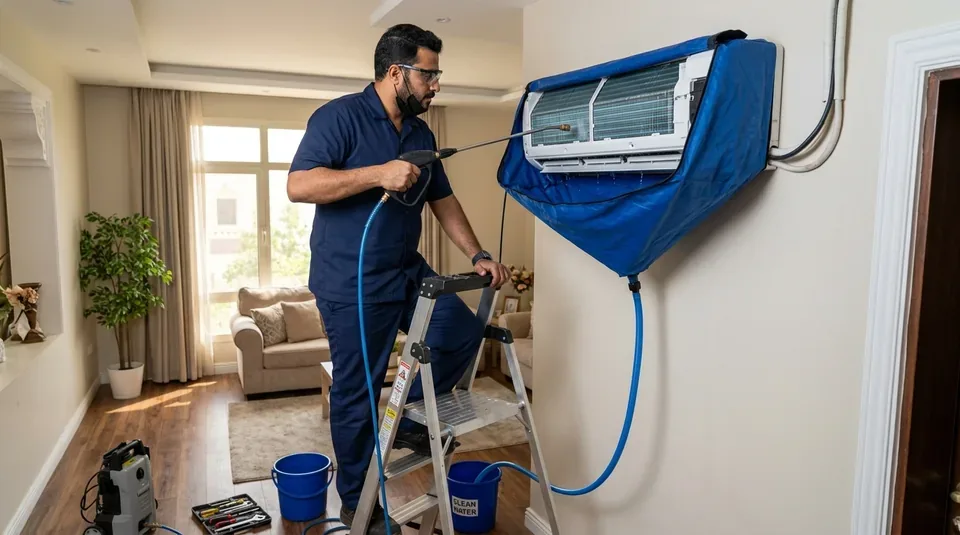
Technician inspecting an indoor split AC unit before summer in Jeddah

Key points

  • Cut the power before opening the indoor unit and wait for the fan to stop
  • Wash filters with lukewarm water and a soft brush; avoid hot water and solvents
  • Let the filter dry fully in the shade before refitting
  • Repeat the check monthly during long running months
  • Lasting odor, leaks or ice on the unit call for a technical check

Dust and humidity work together

Dry dust builds up on a filter gradually, but with humid air it turns into a clinging film that air struggles to pass through. A filter can look fairly clean from a distance while still blocking a good part of the airflow.

Homes with windows opened often, or located near open roads and construction sites, put a heavier load on filters. Hair and fibers from curtains and fabrics add another layer.

Signs of a dirty filter

  • A visible grey or brown film on the mesh
  • Weaker airflow from the supply vent
  • The compressor seems to run longer than usual
  • Dust settling quickly on furniture near the unit

What happens when the filter is neglected

A blocked filter forces the unit to work harder to pull air, so real cooling in the room drops and electricity use may rise. Dust can also reach the cooling coil and fan, where it builds up and becomes harder to remove.

With repeated condensation on a dirty coil, a damp smell can develop or drainage can weaken. These problems normally need a deeper cleaning than a filter wash alone.

Common results of neglect

  • Weaker cooling despite long running
  • A damp smell when the unit starts
  • Dripping or leaking from the indoor unit
  • Louder fan noise than normal
Schedule

A practical cleaning schedule by usage

This is a general recommendation that suits most homes; adjust it to the dust you actually see.

SituationFilter checkIndoor unitNote
AC running more than 12 hours a dayEvery two weeks to monthlyVisual check every 3 monthsTypical for living rooms and bedrooms in summer
AC running limited hoursMonthly to every two monthsVisual check every 6 monthsCheck more often after a dust storm
Home near a construction siteEvery two weeksEarly check every two monthsFine dust reaches the filter quickly
Pets or lots of carpet in the homeEvery two weeksCheck every 3 monthsHair and fibers clog the mesh fast
AC unused for monthsRight before first useFull check before the seasonConfirm no odor or water drops from the unit

The smell comes before the stain

A musty, damp-earth smell is an earlier signal than the stain itself. If you notice it when opening a room or wardrobe after a long closure, look for the source rather than covering it with air freshener; fragrance hides the warning without fixing the cause.

Watch paper, books and cardboard boxes too, since they absorb moisture quickly and act as early indicators. Paint that bubbles or flakes, or white salt crust on a wall, usually points to rising damp or a leak rather than a surface stain.

Telling mold from dirt and scale

Not every dark mark is mold. Dirt, smoke and soap residue can look similar. A simple test: wipe a small area with a damp cloth and a mild household cleaner. If it lifts easily it is probably dirt; if it returns quickly in the same place with a damp smell, suspect mold.

White, rough deposits in bathrooms and kitchens are mineral scale from water, not mold, and need a different treatment.

Before you start: safety first

Switch the AC off and cut the power at the breaker or socket, then wait until the fan has fully stopped. Use a stable ladder if the unit is high; do not stand on an unsteady chair.

Open the front panel gently according to the unit manual and take the filters out carefully without touching the electronic parts or the moving louver.

Simple preparation

  • A soft brush or a vacuum with a small nozzle
  • Lukewarm water and a little mild liquid soap
  • A clean dry cloth
  • A shaded spot to dry the filter

Washing and drying

Remove dry dust first with the vacuum or brush, then wash the filter gently in lukewarm water with mild soap and rinse it from the side the air leaves. Do not scrub the mesh hard or it may warp.

Let it dry completely in the shade, away from direct sun or heat. Refitting a damp filter creates the right conditions for odor and mold.

Before refitting

  • Confirm the filter is dry on both sides
  • Check for tears or warping
  • Seat it until it clicks into place
  • Run the AC and watch airflow and smell

What not to do

Do not spray water inside the indoor unit or on the electronic board, and avoid hot water or strong solvents on the filter because they can damage the mesh. Also do not run the AC without filters, even briefly.

If you see rust or a dirty coil behind the filter, do not try to clean it with sharp tools; the coil fins are thin and bend easily.

Avoid these mistakes

  • Spraying water directly into the unit
  • Using a stiff brush on the coil
  • Running the AC with no filters
  • Refitting a wet filter
Technician

When a filter wash is enough and when you need a technician

Washing the filter solves only part of the problems; these examples help you tell them apart.

SymptomLikely causeSuitable action
Weak cooling with a dirty filterBlocked filterClean the filter and watch the difference within a day
Damp smell that stays after washing the filterBuild-up on the coil or drain panHave the indoor unit inspected and cleaned
Water drops or leaks from the unitBlocked drain lineHave the drain checked and cleared
Ice on the pipes or the unitPoor airflow or a cooling faultSwitch it off and request a technical check
Unusual noise or vibrationDust on the fan or a mechanical faultTechnical check before continuing to run it

The smell comes before the stain

A musty, damp-earth smell is an earlier signal than the stain itself. If you notice it when opening a room or wardrobe after a long closure, look for the source rather than covering it with air freshener; fragrance hides the warning without fixing the cause.

Watch paper, books and cardboard boxes too, since they absorb moisture quickly and act as early indicators. Paint that bubbles or flakes, or white salt crust on a wall, usually points to rising damp or a leak rather than a surface stain.

Telling mold from dirt and scale

Not every dark mark is mold. Dirt, smoke and soap residue can look similar. A simple test: wipe a small area with a damp cloth and a mild household cleaner. If it lifts easily it is probably dirt; if it returns quickly in the same place with a damp smell, suspect mold.

White, rough deposits in bathrooms and kitchens are mineral scale from water, not mold, and need a different treatment.

FAQ

Frequently asked questions about AC filter cleaning

Short answers to the questions people ask before the AC season.

How often should I clean an AC filter in Jeddah?+

It depends on usage, but during summer it is sensible to check the filter every two weeks to a month, and more often after dust storms or if your home is near a construction site.

Should I use hot water to remove the dust?+

Lukewarm water with mild soap is better. Hot water and solvents can warp the filter mesh and shorten its life; if gentle washing is not enough, replace the filter as the manufacturer recommends.

Can I run the AC without a filter while it dries?+

We do not recommend it, because dust goes straight to the coil and fan. Wait until the filter is dry, or fit a clean spare filter if you have one.

Why does the AC smell return after washing the filter?+

The smell usually comes from the coil, the condensate pan or the drain line rather than the filter alone. If it lasts more than a day or two after cleaning, have the indoor unit checked.

Can I wash the indoor unit myself?+

We suggest limiting home cleaning to the filters and the outer casing. The coil, fan and drain need proper tools and experience so the electronics and coil fins are not damaged.

What is the difference between cleaning the filter and cleaning the AC?+

Filter cleaning is a quick job that keeps airflow healthy. AC cleaning normally covers the indoor unit and drain, and sometimes other parts depending on the type of unit, using dedicated tools and products.

Does cleaning the filter lower electricity use?+

It can help airflow and let the unit work more easily, but the saving varies from one unit to another and we do not promise specific numbers.

How do I request AC inspection or cleaning in Jeddah?+

Contact us on WhatsApp or by phone and mention the number and type of units and any symptom such as smell or leaking, so we can suggest the right step for your case.

Need AC checking or cleaning before summer?

Tell us how many units you have, their type, and any smell or leak you notice, and we will help you decide the right next step in Jeddah.

CallWhatsAppGet Quote