
Serving Jeddah & Makkah
Dust & Storm Guide9 min readJeddah

Cleaning Your Home After a Dust Storm in Jeddah: Where to Start and How to Keep Dust From Coming Back

A top-to-bottom routine for lifting fine dust from furniture, windows, vents and AC filters without throwing it back into the air.

When a dust event rolls over Jeddah, the dust does not stay outside. It slips through window tracks, under doors, through vents and in on every opened door, then settles as a fine film you can barely see until you run a finger across a shelf.

The most common mistake is grabbing the vacuum or a dry rag straight away. That turns a thin film into a cloud that resettles within the hour. A better result comes from the right order of work and the right tool for each surface.

This guide covers what to do first, how to work through a home step by step, when home effort is enough, and when it makes sense to call a specialist team, with notes that reflect Jeddah's coastal humidity.

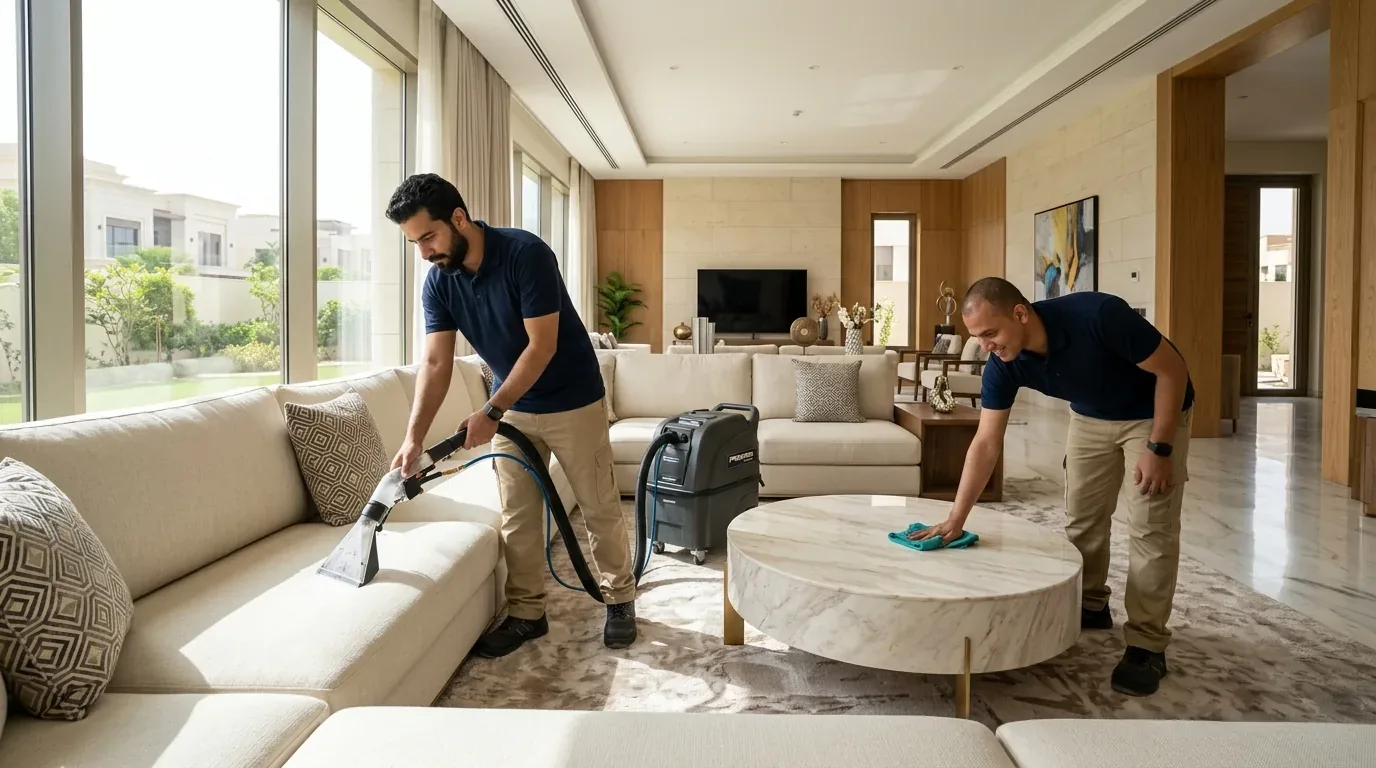
Cleaning a Jeddah home after a dust storm

Quick Summary

  • Close windows first and check AC filters before the general clean.
  • Work top to bottom: fans and shelves, then furniture, then floors.
  • Use damp microfiber rather than dry rags to trap fine dust.
  • A vacuum with a sealed bag or good filter beats one that blows dust back out.
  • If dust keeps returning, check window seals, vents and AC filters.
Quick Reference

Which Tool for Which Surface After Dust?

Match the tool to the surface to avoid scratching or throwing dust back into the air.

SurfaceBest MethodAvoidNote
Polished wood furnitureDamp then dry microfiber, with the grainRough dry ragsTest cleaner on a hidden corner
Glass and mirrorsDamp pre-wipe, then glass solution and squeegeeSpraying onto thick dustWork top to bottom
AC filtersLukewarm water, mild soap, dry in shadeHot water or refitting dampPower off first
Rugs and fitted carpetGood-filter vacuum, several slow passesBeating dust out indoorsClean around and under furniture
Screens and electronicsSoft dry cloth made for themSpraying liquids directlySwitch off and unplug first
In-Depth Guide

Five Steps to Clean a Home After Dust

A proven order of work that saves effort and keeps dust from landing on surfaces you have already cleaned.

Step 1

The First Hour: Stop the Dust From Spreading

Before wiping or sweeping anything, give the air time to settle. Most airborne dust drops out within a few hours of the storm ending, and cleaning while it is still suspended simply means you will clean the same surfaces twice.

Keep windows and balcony doors shut, switch off any unit that pulls in outside air, and do not open windows to air the house until the sky has cleared. Run indoor fans at the lowest setting only if you must.

Lay a damp mat or cloth at the entrance to catch what shoes bring in, and set a place near the door where shoes come off so dust does not travel from room to room.

Quick Setup Checklist

  • Confirm windows, balcony doors and closable vents are shut
  • Cover electronics and light furnishings with washable sheets
  • Lift light curtains away from windows before any movement
  • Prepare a bucket of lukewarm water and several clean microfiber cloths
  • Start once the air has cleared, not during the storm
Coastal homes

Jeddah's humidity makes dust cling to surfaces instead of staying loose, so wipe with a damp, not wet, cloth and dry lightly afterwards to avoid muddy streaks.

Step 2

Top-to-Bottom Order: The Sequence That Saves Effort

Dust falls, so start at the highest point: light fittings, ceiling fans, tops of wardrobes and shelves, then door and window frames, then furniture, with floors last. Working this way means you never clean the floor twice.

Use a well-wrung damp microfiber cloth folded into quarters. After each surface turn to a clean face, and when every face is loaded rinse the cloth in water rather than shaking it out in the room.

On polished wood wipe along the grain. For screens and devices use a soft dry cloth made for them, and never spray liquid directly onto electronics.

Suggested Order for a Living Room

  • Light covers and ceiling fans, fully switched off, with a damp cloth
  • Shelves, ornaments and bookcase tops, then picture frames
  • Curtain rails, rod ends and the outside face of roller blinds
  • Sofa and cushions vacuumed first, then a damp cloth on leather or plastic parts
  • Floors last: a gentle sweep or vacuum, then a damp mop
Step 3

Windows, Balconies and Vents: The Repeat Sources

Aluminium window tracks collect grit that turns to thin mud when damp, blocks the slide and returns dust to the room. Start with a soft brush or a narrow vacuum nozzle for the dry material, then wipe the track with a damp cloth.

For glass, do not spray cleaner onto a dusty pane. Lift the dry grit with a damp cloth first or the particles will scratch as you rub. Then use a mild glass solution and a squeegee from top to bottom.

Vent covers and extractor grilles hold more dust than most people expect. Switch off power to a fan before removing a cover, brush the grille, wipe it, and avoid pushing dust deeper into the duct.

Places Where Grit Collects

  • Sliding window tracks and frame edges
  • Insect screens and mesh where fitted
  • Balcony thresholds and the foot of glass doors
  • Ceiling vents and grille covers
  • Wall clocks and frames hung near windows
Safety note

Keep water away from switches and sockets while cleaning, and leave high glass, tall balconies and facade work to a trained team.

Step 4

AC Filters: What the Unit Takes In After a Storm

AC filters trap part of the airborne dust, and after a storm they can clog faster than usual. Airflow weakens, cooling suffers, and an odour or dripping water can follow. Cleaning the filter is a simple home task on a standard split unit if you know the model.

Turn the unit off and isolate it at the plug or breaker, open the front panel, and lift the filter out gently. Tap it clean away from living areas, wash it in lukewarm water with a little mild soap, and dry it fully in the shade before refitting. Avoid very hot water or strong solutions.

The indoor coil and fan are not a place for guesswork. Pressing too hard can bend the fins or push water toward electrical parts. If a smell or leak appears after the storm, that points to an inspection by a technician rather than a wipe-down.

When the Filter Is Enough and When It Is Not

  • A filter wash is usually enough when cooling is normal and there is no odour
  • Check filters after every strong storm and weekly in heavy summer use
  • Never run the unit without its filter, even briefly
  • A smell that survives a clean filter suggests the indoor unit needs servicing
  • Water dripping from the indoor unit needs a check, not just a wipe
Step 5

Floors, Rugs and Upholstery: Cleaning Without Re-Spreading Dust

On hard floors begin with a vacuum that has a good filter, or a soft dry mop used in single forward strokes, then follow with a damp mop in lukewarm water and a cleaner suited to the floor type. Change the water as soon as it looks grey.

Rugs and fitted carpets hold dust deep in the pile, and a vacuum without a good filter returns part of it to the air. Make slow, repeated passes over the same lines, and clean edges and the area beneath furniture where dust settles most.

Fabric sofas and majlis seating respond well to an upholstery nozzle that pulls dust from seams and pockets. If dust has met humidity and formed muddy patches, do not scrub; blot with a damp cloth, lift what you can, and follow the fabric's care guidance.

Floor and Fabric Cautions

  • Do not use acidic cleaners on marble unless you are sure of the stone
  • Dry wood and parquet quickly after any damp mopping
  • Let rugs dry fully before moving furniture back over them
  • Test any new cleaner on a hidden patch of fabric first
  • Leave floors for last, not first
Tip

If anyone at home is sensitive to dust, spend a few hours in another room afterwards to let the remaining airborne dust settle.

Practical Decision

When Is Home Cleaning Enough and When Should You Call a Team?

Judge the scale of the job before you start so you do not waste time or risk your surfaces.

Home Effort Is Usually Enough When

  • There is a light dust film after a short storm
  • It is a small flat or a couple of rooms in good condition
  • The AC filter is dusty but there is no odour
  • Floors are hard with clean grout
  • You have the time and the right tools

A Specialist Team Makes Sense When

  • Heavy dust has spread through a multi-storey villa
  • An AC smell or leak appears after the storm
  • Large rugs and majlis seating need extraction
  • Windows or balconies are too high to reach safely
  • You are returning to a closed-up home full of dust

We serve Jeddah and Makkah. Message us on WhatsApp with the property type, number of rooms and surface types and we will suggest the best fit.

Common Questions

Frequently Asked Questions

Short answers to what people ask most after dust storms in Jeddah.

Should I vacuum first or wipe first?+

Remove loose dust from high surfaces with a damp cloth, then move to floors: vacuum or dust-mop first, damp mop second. On furniture start with a well-wrung damp cloth. The point is to avoid shaking dust back into the air.

How long should I wait after the storm before cleaning?+

There is no fixed time, but wait until the sky has cleared and airborne dust inside has settled, which is often a few hours. Starting too early lets dust drop back onto surfaces you just cleaned.

Is washing the AC filter enough after a dust storm?+

Usually yes if cooling is normal and there is no smell or water leak. If a smell or weak cooling continues after washing the filter, the indoor unit may need a technician's cleaning or inspection.

How do I handle curtains after dust?+

Use an upholstery nozzle from top to bottom if the fabric allows, and avoid shaking curtains hard indoors. Heavy, pale or delicate curtains follow the care label, and large sets are better left to a specialist team.

Can I wet a dusty rug directly?+

It is not recommended. Water can turn the dust into mud and work it between the fibres. Vacuum as much as you can first, spot-treat marks with a damp cloth, and use professional cleaning for large or delicate rugs.

How often should AC filters be cleaned in dust season?+

It depends on use and how dusty it is, but a sensible rule is to check after each noticeable storm and weekly during heavy summer use, then wash when a visible layer of dust has built up.

Do you offer post-dust cleaning in Jeddah?+

We provide home, apartment and villa cleaning, sofa and carpet cleaning and AC cleaning in Jeddah and Makkah. Send us a description on WhatsApp with the type of property and surfaces and we will suggest the right service.

Need Help Cleaning Your Home After the Dust?

Send a short description of the property and its size on WhatsApp and we will suggest suitable steps and a visit time.

CallWhatsAppGet Quote