
Serving Jeddah & Makkah
Fibre guide10 min readJeddah

Carpet Fibre Types and How to Clean Each: Wool, Synthetic and Fitted Carpet in Jeddah

The fibre decides how much water a carpet tolerates and which cleaner suits it.

Carpets are among the items in a home most exposed to dirt and dust, yet also among the most varied: natural wool rugs, synthetic carpets in polyester, polypropylene or nylon, fitted carpet fixed to the floor and fine silk rugs. Cleaning any of them the wrong way brings colour transfer, shrinkage, damaged backing or musty smells.

In Jeddah the challenge grows because humidity slows drying and dust hides in the fibres and abrades them over time. So knowing the fibre and the drying method is a core part of any successful clean.

This guide shows how to identify your carpet, what suits each fibre, how to handle fitted carpet, the mistakes to avoid and when it helps to have a team with extraction and drying equipment do the work.

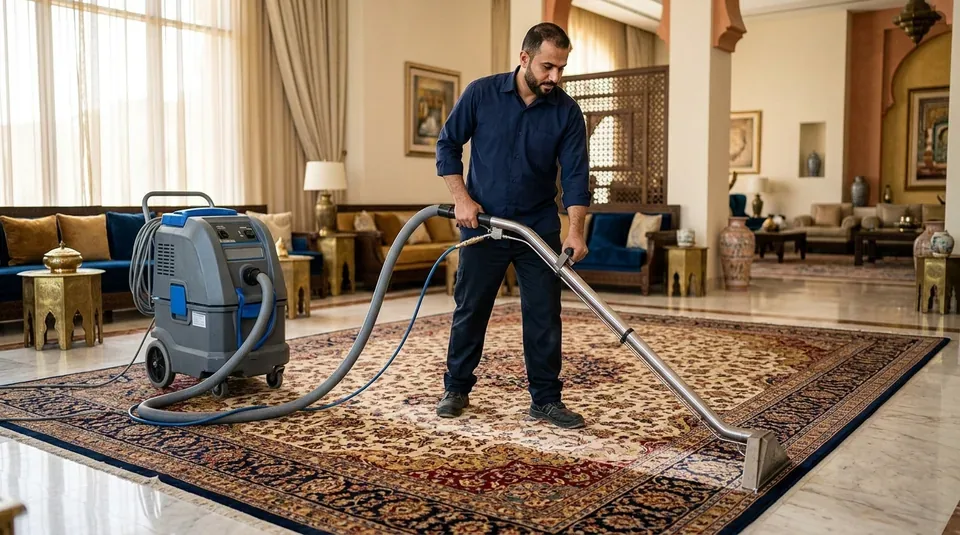
Carpet washing and extraction equipment in a Jeddah home

Quick Summary

  • Identify the fibre first: wool, synthetic, silk or fitted carpet
  • Wool tolerates moderate water but needs good drying and a mild cleaner
  • Synthetic carpet resists stains more but holds odours
  • Fitted carpet needs extraction, not flooding
  • Complete drying separates a clean carpet from a musty one
Identifying

How do you know your carpet’s fibre?

A few simple observations are enough in most cases.

Back label, feel and a safe check

Turn up a corner and look for a label on the back stating the fibre, origin and care. If there is none, check the feel: wool is warm and springy, its pile recovers after pressing and it gives off a natural smell when wet, synthetics are smoother and slightly glossy and fairly uniform, and silk is very soft, very shiny and finely knotted.

Specialists can identify fibre by examining a tiny tuft from the edge. We advise against burning fibres yourself to identify them; it is risky and unnecessary at home, and the label, the maker or a specialist team is enough.

Quick signs

  • Wool: warm, springy and a natural smell when wet
  • Polyester and nylon: smooth and moderately stain-resistant
  • Polypropylene: light and common in budget carpets
  • Silk: very soft, very shiny with fine knots
  • Fitted carpet: fixed to the floor with a flexible backing

Backing and dyes

The backing affects cleaning: cotton backing soaks up water and takes longer to dry, while synthetic backing tolerates water better but can crack with heat. Dyes matter especially in coloured rugs: test a cleaner on a damp white cloth rubbed lightly on a small tuft, and if colour transfers to the cloth stop water-based cleaning and ask for an inspection.

Table

What suits each fibre?

A guide table summarising what each type tolerates.

FibreToleratesTake care with
WoolModerate extraction and a neutral cleanerAlkaline cleaners, hot water and shrinkage
SilkDry or specialist cleaningWater, rubbing and strong cleaners
Polyester and nylonWater extraction and mild cleanersOld oily stains and snagging
PolypropyleneWater and a mild cleanerHigh heat and greasy stains
Fitted carpetLimited-water extraction and moisture removalOver-wetting that soaks the backing

Why is wool different?

Wool is a protein fibre affected by alkalis and heat, so strong laundry detergents can spoil its feel and cause shrinkage or yellowing; it needs neutral cleaners and lukewarm water. Even so it is springy and hides dirt well, and with good care it lasts for many years.

Synthetic fibres resist stains and water better but hold onto odours and grease, so they need thorough rinsing. See the heavily soiled carpet guide for badly soiled cases.

Steps

Cleaning and drying steps in Jeddah’s climate

Drying is half the job in a humid city.

Vacuuming and cleaning

Begin by beating or vacuuming the carpet from both sides if possible, because deep dust harms fibres if it stays. Treat stains by type before the general clean, then use a cleaner suited to the fibre with as little water as possible and rub gently with the pile. Rinse well if the cleaner requires it, then draw out water with an extraction machine or absorbent cloths.

Do not flood the carpet if it does not need it; flooding lengthens drying and risks the backing and the floor beneath.

Order of work

  • Beat and vacuum both sides
  • Treat stains by type
  • General clean with a suitable cleaner and little water
  • Rinse and extract water
  • Dry and ventilate fully before putting it back

Drying properly

Lift the carpet off the floor if you can so it dries on both sides, put it in a well-ventilated room with a fan aimed at it and do not place furniture on it until dry. Avoid long exposure to strong sun because it fades colour and dries out fibres, especially wool and silk. On very humid days it is better to postpone washing to a better day.

See damp smell after cleaning when a musty smell returns and the humidity and mold guide for lowering room humidity.

Warning

A wet carpet covered by heavy furniture can mold within days; put furniture back only when the carpet is completely dry and you have checked by touching the backing.

Mistakes

Common mistakes when washing carpets

Nearly all come from rushing or skipping a test.

What to avoid

Using very hot water on wool, strong alkaline cleaners, aggressive scrubbing with a hard brush, washing coloured carpets without a colourfastness test, folding a carpet while damp, leaving furniture on it before it dries and using fragrance to cover a smell rather than treating its source.

A frequent mistake is neglecting what is under the carpet: the floor beneath holds moisture and dust, and in some cases damp patches or mold form. Lift the carpet now and then, clean the floor and dry it.

Fitted carpet

Fitted carpet cannot be lifted to dry, so cleaning should rely on limited-water extraction with strong suction and good ventilation afterwards. If there are smells or large stains, it is better to inspect the area before the job. In offices, prayer areas and large spaces, scheduling outside usage hours matters.

Team

When should you use a specialist team?

When the carpet is large, valuable or heavily soiled.

The practical benefit

Large and valuable carpets and carpet laid across whole rooms need extraction and drying equipment and working space. Al Awael provides carpet cleaning in Jeddah, and you can send a photo of the carpet, its label and its size on WhatsApp so we can suggest what suits. For larger homes it can be combined with home and apartment cleaning or sofa and majlis cleaning.

We tell you before the job what result to expect, since some old stains and colour changes do not clear completely, and honesty means saying so in advance.

FAQ

Common questions about carpet fibres and cleaning

Quick answers.

Can wool carpet be washed with water?+

Yes with lukewarm water, a neutral cleaner and the least amount possible, plus good drying; avoid alkalis and hot water.

How long does carpet take to dry in Jeddah?+

It varies with size, thickness, humidity and ventilation and can be longer on humid days. Do not put furniture back until fully dry.

Is synthetic carpet washed the same way?+

Generally yes with mild cleaners, but check the label and watch for greasy stains and odours.

Why does a carpet smell again after washing?+

Usually insufficient drying, moisture left in the backing or the floor beneath.

Can I clean fitted carpet myself?+

For small areas with a suitable machine yes; for large areas a team with strong extraction equipment is better.

Do all old stains come out?+

Not always, and they may only fade. The stain and fibre need checking before any promise.

How do I book carpet cleaning?+

Message us on WhatsApp at +966 56 630 0558 with a photo of the carpet, its label and its size.

Ready to Book a Cleaning Visit in Jeddah?

Send us the property type, size and what you want cleaned on WhatsApp and we will arrange the details and the right preparation.

CallWhatsAppGet Quote