
Serving Jeddah & Makkah
Prevention guide9 min readJeddah

Humidity and Mold in Coastal Jeddah Homes: Prevent It and Handle It Safely

Mold never appears overnight: it starts as unmanaged moisture, then a smell, then stains.

Jeddah sits on the Red Sea coast, so humidity stays high for much of the year, and it feels worse inside closed, air-conditioned homes. When moist air meets a cold surface or a corner that never gets airflow, mold finds exactly the conditions it likes.

Prevention is cheaper and easier than cure: regular ventilation, clean extraction vents, attention to leaks and condensation, and routine cleaning of the surfaces most exposed to damp.

This guide covers early warning signs, the riskiest spots in a home, prevention habits, safe cleaning of small surface mold, and the cases where a specialist team should take over.

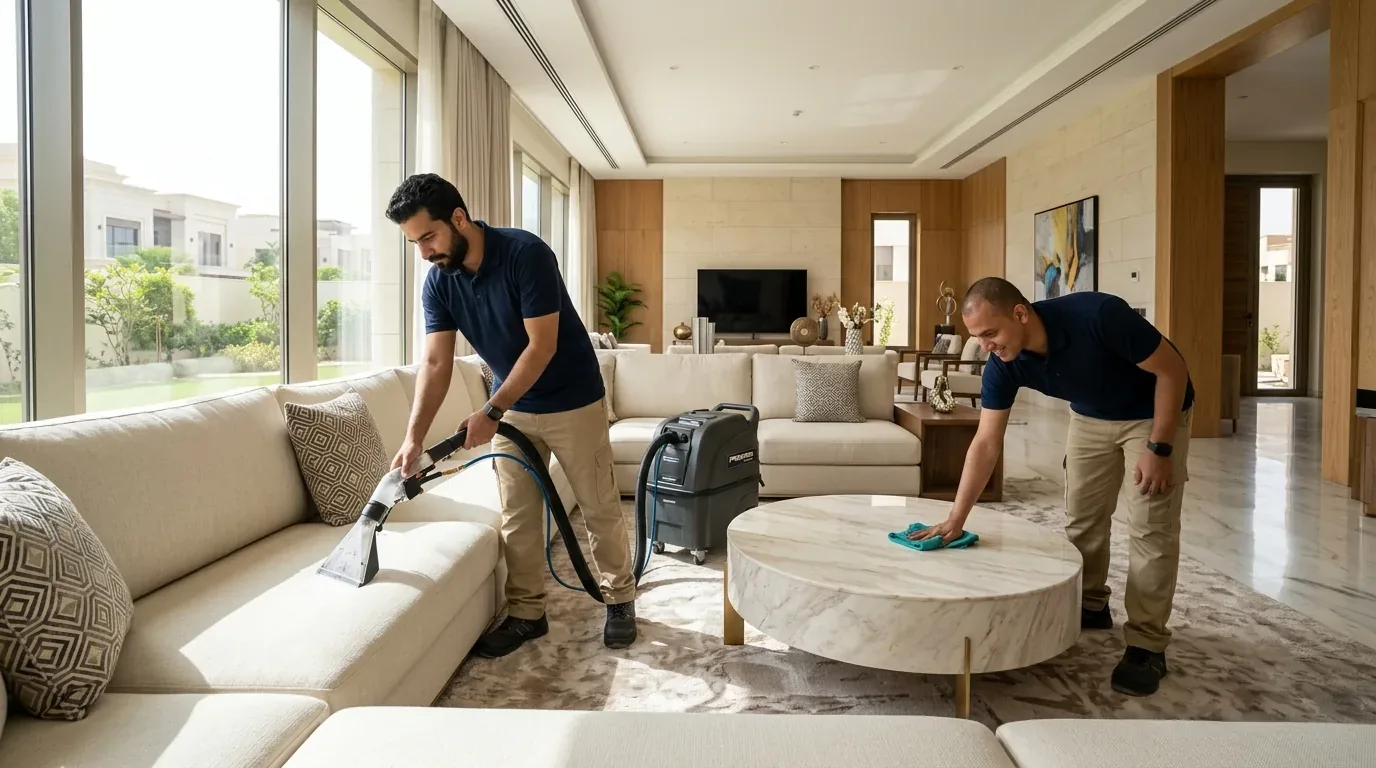
Clean, well-ventilated living room in a Jeddah home

Quick Summary

  • Fix the moisture source first; cleaning alone will not stop mold returning
  • Open windows in drier parts of the day and run bathroom and kitchen extractors
  • Keep furniture and wardrobes a few centimetres off exterior walls
  • Never mix cleaning products, and never combine bleach with acids or ammonia
  • Large or recurring patches call for a specialist and a proper diagnosis
Causes

Why do humidity and mold form in Jeddah homes?

Three factors repeat in most cases: humid air, cold surfaces and weak ventilation.

Humid coastal air

Mold needs moisture before anything else. In coastal cities the air carries a lot of water vapour, and once it enters a sealed home and cannot leave, it settles into fabrics, wood and walls. The problem grows on days when humidity is high and there is little air movement.

Newer, tightly insulated homes can trap moisture more than older ones because the air inside is replaced slowly. Older buildings, meanwhile, may suffer seepage through walls, roofs or ageing pipes.

Most common moisture sources indoors

  • Condensation on cold walls, glass and pipes
  • A small leak from a basin, tank, AC drain or hidden plumbing
  • Shower and cooking steam without enough extraction
  • Damp laundry or rugs shut inside a closed room
  • Floor-washing water left in corners that never dries

Air conditioners and cold surfaces

Running AC for many hours with doors and windows shut cools walls and glass, so warm humid air deposits water the moment it touches them. That is why mold often shows behind heavy curtains, behind furniture against an exterior wall and along window frames.

The AC itself can be part of the story: a blocked or badly sloped drain hose sends water back to the wall or lets it drip inside a false ceiling.

Worth knowing

If a dark patch appears under or around an AC unit, check the drain first. Cleaning the patch without fixing its source means it will return within weeks.

Poor ventilation and too much closing-up

Many households keep spare rooms and storerooms shut for long periods, or avoid opening windows because of dust and heat. The result is stagnant air that holds its moisture. Wardrobes packed with clothes, shoes and bags add another layer, because fabrics and leather absorb damp and release it slowly.

The answer is not to leave windows open all day. Choose the drier hours, run the extractors, leave a small gap behind wardrobes and open closed rooms now and then to refresh the air.

Detection

Early warning signs before mold becomes a big job

Your nose and eyes catch most cases if you know where to look.

WhereSignLikely causeFirst action
Behind curtains and on window edgesBlack or grey dots on the frame and wallOvernight condensation with ACClean the surface, move the curtain, improve airflow
Inside wardrobesMusty smell, discoloured fabric or leatherStagnant air, trapped moistureEmpty, air out and dry the shelves
Bathroom ceiling and tile jointsDark spots and white scale togetherSteam without proper extractionRun the extractor; see the limescale and mold guide
Under or around the AC unitPeeling paint, damp patchesBlocked drain or leakInspect the drain hose before cleaning
Behind furniture on exterior wallsOld smell, marks on the floorNo airflow at allPull furniture 5–10 cm off the wall
Upholstery and mattressesBrown spots or smell after cleaningIncomplete dryingSee damp smell after cleaning

The smell comes before the stain

A musty, damp-earth smell is an earlier signal than the stain itself. If you notice it when opening a room or wardrobe after a long closure, look for the source rather than covering it with air freshener; fragrance hides the warning without fixing the cause.

Watch paper, books and cardboard boxes too, since they absorb moisture quickly and act as early indicators. Paint that bubbles or flakes, or white salt crust on a wall, usually points to rising damp or a leak rather than a surface stain.

Telling mold from dirt and scale

Not every dark mark is mold. Dirt, smoke and soap residue can look similar. A simple test: wipe a small area with a damp cloth and a mild household cleaner. If it lifts easily it is probably dirt; if it returns quickly in the same place with a damp smell, suspect mold.

White, rough deposits in bathrooms and kitchens are mineral scale from water, not mold, and need a different treatment.

Prevention

Prevention steps inside the home

Small daily habits lower humidity more than any product.

Ventilation and extractors

Run the bathroom extractor during showers and for about twenty minutes afterwards, and use the kitchen extractor while cooking. Where there is no extractor, open a window or door slightly and keep the room door closed so steam does not spread through the home.

On less humid days open opposite windows for ten minutes so air can pass through. Wipe dust from extractor grilles as well, because clogged grilles lose suction over time.

Easy daily habits

  • Squeegee the shower and floor after use
  • Do not dry laundry in a closed room without ventilation
  • Empty water trays on appliances that have them
  • Open closed rooms weekly to renew the air
  • Set the AC to a moderate temperature rather than constant deep cooling

Furniture, wardrobes and fabrics

Leave a small gap between furniture and exterior walls, and do not push wardrobes flush against a wall with no space behind. Inside wardrobes use moisture-absorbing sachets or boxes and replace them when full, and never store clothes that are not completely dry.

Air heavy upholstery weekly in dry weather and check behind sofas and beds that sit against walls. If upholstery has been washed, make sure it is completely dry before it goes back into place.

Bathroom, kitchen and drainage

These are the two biggest moisture sources. Use a squeegee after every shower and inspect the silicone around basins and toilets, since cracks and peeling let water slip behind. In the kitchen dry the sink area and check there is no dripping beneath it.

About every three months look at the pipes under basins and the washing machine and at AC drain hoses; a small steady leak can feed mold behind a wall for months before it shows.

Regular cleaning of exposed surfaces

Wipe window sills, frames and tile joints every two weeks with a damp cloth and dry them, because mold in its first stage feeds on water and dirt together. A periodic deep clean two or three times a year reaches the corners that routine cleaning misses.

After dust storms, dust mixes with humidity and becomes a sticky film on glass and AC units; see cleaning a home after dust storms for the right order of work.

Cleaning

How to clean small surface mold safely, and when to stop

Small patches on hard surfaces can be handled carefully at home; anything else needs assessment.

Home steps for small areas

Wear gloves, a suitable mask and eye protection, and open a window. Start with a small area on a hard surface such as tile or ceramic. Use water, a mild household cleaner and a soft brush, then rinse and dry thoroughly with a clean cloth and a fan.

Avoid dry-brushing or sweeping, which spreads spores into the air. Bag the used cloths and sponges and throw them away rather than reusing them elsewhere.

Warnings you should not skip

  • Never mix bleach with any acid, ammonia or other cleaner; it releases toxic fumes
  • Do not use bleach on fabrics, wood, marble or delicate finishes
  • Do not spray strong products in a closed room or stay there afterwards
  • Keep children, pregnant women and people with asthma or allergies away during the work
  • Test any cleaner on a small hidden spot first
When to stop

If mold covers a large area, appears inside walls or under floors, comes back after cleaning, or is linked to a water leak, do not handle it yourself; bring in a specialist to find and fix the source.

Affected upholstery, sofas and carpets

Mold in porous fabrics differs from mold on hard surfaces because the roots reach into the fibres. A small spot on a cleanable sofa may respond to limited treatment, but wide spread needs extraction equipment and strong drying.

This is where a team offering sofa and majlis cleaning or carpet cleaning helps, rather than home attempts that add more water and lengthen drying.

What a specialist team adds

The first benefit is diagnosis: is the moisture from condensation or from a leak? The second is equipment: extraction machines, drying tools, specialist brushes and knowledge of how much each surface tolerates. That does not mean every problem is solved in one visit; some cases need plumbing or insulation repair before cleaning.

At Al Awael we provide home cleaning in Jeddah and tell you during the visit what can be cleaned and what needs repair from another trade. Message us on WhatsApp with a description and photos before the visit.

Plan

A simple plan across the month

A short schedule any household can follow without special equipment.

How oftenWhat to doGoal
DailyRun extractors, dry the bathroom and let air through when possibleLower everyday humidity
WeeklyOpen closed rooms, air upholstery, wipe window edgesStop moisture building up
MonthlyCheck under basins, AC drain hoses and behind furnitureSpot leaks early
Every 3–4 monthsClean AC units and filters and check silicone sealsProtect surfaces and air
YearlyWhole-home deep clean and review of hard-to-reach areasCover what routine cleaning misses
FAQ

Common questions about humidity and mold in Jeddah

Short answers to what homeowners ask most.

Is mold in Jeddah homes just a fact of coastal life?+

High humidity raises the chance, but it is not inevitable. Ventilation, fixing leaks and drying regularly prevent it in most homes.

How can I tell mold from dirt?+

Wipe a small area with water and mild cleaner. If it lifts easily it is probably dirt; if it returns fast with a damp smell, suspect mold and look for the water source.

Is bleach enough to remove mold?+

It may whiten a hard surface but does not treat the cause, is unsuitable for fabrics and wood, and must never be mixed with acids or ammonia. Fix the moisture source first and use a mild cleaner.

Can mold affect health?+

It can worsen allergy and asthma symptoms in some people. If symptoms persist see a doctor, and stay out of the area while cleaning.

When do I need a specialist team?+

When mold covers a large area, appears inside walls, is tied to a leak, returns after cleaning, or has spread through upholstery and carpets.

Does the AC cause mold?+

Not by itself, but condensation on cold surfaces, blocked drains and dusty filters can create the right conditions. Clean the filters and check the drain regularly.

How do I contact you to describe the problem?+

Send a WhatsApp message to +966 56 630 0558 with photos and the approximate area, and we will explain the right next step.

Ready to Book a Cleaning Visit in Jeddah?

Send us the property type, size and what you want cleaned on WhatsApp and we will arrange the details and the right preparation.

CallWhatsAppGet Quote