
Serving Jeddah & Makkah
Curtain Guide8 min readJeddah

Cleaning Curtains in Jeddah by Fabric Type: Wash, Steam or Dry-Clean?

How to read a curtain's care label, which method suits chiffon, velvet and blackout, how to avoid shrinkage and keep colours, and how to deal with dust and smells.

Curtains take in dust, smoke and smells because they hang in the airflow from windows and AC outlets, yet they are usually the last thing to be cleaned. In Jeddah, with seasonal dust and high humidity, the need for regular care is higher.

The difficulty is that curtains are not all alike: a light chiffon panel can often go in the washing machine, while a velvet or lined curtain can be ruined by water. The wrong method means shrinkage, fading or a rippled lining that cannot be put right.

This guide explains how to read the fabric, a light maintenance routine, the difference between washing, dry-cleaning and steaming, how to dry and rehang a curtain, and how to handle smells and damp near windows.

Cleaning fabric curtains in a Jeddah home

Quick Summary

  • Read the care label first; some fabrics cannot tolerate water.
  • Regular vacuuming reduces how often washing is needed.
  • Velvet, lined and heavy curtains usually need dry or specialist cleaning.
  • Dry curtains hanging or laid out, away from long direct sun.
  • Mold near windows points to a moisture problem that needs its source treated.
Quick Reference

Choosing the Cleaning Method by Fabric

A quick look at what suits each type and what to avoid.

FabricSuitable MethodAvoidNote
Chiffon and voileGentle wash in a mesh bagHot water and hard wringingHang slightly damp
Light polyesterGentle wash or steamHigh ironing heatFollow the label
VelvetDry or specialist cleaningWater washing and rubbingFeel can change easily
Blackout and linedAs labelled and with careHeat and rough washingBack coating can crack or lining ripple
Linen and silkUsually dry-cleaningWater and direct sunShrinks and fades easily
In-Depth Guide

Five Steps to Care for Curtains

From knowing the fabric to rehanging safely.

Step 1

Know the Curtain Fabric Before Any Cleaning

Look for the care label, which sets out washing in water or dry-cleaning and the ironing temperature. If there is none, judge by fabric: chiffon, voile and light polyester are generally easier, while velvet, silk, heavy linen and lined fabrics are more delicate.

Blackout curtains are often coated on the back, and that layer can crack with heat and rough washing. Lined curtains have two layers that may shrink at different rates and ripple. Embroidered curtains or those with beads or trims need extra care.

Before trying any cleaner, test it on a hidden corner for colour fastness and shrinkage. If the curtains are expensive or old, a specialist is less risky than experimenting.

What Decides the Cleaning Method

  • The care label: water wash or dry-clean
  • Fabric type: light, velvet, linen or silk
  • Whether there is a lining or blackout coating
  • Embroidery, beads or applied trims
  • Colour fastness on a hidden corner
Note

When unsure between water washing and dry-cleaning, choose the lower-risk route or ask a specialist, because damage often cannot be repaired.

Step 2

Regular Upkeep: Vacuum, Shake and Air

The easiest way to slow soiling is to vacuum curtains regularly with an upholstery nozzle, top to bottom on low suction, lifting dust before it works into the fibres. Shake light curtains gently near an open window or outside if you can.

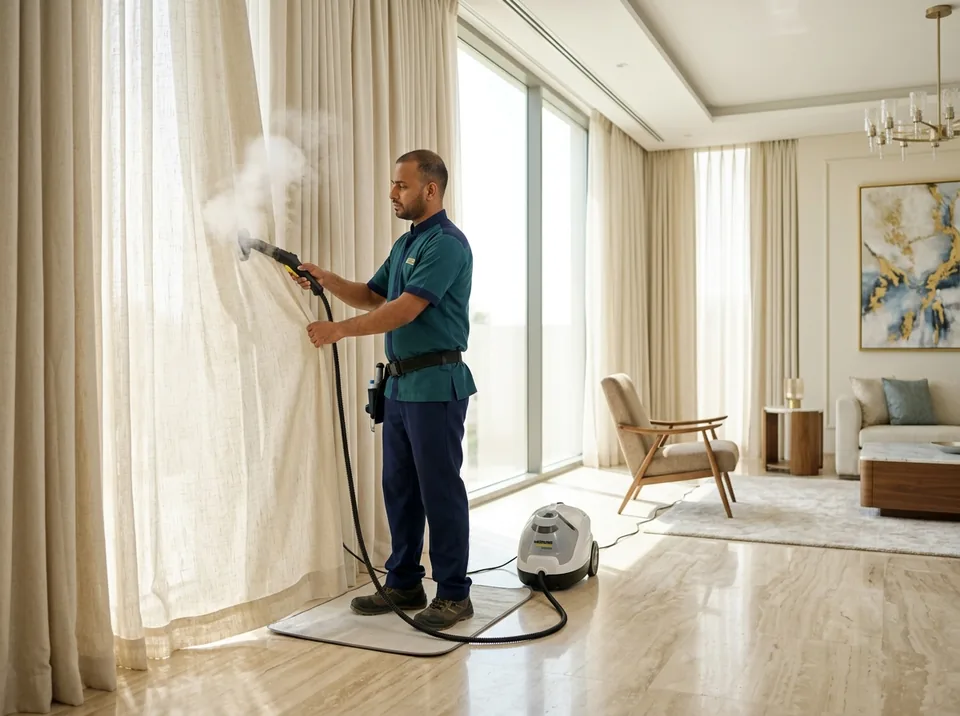
A light handheld steamer can help smooth creases, freshen some fabrics and reduce lingering smells, but do not use it on heat-sensitive fabrics such as silk, velvet or fabrics with glued layers. Try it on a small area first.

Ventilating rooms and not leaving curtains pressed against wet glass or AC outlets cuts damp and smell. After dust storms note that curtains catch a lot of it, so vacuum them before humidity turns it into marks.

Suggested Routine

  • A light vacuum top to bottom every few weeks
  • A gentle shake at an open window or outside
  • Light handheld steaming for freshening after testing
  • Ventilate the room and keep the curtain off damp glass
  • Vacuum curtains after dust storms
Step 3

Wash, Dry-Clean or Steam?

Light washable curtains: remove hooks and rings, put them in a mesh bag and wash on a gentle cycle in cold or lukewarm water with a mild detergent and a low spin speed. Avoid overdoing detergent, and rinse thoroughly so no residue stays in the fabric.

Heavy, velvet, lined and embroidered curtains are usually dry-cleaned or treated by specialist methods, because a water wash may change the feel or shrink the lining. Steaming while hung can suit some fabrics depending on type, and avoids taking them down.

Consult a specialist if the curtains are large, numerous or hard to remove, since working at height on ladders and taking curtains down and refitting them carries risks of falls and damage. Cleaning many windows at once also takes time and organisation.

Choosing the Method

  • Chiffon, voile and light polyester: gentle wash per label
  • Velvet, silk and heavy linen: dry or specialist cleaning
  • Lined or blackout: beware of shrinkage and cracking
  • Embroidered or decorated: usually specialist cleaning
  • Steaming while hung: only for certain fabrics after testing
Warning

Do not wash a curtain in hot water or dry it on high heat before reading the label, because shrinkage may be irreversible.

Step 4

Drying, Rehanging and Ironing

The best way to dry washable curtains is to hang them slightly damp on the rod or a line in a shaded, well-ventilated place, where their own weight pulls the fabric straight and reduces creases. Avoid long drying in direct sun, which fades colour and weakens some fibres.

If ironing is needed, use the right heat for the fabric from the reverse side, or use a handheld steamer to relax creases without touching the fabric directly. Do not iron printed or velvet fabrics without clear instructions.

When rehanging, make sure the curtain is fully dry, check the rod, rings and hooks, and spread the folds evenly. If the curtains are high, use a stable ladder and a helper to avoid falls.

Drying and Rehanging Tips

  • Hang slightly damp in shade with good ventilation
  • Avoid long direct sun to prevent fading
  • Iron at the right heat from the back or use light steam
  • Make sure it is fully dry before rehanging
  • Use a stable ladder and helper for high rods
Step 5

Smells, Mold and Damp Near Windows

Curtains pick up cooking smells, smoke and damp, especially in open kitchens and living rooms. Good ventilation, vacuuming and light steaming on suitable fabrics ease most of these, while deep odours need washing or specialist cleaning.

If dark marks or a musty smell appear on the lower part of a curtain near the glass, suspect condensation on the window. Treat the source by improving ventilation, drying the glass and checking the seals, and clean the curtain as its fabric allows, never leaving it wet.

Roller and motorised blinds need different care: they are usually wiped lightly or vacuumed and not soaked. With a motorised system switch off the power before any cleaning and follow the manufacturer's instructions.

Treating Smells and Damp

  • Ventilate the room and vacuum curtains regularly
  • Light steaming on suitable fabrics after testing
  • Treat condensation on glass to prevent mold
  • Wash or specialist-clean for deep odours
  • Switch off power before cleaning motorised blinds
Tip

If someone in the home has allergies, make curtain washing or cleaning part of the regular cleaning cycle instead of waiting for symptoms.

Practical Decision

When Is Home Care Enough and When Do You Need a Team?

The call depends on fabric, height and quantity.

Home Care Is Enough When

  • Curtains are light and machine-washable per label
  • There is light dust needing only vacuuming and shaking
  • There are few, low windows
  • There are no deep stains or smells
  • You can dry them in shade

A Specialist Team Is Better When

  • They are velvet, silk or lined and embroidered fabrics
  • There are many curtains in a villa
  • Windows are high and need long ladders
  • There are stains, mold or deep smells
  • The fabric's care instructions are unclear

We serve Jeddah and Makkah. Send us the fabric type, number of curtains and photos on WhatsApp and we will suggest the best fit.

Common Questions

Frequently Asked Questions

Common questions about cleaning curtains and removing dust and smells.

How often should I clean curtains?+

It depends on dust, smoke and smells, but vacuuming every few weeks and washing or cleaning once or twice a year suits most homes, and more often with allergies or fast soiling.

Can I wash curtains in the washing machine?+

If the care label allows and they are a light fabric, use a gentle cycle in cold water with a mesh bag. Heavy, velvet and lined curtains usually are not suited to a machine.

How do I stop curtains shrinking?+

Avoid hot water, hard wringing and high-heat drying, read the label, and hang the curtain slightly damp so its weight pulls it straight. For delicate fabrics use dry-cleaning.

Does steam remove dust and smells?+

It eases some smells and creases on suitable fabrics, but it does not replace vacuuming for dust and does not suit heat-sensitive fabrics. Test a small area first.

Why do dark marks appear at the bottom of curtains by the glass?+

Usually condensation on the glass and contact with the curtain. Improve ventilation, dry the glass and check seals, and clean the curtain to suit its fabric.

Can I clean curtains while they are hanging?+

You can vacuum or lightly steam them in place if the fabric allows, but deep washing usually requires taking them down. For high rods, use a trained team.

Do you clean curtains in Jeddah?+

We provide home, sofa and carpet cleaning in Jeddah and Makkah. For curtains, send us the fabric type, window count and a photo on WhatsApp and we will suggest the right option.

Curtains That Need Care in Jeddah?

Send us the fabric type, number of curtains and a photo on WhatsApp and we will suggest the right method and service.

CallWhatsAppGet Quote