
Serving Jeddah & Makkah
Tank guide9 min readJeddah

Who Is Responsible for Cleaning the Water Tank in a Rented Property in Jeddah?

Disputes over the tank usually start with the first complaint about the water: does cleaning fall on the landlord or on the tenant? It is safer to agree in writing before a problem appears.

In a rented property the tank is usually a shared service: it is part of the building the landlord owns, and the tenant benefits from it every day. When cleaning is delayed, the argument appears: the tenant says it is a building asset, and the landlord says daily use falls on the occupant. This page is not legal advice, and we do not interpret contracts or regulations, but it sets out what helps both sides in practice: how to structure the agreement, what to document before and after the service, how to coordinate in multi-unit buildings, and when to review the contract or consult a specialist. The aim is that a tank is never left uncleaned because it is unclear who pays or who arranges it. Written records also protect both parties and make any later review easier and quicker.

Below you will find a practical look at sun exposure, water temperature, algae, the lid and vent, shading and insulation, and a simple monthly routine. If you would rather have the tank cleaned and inspected by a team, see our water tank cleaning in Jeddah page.

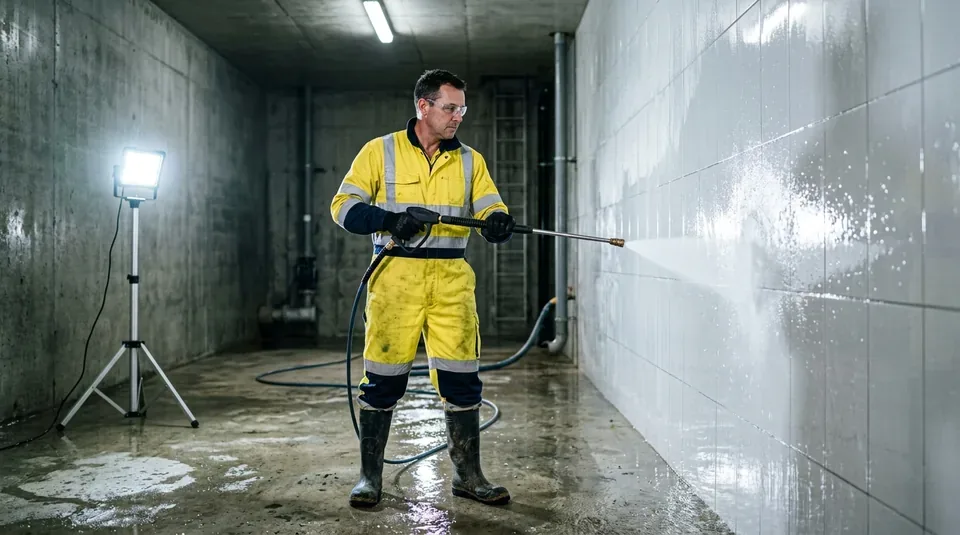
Water tank in a residential building in Jeddah before agreeing a cleaning date

Quick Summary

  • Check the tenancy contract for what it says about maintenance and the tank, and consult a legal specialist if needed; we do not give legal advice.
  • Agree in writing who requests the service, who pays, who contacts the team and when the next visit is scheduled.
  • Photograph the tank before and after cleaning and keep the service description.
  • In shared buildings, coordinate through the owner or association rather than with each resident separately.
Quick reference

Agreement points that avoid disputes

A practical table of points worth clarifying between landlord and tenant before any cleaning date, noting that the contract has the final say.

PointWhat to defineWhy it mattersWhat to record
Who requests the serviceThe name of the person who contacts the cleaning companyAvoids clashing appointmentsA written message with date and name
Who bears the costHow the cost is split or who is responsible under the contractAvoids disputes after the serviceA clear receipt or invoice
Regular cleaning dateHow many months apart and who reminds whomPrevents open-ended postponementA simple yearly schedule both sides accept
Tank condition before cleaningPhotos of the lid, water and float valveProves the earlier conditionDated photos
After the serviceA description of the work and after photosTo review quality and know what was doneA report or message from the team
Structural defectsLeaks, cracks or a broken lidMay need repair before cleaningA written notice of the problem
In-depth guide

Eight areas for organising tank responsibility

Each area is presented in a practical way that any landlord or tenant can apply without entering legal interpretation.

Factor 1

Why does the tank become a source of dispute?

The tank serves everyone yet is invisible in daily life, so nobody thinks of it until a complaint arises. Then each side looks for the person responsible instead of the solution, and time is lost while the tank gets worse.

Tenancy contracts may not mention the tank explicitly, or mention maintenance in general terms, so both sides need a clearer agreement that completes the contract.

It is best to settle it early with a simple question: who takes the initiative, who pays and how often?

The shorter and more clearly written the agreement, the fewer the disputes and the easier any review.

It often happens that cleaning is postponed for years because each side waits for the other, so sediment builds up and later cleaning becomes harder, longer and possibly costlier than regular upkeep.

Factor 2

What the contract says and what a specialist interprets

Start by reading the maintenance and repairs clauses of the tenancy contract and see whether they mention tanks, shared services or periodic cleaning.

If the wording is unclear, do not improvise an interpretation; consult a legal specialist or the body that regulates rental relationships, because we are a cleaning company and do not give legal opinions.

What we offer here is practical guidance for coordination, not a substitute for the contract or the regulations in force.

Keep a copy of the contract and the maintenance correspondence to return to when needed; where a property management company runs maintenance, ask how shared services are requested and who approves the cost.

Factor 3

A simple written agreement between the two sides

A short text signed by both sides, or exchanged in a message, is enough: who requests the service, who pays, when the visit is scheduled, who contacts the team and how receipts are kept.

It helps to set a maximum reply time for a cleaning request so it does not hang for weeks.

If the sides disagree on cost, they can agree that cleaning goes ahead first and the split is reviewed afterwards, as they decide together.

Any change to the agreement is also recorded in writing; both sides may also agree that one coordinates while the other bears a share of the cost, provided it is all written and clear.

Factor 4

Documentation before cleaning

Take photos of the lid, the access hatch, the float valve and any visible leak or rust, plus the water colour from a nearby tap, and note the date of the photos.

Tell the other side what you saw in a written message with the photos attached, so the earlier condition is clearly recorded.

It also helps the team to know any previous repairs, their dates and the age of the tank if known.

If there is a structural defect such as cracks or a broken lid, it is better to report it before the appointment so the repair can be arranged.

Factor 5

Multi-unit buildings

In one building, one or two tanks feed several flats, so coordination is needed with the owner, the association or the building manager rather than each resident requesting separately.

A single appointment and expected length of water cut are set and everyone is told in advance, and each resident prepares temporary storage safely.

Cost is divided as owners agree or as the building rules state.

That saves everyone repeated water cuts and keeps scheduling regular, and our guide on shared tanks covers the details, including how to deal with tenants and owners who live together in the same building.

Factor 6

Who contacts the cleaning company?

Pick one person to contact the team and take calls, whether landlord, tenant or building manager, and tell the others the dates.

Several contacts confuse scheduling and sometimes lead to two bookings or a cancelled slot nobody else knows about.

Give the team the number of the person responsible for opening the roof or the tank room and for access on the day of the visit.

Agree beforehand who receives the service description once the work ends, and who holds the key if the tank is behind a lock on a shared roof.

Factor 7

After cleaning: work description and review

Ask the team for a clear description of what was done in the tank, plus after-cleaning photos where possible, and share them with the other side so everyone is informed.

Review our checklist for verifying cleaning quality after the service, and watch the colour and smell of the water over the following days.

If a remark appears, contact the team directly and tell the other side so they can share the follow-up.

Keep the description and the receipt with the property papers, and ask the team for maintenance tips between visits to share with the other side; the monthly check is part of the answer.

Factor 8

Scheduling regular cleaning and reminders

Agree a simple yearly schedule of expected cleaning dates, reviewed when the number of occupants or the water condition changes, and see our frequency guide to choose a suitable interval.

A reminder can be set on one side’s phone or in a shared file so the date is not forgotten.

If a sign appears that calls for cleaning before the due date, such as a smell or cloudiness, do not wait for the scheduled date.

At the end of a tenancy, recording the last cleaning date makes handover easier, and in this way the tank turns from a point of dispute into a routine maintenance item where everyone knows their role.

Common Questions

Frequently asked questions

Short answers to what tank owners in Jeddah ask most.

Is the landlord always responsible for cleaning the tank?+

Not necessarily; it depends on what the tenancy contract says and what both sides agreed. We are a cleaning company and do not give legal opinions, so we recommend reviewing the contract and consulting a specialist when the wording is unclear.

What if the other side refuses to share the cost?+

Try to agree in writing on a temporary arrangement so cleaning is not delayed, then review the contract or the body that regulates rental relationships. We do not recommend leaving the tank uncleaned during a dispute, because water cleanliness matters to everyone living in the property.

Can I request cleaning on my own as a tenant?+

You can contact us for an inspection and a quote, but it is better to inform the landlord and get approval, especially if the tank is shared or access needs common areas such as the roof. We can send an introduction to the service for the landlord to speed up approval.

What should I document before the visit?+

Photos of the lid, access hatch, float valve and any leak or rust, the water colour, the date and any previous repairs. Send them to the other side in a written message so a shared record exists; a shared digital folder is a good place to keep them.

How do I handle a building with several tenants?+

Coordinate with the owner, the association or the building manager to set one appointment, tell everyone and divide the cost. Avoid requesting the service from each resident separately so appointments do not clash, and agree who will be present to open the roof or tank room.

Do you provide an invoice or a description of the service?+

We explain what was done in the tank after the service, and you can ask for a receipt or a written description with photos as agreed when booking. Keep them with the property papers and, ideally, a digital copy in a shared file.

Do you clean tanks in rented properties in Jeddah?+

Yes, we offer water tank cleaning in Jeddah for homes and buildings. Message us on WhatsApp with the tank type, the number of units and who will contact us, and we do not promise results before inspection. We can also coordinate with the landlord or property management on access to the roof.

Want to arrange tank cleaning in a rented property?

Send the number of units, the tank type and the name of the person who will contact us, and we will arrange the inspection and appointment to suit the landlord and residents.

CallWhatsAppGet Quote