
Serving Jeddah & Makkah
Water tank guide8 min readJeddah

How to Read a Water Tank Cleaning Report: What the Technician Should Write and What You Should Ask

Once the crew leaves you are left with a note, a message or a few photos. This guide helps you judge what really happened inside your tank.

Many homeowners in Jeddah pay for a tank cleaning and then never learn what was done, simply because nobody explained it. A written record, even a short one, is the only way to tell a careful visit from a rushed one.

Below we explain what a visit record should contain, how to read each part, and when to ask for clarification. For details of the service itself, see our page on water tank cleaning in Jeddah.

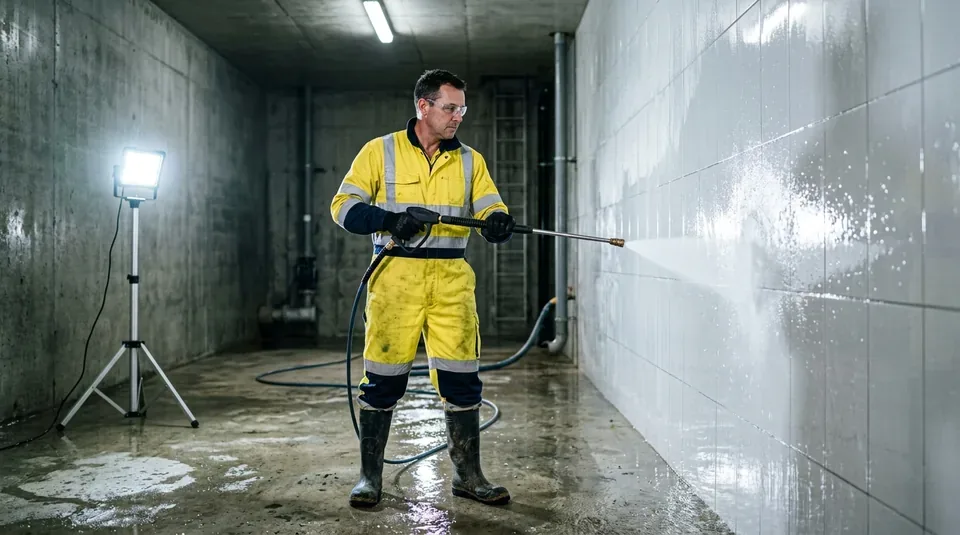
Technician pressure-washing the inside of a water tank in Jeddah

Quick Summary

  • Ask for a written record showing the visit date, tank type and location.
  • Check that the steps are listed in order: drain, remove sediment, wash, rinse, disinfect, final rinse.
  • Compare before and after photos taken from the same angle inside the tank.
  • Keep the notes and the suggested date for the next visit.
Quick table

What to check in each part of the report

Hold what you received up against this table; if a whole line is missing, ask about it before you treat the job as finished.

ItemWhat you should expectRed flag worth a questionWhat to do
Visit detailsDate, address, tank type (ground or roof), number of tanks, approximate capacityNo date, or no mention of which tank was cleanedAsk for the missing details the same day while memories are fresh
Condition before and afterA written description of sediment, algae or scale, with photosA vague line such as "cleaning done" with nothing elseAsk for photos from inside the tank or a plain description of what was found
Steps and materialsOrder of work, the product used, and how many rinses were doneNo mention of a final rinse or of the productAsk about the last rinse, the product name and its instructions
Notes and adviceState of the lid, float valve, vents and any leaks, plus a suggested next visitA defect noted with no recommendation attachedAsk for a written recommendation on what needs fixing and who does it
In detail

Eight parts of a service record and how to read them with confidence

We go through the record one part at a time, with examples drawn from the ground and roof tanks found in Jeddah villas and apartment buildings.

Part 1

Why a service record matters at all

A tank is closed, dark and rarely seen by the owner, so what gets written after the visit is the only evidence of what took place. A record does not guarantee quality on its own, but it makes the work reviewable and keeps the crew honest about detail.

In Jeddah sediment builds up quickly in ground tanks because of dust, salts and summer heat. A precise description of what was found helps you pick a sensible interval for the next visit instead of guessing.

You do not need a long formal form. A clear sheet, or a well-organised WhatsApp message with photos, is enough as long as it covers the points described below.

Part 2

The basics: date, location and tank type

A good record opens with the date, the address and the name of the person who received the crew. These look like formalities, yet they help later when you compare two visits or follow up on a remark.

It then identifies the tank exactly: ground or roof, how many tanks, and roughly what size. In villas with two tanks the record should confirm that both were cleaned, because it is common for only one to be done while everyone assumes the job is complete.

If the building uses a shared tank, ask for that to be written down. Responsibility for follow-up then sits with the residents or the owners association rather than with nobody.

Part 3

What was found before cleaning started

The most valuable part of any record is the description of the starting condition: was there muddy sediment on the floor, a green film on the walls, hard scale, or dirt that came in through the lid? It tells you how neglected the tank had been and whether you need a shorter schedule.

Beware of general phrases. "The tank is clean" means little if the record never says what it looked like before. A useful note gives the place and rough amount, such as sediment near the inlet, or algae on the sun-facing wall of a roof tank.

This description also lets you compare today’s result with what another crew wrote last time, which is the only fair way to judge how fast your own tank gets dirty.

Part 4

The steps that were carried out, in order

Read the steps in sequence: shut off the supply and drain the water, remove sediment from the bottom, scrub walls and floor, rinse, apply a suitable disinfectant while respecting its contact time, then rinse again and refill. A missing final rinse is the one omission that deserves a direct question.

With a ground tank feeding a roof tank, ask about the order of work between them. Cleaning one and then pumping water into the other before it has been washed spoils the result. We describe that sequence in our guide to <a class="underline" href="/en/guides/ground-and-roof-tank-system-cleaning-order-pump-transfer-jeddah">cleaning ground and roof tanks in the right order</a>.

The technician is not expected to write technical essays. Plain wording and the right sequence are enough.

Part 5

Products used and contact time

The record should name the product used for washing and disinfecting, or at least its category, and it should be suitable for tanks that hold household water. If lingering smell worries you, ask to see the product’s instruction sheet.

Contact time is how long the solution stays on the surfaces before rinsing. No single number suits every product; the manufacturer’s instructions are the reference, so ask which duration the crew followed rather than accepting a vague answer.

If a strong smell is present when the tank is refilled, do not drink the water and call the company straight away for another rinse. It usually means the final rinse was not thorough enough.

Part 6

Condition of the tank and its fittings

A cleaning visit is a rare chance to see the inside of the tank, so the technician should note the lid and how well it seals, the vents and their screens, the float valve, the valves and visible pipes, and any cracks, leaks, rust or flaking internal coating.

These notes turn the visit from a wash into an inspection. A broken lid on a roof tank, for example, lets in dust, birds and insects, and a worn float can mean overflow or a tank that stops filling.

If the record flags a fault, ask who will repair it, whether it falls within the service or needs a plumber or contractor, and when it can be done.

Part 7

Before and after photos: how to read them

Photos are among the best evidence in a record, provided they are taken from the same angle. A before picture from the left corner and an after picture from the right corner prove nothing, whereas two shots of the same patch of floor show the difference clearly.

Watch the lighting. Tanks are dark, and weak photos can hide sediment or suggest a cleanliness that is not real. Ask for one shot of the floor, one of a wall, one of the lid from inside and one of the inlet.

If the crew took no photos, ask for a detailed written description instead. Missing pictures are not a defect in themselves when the description is precise and convincing.

Part 8

Advice, the next visit date and keeping the record

A good record ends with practical advice: when the next visit should be, whether a repair is needed before then, and what you can check yourself, such as the lid once a month. The date depends on the tank type, its condition and how the water is used, not on a fixed number for everyone.

Keep the record and photos in one place. They help a new tenant, the owner or the building committee, and they make the next visit easier because the crew can see what was found last time.

Once you hold two records a known time apart you will understand how quickly sediment builds in your own tank, which is information nobody else has.

Common Questions

Frequently asked questions

Short answers to what tank owners in Jeddah ask most.

Can I ask for a written report after the cleaning?+

Yes. You are entitled to ask for a written record or an organised message that states the date, which tank was cleaned, the steps taken and any observations. Its format differs between companies, but a written description of what happened is far better than a verbal assurance.

Does the record replace a laboratory water test?+

No. The record documents what was done during the visit only. Whether water is fit to drink is measured by tests carried out by qualified bodies. If you have a specific health concern, ask a qualified testing body rather than relying on the report alone.

How many photos should I ask for?+

There is no fixed number, but one of the floor, one of a wall, one of the lid from inside and one of the inlet, before and after, give a reasonable picture. What matters is that they share the same angle and have enough light.

What should I do if the record is incomplete?+

Contact the company the same day and ask about the missing item specifically, preferably in writing. If you get no convincing answer, keep the messages and consider an earlier follow-up date or a different provider for the next visit.

Does the record always name the product used?+

It should. If it does not, ask for the product name and its instructions. Do not settle for "a safe material" without a name, because the name lets you check that it suits household water tanks.

Who keeps the record in a shared building?+

Ideally the building committee, the caretaker or the property manager, with a photographed copy for anyone interested. That way the record is not lost when tenants or managers change.

Can I use the record to review the next visit date?+

Yes, that is its main value. Heavy sediment after a short period may call for a closer date or a check of the lid and inlet, while a good condition after a long period lets you trust the current schedule.

Want a cleaning visit with a clear record of what was done?

Send us the tank type, its location and the number of tanks, tell us what you would like documented, and we will arrange a time with you in Jeddah.

CallWhatsAppGet Quote