
Serving Jeddah & Makkah
Carpet guide9 min readJeddah

Carpet Stain First Aid Before the Team Arrives: Coffee, Tea, Juice and Grease

The first ten minutes decide whether a stain lifts or sets

In many Jeddah homes, coffee, tea and juice are served in the majlis and living room, often on the carpet, so a cup tips or a greasy plate drops in a second. What you do in the first minutes usually decides whether the stain lifts fully or becomes a permanent mark.

This guide gives simple, safe first-aid steps for the most common stains, explains the mistakes that set stains in, and says when it is wiser to stop and leave the job to a trained team.

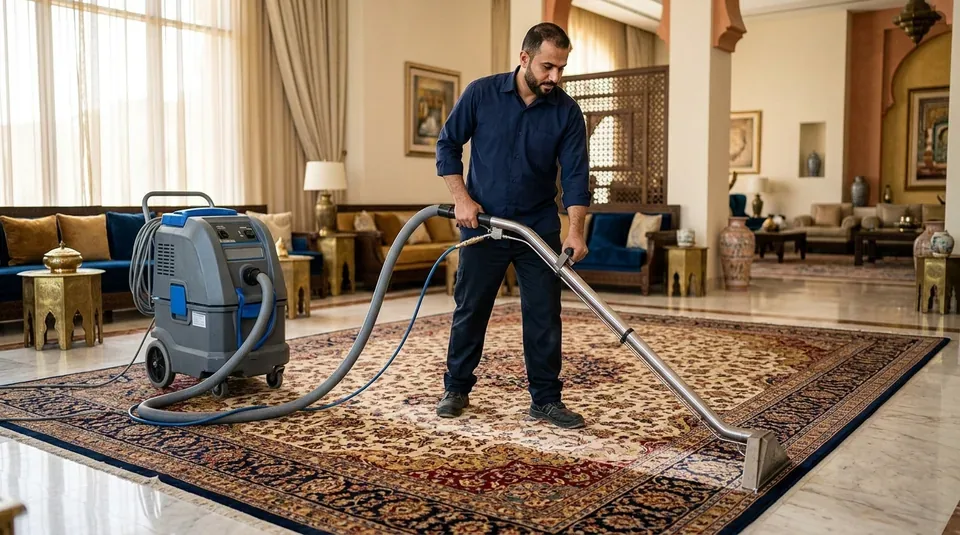
Technician treating a stain on a home carpet in Jeddah

Quick Summary

  • Blot by pressing, never rub
  • Cold water first, then a gentle cleaner
  • Test any product on a hidden spot first
  • Never mix cleaning products
  • Old or large stains need a specialist
Quick table

What to do first, and what to avoid, by stain type

A quick table for the moment of the accident; it does not replace checking the fibre and dye.

Stain typeFirst moveAvoid
Coffee or teaBlot, then cold waterHot water
Juice or coloured drinkBlot and dilute with cold waterHard scrubbing
Grease or oilSprinkle absorbent, then vacuumPouring water straight on
Milk or foodLift solids, then blotLetting it dry
MudLet it dry, then vacuumWiping while wet
Ink or dyeBlot so it does not spreadStrong cleaners
In detail

Sixteen points on first aid for carpet stains

Read them before you need them: accidents do not wait, and the first minutes matter most.

Rule

Press and blot, do not rub

The first mistake most people make is rubbing quickly with a tissue, which pushes liquid deeper, widens the mark and frays the fibres. Use a clean white cloth or paper towels and press gently.

Lift the cloth, move to a clean part whenever it fills, and repeat until no more liquid comes up. Work from the edge toward the centre so the stain does not spread.

This step alone saves most fresh stains, because liquid that has not soaked in cannot set.

Water

Start with cold water

Cold or lukewarm water dilutes the spill and helps lift it, whereas hot water can set some stains and deepen colour, especially foods containing protein.

Do not pour a lot at once. Spray a little, blot, repeat. Too much water soaks the lower layers and slows drying, which matters in Jeddah humidity.

If you are unsure what the stain is, cold water is usually the safest choice while you ask a specialist.

Coffee

Coffee and tea

Coffee and tea carry pigments that cling to fibres, so speed matters. Blot up the excess, then dilute the spot with cold water.

A few drops of mild dish soap in water on a cloth can help; press, then rinse with a cloth dampened in clean water.

Arabic coffee with cardamom or saffron may leave a yellow tint that needs longer treatment. If a mark remains, do not keep repeating attempts; leave it to the team.

Juice

Juice and coloured drinks

Juice contains sugar that leaves a sticky film which attracts dust after drying, so removing the colour is not enough; the sugar must be rinsed out too.

Blot, dilute with cold water and blot again several times. Once the colour fades, rinse with a well-wrung damp cloth and press dry.

Red juices and coloured fizzy drinks are often the hardest, so do not delay first aid.

Grease

Grease and cooking oil

Grease does not dissolve in water alone, and pouring water on it spreads the mark. First lift what you can from the surface with a spoon or a blunt edge without cutting fibres.

Then sprinkle an absorbent such as cornflour or baking soda, leave it a few minutes to draw the oil, and vacuum it up.

Follow with a mild dish-washing liquid on a clean cloth, and rinse well. If a dark mark remains, a specialist with suitable solvents is the better choice.

Milk

Milk and food residue

Milk and food turn into a sour smell over time, so do not leave them to dry even if the colour is not obvious. Lift solids with a spoon and blot liquid.

Rinse with cold water, repeat blotting, then make sure the area is completely dry, because leftover moisture feeds odours.

If milk reached the lower layer and a smell appears days later, first aid did not reach deep enough and extraction is needed.

Mud

Mud and shoe marks after rain

After Jeddah’s rare rains, shoes can bring mud indoors. Do not wipe wet mud because it works deeper. Let it dry fully, then break it up with a soft brush.

Vacuum the residue slowly, then treat what remains with a slightly damp cloth and a mild cleaner.

If water also reached the floor, see our guide to cleaning ground floors after heavy rain.

Ink

Ink, dye and make-up

These are riskier for colour, since a wrong attempt can spread the pigment. Blot only, and try not to enlarge the mark.

Do not use strong solvents of your own before testing on a hidden spot, as some dissolve the carpet dye or weaken the fibres.

If the stain is large or on a valuable carpet, stop at blotting and contact a specialist.

Accidents

Child and pet accidents: urine and vomit

These need speed because urine carries salts and odour that settle deep. Blot as much as possible with layers of paper towels, replacing them often, and do not rub.

Then rinse with a little cold water and blot again. Avoid bleach and heavily scented cleaners; they may mask odour rather than remove it and can draw a pet back to the same spot.

If a smell remains after drying, the problem is probably in the lower layer and needs deep extraction with a suitable product.

Wax

Candle wax, gum and sticky solids

Wax and gum do not dissolve in water. Place an ice pack on them until they harden, then break them off carefully with a blunt tool without cutting the fibres.

Vacuum the crumbs, then treat any greasy mark left behind as you would a grease stain. Use a hot iron only on a specialist’s advice, since some synthetic fibres melt.

For a wide area, never trim the pile yourself, because the bare patch cannot easily be repaired.

Test

Test on a hidden spot first

Even a mild cleaner can react with carpet dye. Try a drop on an unseen area such as under the sofa or a back edge, wait a few minutes, and check for colour change or transfer to the cloth.

If nothing changes, use it on the stain carefully. If anything changes, stop.

That extra minute prevents a light patch caused by the treatment itself.

Colour

Light versus dark carpets

Light carpets show coffee and tea clearly but any remaining mark is easy to see and treat. Dark carpets hide stains but may show pale rings after a wrong treatment.

So do not judge success while it is wet, because colours change on drying. Wait until the area is dry, then assess.

If a halo appears around the treated spot, the cleaner may not have been rinsed out; rinse again with clean water and blot.

Warnings

What never to do

Never mix cleaning products such as bleach with ammonia-based cleaners or acids, because the mixture can release harmful fumes. Use one product at a time in a well-ventilated room.

Do not use hot water, an iron or a hair dryer on a stain that has not come out, because heat sets the mark. Do not scrub hard or use a stiff brush.

And do not flood the area so that water reaches the floor beneath; trapped moisture is the start of bigger problems.

Kit

A small first-aid kit at home

Keep a small kit within reach: white cloths, paper towels, a spoon and an old card to lift solids, a mild dish-washing liquid, a spray bottle of water, cornflour or baking soda, and a small ice pack.

Put it where everyone in the household knows, which saves the crucial first two minutes. Tell older children to call for help at once instead of hiding a spill.

Leave bleach and strong solvents out of the kit unless you know how to use them; leave strong products to specialists.

Drying

Drying after treatment

After the stain lifts, lay a dry cloth with a light weight over the spot to draw out remaining moisture, and swap it until dry. Then run ventilation or a fan placed a little away.

Do not put heavy furniture back until the spot is fully dry above and below, as damp furniture can leave marks and trap moisture.

Watch the spot over the following days; if the stain returns, some soil stayed deeper down.

Advice

When to stop and call a specialist

Stop if the stain keeps spreading despite your efforts, is old, is on a valuable or hand-knotted carpet, if a lot of water has reached the floor, if a strong smell remains, or if you do not know what was spilled.

Send us a clear photo and tell us what was spilled, when, and what you have already tried; it helps us suggest a suitable step.

The fewer earlier attempts, the better the chance of success, since over-treatment weakens fibres and makes the job harder.

Common questions

Frequently asked questions about carpet stain first aid

General first-aid answers; difficult cases need the carpet to be inspected.

What should I do first when coffee spills on carpet?+

Blot the liquid by pressing with a clean cloth without rubbing, then dilute the spot with cold water and keep blotting until the colour fades.

Should I use hot water to remove a stain?+

Not at first, because heat can set some stains. Start with cold or lukewarm water.

Does baking soda help with grease?+

It can help absorb surface oil if sprinkled, left for minutes and vacuumed, but it does not replace cleaning the remaining mark.

Can I mix vinegar with dish soap or bleach?+

Do not mix cleaning products. Use one gentle product at a time with good ventilation, and test it on a hidden spot.

Why does a stain return after it dried?+

Some liquid stayed in the lower layer and wicks back up as it evaporates. Deeper extraction is usually needed.

How long before I put heavy furniture back?+

Until the spot is completely dry above and below, which can take longer in high humidity, so do not rush.

Do store-bought foam cleaners work?+

They can work on some types, but read the instructions, test on a hidden spot and do not exceed the stated amount.

When should I call a specialist team?+

For large or old stains, spreading marks, water reaching the floor, or valuable carpets. Send us a photo and we will guide you.

Did something just spill on your carpet?

Send us a photo, what was spilled and how long ago, and we will suggest a suitable step without exaggerated promises.

CallWhatsAppGet Quote