
Serving Jeddah & Makkah
Safety guide9 min readJeddah

Mixing Household Cleaners Safely in Jeddah: What Never to Combine and What to Do After Exposure

Many people assume two cleaners mixed together must work twice as hard. In reality some combinations release gases that irritate the eyes and chest and can be dangerous in a closed home. This guide covers the combinations to avoid, how to work safely in a Jeddah kitchen or bathroom in summer when windows stay shut and the AC runs all day, and the exact steps to take if you notice a sharp smell.

You will also find a quick reference table of risky mixes, storage rules for Jeddah heat, a response plan for exposure, and advice on when it makes sense to let a trained team handle the heavy jobs.

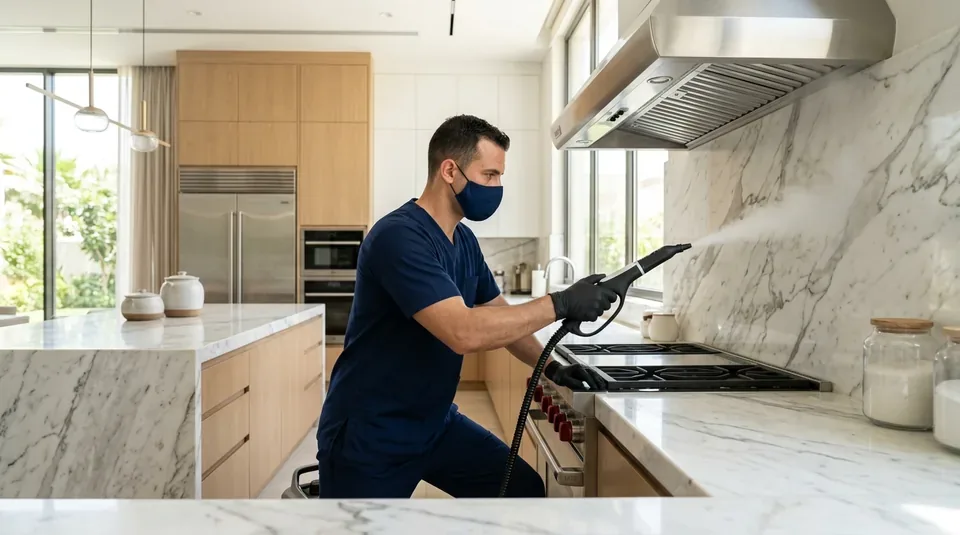
Deep cleaning of a home kitchen with suitable tools and cleaners

Quick Summary

  • Never mix bleach with ammonia, vinegar, any acid or a limescale remover.
  • Use one product at a time and rinse the surface well before the next one.
  • Open windows and run the exhaust fan; the AC alone does not remove fumes.
  • Keep cleaners in their original containers, away from heat and children.
  • If you smell something sharp or start coughing, get fresh air and call 997 if needed.
Quick table

Quick table: risky mixes and the safer move

This table summarizes widely known warnings. It does not replace the label on each product or the manufacturer instructions.

MixWhy it is a problemSafer move
Bleach + ammoniaProduces chloramine gases that irritate eyes and airwaysUse only one; rinse the surface before using another product
Bleach + vinegar, acid or limescale removerCan release toxic chlorine gasNever add acid to a surface holding bleach; rinse and ventilate
Bleach + rubbing alcohol or hand sanitizerCan form toxic compounds such as chloroformDo not wipe bleach residue with alcohol
Vinegar + hydrogen peroxide in one bottleForms an acid that irritates skin and eyesApply one after the other with a rinse between, never in one container
Two drain openers togetherHeat, fumes and dangerous splashingUse a single product per label and do not repeat right away
Baking soda + vinegarThey cancel each other out and lose strengthUse separately for the job you need instead of relying on fizz
In detail

Using cleaners safely in Jeddah homes

Read in order or jump to the question you care about; each section answers one common concern about cleaner safety at home.

Basics

Why do people mix cleaners in the first place?

The motive is usually good: a stubborn stain in the bathroom, a smell from a drain, or a home recipe that claims two products are stronger together. But cleaners are designed to be used on their own, following the maker's directions, and their formulas are balanced to avoid side reactions.

When you combine two chemicals you start a reaction whose result you cannot predict. Some mixes simply lose their power and waste your effort, while others release harmful gases. So the golden rule is one product, one surface, one moment, then rinse.

Bleach and ammonia

Bleach with ammonia: the best-known combination to avoid

Many glass and surface cleaners contain ammonia, and most household bleach is sodium hypochlorite. When they meet they form compounds called chloramines, which irritate the eyes, nose and throat and can cause coughing and shortness of breath.

The risk is highest in small rooms such as a bathroom or toilet. If you have wiped a mirror with a glass cleaner and then spray bleach on the floor of the same room, open the door and window and run the exhaust fan before you start and after you finish.

Bleach and acids

Bleach with vinegar, limescale removers and acidic toilet cleaners

Vinegar is a mild acid, and limescale removers and toilet bowl cleaners are often much stronger. Adding acid to bleach can release chlorine gas, which is toxic and very harsh on the airways even at modest levels.

A common Jeddah scenario: hard water leaves scale in the shower tray, you treat it with an acidic product, then you use bleach to disinfect the floor and both run into the same drain. Separate the two products with time and plenty of rinse water, and do not rely on smell to tell you the danger has passed.

Alcohol

Bleach with rubbing alcohol and hand sanitizer

Wiping a surface with alcohol over unrinsed bleach residue is not a good idea, because toxic compounds such as chloroform can form. That includes spraying hand sanitizer onto a counter that was just cleaned with bleach.

If you need to disinfect a surface, choose one suitable product, follow the contact time printed on its label, then rinse anything that touches food. Avoid adding a "final touch" of a second product just to be extra careful.

Vinegar and peroxide

Vinegar with hydrogen peroxide: a home mix that is not safe in one bottle

Recipes circulate that mix vinegar and hydrogen peroxide in a spray bottle. Combined in one container they can create an acid that irritates skin, eyes and airways, and the mixture breaks down over time so it also loses effectiveness.

If you want to use both, apply each separately to the surface with a rinse in between, from clearly labelled bottles, and test a hidden corner first, because acidity can damage some surfaces such as marble and natural stone.

Drain openers

Drain openers: never combine two, and do not repeat immediately

Drain products are strong formulas; some are highly alkaline and others acidic. Combining them or using one right after another can create heat, fumes and dangerous splashes that may reach skin and eyes.

If the first product fails, do not add a second straight away. Wait for the time stated on the label, flush with water, and think about the cause of the blockage: hair, grease or buildup in the trap. For repeated blockages the answer may be mechanical rather than chemical.

Ventilation

Ventilation in Jeddah: summer, dust and the AC

In summer windows stay closed and the AC runs for many hours, and on dusty days we avoid opening windows at all. That means fumes can linger indoors. A split AC recirculates indoor air rather than removing it, so it cannot be your only protection.

Open a window or door for a few minutes and run the exhaust fan in the bathroom and kitchen. Pick a time when dust is lower, take children, older relatives and pets out of the room, and never shut yourself in a small room while using a strong product.

Storage and heat

Storage: Jeddah heat weakens cleaners and raises risk

Temperatures in storerooms, balconies and cars can climb very high in Jeddah. Heat speeds up the breakdown of some cleaners such as bleach, and it can weaken containers and cause leaks.

Store products somewhere dry, shaded and ventilated, away from direct sun and the hot kitchen, on a high shelf or in a closed cabinet. Do not shelve acidic products next to bleach, so that a leak from one cannot meet the other.

Children and pets

Children, pets and unlabelled bottles

One of the riskiest habits is pouring a cleaner into an old water or drink bottle, because it looks familiar to a child. Keep products in their original containers with the label, and if you decant some into a spray bottle, write the product name and date clearly on it.

Keep cleaners out of children's reach in a locked cabinet, let surfaces dry before kids and pets return, and if you suspect a child swallowed something do not try to make them vomit. Call the ambulance or the relevant helpline and follow instructions.

Reading labels

How to read a cleaner label before using it

Look for three things: the main ingredients, the warning words and symbols, and the directions including contact time. Knowing the main ingredient (hypochlorite, acid, ammonia, alcohol, alkali) tells you what must never be combined with it.

Follow the dilution on the label rather than guessing; more product does not mean more cleaning, it means more risk. If a container is old or has changed colour or smell, dispose of it according to local guidance and do not mix it with anything else.

After exposure

What to do if you smell something sharp or feel irritation

Stop work immediately and move to fresh air, taking children and others with you, and do not go back to finish the job. Open doors and windows from outside if you can do so safely, and do not try to neutralise the mixture with a third product.

If you develop heavy coughing, shortness of breath, chest pain or dizziness, call the ambulance on 997 or the Ministry of Health line 937 for advice. Rinse skin or eyes with running water if a product touched them, and keep the containers so you can show them to responders.

Real scenarios

Common scenarios in kitchens and bathrooms

In the bathroom: you cleaned the floor with an acidic product to remove scale and now want to disinfect it. Rinse thoroughly with water and let the room air out before using anything else. In the kitchen: do not spray bleach over residue of an alkaline degreaser or an ammonia cleaner before rinsing.

When you wash floors and drains at the same time, assign one product to each source and never pour two products in a row into the same drain. It is often easier to organise the work by room rather than by product.

Professional help

When to bring in a trained team, and what to ask

If the area is large or the problem is old, such as heavy scale, mould or built-up grease, it may be better for a trained team to handle it because they know which product suits which surface, so you avoid experiments in your own home.

Ask the team which products they will use, whether any will be used on food surfaces, how the room will be ventilated, and whether children or people with sensitivities should leave for a few hours. A clear answer is a sign of professionalism, and you can message us photos of the space so we can suggest the right step.

Common questions

Frequently asked questions about mixing cleaners

Short answers to what Jeddah homeowners most often ask about cleaner safety.

Can I mix bleach with hot water to make it stronger?+

It is not recommended. Hot water can make more fumes escape and reduces the stability of bleach. Use the dilution on the label with cool or lukewarm water in a well-ventilated space.

Is baking soda with vinegar a dangerous mix?+

Usually not dangerous, but it is not as effective as people say because one cancels the other. The fizz looks impressive without adding cleaning power, so use each on its own for the job it suits.

How long should I wait between two different products on the same surface?+

There is no single number for every case. Follow the contact time on the label, then rinse with clean water, dry the surface and ventilate before applying the next product.

Is an open window enough when I use bleach?+

It helps a lot, but it works best with the exhaust fan and a second opening for through-draft. If you feel irritation, leave for fresh air at once and do not keep working.

Can I pour cleaner into an empty water bottle?+

No, this is a leading cause of child poisoning. Use the original container or a dedicated spray bottle with the product name written clearly, and keep it out of reach of children.

What if a strong cleaner splashes on skin or in an eye?+

Rinse the area with running water for several minutes, remove contaminated clothing, and seek medical help if pain or redness continues. Bring the container to show the product.

Are "natural" products safe because the ingredients come from plants?+

Not necessarily. Safety depends on the formula, strength and use. Some natural oils and acids irritate skin or damage surfaces, so read the label and follow directions.

Does hiring a professional remove the need for these precautions?+

It lowers the risk because the team chooses a product suited to the surface, but you still need ventilation, children and pets kept away, and to tell the team about any sensitivity or health condition at home.

Need help cleaning a bathroom or kitchen in Jeddah without taking risks?

Send photos of the area and tell us about the scale or smell, and we will suggest the right next step.

CallWhatsAppGet Quote