
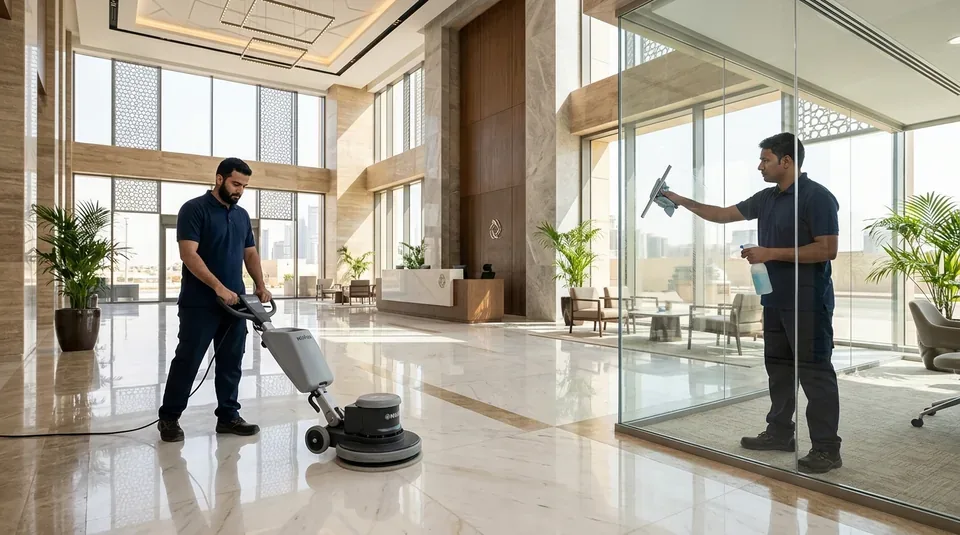
Principles: Frequency Follows How Heavily an Area Is Used
Office areas do not need cleaning equally. Restrooms, the small kitchen, the reception area and surfaces everyone touches, such as handles, switches and printers, need daily care, while storerooms and little-used meeting rooms may be fine once a week.
Decide who does what: staff usually tidy their own desks and clear personal items, and the team handles floors, bins and shared areas. That split saves time and reduces risk around papers and sensitive equipment.
Choose cleaning times to suit the work: after hours causes least disruption and lets floors dry, while cleaning during working hours suits light tasks such as quick wipe-downs and emptying bins, and needs coordination with staff.
Questions That Shape the Schedule
- How many staff and how many visitors pass through each day?
- Which areas have heavy touch and heavy use?
- Will cleaning happen after hours or during them?
- Who handles personal desks and who handles shared areas?
- Which sensitive surfaces need special instructions?
Start with a simple schedule and adjust it after two weeks based on where dirt actually builds up, rather than building a complicated list on day one.