
Serving Jeddah & Makkah
Practical guide8 min readJeddah

Cleaning Roller Blinds and Venetian Blinds in Jeddah: A Material-by-Material Guide

These differ from heavy fabric curtains: each type has a safe method and another that can ruin it.

Roller and slat blinds face Jeddah’s fine dust, humidity and salt, which build a greyish, slightly sticky film on slats and fabric, worst near kitchens and often-opened windows.

Safety starts with the material: aluminium, wood or faux wood, PVC, or coated fabric. Dry tools always come before water, and heavy water is a no for wood and roller mechanisms.

Heavy or hard-to-reach blinds can be handled by a specialist team; light upkeep suits simple household tools.

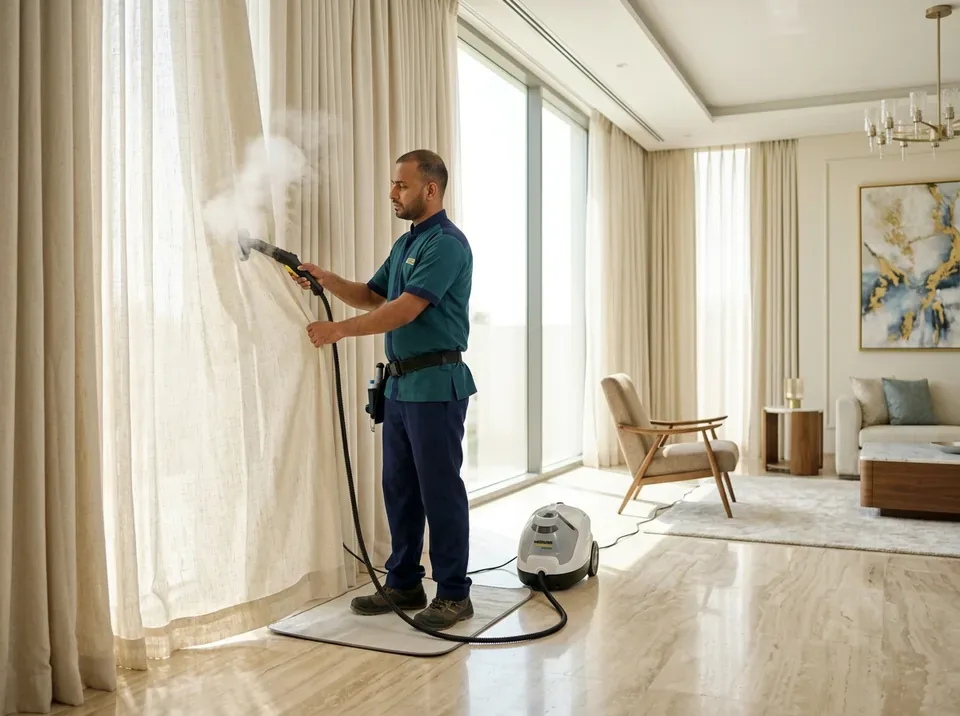
Steam cleaning of home fabrics in Jeddah

Quick Summary

  • Identify the material before choosing a method
  • Start with dry dust using a soft brush or glove
  • Never soak wood or the roller mechanism
  • Dry slats at once to prevent water marks
  • Follow the manufacturer’s care notes when unsure

Roller, vertical and horizontal blinds

A roller blind is a single piece of fabric that winds onto a top tube, and dust collects in its folds and edges. It is hard to wash with water because the internal mechanism and adhesive can suffer. A horizontal blind has slats joined by cords or chains, and dust lies on the upper face of every slat. Vertical blinds hang as separate vanes and collect dirt along the bottom and edges.

This variety means one method will not fit all. Aluminium tolerates a light damp wipe; natural wood reacts to water and may warp or crack; PVC takes mild soap but can yellow in strong sun; and roller fabric is often better vacuumed gently than wetted.

Common materials

  • Aluminium: light damp wipe and drying
  • Wood or faux wood: dry dusting, minimal moisture
  • PVC: mild soap and a soft cloth
  • Roller fabric: soft vacuum and spot treatment
  • Blackout fabric: be very careful with water

Why they get dirty faster in Jeddah

Fine dust and coastal humidity cling together, forming a film that a quick shake will not remove. Near the kitchen a light mist of grease makes grit stick even harder, leaving dark marks at the edges.

Air conditioning also moves air and dust, so blinds near vents collect more. If there is a damp smell, the blind may be near a leak or a window where condensation forms, which deserves a check before cleaning.

Spots that get dirtier

  • Near the kitchen from grease vapour
  • In front of AC vents
  • At windows that open often
  • In kids’ rooms and majlis areas
  • Bottom edges of vanes and slats

Weekly dry cleaning

Use a soft brush, dry microfibre cloth or a slatted dusting glove, wiping each slat top to bottom in one motion so dust is not pushed back up. For roller blinds use a vacuum with a soft cloth nozzle on low power while the blind is lowered and held flat.

Close the window while cleaning or lay a cloth beneath to catch what falls. Avoid blowing hard or beating the blind, which spreads dust around the room and bothers sensitive airways.

Suitable tools

  • Dry microfibre cloth
  • Slatted dusting glove
  • Vacuum with a soft cloth nozzle
  • Soft hairbrush for edges
  • Dry cotton towel for drying

Damp wiping aluminium and PVC

For wipeable types mix lukewarm water with a few drops of mild liquid soap, dampen a microfibre cloth and wring it out well so it does not drip. Wipe each slat and dry at once with a towel; water left behind leaves white spots and salt marks, especially in coastal air.

Do not use strong cleaners, bleach or solvents unless the maker allows them, as they change colour and make slats brittle. For stubborn ink or grease, test an out-of-sight edge first.

Avoid these mistakes

  • Soaking the slats
  • Scrubbing hard enough to scratch the coating
  • Bleach or solvent on light colours
  • Letting water dry on its own
  • Forcing slats straight while wiping

Wood and faux wood

Natural wood absorbs moisture easily, so cleaning is limited to dry dusting and a barely damp, well-wrung cloth followed by immediate drying. Never use floor cleaners or ammonia on wooden slats because they dull the finish.

Faux wood tolerates more moisture but can swell at the edges if left wet. In humid Jeddah it helps to ventilate the room after wiping so the slats dry quickly.

Cautions for wood

  • No running water
  • No direct steam
  • Wipe along the slat
  • Dry immediately
  • Check cords and chains regularly

Roller fabric and large blinds

Roller fabric can distort if washed, and the adhesive holding it to the tube may shift. Treat marks locally with a damp cloth and mild soap using a dabbing motion, then leave the blind extended until fully dry before rolling it up.

Large blinds in majlis rooms and villas, or those mounted high, may need a ladder and special equipment, so it is best left to someone experienced to avoid damaging the mechanism or risking a fall.

When help is better

  • Very high or hard-to-reach blinds
  • Water-resistant blackout fabric
  • Old stains or mould traces
  • A jammed or faulty roller
  • Inherited blinds of unknown material

A suggested routine

Weekly, a quick dry clean is enough in rooms used a lot, and every two weeks to a month in rooms used less. In heavy dust seasons raise the frequency slightly, and after heavy kitchen use wipe blinds nearby.

Every three to six months do a damp wipe on the types that allow it, check cords, chains and fixings, and make sure the blind rolls and lowers smoothly. Note which blinds cannot take water so anyone helping you knows.

A simple reminder

  • Weekly: dry dusting
  • Monthly: check edges and corners
  • Every 3–6 months: damp wipe where allowed
  • Yearly: inspect mechanisms and cords
  • Any odour: check the window and leaks

Signs that call for action

Small black spots on fabric or slats can indicate mould from humidity, which needs ventilation and a check of the water source before wiping. Yellowing or cracking in PVC may show the material has aged, in which case replacing is wiser than cleaning.

If the roller moves poorly, squeaks or winds unevenly, do not keep pulling, because the mechanism wears quickly. Call a blind specialist or check the warranty before altering anything.

Signals that need a decision

  • Black spots on fabric or slats
  • Yellowing or cracking slats
  • Uneven winding or squeaking
  • A strong damp smell
  • Dust returning fast despite cleaning
Comparison

Quick comparison of materials and methods

Use it as a reference before you start.

MaterialMethodCaution
AluminiumDry dust, then light damp wipe and dryNo hard scrubbing
PVCMild soap and a soft clothMay yellow in sun
Natural woodDry dust, barely damp clothReacts to water
Faux woodLight damp wipe and dryEdges can swell
Roller fabricSoft vacuum and spot treatmentDo not soak
FAQ

Common questions about humidity and mold in Jeddah

Short answers to what homeowners ask most.

Can a roller blind go in the washing machine?+

Usually not; the mechanism, adhesive and light-blocking coatings can be damaged. Prefer dry and spot cleaning, and wash only if the maker explicitly allows it.

How often should I clean horizontal blinds?+

Weekly with dry dusting in busy rooms, roughly monthly in lesser-used rooms, plus a light damp wipe for aluminium every few months.

Is steam suitable for blinds?+

It is not recommended for wood, faux wood or water-resistant fabric, and it can damage adhesive and coatings. Follow the maker’s advice.

How do I remove marks from roller fabric?+

Dab only the mark with a damp cloth and mild soap, then leave the blind extended to dry fully before rolling it.

Why do white spots appear after wiping?+

Usually water that dried and left salts. Dry the slats at once with a towel and do not let water sit on them.

Do I need a team for high blinds?+

Often yes, when the blind is high, heavy or unsafe to reach. Never use an unstable ladder.

Can you help with cleaning my home blinds?+

Send us the blind type, quantity and your area of Jeddah on WhatsApp and we will explain what can be arranged and how.

Need help cleaning the blinds in your Jeddah home?

Send us the blind type, quantity and room sizes on WhatsApp and we will arrange suitable details.

CallWhatsAppGet Quote