
Serving Jeddah & Makkah
Home emergency guide9 min readJeddah

Cleaning After Heavy Rain in Jeddah: Mud and Water on Ground Floors and Courtyards

When the rain eases, a phase just as important begins: safety first, then removing water and mud and drying the space before mold sets in.

From time to time Jeddah sees heavy rain whose water gathers in streets and courtyards and enters ground floors, annexes and storerooms. This leaves mud, sediment and a sharp smell that can linger if the space is not dealt with quickly and properly.

This differs from an internal water leak because rainwater can carry mud, dirt and sometimes sewage, so hygiene and safety need more care. We focus here on general home cleaning, not structural or electrical repairs.

Follow instructions from the relevant authorities during and after the rain, and do not enter any flooded space with live electricity or a risk of collapse.

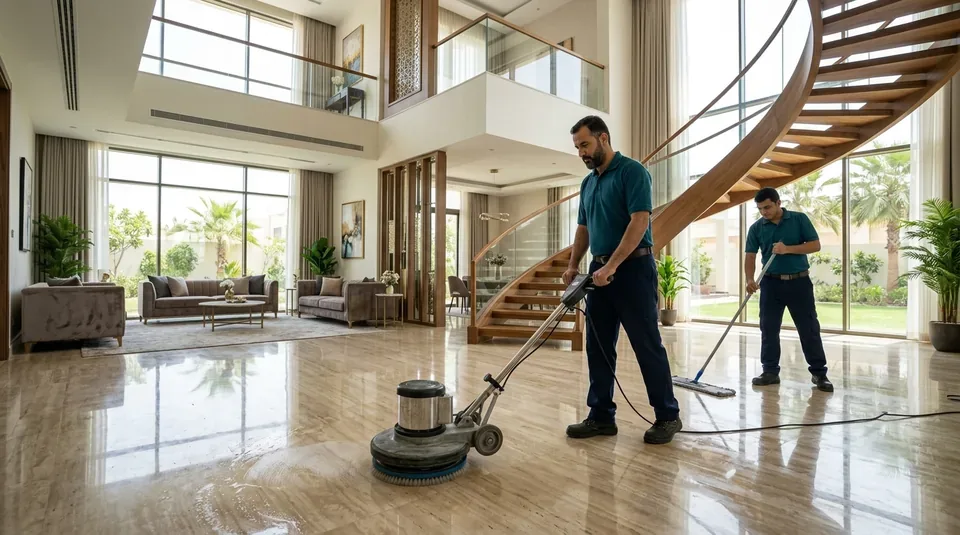
تنظيف أرضيات فيلا في جدة بعد تجمع مياه الأمطار والطين

Quick Summary

  • Safety first: isolate power to the wet area and do not enter if water is near wiring or appliances.
  • Wear rubber boots, gloves and a mask, and treat rainwater and mud as contaminated.
  • Remove water and mud quickly before it dries and hardens.
  • Dry the room with ventilation, fans and a dehumidifier, and sort damaged items.
  • Watch for mold in the first two to three days and re-clean if it appears.
Safety

Safety First, Before Any Cleaning

Quick cleaning is not worth a risk to safety, so take a moment to assess.

Electricity, water and protective gear

If water is still inside the ground floor, do not touch sockets or electrical appliances while standing in water, and switch off the main breaker for the wet area if that is safe. If you doubt the wiring, call an electrician before restoring power.

Wear tall rubber boots, thick gloves and a mask, and avoid contact with the water if you have open cuts. Wash your hands thoroughly after work and before eating, since rain and flood water can carry contaminants.

Do not start work yourself if

  • The water is deep, its source is unknown, or it is near live electricity.
  • Large cracks have appeared in walls or ceilings.
  • There is a smell of gas or chemicals.
  • You cannot drain the water because the drainage line is blocked.

Assessing damage quickly

Photograph the damage before cleaning if you may need it for insurance, then work out what can be saved right now and what has to be taken out. Priority goes to electrical items, documents, clothes and light furniture.

Removal

Removing Water and Mud from Ground Floors and Courtyards

Speed matters because mud dries, hardens and becomes difficult to remove.

Practical steps for mud and sediment

Start by draining standing water with a pump or a wet vacuum if you have one, then scrape heavy mud with a shovel or squeegee and bag it in strong sacks. Do not wash mud straight toward the internal drain, since it can clog it.

Then wash the floor with water and mild soap or a suitable floor cleaner and a brush, rinse with clean water and squeegee dry. In the outdoor courtyard use a hose at moderate pressure and avoid aiming water toward walls and doors.

Suggested order for hard floors

  • Drain standing water first.
  • Scrape heavy mud and bag it.
  • Wash with water, soap and a brush.
  • Rinse with clean water and dry the floor.
  • Ventilate and dry fully before bringing furniture back.

Different floors need different treatment

Tile and porcelain tolerate water but their grout holds fine mud and needs a brush. Parquet and wood are damaged quickly and usually need a specialist and fast drying. Carpet or fitted rugs soaked in contaminated water are hard to rescue and may need to be discarded or professionally cleaned.

Drying

Drying, Preventing Mold and Sorting Belongings

The first 24 to 48 hours are decisive for limiting mold and odor.

ItemActionNoteWhen to discard
Hard floorsWash, rinse, dry and ventilateGrout needs a brushIf cracked or swollen
Wooden furnitureMove to a dry place, wipe and dryNot under hot direct sunIf swollen and loose
Sofas and mattressesTake out to air and assess damageSoaked foam is hard to dryIf soaked with contaminated water
CarpetsSoak, wash and dry quicklyMay need a specialistIf odor and mold remain
Electrical appliancesDo not run before a technical checkWater damages circuitsIf fully submerged
Paper and documentsSeparate sheets and air-dryFast drying prevents moldIf completely destroyed
Afterwards

Following Up Over the Next Days

Problems may not appear straight away, so keep monitoring the space.

Mold, odors and drains

Watch walls, corners behind furniture and wooden doors over the following days, since spots or a musty smell mean moisture remains. Keep ventilating, use a dehumidifier if you have one, and re-clean around any patches.

Check courtyard drains, bathrooms and gutters once things settle and clear the mud and leaves so they do not block in the next rain. You can also read our guides on water leaks in the first 48 hours and on humidity and mold in Jeddah homes.

When do you need specialist help?

  • Large amounts of water or mud spread across several rooms.
  • Contaminated material or a clear sewage smell.
  • Structural or electrical damage.
  • Widespread mold after several days.
FAQ

Common Questions About Cleaning After Heavy Rain

Short answers to the questions that come up after rain in Jeddah.

What should I do first when rainwater enters the ground floor?+

Safety first: switch off power to the wet area safely, do not touch appliances while standing in water, then begin draining the water and assessing damage.

Is rain and flood water contaminated?+

It can carry mud, dirt and sometimes contaminants, so handle it carefully, wear boots and gloves and wash your hands well after the work.

How do I get rid of mud quickly?+

Scrape it with a shovel before it dries and bag it, then wash the floor with soapy water, rinse and dry, without washing mud toward the internal drain.

How long before mold can appear?+

It can start within the first two to three days if moisture stays, which is why ventilation and quick drying matter.

Should I keep a wet carpet?+

If it is fairly clean it may be saved by washing and drying quickly, but one soaked in contaminated water may need to be discarded or assessed by a specialist.

Should I run electrical appliances that touched water?+

Do not run them before a technical check, since water can damage circuits and create a hazard.

How is this guide different from the water-leak guide?+

This one focuses on rainwater, mud, courtyards and ground floors; the other covers internal water leaks and the first 48 hours of dealing with them.

Do you clean homes after rain in Jeddah?+

We provide home and villa cleaning in Jeddah. Send a description and photos if possible on WhatsApp so we can explain what can be done; structural and electrical repairs need specialists.

Need your home or villa cleaned after the rain?

Send us a description of the situation and photos if possible on WhatsApp and we will explain what can be done.

CallWhatsAppGet Quote