
Serving Jeddah & Makkah
AC care guideJeddahJeddah

AC Drain Line Cleaning: Why Is Water Dripping From Your Indoor Unit in Jeddah?

When an indoor AC drips onto the wall or floor, the cooling is usually fine. The real problem is the path the condensation takes out of the unit: the collection tray and the drain line.

An air conditioner pulls humidity out of the room and turns it into water. Along the Red Sea coast that is a lot of water, especially when the unit runs most of the day. It leaves through a small sloped pipe hidden in the wall or above a false ceiling, and any blockage pushes the water back into the unit.

Dust and a thin bacterial film build up in the tray and pipe until the water pools and spills over. Catching it early saves you from repainting walls, fixing gypsum ceilings and replacing damaged furniture.

This guide explains why drains clog, how to tell a drainage problem from a refrigerant or freezing problem, which safe steps you can take without opening the unit or touching electrics, and when a technician becomes cheaper than waiting.

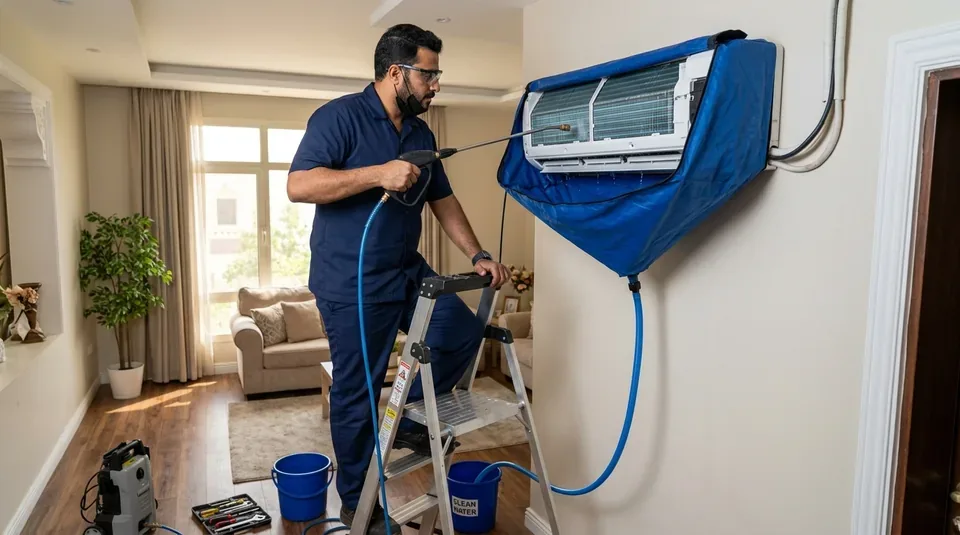
Technician cleaning the indoor unit and condensate drain line of a split AC in a Jeddah home

Quick Summary

  • Water dripping from an indoor unit is usually normal condensate that could not escape, not a gas leak.
  • Cut the power at the breaker before any check, and never open internal panels yourself.
  • A dirty filter increases icing and drain load, so wash it monthly during summer.
  • Clearing the outlet end of the drain and rinsing the line solves most simple blockages.
  • If dripping returns after cleaning, suspect slope, tray or icing problems and book an inspection.

From humid air to water on the coil

When warm, humid air passes over the cold cooling coil, water vapor condenses just like moisture on a cold glass in summer. Jeddah has high humidity for much of the year, so a unit running for long hours can collect several liters of water a day.

That water falls into a tray under the coil and leaves through an outlet and a slightly sloped pipe that runs outside, or into a bathroom or kitchen drain depending on the installation.

The parts the water passes through, in order

  • The cooling coil where condensation begins
  • The collection tray under the coil
  • The tray outlet and connection
  • The sloped drain pipe inside the wall or ceiling
  • The pipe end outdoors or at the drain

Why the pipe clogs so easily

Warm water in a dark, damp pipe is an ideal place for algae and bacteria, forming a slimy film that traps the dust passing through with the water. Fine desert dust and sand blown in by the wind add to that layer in Jeddah.

Small insects, nests or debris can also enter from the outdoor end and block the outlet completely even when the inside is clean.

Safety note

Water near any electrical connection is dangerous. Switch off the breaker before touching the unit or the wet floor beneath it.

Drainage is not always the cause

The coil can freeze because of a dirty filter, poor airflow or low refrigerant, and the sudden melt can exceed what the tray can handle. Damaged insulation on the pipes can also let water condense on the copper and drip outside the unit.

So check three things before deciding: the filter, whether there is ice on the pipes or coil, and whether the water leaves from the drain outlet or from the body of the unit.

Signs

Signs of a blocked AC drain

This table links what you see to the likely cause and a safe first action.

What you noticeLikely causeSafe first actionWhen to call a technician
Drops from under the indoor unitBlocked drain or full traySwitch off, place a bowl, check the filterIf it continues after cleaning the filter
Damp patch on the wall below the unitRepeated tray or pipe leakDry the area and watch after two hours of runningIf the patch spreads or mold appears
Musty smell near the ACBacterial film in tray and pipeClean the filter and run fan mode to dryIf the smell stays after cleaning
Gurgling soundAir trapped in the drain pipeCheck the outdoor pipe end for blockageIf it repeats along with dripping
Unit stops suddenly with a warning lightWater level sensor shutting it downCut power for a few minutes and restart onceIf it shuts down again
Ice on pipes or coilDirty filter, poor airflow or low gasTurn off cooling and run fan until it meltsAlways, because gas needs expert checking

The smell comes before the stain

A musty, damp-earth smell is an earlier signal than the stain itself. If you notice it when opening a room or wardrobe after a long closure, look for the source rather than covering it with air freshener; fragrance hides the warning without fixing the cause.

Watch paper, books and cardboard boxes too, since they absorb moisture quickly and act as early indicators. Paint that bubbles or flakes, or white salt crust on a wall, usually points to rising damp or a leak rather than a surface stain.

Telling mold from dirt and scale

Not every dark mark is mold. Dirt, smoke and soap residue can look similar. A simple test: wipe a small area with a damp cloth and a mild household cleaner. If it lifts easily it is probably dirt; if it returns quickly in the same place with a damp smell, suspect mold.

White, rough deposits in bathrooms and kitchens are mineral scale from water, not mold, and need a different treatment.

Preparation and the filter first

Switch off the dedicated breaker, not just the remote. Put a bowl or towel under the unit, open the front cover designed for users and take out the filters.

Wash the filter in lukewarm water with mild soap and dry it away from direct sun. A clean filter reduces icing and eases the water load on the tray.

Before you start

  • Cut the power at the panel
  • Use a stable ladder if the unit is high
  • Move furniture and curtains away from under the unit
  • Take a photo of the unit to show the technician
  • Do not touch any wires or internal boards

Treating the outdoor drain end

Find where the small drain pipe exits outside; it may be on the wall or over a drain. Look at it and remove dirt, insects or plants with a cloth.

If you own a wet and dry vacuum, it can pull a blockage from the outdoor end when the nozzle is sealed against the pipe for a few seconds.

Note

Do not push compressed air or stiff wire into the pipe, as it can detach a joint or puncture the pipe inside the wall.

Rinsing and monitoring

After clearing the blockage, you can pass a small amount of warm water mixed with a drain-safe disinfectant through the pipe end or a dedicated cleaning port, in small stages, and watch it leave from the other end.

Run the AC for an hour and check under the unit and at the outlet. If water leaves steadily the simple problem is solved. If it does not, or dripping returns, stop trying and book an inspection.

Problems home attempts will not fix

A deep blockage inside the wall, a pipe with the wrong slope, a cracked tray or a stalled drain pump all need hands-on inspection and sometimes removal of unit parts. If the AC is above a false ceiling, simply reaching it needs equipment.

Any case where dripping comes with ice on the pipes or clearly weak cooling needs a technician who can check refrigerant, fan and sensors.

Questions to help you decide

  • Does the water come from the unit body or the pipe?
  • Has it dripped more than once in a month?
  • Are there new stains on the ceiling or wall?
  • Is the AC making an unusual noise?
  • Is the last service more than a year old?

How to prepare for a cleaning visit

Describe the problem accurately when booking, with the AC type, number of units and where they are installed, and send a photo of the unit and any stain. That helps prepare the right equipment and saves time.

You can review our AC cleaning page for Jeddah to see the advertised scope, and cover furniture and the floor under the unit before the team arrives.

FAQ

Common questions about AC drains and dripping water in Jeddah

Short answers to what homeowners ask most when an indoor unit starts to leak.

Does water dripping from an indoor AC mean the gas is low?+

Usually not. Low refrigerant makes the coil freeze and can cause water when the ice melts, but the most common cause in Jeddah is a blocked drain line or a dirty tray. Check the filter and the drain first. If cooling is weak and the pipes are covered in ice, call an AC technician.

Can I pour water and vinegar into the unit?+

Do not pour liquids into the indoor unit unless you know exactly where they go, because water can reach the control board. It is safer to treat the outdoor outlet end or a dedicated cleaning port if one exists, in small amounts and with the power off. If you are unsure where the port is, leave it to a technician.

How often should an AC drain line be cleaned?+

At least once before summer and once after in dusty or humid homes, ideally as part of regular AC maintenance. Homes near the coast, or units that run more than ten hours a day, may need shorter intervals.

Why does the dripping return a few days after cleaning?+

The main blockage may still be deeper in the pipe, the pipe may not have enough slope so water collects, the tray may be cracked, or the filter may still be dirty and cause icing that melts later. Repeated dripping calls for an inspection rather than repeated rinsing.

Can a leaking AC damage walls and gypsum ceilings?+

Yes. Repeated water causes stains, bubbling paint, damaged gypsum and mold behind furniture. If you see a damp patch under the unit or on the ceiling, dry the area and fix the cause before repainting. Our guide on humidity and mold in Jeddah homes covers the next steps.

Does an AC cleaning visit include the drain?+

It depends on the agreed scope. Tell us when booking that the problem is dripping water so the team can bring suitable suction and flushing equipment and check the tray and drain. Message us on WhatsApp with a description and a photo of the unit if possible.

When should I switch the AC off immediately?+

If water is near sockets or the control panel, if you smell burning, hear popping sounds or see heavy flow. Stop the unit, switch off the dedicated breaker and wait for a technician. Do not try to dry things with an electrical device while standing on a wet floor.

Is a concealed or cassette AC different from a split unit?+

The principle is the same, but concealed and cassette units usually drain above a false ceiling and some use a small pump to lift the water. That makes inspection harder and raises the risk of ceiling damage, so a technician should handle it, especially if the pump sounds abnormal.

Ready to Book a Cleaning Visit in Jeddah?

Send us the property type, size and what you want cleaned on WhatsApp and we will arrange the details and the right preparation.

CallWhatsAppGet Quote