
Serving Jeddah & Makkah
Flooring guide9 min readJeddah

Cleaning Yellowed and Dark Tile Grout: Causes, the Safe Method and How to Protect It

From diagnosis to cleaning to protection

A floor starts out new and bright, then months later dark lines appear between the tiles in the kitchen, bathroom and even the living room. Those lines are grout, a porous material that absorbs and holds dirt, moisture and soap, and in Jeddah humidity and dust help yellowing and blackening show up faster.

Quick answer: first diagnose whether it is dirt, mold or limescale, then start with the mildest method: water, soap and a soft brush, then a baking soda paste or a suitable oxygen cleaner. Avoid strong acids on cement grout and marble, never mix cleaners, and dry the grout well afterward.

Here we give clear steps, a table linking grout color to cause and treatment, and when resealing or replacing the grout is the better answer.

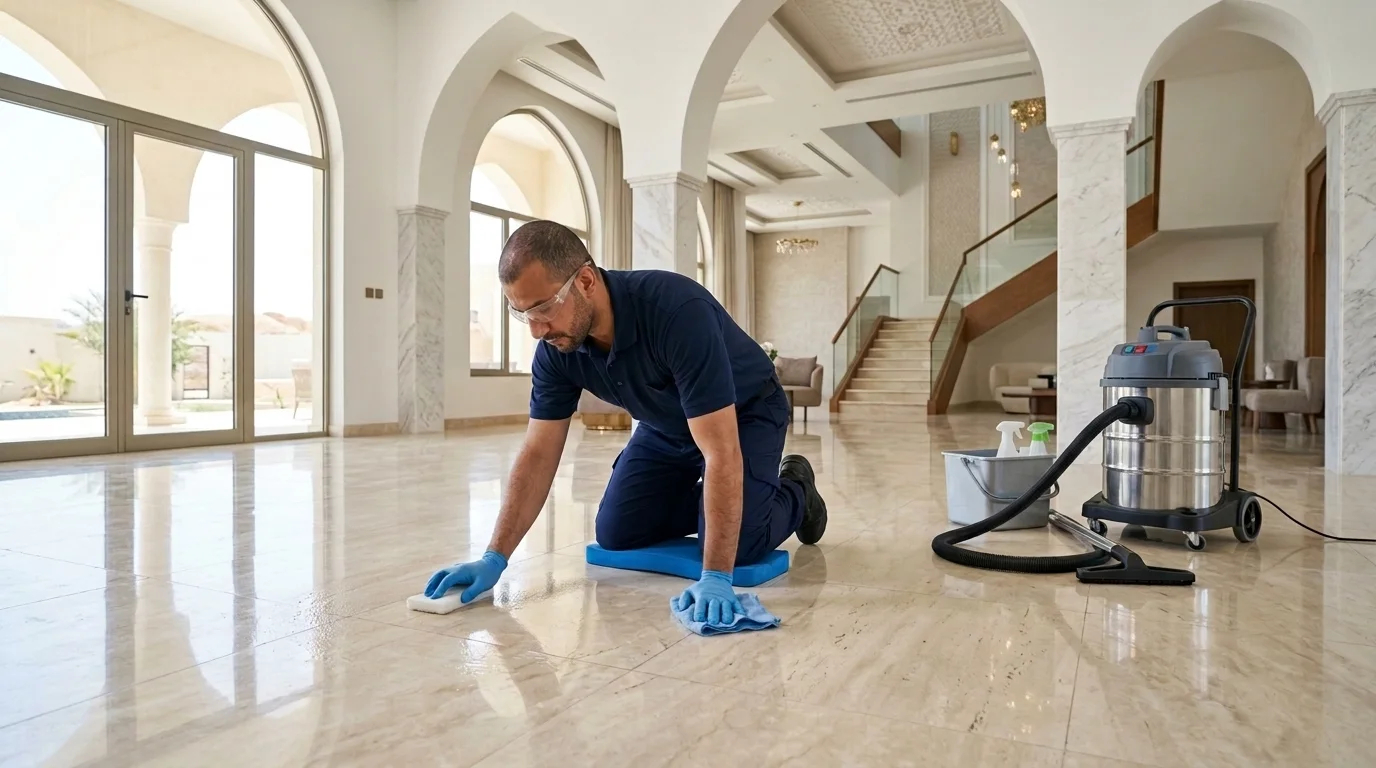
Tile floor and grout lines after cleaning in a Jeddah home

Key points

  • Cement grout is porous and absorbs dirt and moisture
  • Start with the mildest method: water, soap and a soft brush
  • Do not use strong acids on cement grout or marble
  • Dry the grout well and fix the source of moisture
  • Sealing after complete cleaning reduces future soiling

Properties of cement grout

Cement grout contains tiny pores that let water, dirt, oils and soap in, so a floor can look clean while the grout lines stay dark. The rougher and deeper the grout line, the more soil it takes up.

In bathrooms, soap and limescale-laden water collect; in kitchens, fat and cleaning solutions; in living areas, footfall and fine dust, so darkening shows up in different shades.

What changes the color

  • Fat and oils in the kitchen
  • Soap and limescale in the bathroom
  • Dust and soil at entrances
  • Moisture that fungi grow on

Dirt, mold or limescale

Before cleaning, try to tell them apart. Ordinary dirt comes off with light scrubbing; mold shows as black or green spots, usually in damp areas, and returns if the moisture is not treated; limescale is a hard white layer left by hard water.

The difference matters because acids treat limescale but harm cement grout and marble, while mold calls for dealing with moisture before anything else.

A quick check

  • Scrub a small spot with soap and water
  • See whether the spot returns quickly
  • Check ventilation and humidity
  • Test your product in a hidden spot
Diagnosis

Grout color, cause and treatment

A quick table to help you choose a suitable method.

What you seeLikely causeFirst treatmentCaution
General yellowing between tilesSoap and cleaner residueWarm water, mild soap and a brushRinse thoroughly
Dark grey linesAbsorbed dirt and dustBaking soda paste and gentle scrubbingNo wire brushes
Black or green spotsMold and moistureSuitable cleaning plus fixing ventilationTreating without drying brings it back
A hard white layerLimescale from waterA limescale product suited to the materialAvoid acids on marble and cement
Cracked or crumbling groutAge or floor movementRepair or replace the groutCleaning does not fix damage

The smell comes before the stain

A musty, damp-earth smell is an earlier signal than the stain itself. If you notice it when opening a room or wardrobe after a long closure, look for the source rather than covering it with air freshener; fragrance hides the warning without fixing the cause.

Watch paper, books and cardboard boxes too, since they absorb moisture quickly and act as early indicators. Paint that bubbles or flakes, or white salt crust on a wall, usually points to rising damp or a leak rather than a surface stain.

Telling mold from dirt and scale

Not every dark mark is mold. Dirt, smoke and soap residue can look similar. A simple test: wipe a small area with a damp cloth and a mild household cleaner. If it lifts easily it is probably dirt; if it returns quickly in the same place with a damp smell, suspect mold.

White, rough deposits in bathrooms and kitchens are mineral scale from water, not mold, and need a different treatment.

Preparation and light cleaning

Sweep or vacuum the floor first, then dampen the grout with warm water. Use a soft brush or an old toothbrush with mild soap, follow the grout line in short strokes, then rinse and wipe with a clean cloth.

If the grout does not improve, the dirt has soaked in and it is time for the paste.

Tools

  • A soft brush or old toothbrush
  • Mild soap and warm water
  • Baking soda
  • Clean cloths and gloves

Baking soda paste and oxygen cleaners

Mix baking soda with a little water into a paste, apply it to the grout, leave it a few minutes, then scrub gently and rinse. Oxygen-based cleaners made for grout can help on some types; follow the product label.

Do not combine these products with bleach or acids, and always test on a small stretch before going further, especially on colored grout.

Safety rules

  • Ventilate while working
  • Gloves and eye protection
  • Never mix products
  • Test a small area first

Drying and protecting afterward

Dry the floor and grout well, since leftover moisture brings the darkness back quickly. Once completely dry, a grout sealer suited to the material can reduce soil absorption; follow the product instructions and reseal periodically.

In bathrooms especially, wiping water after showering and running the fan helps, and in the kitchen wiping fat as it happens.

To keep it clean

  • Wipe water after showering
  • Ventilate bathroom and kitchen
  • Light weekly cleaning
  • Reseal as recommended
The team

When regrouting or a cleaning team is the answer

Not every dark grout line can be saved.

SituationHome cleaning is enoughBetter to do something else
Light yellowing and soap residueYes—
Dark lines over a large areaA lot of effort and timeSpecialist floor cleaning
Cracked, crumbling groutCleaning will not fix itRepair or replace the grout
Mold that returns after cleaningNeeds moisture treatmentCheck for a leak or poor ventilation
Preparing to hand back a rentalA quick cleanA full clean before the date

The smell comes before the stain

A musty, damp-earth smell is an earlier signal than the stain itself. If you notice it when opening a room or wardrobe after a long closure, look for the source rather than covering it with air freshener; fragrance hides the warning without fixing the cause.

Watch paper, books and cardboard boxes too, since they absorb moisture quickly and act as early indicators. Paint that bubbles or flakes, or white salt crust on a wall, usually points to rising damp or a leak rather than a surface stain.

Telling mold from dirt and scale

Not every dark mark is mold. Dirt, smoke and soap residue can look similar. A simple test: wipe a small area with a damp cloth and a mild household cleaner. If it lifts easily it is probably dirt; if it returns quickly in the same place with a damp smell, suspect mold.

White, rough deposits in bathrooms and kitchens are mineral scale from water, not mold, and need a different treatment.

FAQ

Frequently asked questions about tile grout

General answers that depend on the type of grout and tile.

Is bleach suitable for tile grout?+

It may lighten grout color but does not suit every type, gives off irritating fumes and can damage colored grout. Use it carefully with ventilation, and never mix it with other products.

Is vinegar suitable for cleaning grout?+

Mild acids can affect cement grout and marble with repeated use, so we do not recommend them on those surfaces.

Why does the grout turn dark again within weeks?+

Because it is porous and soaks up dirt quickly if it is not dried or sealed, or because the source of moisture was not fixed.

What is the difference between cement and epoxy grout?+

Epoxy is usually less porous and more stain-resistant, but it differs in cleaning and installation. Follow the instructions for the type you have.

Can I use a wire brush?+

We do not recommend it because it scratches the tile and grout and increases pores.

Is sealing necessary?+

Not for everyone, but it reduces soil absorption in cement grout; it must suit the grout material and be applied after complete drying.

How often should I clean grout?+

It depends on the room: bathrooms and kitchens need light weekly care and a deeper clean every few months.

Is floor cleaning available in Jeddah?+

Yes, contact us on WhatsApp with the tile type, area and condition of the grout so we can suggest the right step.

Need a full floor and tile grout clean?

Send us the tile type, the area and photos of the grout, and we will help you decide the right step in Jeddah.

CallWhatsAppGet Quote