
Serving Jeddah & Makkah
Care guide10 min readJeddah

Floor Care by Type in Jeddah: What Suits Marble, Porcelain and Parquet?

The wrong cleaner can spoil an expensive floor in minutes, and the right one protects it for years.

Floors in Jeddah homes range from natural marble to porcelain, ceramic, parquet, epoxy and more, and each has its own care method and tolerance. Many people use the same cleaner everywhere and some floors suffer quietly: dull marble, swollen parquet, or tile joints that soak up dirt.

Jeddah’s climate adds its own challenge: fine dust that contains hard grit and scratches surfaces when dragged across them, high humidity that affects wood, and salts that can leave marks on delicate floors. So we begin by identifying your floor type and then choose the method.

This guide gives a practical summary for each type: what suits it, what harms it, mistakes that repeat and when a specialist team is needed. The information is a guide and varies with the manufacturer’s instructions; always test in a hidden corner.

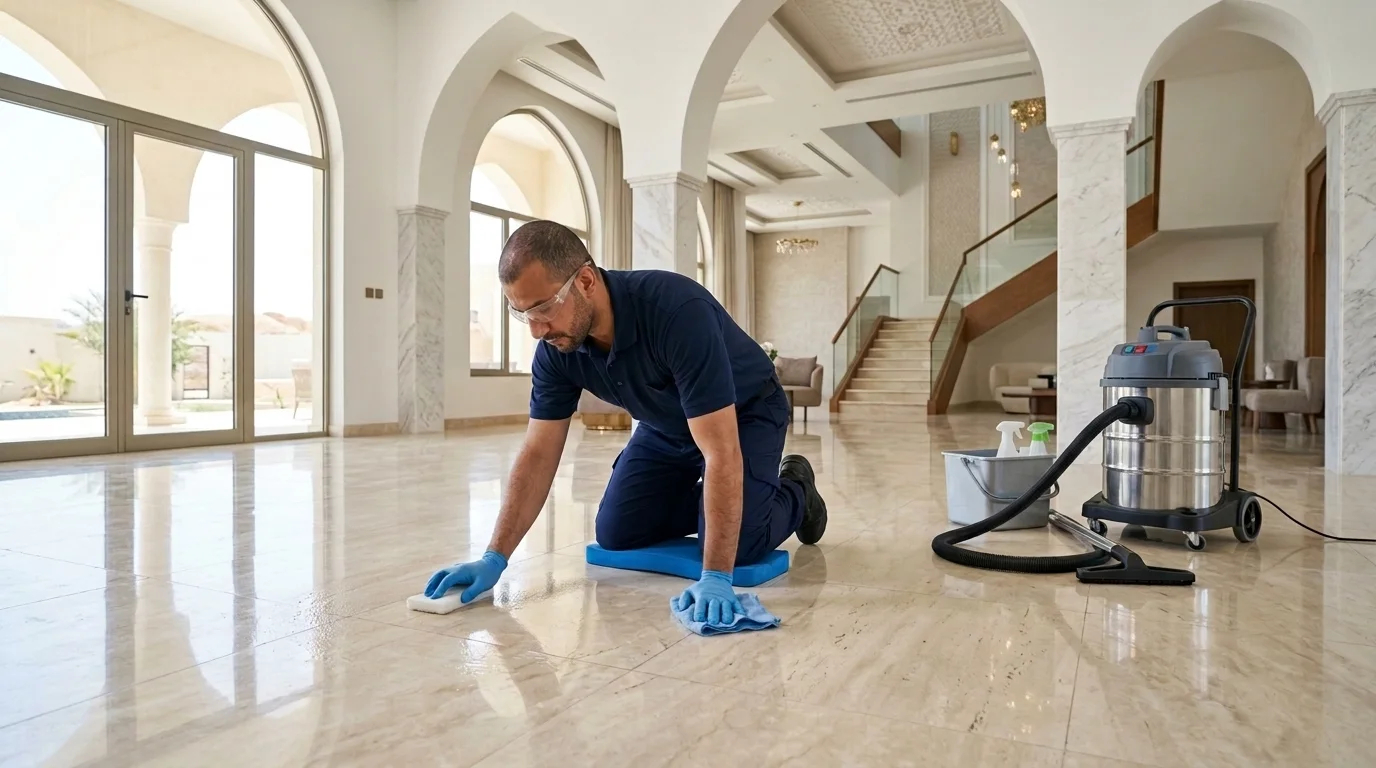
Polished marble floor in a Jeddah home living room

Quick Summary

  • Identify the floor type first; marble, parquet and porcelain are all different
  • Keep acids and abrasives away from marble and natural stone
  • Use little water on parquet and laminate and dry at once
  • Sweep dust before mopping so grit does not scratch the surface
  • Polishing, honing and stripping are specialist jobs; do not experiment
Types

Overview: what does each floor need?

A quick summary before the detail.

Floor typeWhat suits itWhat to avoid
Natural marbleMild pH-neutral cleaner and a soft clothVinegar, acids, abrasives and leaving it wet
Porcelain and ceramicWater, a mild cleaner and a brush for jointsSharp tools and abrasives on glossy surfaces
Parquet and laminateA barely damp mop and a wood-specific cleanerHeavy water and direct steam
Natural stone floorsA stone-suitable cleaner and resealing when neededAcids and harsh cleaners
Epoxy and terrazzoMild cleaner and a soft mopSolvents and abrasives

How do you know your floor type?

If you are not sure, check the finishing documents or ask the contractor, or try a drop of water in a hidden corner: natural marble and stone absorb water slowly and darken a little, whereas porcelain stays non-absorbent. In parquet you notice plank lines, and in laminate often a repeating pattern.

Do not rely on looks alone: some porcelain imitates marble very accurately, and knowing the real type decides the right cleaner. If in doubt choose the gentlest method: lukewarm water, a mild cleaner and a soft cloth, and avoid acids until you are sure.

Marble

Marble and natural stone: beauty that needs gentleness

Acids are marble’s first enemy and scratches its second.

Everyday care

Sweep or dust-mop with a soft broom before any wiping, because grit acts like sandpaper under shoes and mops. Then wipe with a damp cloth and a mild pH-neutral marble cleaner and dry the surface to avoid water marks. Do not leave liquids on marble because it absorbs them.

To prevent scratches put a mat at the entrance, add felt pads under furniture and avoid dragging heavy pieces. Cleaning the entrance often does more than cleaning the rest of the home.

What harms marble

  • Vinegar, lemon and acidic cleaners or scale removers
  • Abrasives and stiff brushes
  • Standing water and spilled coloured liquids
  • Strong bleach on pale varieties
Note

If marble loses its shine or shows dullness, do not treat it with a strong cleaner; the case needs assessment that may end in specialist polishing. See the post-construction marble and porcelain guide.

Porcelain

Porcelain and ceramic: tough, but the joints need care

The surface is strong; the trouble is usually the joints and build-up.

The surface and the joints

Porcelain is mostly non-porous, so water, a mild cleaner and a clean mop are enough, and it helps to change the mopping water as it gets dirty so you do not spread dirt into the joints. Tile joints (grout) are porous and soak up grease and dirt over time, so they need a small brush and a suitable cleaner and then a thorough rinse.

In bathrooms and kitchens scale and grease build up; the limescale and mold guide and kitchen grease guide can help.

Practical tips

  • Scrub joints with a brush monthly in damp areas
  • Do not use sharp tools on glossy surfaces
  • Rinse well so no cleaner film attracts dust
  • Beware slippery floors when washing and warn the household

Common mistakes

Using concentrated bleach on everything, or mixing cleaners for a stronger effect, are among the commonest and most dangerous mistakes because the fumes are toxic and grout colour can change. Another is leaving water on a smooth floor so it leaves marks and streaks. Follow the manufacturer’s instructions and dilute cleaners according to the label.

Parquet

Parquet and laminate: little water, plenty of caution

Humidity is wood’s enemy in a coastal city.

What suits wood?

Parquet and laminate are affected by excess water: edges swell and planks separate. Use a barely damp mop and a cleaner made for wooden floors, and dry at once. Avoid direct steam unless the manufacturer allows it.

In humid Jeddah it helps to manage home ventilation so wood does not absorb moisture from the air, and to avoid leaving liquids on the floor. See the humidity and mold guide for lowering humidity.

Warning

Do not flood a wooden floor with water or use acidic cleaners or solvents on it; the damage usually cannot be reversed by cleaning.

Other types

Epoxy, terrazzo and outdoor floors

Floors that need a mild cleaner and patience.

Garages, gardens and balconies

Epoxy floors tolerate water and mild cleaners but solvents and abrasives dull the finish. Garden and balcony tiles collect dust and, in damp spots, algae; wash with water, a mild cleaner and a brush, taking care against slipping.

After dust storms, shift the dust down with gentle brushing or sweeping and then wash. See the dust-storm cleaning guide.

When a team

When to bring in a specialist team for your floors

Some jobs need equipment and knowledge.

Cases that call for help

After construction, when cement, paint and plaster residue builds up on floors and needs removing safely without scratching. When marble goes dull or loses its shine. When joints change colour or become heavily soiled. And in large villas where washing takes a great deal of time and effort.

At Al Awael we provide home and apartment cleaning, villa cleaning and post-construction cleaning and take floor type into account when choosing the method. Send us a photo of the floor on WhatsApp and we will suggest what suits, explaining what can be cleaned and what needs polishing by a specialist.

A weekly routine for every type

Sweep or dust-mop daily in corridors and the entrance, mop weekly according to floor type, and give corners, wall edges and joints a closer monthly clean. Make an entrance mat a permanent fixture and change the mopping water whenever it gets dirty. These simple habits protect floors more than any product.

FAQ

Common questions about floor cleaning

Quick answers to the most frequent questions.

Should I use vinegar on marble?+

No, acids damage natural marble and cause dulling. Use a mild pH-neutral marble cleaner.

How do I clean parquet without damaging it?+

With a barely damp mop and a wood-specific cleaner, drying at once and avoiding heavy water and steam.

Why do tile joints get dirty so fast?+

They are porous and absorb grease and dirt, so they need a brush, a suitable cleaner and a good rinse.

Does dust scratch floors?+

Yes, hard dust grit scratches delicate surfaces underfoot, which is why dust is swept before mopping.

Can I polish marble myself?+

Polishing is specialist work needing equipment and knowledge, and trying it without experience can make damage worse.

What is the best way to protect floors?+

An entrance mat, felt pads under furniture, sweeping before mopping and cleaning spills at once.

How do I ask for cleaning that suits my floor?+

Message us on WhatsApp at +966 56 630 0558 with a photo of the floor and its type if you know it.

Ready to Book a Cleaning Visit in Jeddah?

Send us the property type, size and what you want cleaned on WhatsApp and we will arrange the details and the right preparation.

CallWhatsAppGet Quote