
Serving Jeddah & Makkah
Sofa Guide10 min readJeddah

Protecting Your Sofa in Jeddah: Fabric Protector, Covers and Sun

What really protects a sofa and what over-promises

Many families ask about fabric protector sprays and covers after buying a new sofa or after having it cleaned. The honest answer is that protection reduces damage but does not remove it, and the result depends on the fabric, how it is used and the climate.

In Jeddah, strong sun combines with dust and humidity to fade colours and make fabric dirty faster. This guide sets out realistic protection options, when a protector helps, and when simple room arrangement and light regular cleaning are enough.

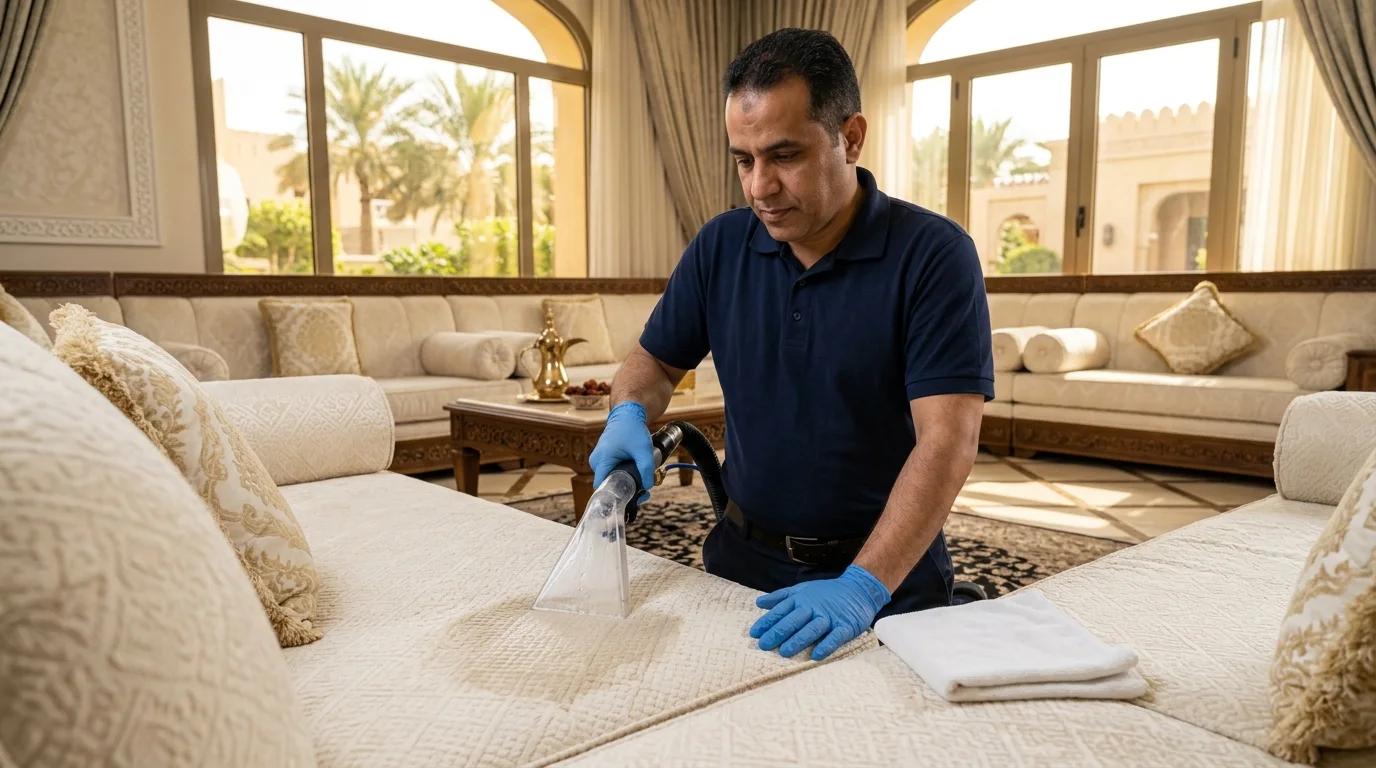
A fabric sofa in a Jeddah living room near a sunlit window

Quick Summary

  • No protector stops every stain or replaces cleaning
  • Direct sun is one of the biggest causes of faded sofa colour
  • Washable covers are the most dependable daily protection for active families
  • Rotating cushions spreads wear and light exposure
  • Read the care label before using any protective product
Quick table

Sofa protection options and when each fits

A general comparison. Choose what suits your fabric and your lifestyle.

OptionWhat it doesWhat to watch
Fabric protector (spray or coating)Makes liquids bead briefly before soaking inNeeds a hidden-spot test and may change feel on some fabrics
Washable sofa coversA removable layer you launder when dirtyNeeds a good fit and washing per fabric instructions
Throws and seat coversProtects the most-used seatsMay slide if not secured
Sheer curtains or window filmSoftens harsh sun on the fabricDoes not block all sun; fit depends on the window
Moving the sofaKeeps it out of direct lightDepends on room size
Regular light cleaningRemoves dust before it builds upDoes not replace sun protection
In detail

Seventeen points on protecting a sofa from stains and sun

From realistic expectations for fabric protector to daily protection habits in Jeddah’s climate.

Causes

What does fabric protector actually do?

A fabric protector coats the fibres with a thin layer that reduces how quickly liquids soak in during the first minutes. The idea is that the liquid beads on the surface so you can blot it before it sinks into the cloth.

But that layer does not stop contamination completely and it does not last for ever. Friction, washing and cleaning wear it down gradually, so protectors are reapplied from time to time according to the product.

We do not promise that any product makes a sofa resistant to stains by a set percentage. It is a helper, not a full shield.

Causes

Is protector suitable for every fabric?

No. Fabrics such as velvet, suede, leather and some delicate materials can change in feel or colour with a protector. The care label is your first reference, and if it says X it is safest to avoid liquids.

Even on less sensitive fabrics, test in a hidden spot and wait for it to dry before judging, because the effect does not always show while wet.

If the sofa is under manufacturer warranty, ask them first, as the terms may specify products or methods.

Causes

Jeddah sun and colour fading

Ultraviolet rays gradually break down dyes, so the part near the window looks paler than the rest of the sofa. It happens slowly but becomes obvious after seasons of direct exposure.

Dark colours and cheaper fabrics usually suffer more, and leather can dry and crack in heat. In Jeddah the sun enters many rooms at a low angle in the morning or late afternoon.

There is no magic fix, but reducing direct light with curtains or suitable film clearly slows the process.

Causes

Curtains, window film and rearranging the room

The easiest way to protect a sofa from sun is to move it away from the window when possible. If not, sheer or double curtains soften the light during the strongest hours.

Some households use film on the glass to cut rays, which is your decision and depends on the windows, and is best discussed with an installer. We do not offer this service or recommend a brand.

Even moving the sofa seasonally can spread exposure and reduce fading on one side.

Causes

Washable covers

Covers are among the most successful protection for active families: they take the dust and stains instead of the original fabric and are washed when needed. They suit sofas used heavily by children or guests.

Choose a good fit and a breathable fabric, because poor covers can trap heat. Make sure the colours do not bleed onto the sofa when damp.

Remember that a cover does not treat a stain that already reached the fabric; it prevents before an accident rather than curing afterwards.

Causes

Rotating cushions and spreading use

Sitting in the same spot repeatedly causes sagging and wear in certain cushions. Flipping and swapping cushions every so often spreads the pressure and reduces permanent marks.

If cushions are reversible, use both sides. If they are fixed, swapping positions is enough.

The habit also reduces uneven colour caused by one side being exposed to light.

Causes

Dust and light maintenance cleaning

Jeddah dust is fine and builds up quickly between the fibres, darkening the colour and turning any stain into a clearer halo. Regular vacuuming with a soft nozzle prevents the build-up.

Work from top to bottom and between cushions, every week or two depending on the room. Avoid a hard brush on soft fabrics.

For a more precise deep-cleaning rhythm, see the guide on how often to clean a sofa.

Causes

Quick spills: first aid before protection

A protector or cover does not remove the need to act fast on any liquid. Blotting with a dry white towel is the rule, followed by gentle cleaning if needed.

Relying too much on a protector tempts some people to leave a spill longer, letting it seep and leave an odour. Speed beats any product.

For child-related accidents, see the dedicated guide on milk and spit-up stains on sofas.

Causes

Reapplying protector after deep cleaning?

Deep cleaning with water and cleaner can remove part of the protective layer. If you use a protector, you may need to renew it after cleaning, following the product instructions.

Never apply protector on damp or dirty fabric, because that traps contaminants under the layer. The fabric must be clean and completely dry.

We do not promise a specific result from any protector, and we advise reading the manufacturer’s instructions and ventilating well during use.

Causes

Humidity and mould protection

In Jeddah humidity matters as much as sun. Covers that trap moisture, or a sofa pushed against a cool wall, can cause odour or mould spots. Leave a small gap between sofa and wall for airflow.

Avoid placing a damp sofa on a damp floor. If a musty smell appears, open the room and dry by moving air.

For after-cleaning odours, see the guide on smells after sofa and carpet cleaning.

Causes

Majlis seating and floor cushions

Arabic majlis seating relies on floor cushions and back rests that face more friction from feet, hands and dust than a normal sofa. Covering them with washable cases protects them from quick soiling.

Wash covers according to the fabric and dry them fully before putting them back so moisture is not trapped in the filling. Cushions left damp smell after a few days.

For more, read the guide on caring for floor cushions and seating mattresses in Arabic majlis.

Causes

Pets and sofas

Cats and dogs cause hair, scratches and odours, and a protector does not prevent scratching. A durable cover or a throw on their usual resting spot protects the fabric better.

A vacuum with a pet-hair nozzle each week reduces what clings to the fibres. Any urine or vomit accident should be blotted immediately before it reaches the foam.

See the guide on pet hair and odours on sofas and carpets for more detail.

Causes

Leather and faux leather: different needs

Leather needs suitable conditioning and distance from direct heat more than it needs a fabric protector. Faux leather can peel with sun and heat over time.

Follow the manufacturer’s instructions for the right product and do not use a fabric protector on leather. See the leather and faux leather care guide on this site.

Keeping away from the window and from direct air-conditioning prolongs the life of these materials.

Causes

Jeddah seasons and sofa care

In summer the sun and heat are strongest, speeding fading and leather drying, and indoor humidity rises with air-conditioning. In busy visitor seasons such as Umrah, more guests use the majlis and soiling increases.

So a deep clean before busy seasons and spare covers for guests are sensible. After dust storms, do a quick light clean before the dust settles in.

A little seasonal planning saves you from treating large stains later.

Causes

What not to do when protecting a sofa

Do not apply protector to dirty or damp fabric, and do not mix different products. Do not seal the sofa in a tight plastic cover, which traps heat and moisture and spoils the fabric and foam.

Do not ignore the care label or try a new product on the visible part first. A hidden test protects you from permanent damage.

And do not expect a product to make up for neglect; good protection means simple daily habits with regular cleaning.

Causes

What deserves your budget first?

A sensible order: first usage habits and regular light cleaning, then covers or throws if the household is active, then softening the sun with curtains, and finally fabric protector if the fabric suits it.

Do not buy an expensive product before knowing the fabric type and your real need. Simple steps often extend a sofa’s life by years.

If you are unsure, send us a photo of the fabric and we will give an honest opinion on cleaning and care.

Causes

How we can help with the decision

When you message us on WhatsApp, send a photo of the sofa, the care label and where it sits in the room, and we will tell you what we see for cleaning and care. We are a cleaning company and we do not list protector application as a service, and will not claim it.

We can assess the condition of the fabric and whether it needs deep cleaning before any protection step, because protector over dirty fabric does not help.

Then you choose the approach that suits you: a cover, a curtain, rearranging the room or something else.

Common questions

Common questions about protecting sofas

General answers; the manufacturer’s instructions remain the reference.

Does fabric protector stop stains completely?+

No. It only slows how fast liquid soaks in, and it does not replace quick blotting and cleaning. Results vary by fabric and product.

Is protector suitable for velvet and suede?+

It may change the feel or colour, so test in a hidden spot and read the product instructions; if the care label says X, avoid liquids.

How do I protect a sofa from Jeddah sun?+

Move it away from direct light if possible, use sheer or double curtains and swap cushion positions. No protection is total, but these steps slow fading.

Are covers better than protector?+

For active households, often yes, because a cover can be removed and washed. But it does not treat a stain that already reached the fabric.

Do you apply fabric protector?+

We offer sofa and majlis cleaning in Jeddah and do not list protector application as a service. We assess the fabric and guide you on suitable cleaning.

Should I apply protector after deep cleaning?+

It may need renewing because cleaning removes part of it, and the fabric must be clean and completely dry. Follow the product instructions.

How often should I clean to reduce soiling?+

It depends on household size, children, pets and dust. See the published guide on cleaning frequency for details.

What if part of the sofa has faded?+

It is usually sun damage. Move it from direct light and reduce exposure; cleaning may soften the difference but fading itself rarely reverses.

Want us to assess your sofa fabric before protection?

Send a photo of the sofa and where it sits in the room and we will tell you whether it needs cleaning and what care suits it.

CallWhatsAppGet Quote