
Serving Jeddah & Makkah
Sofa Guide8 min readJeddah

How Often Does a Sofa Need Deep Cleaning in Jeddah?

Cleaning frequency by household and fabric

No single interval fits every home. A sofa in a quiet two-person apartment is a different case from a majlis sofa that hosts guests every week, or a living-room sofa shared by children and a cat. In Jeddah, humidity and dust add two more factors to the equation.

This guide gives you a practical rule for estimating the right timing. It separates weekly vacuuming, quick spot treatment and deep cleaning, so you neither postpone for too long nor over-wet the fabric without a reason.

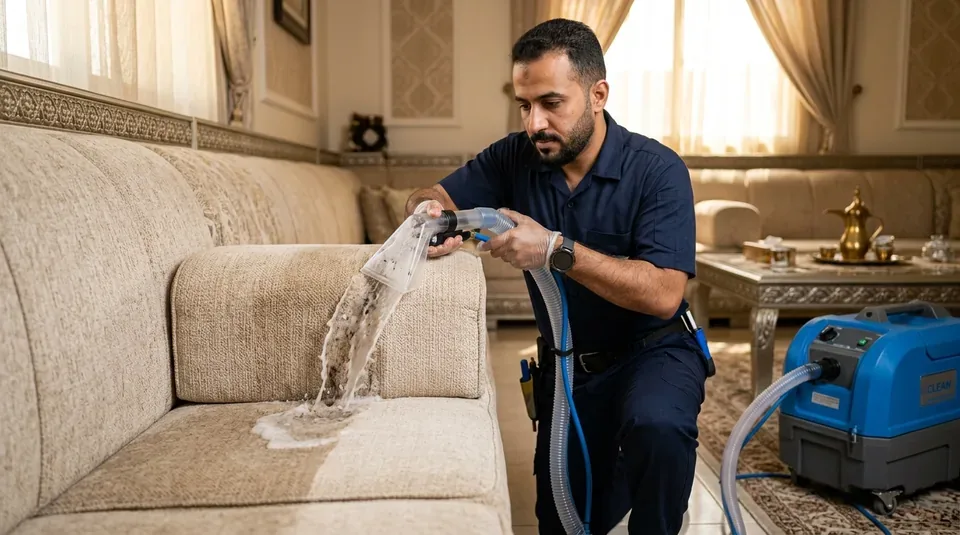
Technician extraction-cleaning a fabric sofa in a living room in Jeddah

Quick Summary

  • Figures here are general estimates, not fixed rules
  • Household and pets matter more than the sofa age
  • Regular vacuuming postpones deep cleaning
  • A fresh stain never waits for a schedule
  • Too much wet cleaning harms fabric
Quick table

General estimate for deep-cleaning frequency

These figures are a starting point for thinking, not a promise of any result. Adjust them to what you see on your sofa and to its fabric label.

HouseholdDeep cleaning (general estimate)In between
Apartment for two, no kids or petsOften once every 9 to 12 monthsWeekly vacuuming and spot treatment the same day
Family with small childrenRoughly every 4 to 6 monthsTreat spills at once and vacuum twice a week
Home with cats or dogsRoughly every 3 to 5 monthsFrequent vacuuming with a pet-hair brush
Busy guest majlisBefore the busy seasons and after large gatheringsAiring out and covering when unused
Leather or faux leather sofaVaries: periodic wiping and care by leather typeSoft cloth, slightly damp, dried right away
After an AC leak or a large spillAt once, without waiting for the scheduleBlot the water and ventilate strongly
In detail

Ten points to help you choose the timing

We start with the factors that set the interval, then the weekly routine, then the real signs of need, then the mistakes, how to prepare, and how to track what happens in your home.

Factors

What actually decides the cleaning date?

Timing depends on how many people sit on the sofa daily, whether there are children or pets, how much eating and drinking happens in the living room, and how much dust enters the home. A sofa used six hours a day is not a sofa used only for occasions.

Fabric colour plays a double role. Light fabric shows stains early, which pushes you to clean; dark fabric hides dust and oils, so they build up unnoticed. Do not judge by eye alone. Check the arm rests and cushion edges that your hands actually touch.

Finally, sunlight from windows and humidity in the hot months change how dirt accumulates and also affect the fabric itself.

Do not forget where the sofa sits in the home: one beside the kitchen catches airborne grease, one near the entrance catches dust, and one under an AC vent may face condensation or a damp air stream. A piece’s location changes its schedule more than you might expect.

Routine

Regular vacuuming: the cheapest way to delay deep cleaning

Most of what people call «dirt» on a sofa is dust, crumbs and hair trapped between fibres. Vacuuming weekly with an upholstery attachment, lifting the cushions and vacuuming the gaps and seams, stops these particles from turning into a layer that bonds to the fabric.

In Jeddah homes exposed to repeated dust, vacuuming twice a week during dusty seasons helps. Avoid beating the sofa hard, because that returns dust to the air and then to other surfaces.

If your cushions have removable zippered covers, flip them every two weeks so use is spread across both sides.

Stains

A fresh stain does not wait for the cleaning date

The schedule rule does not cover spills. Coffee, tea, juice and oils are treated the same day, because a stain that dries and soaks into the inner foam is far harder to remove later.

Press with a clean cotton cloth to absorb liquid without rubbing, work from the edges inward, use the least water possible and test any cleaner on a hidden spot first. Leave oily or dye-based stains to a specialised team.

For more detailed steps on common stains, see our guide on removing sofa and majlis stains and odors.

Jeddah

Humidity and dust in Jeddah: when to shorten the interval

In humid months, fabric and padding hold moisture longer, and a faint smell appears when you sit down before any stain shows. That is a signal to shorten the interval or improve ventilation, not always a signal for immediate wet cleaning.

After dust storms, a sofa deserves a thorough vacuum even if it looks clean. And if a nearby AC drips water onto the sofa, treat it as an urgent case.

Remember that cleaning a sofa in a very humid season needs good drying, so the process does not become a new source of odor.

Signs

Signs telling you it is time for deep cleaning

Do not rely on the calendar alone. Watch for these signs:

  • Shine or flattened fibres on arm rests and seating spots
  • A faint smell that ventilation does not remove
  • Rings or halos around old stains
  • Recurring stains that return after treatment
  • A grey smudge on a white cloth when you lightly wipe the sofa
  • Grubby cushion edges despite vacuuming

Two or more signs usually mean the time has come, and any sign together with a damp smell deserves faster attention.

Majlis

Majlis and guest sofas: schedule by season, not calendar

A majlis sofa can sit unused for weeks and then fill up in a single evening. It is therefore better scheduled before visiting seasons and gatherings, and after large events, instead of a fixed number of months.

With coffee, dates and incense, sugar, oil and smoke transfer to the fabric. Covering the sofa when unused, airing it after incense, and keeping fabric throws for the arm rests all help.

For floor seating, mattresses and cushions, see our guide on caring for Arabic majlis floor seating, which has its own notes.

If the majlis seats many people, do a quick visual check after every event: lift the cushions, look for coffee and tea stains and check the seams and gaps. Spotting a problem early is easier than letting it build up.

Mistakes

Repeated wet cleaning: a mistake that shortens fabric life

Some assume deep cleaning every two months is better because «clean is always good». But repeated wetting stresses fibres, adhesive and padding, and raises the chance of odor if drying is incomplete.

Other mistakes recur too: using a strong stain remover untested, ignoring the care label inside the sofa, mixing different chemicals, and sitting down before it is dry.

To estimate a suitable interval for your home, send us a photo of the sofa and your household size on WhatsApp, and we will reply with an initial suggestion without obligation.

Records

Log your last cleaning: a small habit that saves guessing

Note in your phone the date of the last deep clean, the fabric type, any large stain that happened, and whether a smell appeared afterwards. After two or three rounds you will know your own home’s real rhythm instead of relying on a general estimate.

These notes also help the team that visits you, because they show which spots had old stains and which fabric suffered earlier damage. Photograph the sofa before and after from the same angle so you can compare clearly, and do not over-read a photo taken in different lighting.

If you have more than one sofa, do not assume they share the same interval; the one nearest the kitchen or balcony usually gets dirtier faster than a sofa in an inner room.

Decision

Cleaning or re-covering: when does each option make sense?

If the fabric is sound but dirty or smelly, cleaning is the natural choice. But if you see tears, worn-through fibres or clearly sagging foam, the problem is not dirt and cleaning will not solve it.

Sofa cleaning improves appearance and smell as far as the fabric condition allows. It does not repair structural damage or restore faded colour. Ask for a frank opinion before expecting more than is possible, and do not pay for a service that does not suit your sofa’s condition.

For very old sofas, light spot cleaning may be the sensible step while you consider re-covering later.

Preparing

How to prepare for the visit so you get the full benefit

Clear the sofa of items, lift the cushions, and tell the team about stains you know of and any cleaners you tried on them, because some products react with others. Pick a spot near a window or AC so the fabric can dry easily.

Do not put cushions or covers back before the team confirms the surfaces are dry, and do not lay plastic sheets over damp fabric. It also helps to book a day when you will not need to sit on the sofa much afterwards.

For general details on getting your home ready before a cleaning team arrives, see our dedicated guide.

Common questions

Common questions about sofa cleaning frequency

General answers to help you estimate. Your own case may need a view based on the fabric.

Is cleaning a sofa once a year enough?+

It can be in a small, lightly used apartment with no children or pets, as long as you vacuum regularly and treat stains the same day. In active homes the interval is usually shorter, and the more accurate measure is the signs on the sofa itself.

Should I clean the sofa before Ramadan or a visiting season?+

Yes, this is a sensible time because the sofa gets used more. Book early and leave enough time for drying before the first guests, since the days before occasions get busy.

Does frequent cleaning damage the fabric?+

Repeated wetting and strong chemicals can stress fibres and padding. It is safer to rely on vacuuming and spot care between sessions and keep deep cleaning for actual need.

How often should a leather sofa be cleaned?+

Leather is not treated like fabric; it needs periodic wiping and suitable care for its type. See our guide on leather and faux leather sofas for the heat and humidity details in Jeddah.

Does vacuuming replace deep cleaning?+

No. Vacuuming removes surface particles and delays build-up, but it does not draw out oils, sweat and soaked-in stains. It complements deep cleaning rather than replacing it.

How long does a sofa take to dry after cleaning?+

It depends on the fabric, method, humidity and ventilation, and we do not promise a fixed time. Keep windows open or the AC ventilating well, and do not sit until the cool, damp feeling is gone.

Should I clean a sofa nobody sits on?+

Dust accumulates even on unused sofas, especially after storms. Regular vacuuming and a cover are usually enough, and the decision to deep clean depends on smell and stains, not use alone.

Does it differ for a bedroom sofa and a living-room sofa?+

Yes. A living-room sofa that is used more and sits near the kitchen and windows gets dirty faster than one in a rarely used room. Estimate each sofa’s timing from its own use rather than putting every piece on one schedule without a reason, then adjust when you notice the signs.

Want an estimate for when to clean your sofa?

Send us the fabric type, household size and a photo of the sofa, and we will suggest a suitable step without exaggerated promises.

CallWhatsAppGet Quote