
Serving Jeddah & Makkah
Sofa Guide8 min readJeddah

How Long Does a Sofa Take to Dry After Cleaning in Jeddah?

Ventilation, humidity and real signs of dryness

A question that follows every visit: when can I sit on the sofa again? The honest answer is that there are no fixed hours, because drying depends on the fabric, the padding thickness, the cleaning method, the humidity outside and the airflow in the room.

In Jeddah the wait can run longer because of humidity. This guide explains what affects drying, how to help it in safe ways, and how to confirm the sofa is genuinely dry before you put the cushions back and sit.

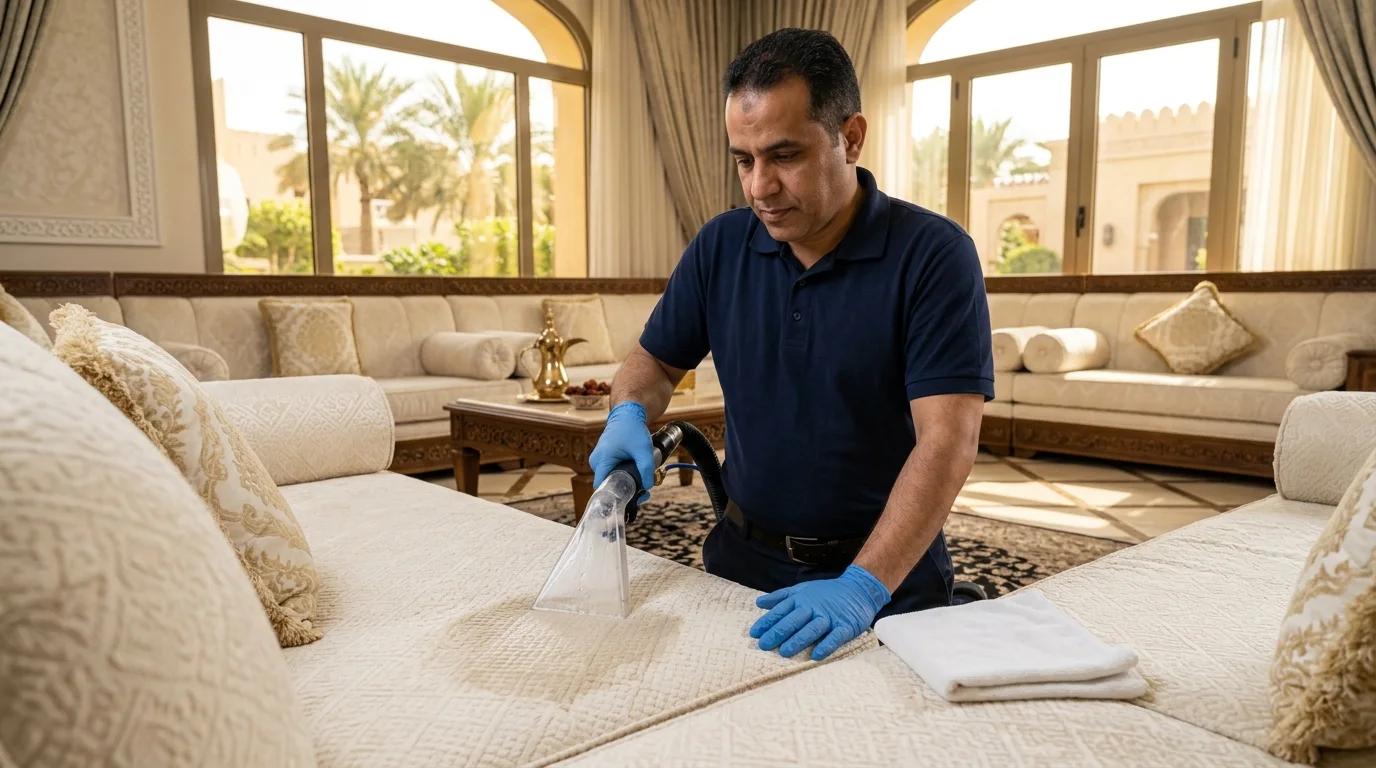
Stain being cleaned on a fabric sofa in Jeddah with moisture extracted after cleaning

Quick Summary

  • No fixed time suits every fabric and room
  • Moving air matters more than high heat
  • A dry surface does not mean dry padding
  • Covering too early traps moisture
  • A lingering smell signals incomplete drying
Quick table

What lengthens or shortens sofa drying?

General factors that explain why one sofa dries quickly and another slowly, and what you can do without risking the fabric.

FactorEffect on dryingWhat you can do
Outdoor humidityHigh humidity slows evaporationRun the AC at a moderate setting and keep the room ventilated
AirflowStill air means slower dryingAim a fan at an angle, not pressed against the fabric
Padding thicknessThick foam holds moisture insideStand cushions on their edges and leave space around them
Cleaning methodHeavy extraction leaves more moisture than dry foamAsk the team which method to expect before the visit
Fabric typeSome fabrics soak up water fast and dry slowlyFollow the fabric instructions and avoid excess water
Cleaner residueLeftover product can attract moistureAsk for adequate rinsing and do not add products yourself
In detail

Twelve points for safe drying and real confirmation

From understanding the causes to practical steps, then signs of dryness, then the common mistakes that produce a smell or returning stains.

Causes

Why is there no fixed drying time?

Drying depends on the water that entered the fabric and padding, and on the air’s ability to absorb it. A room with dry wind differs from a closed room on a humid day. Anyone who promises specific hours without seeing the sofa and knowing your home’s conditions is not being straight with you.

A good team removes as much leftover water as possible by extraction before leaving, but what remains afterwards depends on the airflow you provide.

Remember that the point of cleaning is to remove dirt, not to leave as much water as possible, which is why a good team asks about the fabric type and where the sofa will dry. Answer clearly and say whether you have a working AC or a window that opens, since such details change how the work is done.

Airflow

Moving air matters more than high heat

The fastest safe approach is moving air: open the windows if the outdoor air is dry, or run the AC at a moderate cooling setting because it lowers the room’s humidity, and aim a fan at the sofa from a distance without letting it touch the fabric.

Avoid direct heat from a hair dryer or a nearby heater. Localised heat can stress fabric, cause shrinkage or colour change, and may dry the surface while leaving the inside damp.

It also helps to keep the room door open so it connects to another space with air movement, instead of closing the room in on its own vapour. If the room is small, reopen the window now and then to refresh the air, because saturated air cannot absorb more water.

Dryness

A dry surface does not mean dry padding

Fabric can feel dry on top while the foam inside stays damp, which is where the smell shows up later. So do not judge by a quick touch with the palm.

Press with your palm on a seating spot and then on the gap between a cushion and an arm rest, and notice any coolness or damp feeling. If the feeling remains, drying is not complete.

On large sofas or those with thick padding, the gap between a dry surface and a dry interior can last longer, so do not judge from one touch; check again after some hours before you return the cushions and sit.

Test

A simple test before you sit

Lay a clean paper towel on the spot, press firmly for a few seconds and lift it. If it picks up no moisture and shows no dark patch, the surface is probably dry.

Smell the spot after pressing, since a damp or slightly sour odor means the inside has not dried. Repeat in more than one spot, especially near the arm rests and seams.

This is an approximate test; if doubt remains, postpone sitting and increase ventilation.

Keep the used paper towels to compare spots, since a difference in the mark between one spot and another shows that part of the sofa is still damp and needs extra ventilation.

Jeddah

Humid days in Jeddah: how to act

On very humid days drying can lag even with windows open, because the outside air itself is damp. The AC helps here, as does a fan that pushes air, and if you have a dehumidifier, use it in a closed room.

Consider booking the cleaning for a less humid day if possible, and read our guide on coastal humidity and mold prevention to understand how Jeddah’s humidity affects a home in general.

Do not wait for the humidity to improve by itself over several days, because a long time with damp fabric can help odors appear. If the coming days are all very humid, make mechanical ventilation part of the plan instead of relying on the weather.

Mistakes

Covering and sitting too early

A common mistake is placing a throw, blanket or plastic sheet over damp fabric, or returning cushions to a base that has not dried. Covering traps moisture, slows evaporation and can encourage odor.

Sitting early also presses leftover water upward, may leave marks on clothes, and can transfer dye from dark clothing to a light sofa, so wait for real dryness.

Odor

A smell after drying: what does it mean?

If a damp smell appears a day or two later, it may mean the padding kept more water than it should, that ventilation was inadequate, or that the problem predated the cleaning, such as a leak or old dampness.

Increase ventilation first, then tell us the details if the smell persists. For more, see our guide on damp smell after sofa and carpet cleaning.

Returning stains

A stain appeared after drying: is it new?

An old stain can reappear after drying because deep dirt rises with the water to the surface as it evaporates. This is a known effect and does not always mean the cleaning was not done.

Send the team a clear photo and the date it appeared; the spot may need extra treatment depending on the stain and fabric. Do not scrub it yourself with a new cleaner before consulting.

If the spot is near an old leak or drip, tell the team, because if the moisture source remains the problem will return however well the cleaning is done. Real treatment starts with stopping the source and then cleaning.

Preparation

How to prepare the room for faster drying

Before the visit, move the sofa closer to an air source if possible, clear items that block movement, and keep the room tidy so air can circulate. Book at a time when you do not need the sofa straight after.

If you plan to host guests, leave a sufficient gap between cleaning and the occasion rather than booking on the same day.

Fabrics

Does drying differ between velvet, leather and linen?

Dense fabrics such as velvet usually hold water longer than light ones, so less water is used with them and ventilation matters more. Cotton and linen absorb water quickly but may wrinkle or shrink if they are dried with direct heat.

Leather and faux leather are not treated by soaking at all; they need wiping with a lightly damp cloth and immediate drying. Ask the team to tell you your fabric type and what to expect in drying before work starts, since an honest answer saves needless worry.

For details on fabric types and cleaning methods, see our guide to sofa fabric types.

Scheduling

The best time of day to book the cleaning

If your home has good morning ventilation, booking early in the day gives the sofa a full daylight period with moving air. A late-day booking may mean the sofa spends the night damp in a closed room.

Avoid a visit that lands only hours before guests arrive. Leave yourself a gap and do not force the sofa into early use. A less humid day is better if you can predict one, but do not postpone cleaning for months waiting for perfect weather.

Cushions

Removable covers and cushions: how to dry them

If the sofa has removable covers, read the care label before putting them in a washing machine, since some covers cannot take hot water or a rough spin cycle. Follow the instructions instead of improvising.

A foam cushion core is normally not washed with heavy water and is left with air moving around it, standing on its edge rather than flat. Do not fit a damp cover over a dry core or the reverse, because moisture moves between the layers.

Common questions

Common questions about sofa drying after cleaning

General answers; an exact estimate needs the fabric, the method and the weather.

How many hours does a sofa need to dry?+

We do not promise a fixed number of hours, since drying depends on fabric, padding, method, humidity and ventilation. It is better to rely on signs of dryness than on a set time.

Should I put the sofa in the sun?+

Direct sun can fade and stress some fabrics, and a sofa is not easy to move anyway. Moving air and ventilation in the room are the better choice, away from intense light on the fabric.

Can I use a hair dryer to speed things up?+

It is not recommended, since localised heat can stress the fabric and dry only the surface. Rely on a fan, the AC and ventilation instead.

How do I know the padding has dried?+

Press several spots and notice any coolness or dampness, try a clean paper towel, and smell the spot. Any moisture or odor means drying is not complete.

Can the smell return after two days?+

Yes, it can if moisture stayed in the padding or ventilation was weak. Increase ventilation and tell us the details so we can suggest a suitable step for the case.

Should I cover the sofa after cleaning to protect it?+

Wait until it is completely dry. Covering damp fabric traps moisture, and after real dryness you can use a suitable cover to protect it.

Does dry-foam cleaning dry faster?+

It often leaves less moisture than heavy extraction, but it does not suit every case. The method is chosen by fabric and level of soiling, not by drying speed alone.

Can I put the cushions back right away?+

Do not return them before both the base and the cushions are confirmed dry. Placing them on a damp surface transfers moisture and lengthens the wait.

Unsure whether your sofa has dried properly?

Send us the fabric type, how the spot looks and how it smells, and we will suggest a suitable step without exaggerated promises.

CallWhatsAppGet Quote