
Serving Jeddah & Makkah
Sofa Guide9 min readJeddah

Caring for Velvet, Microfiber and Suede Sofas in Jeddah

Fabrics that need extra caution with water and rubbing

Velvet, microfiber and faux suede look elegant and soft, but they show mistakes more than ordinary fabric: a water ring after a quick wipe, a crushed pile after hard rubbing, or a new shine on the seating spot.

This guide explains how to read the care code on the sofa, how each fabric differs in handling, what you can safely do between visits, and when to leave the work to a team that identifies the fabric before wetting it.

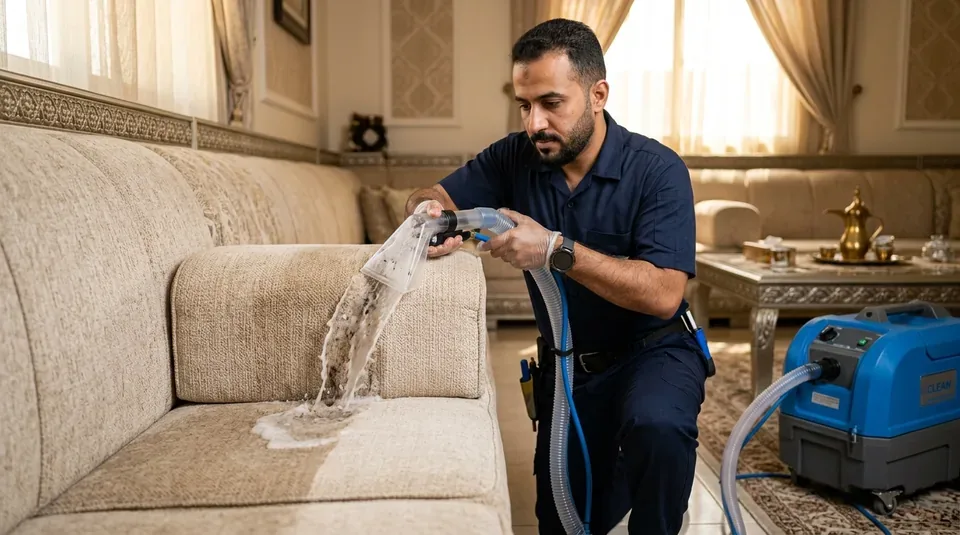
Technician checking a soft sofa fabric before cleaning in a home in Jeddah

Quick Summary

  • Read the care code before any water or cleaner
  • Too much water leaves rings on these fabrics
  • Hard rubbing crushes the pile and changes its sheen
  • Natural suede differs from synthetic suede
  • Brushing in the right direction is part of care
Quick table

What suits each fabric and what to watch for

A general comparison to help you set expectations; the manufacturer’s instructions on the sofa label remain the first reference.

FabricWhat usually suits itWhat to watch for
VelvetGentle vacuuming and a soft brush along the pileHeavy water and hard reverse rubbing that flattens the pile
MicrofiberLight wiping with a cotton cloth and a cleaner suited to the codeWater rings and cleaner marks if not rinsed
Faux suedeA soft brush and early stain removalOils and shine caused by friction
Natural suedeSpecialist care, handled with great cautionWater, strong products and changes in texture
Blended fibre fabricFollow the code and test a hidden spotAssuming it tolerates what cotton does
Code XVacuuming and a dry brush onlyAny water or liquid cleaner
In detail

Ten points to care for these fabrics without damaging them

We start with the codes, go through each fabric, then cover rings, pile, stains and climate, and finish with what is best left to specialists.

Codes

The care code on the sofa label: read it first

Many sofas carry a small label under a cushion or beneath the base with a letter on it. W means the fabric tolerates water-based products, S means dry solvents are the right choice and water may harm it, WS means either method is possible, and X means vacuuming and a dry brush only.

Do not assume a soft shiny fabric tolerates water. Read the code, and if there is no label, ask a team that tests a hidden spot before starting. With S or X, do not try a household cleaner out of curiosity.

If what you read differs from the opinion of the person treating the sofa, ask them to explain the difference; a blended fabric or an outer cover may differ from the padding.

Velvet

Velvet: a lovely pile that should not be treated roughly

Velvet has a short upright pile that reflects light, so any pressure or rubbing shows as a dark or shiny mark. It is best vacuumed with a soft attachment, then brushed with a soft brush along the pile, avoiding hard reverse strokes.

A fresh stain is absorbed by pressing a white cotton cloth, without circular wiping, and water is not poured on it. Some velvets react to moisture, so the pile crinkles or a ring forms around the stain.

If you notice crushed pile after long sitting, it may recover with a soft brush and time, but heavy accumulated pressure does not always return to its first state.

When buying or replacing in future, remember that denser, glossier velvet shows marks more than matte velvet. Choosing a mid-tone instead of pure black or bright white makes dust and stains less visible and lengthens the gap between serious care sessions.

Microfiber

Microfiber: durable, yet it shows water rings

Microfiber fibres are extremely fine and tightly packed. They resist a lot of dirt, but they can leave a clear ring around a wetted area even if the stain was small, because water carries dirt to the edge of the area and dries leaving a line.

To reduce this, treat the whole panel rather than just the stain, use little water and a dry towel, wipe in one direction, and let the sofa dry well. Much microfiber carries an S or WS code, so do not assume W.

Scrubbing dirt with a strong cleaner can leave a whitish halo or change the feel of the fibres.

It also helps to run the hidden-spot test somewhere nobody sees, such as the back or beneath the base, and wait until it dries completely before judging the result, since wet fabric looks different from dry fabric.

Suede

Synthetic and natural suede: a fundamental difference

Synthetic suede, often called microsuede, is an artificial fabric that resembles brushed leather and usually accepts a soft brush and early stain removal. Natural suede is real brushed leather, very sensitive to water and oils, and needs specialist care.

The two must not be handled alike. If you do not know your fabric, ask the seller, check the invoice or get the team’s view before any wet cleaning. Ordinary leather and faux leather have their own guide you can consult.

In both cases do not rely on the fabric name in the advertisement alone, since many trade names cover different fibres, and the label and a hidden test are more trustworthy than the name.

Rings

How do we avoid water rings after cleaning?

Rings appear when part of the fabric gets wet and dries, leaving an edge between wet and unwet areas. The solution in most cases is to treat a whole connected surface, an entire cushion or an entire arm rest, instead of isolating a small spot.

Water should be minimal with strong extraction afterwards, then good ventilation until the surface dries evenly. A hair dryer with localised heat should not be used because it widens the difference between areas.

If a ring appears after your own cleaning, do not re-wet it at random. Contact whoever is handling the case and send a photo in good lighting.

Pile

Reviving the pile: a brush and patience, not force

After drying, the pile may look flat or lie in different directions. A clean soft brush passed in one direction redistributes it and gives a more even colour.

Do not use a hard brush or heavy pressure, and do not drag the brush over damp patches. A brush made for soft fabrics is better than a shoe brush. Flattened areas may not return to how they were, and that is part of the nature of these fabrics.

Do not over-brush; once or twice a week after vacuuming is enough. Too much brushing can stress the fibres more than it helps, and what matters is a consistent direction and a light hand.

Stains

First response to stains by fabric

In velvet and microfiber, absorb liquid by pressing and do not rub. In synthetic suede, deal with oils quickly using a dry cloth and avoid adding much water. In any fabric whose label does not point to water, avoid wetting until you are sure.

Coffee, tea and juice differ from oils and inks, and the first group usually tolerates lighter treatment. Dye-based stains such as ink often need a specialist opinion. For common stains on sofas in general, see our guide on removing sofa and majlis stains and odors.

Note what you tried on the stain and when, since that helps whoever treats it later avoid a reaction between different products and stops repeated attempts that could set the stain further.

Climate

Jeddah’s humidity, dust and sun with soft fabrics

Dust sinks between pile and fibres and looks like a faded colour if not vacuumed, so a weekly vacuum, or twice weekly in dusty seasons, usually helps. Humidity can lengthen velvet’s drying time and show a smell if water is trapped.

Sun through windows fades some colours and stresses fibres. Rotating cushions and moving the sofa from direct light, or using a light curtain, reduces the effect. For ventilation after any cleaning, see our guide on sofa drying time.

If the sofa sits near an AC vent, watch for condensation or damp air blowing on it, since repeated local moisture produces halos and odors more than any dust does.

Pets

Cats and dogs: hair, scratches and snagged threads

Velvet and synthetic suede attract hair and can be scratched by claws; microfiber tolerates this better but catches hair. Vacuuming twice a week with a rubber pet-hair brush eases the problem.

Odors need deeper treatment that respects the fabric. For detail, see our guide on pet hair and odor in sofas and carpets. And do not treat a pet or child urine stain with a strong cleaner before you know the fabric type.

If the household lets a pet sleep on the sofa, consider a washable cover laid over the soft fabric and removed when guests arrive; it is cheaper than treating repeated scratches.

Specialists

When should you leave it to a team that knows the fabric?

Call a team if the code is S or X, if the fabric is natural suede, if the stain is oily or dye-based, if a ring appeared after an earlier attempt, or if the sofa is expensive or old and a mistake would be hard to repair.

Before any visit, photograph the fabric label and the stain spot and send them on WhatsApp with the colour, and you will get a clearer idea of what suits your case without exaggerated promises. Importantly, know that some damage to these fabrics, such as heavy flattening, cannot be fixed by cleaning.

Common questions

Common questions about velvet, microfiber and suede

General answers; the care label on your own sofa is the first reference in any case.

What do the W, S and X codes mean on a sofa label?+

W is for water-based cleaning, S for dry solvents, WS accepts both, and X means vacuuming and a dry brush only. Follow the code before any water or cleaner.

Can I use water on a velvet sofa?+

It depends on the code and the type of velvet, and some react to water. It is safer to use very little water, test a hidden spot, and leave it to a team if in doubt.

Why did a ring appear after wiping?+

Because water carried dirt to the edge of the area and left it as it dried. Treating the whole panel instead of the stain alone reduces rings.

Can crushed pile be fixed?+

It may improve with a soft brush and patience, but accumulated pressure does not always return to how it was. Rotating cushions to prevent it is better than treating it.

What is the difference between synthetic and natural suede?+

Synthetic is an artificial fabric that is usually less sensitive, while natural is real brushed leather that is very sensitive to water and oils and needs specialist care.

Should I use a household stain remover on the sofa?+

It may damage the fabric or leave a halo, especially with an S or X code. Check the code and test a hidden spot first, and for expensive pieces consult a team.

Does dust affect the colour of velvet?+

Yes, it makes the colour look faded. Regular vacuuming restores evenness and delays the need for wet cleaning.

Do you clean these fabrics?+

We provide sofa and majlis cleaning in Jeddah. Send a photo of the fabric and the label and we will suggest what suits your case, and we may recommend limiting the work if the fabric does not tolerate a certain method.

Have a velvet, microfiber or suede sofa?

Send a photo of the fabric, the care label, the colour and the spot of any stain, and we will suggest what suits it without exaggerated promises.

CallWhatsAppGet Quote