
Serving Jeddah & Makkah
Home care guide11 min readJeddah

Cleaning Stainless Steel Pots and Surfaces: Water Spots, Burnt Marks and Fingerprints

Stainless steel resists rust but not scratches, limescale or salt, and the way you clean it decides how long it lasts.

Stainless steel is in almost every kitchen: pots and pans, sinks, fridge and oven fronts, worktops and extractor hoods. In Jeddah three problems keep coming back: white limescale spots once water dries, rainbow tints and heat marks on pan bases, and fingerprints and greasy smears that show clearly on shiny surfaces.

This guide shows how to identify the finish and its grain direction, how to remove water spots and limescale with safe household products, how to deal with burnt-on food and stuck rice or milk, when visible rust actually comes from iron touching the steel, and which mistakes scratch the surface and make it dirty faster.

The advice is general home care, and the manufacturer's instructions always come first for any appliance or pan. If your kitchen needs a full deep clean you can message us, but repairing appliances or replacing damaged cookware is outside our services.

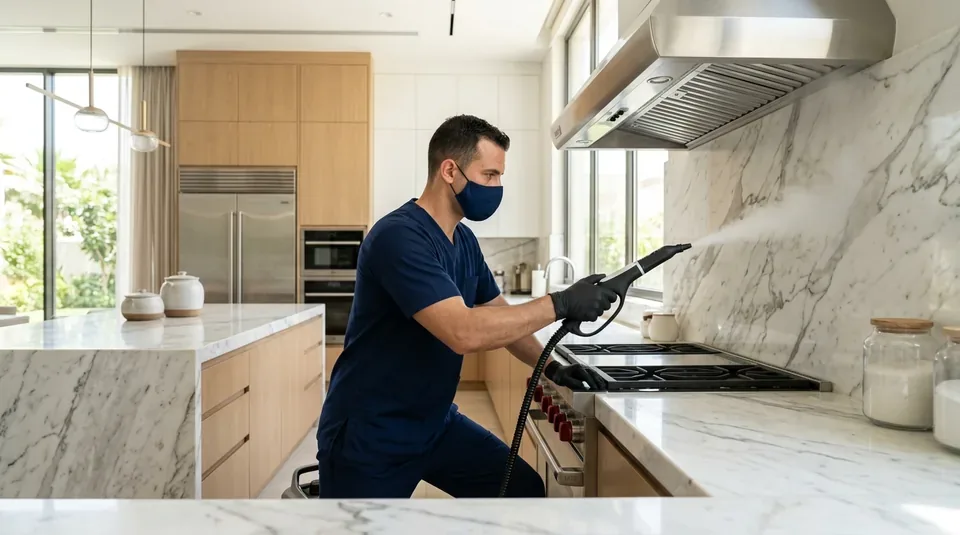
Shiny stainless steel pots and surfaces in a Jeddah home kitchen

Quick Summary

  • Always wipe brushed steel along the grain, never in circles.
  • Diluted white vinegar treats limescale; rinse and dry immediately so spots do not return.
  • Avoid iron wire wool, which leaves surface rust and scratches.
  • Soak burnt food in hot water and detergent instead of scraping hard.
  • Bleach and strong chlorine cleaners pit the surface and should be avoided.

Polished versus brushed finish

Most household stainless is either mirror polished or brushed, with fine lines running in one direction. When cleaning brushed steel you must wipe along those lines, not across them, because the opposite motion acts like light sanding, opens the lines, dulls the surface and makes it hold fingerprints.

Polished steel shows scratches and smears most, and a microfibre cloth with water and a little washing-up liquid is usually enough. Look for the grain under side light before you begin, as it saves attempts that spoil the appearance.

New appliances may carry a protective plastic film from the factory; peel it off following the instructions before cleaning rather than trying to scrub it with harsh products, which can make it stick and leave residue.

What you need for daily care

  • a soft clean microfibre cloth and a dry one for buffing
  • warm water and mild washing-up liquid
  • white vinegar diluted with water for limescale
  • a tiny amount of mineral or vegetable oil for a final shine

Pots and pan bases

Good stainless pans may have layered metals in the base to spread heat, so they dislike sudden thermal shock such as putting a hot pan straight into cold water. Let it cool slightly before washing, and do not leave salty water standing for hours, since salt can cause tiny pits in the base.

Avoid harsh scouring tools because older pans keep their shine better with soaking and a soft sponge than with scraping. Store polished pans away from other metal items so they do not rub and scratch.

Appliance fronts and kitchen fittings

Fridges, ovens and dishwashers with steel fronts collect fingerprints and grease around handles and control panels. Wipe with a damp cloth and then a dry one along the grain, and spray cleaner onto the cloth rather than directly on controls so liquid cannot seep into electronics.

In open kitchens in Jeddah greasy dust builds up on hoods and steel above appliances, so a light weekly wipe prevents a hard yellow film. See our guide on hood and cabinet grease for the detail.

White spots and limescale

Water in Jeddah can leave white mineral deposits as it evaporates on sinks, pans and taps. A cloth wetted with equal parts white vinegar and water, left for a few minutes, then rinsed well and dried immediately usually removes them. Drying is half the solution because leftover water leaves new spots.

Do not leave vinegar on steel for long, and keep it off natural stone nearby such as marble and granite, which it can damage. If deposits are thick, repeat the gentle treatment rather than reaching for something stronger.

Acidic foods such as tomato and lemon can leave faint marks or pitting if they sit in a pan for days, so move leftovers to a glass or suitable plastic container and wash the pan soon after serving.

Before using any acidic product

  • rinse and cover nearby stone surfaces
  • never mix vinegar with bleach or chlorine
  • open a window or run the extractor while you work
  • test on a hidden corner first

Burnt-on food and sticking

Fill the pan with hot water and a few drops of washing-up liquid, leave it to soak from half an hour to several hours depending on the mess, then loosen the softened food with a wooden spoon or plastic scraper. For stubborn marks boil water with a spoonful of baking soda for a few minutes, let it cool, and rub gently.

Avoid scraping with knives or metal spoons, because deep scratches trap food next time and make the pan stick even more, starting a cycle of scraping and damage.

Heat tints and rainbow marks

Blue and brown shades on the base come from strong heat changing the thin oxide layer, not from dirt. Diluted vinegar followed by washing and drying often softens them. They do not mean the pan is ruined, but they recur if the flame is high with too little food in the pan.

Use medium heat with heavy pans and add food or oil before long heating so the base does not heat empty.

Visible rust and where it comes from

Good stainless does not rust easily, but orange spots can appear when a damp iron item touches it, such as old wire wool or a knife left in the sink, or when bleach or concentrated chlorine attacks the protective layer and causes pitting. Light surface marks often respond to gentle wiping and a mild baking soda paste.

If rust spreads or deep pits form, the steel may be low grade or damaged, and cleaning alone will not fix it.

What to avoid with stainless steel

  • iron wire wool and wire brushes
  • bleach and concentrated chlorine cleaners
  • leaving salt or acidic food in pans for hours
  • abrasive cleaners and wiping against the grain

A routine that reduces spots and prints

Dry steel with a dry microfibre cloth after every wash, which alone prevents most water spots. Once a week wipe shiny surfaces with a mild cleaner and then buff with a cloth carrying a drop of oil, which repels fingerprints and delays the return of grease.

In Umrah and Hajj seasons, when guests are many and big meals are cooked, wash large pots straight after cooking, because fatty food left to dry takes twice the effort to remove.

If you are preparing for guests or a big gathering, get your stainless serving dishes ready a week ahead: wash, dry and inspect them for spots or scratches, then store them somewhere dry so humidity marks do not appear just before the event.

Plan

Care schedule for stainless steel pots and surfaces

Short routines that keep the shine without scouring.

ItemFrequencySuitable method
Pots after useAfter every mealSoak, wash softly and dry at once
Sink and worktopsDailyWipe along the grain and dry
Fridge and oven frontsWeeklyDamp then dry cloth, no spraying on controls
Limescale and white spotsWhen they appearShort diluted vinegar, rinse and dry
Pan bases and heat tintsMonthly or as neededDiluted vinegar or baking soda, gently
Hood and greasy surfacesLight weekly wipeWarm water and washing-up liquid before grease builds
FAQ

Common questions about cleaning stainless steel

Short answers to what homeowners ask most.

How do I remove white water spots from stainless steel?+

Wipe with a cloth wetted with equal parts white vinegar and water, leave a few minutes, rinse and dry straight away. Drying prevents new spots. For thick deposits repeat gently rather than scraping.

Can I use rough scourers on pots?+

It is best to avoid them, because they scratch the base and walls and food then sticks more. Soak the pan and use a soft sponge, saving plastic scrapers for stubborn spots.

What causes blue and brown tints on the base of a pan?+

Strong heat changes the thin oxide layer on the metal. It is not dirt. Diluted vinegar and washing can soften it, and it happens less with medium heat and food or oil in the pan.

Does stainless steel really rust?+

Good steel resists rust but can be marked by salt, chlorine, bleach and contact with damp iron. Light orange spots are often surface marks that a baking soda paste removes, while deep pitting signals damage.

Which direction should I wipe a fridge front?+

Along the fine grain of brushed steel. Wiping across it or in circles leaves micro scratches that catch fingerprints and dull the surface.

Is vinegar safe next to stone worktops?+

No, it can harm marble, granite and some other stones. Rinse and cover the stone first, and never mix vinegar with bleach because the fumes are harmful.

Do you repair appliances or replace cookware?+

No. This is a cleaning care guide. Our advertised services cover home, apartment, villa, sofa and carpet cleaning and more in Jeddah and Makkah, and you can message us on WhatsApp to see what suits your kitchen.

Need help cleaning your home in Jeddah?

Send us the property type, size and what you want cleaned on WhatsApp and we will arrange the details and preparation that suit you.

CallWhatsAppGet Quote