
Serving Jeddah & Makkah
Tank Guide9 min readJeddah

Villa or Apartment Building: How Water Tank Cleaning Differs in Jeddah

The same cleaning method can look very different on site. A villa usually has one or two tanks and one decision-maker; a building has more tanks, more users and more coordination.

Owners often ask whether a building tank is just a bigger villa tank. The honest answer is partly: the chemistry of dirt is the same, but access, volume, supply interruption, schedule and responsibility change a lot, and they decide how you should plan and what you should ask for.

This guide compares the two situations side by side so you can plan properly. For the service itself, see our water tank cleaning in Jeddah page.

Water tanks at a villa and an apartment building in Jeddah

Quick Summary

  • Villas usually have one or two tanks, simple access and one decision-maker.
  • Buildings need coordination of residents, access, timing and supply interruption.
  • Large or multiple tanks mean a longer visit and often a staged plan.
  • In both cases a written scope, a clear date and a follow-up check matter most.
Quick reference

Villa and building comparison

The main differences at a glance.

TopicVillaApartment buildingPlanning note
Number of tanksUsually one or twoOften several, ground and roofAsk for a count and layout
AccessUsually simpleMay need keys, roof access, permitsConfirm in advance
Decision-makerOwner or householdOwner, manager or associationAgree who approves and pays
Supply interruptionAffects one householdAffects many residentsNotify everyone early
Visit lengthShorterLonger, sometimes stagedPlan the day with the manager
In-depth guide

Nine differences that shape your plan

Each difference below explains what changes and how to handle it.

Factor 1

Tank count and layout

A villa typically has a ground tank and sometimes a roof tank. A building may have ground tanks, roof tanks and booster arrangements, each with its own inlet, outlet and level controls.

The more tanks there are, the more important it is to agree on the order of work and which tanks stay in service during cleaning.

Ask the team for a short written plan that lists each tank and what will be done to it.

If you are unsure about the layout, a quick walk-through with photos before booking is worth the few minutes it takes.

Factor 2

Access and permissions

In a villa the owner usually controls the roof and the tank room. In a building, access may sit with a manager, a caretaker or an owners association, and some areas may be locked or shared.

Confirm in advance who has the keys, whether permits or building rules apply and where equipment can be set up.

Missing access is one of the most common reasons a visit is delayed, so sort it out before the date.

Factor 3

Water interruption and residents

In a villa, a few hours without water affects one household. In a building, the same interruption affects every resident, and good notice is not optional.

Send a short written notice with the date, expected hours and advice to store water. Remind people again the evening before.

If the building has two tanks that can be switched, ask whether cleaning one at a time is possible. It reduces interruption, although it makes the work longer.

Factor 4

Scheduling and cleaning interval

Buildings with high consumption often justify a shorter interval than a villa. Sediment, filter blockages and complaints from residents are good signals.

Villa owners can usually follow the general frequency guide and adjust for roof exposure and tanker use.

Whichever you are, keep a dated log and use it to adjust the interval after each cleaning.

In older buildings with worn plumbing, expect to find more sediment and more fittings that need attention.

Factor 5

Responsibility and cost

In a villa the owner decides and pays. In rented villas and buildings it may be shared or depend on the lease and local practice, so agree in writing who authorizes and who pays.

For buildings, a clear approval path avoids delays. A short message to the manager with the scope and date often saves days.

For a general idea of what drives a quote, see the cost factors guide on this site.

Factor 6

Quality control after the visit

In a villa you can check the tank and water yourself. In a building, ask for a short summary and, if possible, a photo record of the tank condition before and after.

Our verification checklist applies to both. Check color, smell, pressure and the condition of the lid and fittings.

Report any issue quickly after the visit so it can be corrected while it is fresh.

Factor 7

Communication

Villas need a simple call to confirm time and access. Buildings need a communication plan: who informs residents, who meets the team and who signs off.

Appoint one contact on each side. It prevents mixed messages and reduces the number of calls on the day.

Keep the contact details in your log for next time.

Factor 8

Safety and equipment on larger jobs

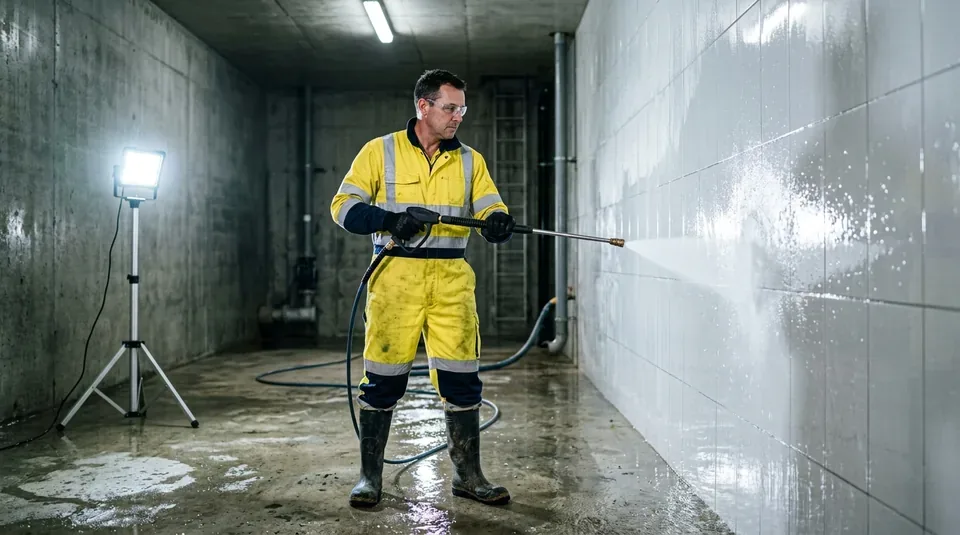
Larger tanks and building roofs raise the safety bar: confined-space procedures, secure access, proper ventilation, lighting and trained people. Cleaning a large tank is not a one-person improvisation.

Ask the company how it works safely, and keep residents, children and pets away from tank rooms and roof edges during the work.

Make sure drains and the disposal point for dirty water are agreed in advance, so rinse water does not flood a basement or a neighbor.

Factor 9

Common mistakes to avoid

Treating a building like a big villa and skipping the notice to residents; booking without confirming access; assuming everyone knows who pays; and forgetting to check the pump and float valve while the tank is empty.

Another mistake is cleaning only the tank that is easiest to reach. If the building has several tanks, ask for a plan that covers all of them, even if the work is staged over more than one visit.

A short checklist and one named contact on each side prevent almost all of these problems.

Common Questions

Frequently asked questions

Short answers to what tank owners in Jeddah ask most.

Is a building tank just a bigger villa tank?+

Partly. The dirt is similar, but access, volume, resident coordination and responsibility are different, so plan accordingly.

Who arranges cleaning in an apartment building?+

Usually the owner, manager or owners association. Agree in writing who approves and who pays before booking.

Can the building keep water while one tank is cleaned?+

Sometimes, if there are two tanks that can be switched. Ask during planning, knowing it can make the work longer.

How long does a building tank take?+

It depends on the number and size of tanks and access. We estimate after we know the layout.

Do villas need a different interval from buildings?+

Often shorter for high-use buildings. Use the frequency guide and your own log to decide.

What should I send when requesting a quote?+

The number of tanks, their location, access details and a few photos.

Do you clean both villa and building tanks?+

Yes. Tell us about your property and we will advise on the right plan.

Villa or building? Tell us about your tank

Send the property type, tank count and photos on WhatsApp, or call us.

CallWhatsAppGet Quote