
Serving Jeddah & Makkah
MakkahRestoring Airflow & Hygiene with In-Place AC Cleaning in Makkah

Professional Air Conditioner Cleaning in Makkah (Split, Concealed Duct, Cassette & Window Units)

Air conditioning systems in Makkah endure long operating hours under high temperatures and seasonal dust, leading to clogged evaporator fins, heavy dust buildup on blower fan blades, and restricted cooling airflow. We deliver methodical in-place AC cleaning for residences, villas, and commercial facilities using protective wash bags, electronic insulation, and thorough condensate drain clearing.

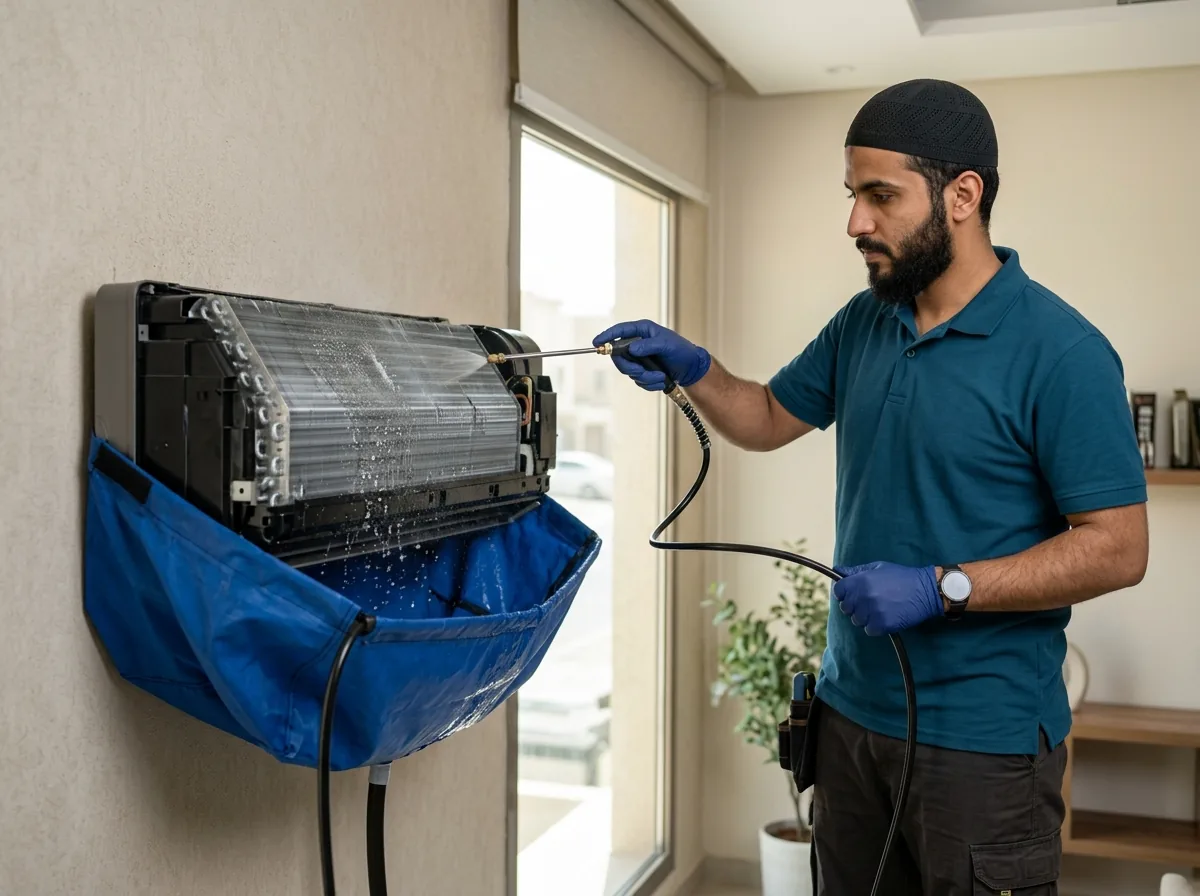
Professional air conditioner coil and blower wheel washing service in Makkah
Specialized Technical Protocol

Every unit is washed using a sealed waterproof catchment system and calibrated low-to-medium water pressure that flushes deep grime from delicate aluminum fins and blower wheels without splashing painted walls, wallpaper, or surrounding furniture—while maintaining a clear boundary between hygiene cleaning and mechanical HVAC repair.

AC Units Serviced:Wall-Mounted Split, Ceiling Cassette, Concealed Ducted & Window Units
Interior Protection:Waterproof catchment funnels, PCB electronic shielding & floor drop cloths
Core Cleaning Scope:Filters, evaporator coils, cylindrical blower wheel & condensate drain flushing
Pricing & Assessment:Structured quotes based on unit type, unit count, ceiling height & access
Real-World Problem Diagnosis

Why AC Airflow Drops and Water Leaks Develop in Makkah Properties

Rinsing the removable plastic mesh filter only addresses surface lint. The real operational bottlenecks inside an air conditioner occur deeper within the wet, cold components where air and condensation meet every day.

Compacted Wet Dust and Biofilm on the Cylindrical Blower Wheel

1

Fine dust particles that bypass primary mesh filters settle onto the curved blades of the internal cylindrical fan (blower wheel). Combined with cold condensation, this dust forms a dense, muddy crust that fills the aerodynamic curve of each blade and adds unbalanced weight to the rotating cylinder.

Impact if Neglected: Airflow drops drastically even when the fan is set to maximum speed, accompanied by a muffled rushing sound, uneven air throw, or noticeable vibration from the indoor unit.

Fouled Evaporator Fins Blocking Heat Exchange

2

Cooling relies on warm room air passing directly through tightly spaced aluminum fins along the evaporator coil. When airborne dust, textile fibers, and cooking aerosols coat these fins, they create an insulating blanket that prevents heat transfer between the room air and the cold refrigerant tubing.

Impact if Neglected: The air leaving the vents feels noticeably less cool, the outdoor compressor runs longer cycles under heavier thermal load, and moisture may freeze into ice across blocked sections of the coil.

Sludge and Biofilm Blocking the Condensate Drain Pan and Line

3

As humidity condenses on the cold evaporator coil, water drips into a narrow internal drain trough and exits through a gravity drain pipe. Dust washing off the coil mixes with standing moisture in the dark pan, forming thick gelatinous slime (biofilm) that plugs the drain outlet or pipe bends.

Impact if Neglected: Water overflows the internal trough and drips down the wall, staining interior paint, peeling wallpaper, warping wooden skirting, or soaking sofas and electronics positioned below the unit.

Musty Odors and Recirculated Indoor Allergens

4

Damp, uncleaned internal surfaces trap organic debris, mold spores, and household odors inside the air handler housing. Every time the unit starts up, the blower pushes air directly across these damp deposits before circulating it throughout the room.

Impact if Neglected: An immediate stale, damp, or sour smell upon turning on the AC, reducing indoor air freshness in bedrooms, family living areas, and enclosed workspaces.

Realistic Professional Note: Important Technical Distinction: Professional AC washing restores unobstructed airflow, cleans heat-exchange surfaces, and clears clogged condensate drains. However, cleaning cannot fix a refrigerant gas leak, replace a failed capacitor, or repair a mechanically defective compressor.

Our Methodical In-Place Air Conditioner Cleaning Approach

Our AC cleaning service in Makkah is engineered to restore internal hygiene and airflow efficiency while the unit remains mounted in place, avoiding the risks and disruption of disconnecting refrigerant lines in standard situations. The technician begins by preparing the room, laying protective floor coverings, disconnecting electrical power, and dismantling the front casing, removable louvers, and mesh filters to expose the internal heat exchanger and fan assembly.

A heavy-duty waterproof catchment bag (wash funnel) is secured tightly around the indoor unit frame, creating an enclosed basin that channels all wash water through a bottom drain hose directly into a sealed collection bucket. After isolating the printed circuit board (PCB), display module, and electrical terminals with waterproof shielding, the technician applies a coil-safe cleaning solution and uses a calibrated pressure washer to flush embedded grime from between the evaporator fins and across every blade of the cylindrical blower wheel.

Beyond coil and fan washing, the protocol addresses the root cause of indoor water leaks by scrubbing accessible sections of the condensate drain pan and pressure-flushing the drain line to expel gelatinous buildup. Where safely accessible from a balcony, patio, or flat roof, the outdoor condenser coil is also rinsed to remove compacted exterior dust so the system can reject heat efficiently.

When Should You Schedule This Service?

  • Before peak summer heat or high-occupancy seasons to ensure maximum airflow and clean coils.
  • Whenever you notice weak airflow from the vents despite the fan motor running at high speed.
  • At the first sign of water dripping or seeping down the wall beneath the indoor unit.
  • When a musty, damp, or dusty odor comes out of the vents when the unit is switched on.
  • Following severe dust storms or indoor renovation, sanding, and painting work.

Properties & Scenarios Served in Makkah

Occupied Apartments & Family Homes

Clean, contained in-place washing for bedroom, living room, and majlis split units without splashing walls, bedding, or residential furniture.

Multi-Floor Villas & Large Residences

Coordinated multi-unit servicing across wall-mounted split units, ceiling cassettes, and concealed ducted units with ceiling access panels.

Corporate Offices, Clinics & Retail Showrooms

Off-hours or weekend AC hygiene cleaning for commercial workspaces, protecting desks, IT hardware, and display areas.

Post-Construction & Newly Renovated Properties

Removing fine gypsum dust, drywall powder, and construction residue trapped inside AC coils and fans prior to move-in.

Detailed Scope Breakdown

Detailed Scope of Work: What Is Included & Excluded

We define our operational checklist clearly so property owners and facility managers know exactly what our AC hygiene service covers and where mechanical HVAC maintenance begins.

1. Standard Included Tasks & Zones
Pre-Wash Operational Check & Area Protection
Briefly testing airflow and louver movement before switching off the breaker, isolating power completely, and placing protective drop cloths beneath the work zone.
Dismantling Front Casing, Filters & Louvers
Carefully removing the outer plastic shell, primary mesh filters, and directional air vanes so they can be washed and dried separately without damaging plastic clips.
Electronic Board (PCB) Shielding & Catch Bag Setup
Wrapping the electrical control box, temperature sensors, and wiring in waterproof protective covers, then fitting the sealed catchment bag around the indoor unit.
Evaporator Coil Fin Washing
Applying a non-corrosive coil cleaner to loosen grime and washing the aluminum fins vertically with controlled water pressure to clear blocked air passages safely.
Cylindrical Blower Wheel Deep Cleaning
Rotating and pressure-washing the internal cross-flow fan cylinder to strip away compacted wet dust, mold, and biofilm from between individual blades.
Condensate Drain Pan & Drain Line Flushing
Washing out the internal condensate collection trough and flushing the drain pipe to clear slime plugs and verify smooth outward water drainage.
Outdoor Condenser Rinsing (Where Safely Accessible)
Flushing exterior dust, sand, and debris from the outdoor condenser fins when the unit is situated on a safe, reachable balcony, courtyard, or flat roof.
Drying, Reassembly & Exterior Sanitization
Removing shielding, wiping internal housing surfaces dry, reinstalling clean filters, louvers, and the front cover, and wiping down the exterior unit casing.
Post-Wash Airflow & Drainage Verification
Restoring electrical power and running the unit to verify improved air velocity, quiet fan rotation, proper louver swing, and leak-free drainage.

2. Inspection-Dependent & Optional Items

  • Concealed ducted units above false ceilings require an existing ceiling access panel of sufficient size to reach the coil, filter rack, and drain pan safely.
  • Outdoor condenser washing depends strictly on safe physical access; units mounted on high exterior building facades without balcony or roof footing cannot be washed without specialized rope/crane access.
  • Pre-existing wall paint peeling, water stains, or plaster damage caused by past leaks are structural/decorative issues outside AC washing.
  • Condensate drain pipes that are crushed inside walls or installed with reverse slope during construction may continue to back up until corrected by a plumber or HVAC installer.

3. Exclusions & Technical Boundaries

  • Refrigerant gas (Freon) recharging, pressure gauging, or brazing/repairing copper refrigerant line leaks.
  • Electrical or mechanical component replacement, such as replacing capacitors, contactors, circuit boards, fan motors, or sensors.
  • Compressor troubleshooting, mechanical overhaul, or dismantling and relocating AC units to new rooms.
  • Full mechanical rotary-brush sweeping of long central metallic ductwork trunks; our service focuses on the indoor air-handling unit, filters, coils, drain pan/line, and accessible supply/return grilles.

4. Variables Affecting Time & Crew Size

  • Total number of AC units serviced during the same visit.
  • Unit architecture (wall-mounted split units vs. ceiling cassettes, concealed ducted units, or window units).
  • Condition of the internal components (routine seasonal buildup vs. heavy neglected sludge or post-construction gypsum dust).
  • Ceiling height, furniture obstacles directly underneath units, and ease of access to ceiling hatches or outdoor condensers.
Step-by-Step Operational Workflow

Step-by-Step Field Execution Protocol

Every technician follows a strict sequence designed to maximize internal cleanliness while safeguarding sensitive electronics and room furnishings.

01Phase 1

Initial Assessment, Power Isolation & Workspace Shielding

The technician runs the AC briefly to observe baseline airflow velocity, fan balance, and louver operation. Power is then switched off at the isolator or circuit breaker. Lightweight items below the unit are moved aside, and waterproof drop cloths are laid over the floor and nearby furniture.

Quality Verification: Confirming zero live electrical current at the unit and complete coverage of the floor zone beneath the work area.
02Phase 2

Casing Disassembly & Electronic Control Box Waterproofing

The front panel, air filters, and directional louvers are detached carefully. With the chassis exposed, the technician wraps the PCB housing, wiring harness, display receiver, and louver motor in multi-layer waterproof sheeting and absorbent barriers.

Quality Verification: Inspecting the electronic enclosure seal to guarantee no water spray or mist can reach circuit components.
03Phase 3

Installing the Waterproof Catchment Funnel & Drain Hose

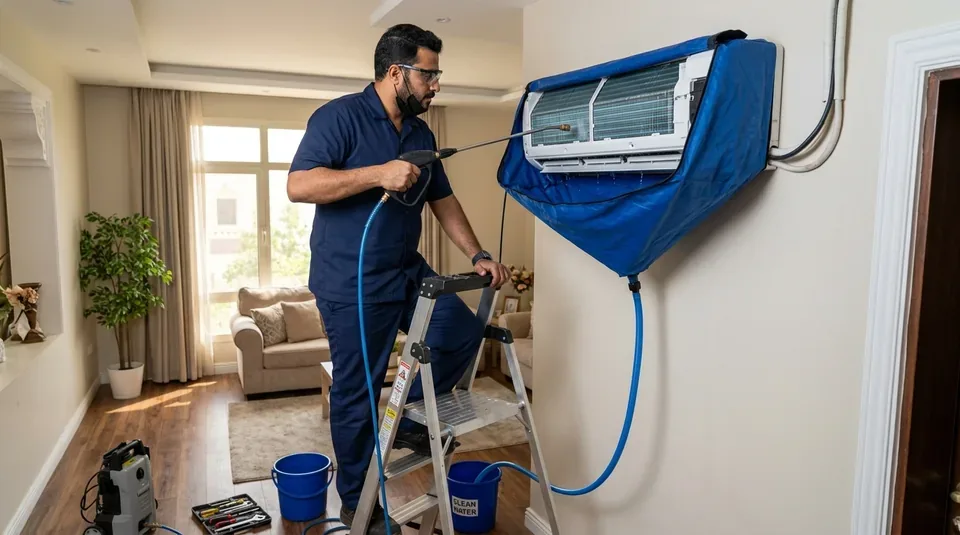
A specialized waterproof wash bag is fitted snugly around the indoor unit, sealing against the wall edges behind the chassis and extending beneath the blower opening. The integrated drain spout is routed into a heavy-duty collection container on the floor.

Quality Verification: Verifying tight wall contact along the upper and side edges of the catchment bag before introducing any liquid.
04Phase 4

Coil Treatment & Controlled-Pressure Evaporator Washing

A coil-safe foaming cleaner is sprayed across the evaporator fins to break down oily residue and stubborn dust. After a short dwell time, the technician uses a calibrated short-nozzle pressure washer, spraying strictly parallel to the vertical aluminum fins from top to bottom until the runoff water turns clear.

Quality Verification: Checking that all fin channels are clear of debris and no delicate aluminum fins have been bent during washing.
05Phase 5

Deep Washing the Cylindrical Blower Wheel

While manually steadying and rotating the cylindrical fan wheel, the technician directs a targeted water jet across the length of the cylinder. This dislodges thick black mold, wet dust crusts, and lint trapped inside the concave blade pockets, flushing all debris down into the catch bag.

Quality Verification: Spinning the blower wheel and inspecting with a flashlight to confirm clean blades and smooth, balanced rotation.
06Phase 6

Condensate Drain Pan Cleaning & Drain Line Flushing

The technician cleans the internal condensate trough where water collects below the coil, then flushes the drain outlet and piping to push out gelatinous slime and sediment blockages that cause indoor dripping.

Quality Verification: Pouring test water into the drain pan and confirming rapid, unobstructed flow through the drain line with zero backup.
07Phase 7

Filter Washing, Drying, Reassembly & Operational Test

The detached mesh filters, louvers, and front panel are washed, sanitized, and dried. If the outdoor condenser is safely reachable, its coil is rinsed clean. Finally, the catch bag and electronic shields are removed, the chassis is wiped dry, components are reassembled, and the AC is powered on for final verification.

Quality Verification: Running the unit to verify strong, fresh airflow, quiet operation, and a completely clean, dry wall and floor area.
Machinery & Technical Methods

Specialized Equipment & Safe Washing Methods

Washing an air conditioner inside a furnished room requires purpose-built containment and pressure-regulated equipment rather than improvised household tools.

Established Industry Methods:Professional HVAC hygiene standards rely on wet hydraulic flushing inside a sealed containment funnel combined with pH-balanced, non-acidic coil cleaners that preserve the protective hydrophilic coating on aluminum fins.
Al Awael Case-by-Case Adaptation:Our technicians adjust nozzle spray angles and water pressure settings according to coil fin density and unit age, ensuring thorough decontamination without mechanical distortion.

Sealed Wall & Ceiling Waterproof Catchment Bags

Enclosing the indoor AC chassis during pressurized water washing and channeling all contaminated runoff directly through a hose into a floor receptacle.

Surface Compatibility: Sized for standard and wide wall-mounted split units as well as 4-way ceiling cassette units, protecting painted walls, gypsum ceilings, and wallpaper.

Variable-Pressure AC Wash Pumps with Short-Reach Nozzles

Delivering a controlled, focused water stream that penetrates deep between evaporator fins and inside cylindrical blower wheels in tight indoor spaces.

Surface Compatibility: Safe for thin aluminum cooling fins, copper refrigerant bends, and ABS plastic blower wheels when operated at calibrated pressure.

Non-Caustic, Aluminum-Safe Coil Cleaning Solutions

Emulsifying airborne grease, nicotine film, organic biofilm, and caked dust on coils and drain pans so they rinse away cleanly with water.

Surface Compatibility: Formulated to avoid corrosion or pitting on aluminum fins, copper tubing, galvanized brackets, and plastic drain pans.

Condensate Drain Flushing Adapters

Applying controlled hydraulic or pneumatic pressure through the condensate drain pipe to dislodge algae, slime plugs, and mud accumulation.

Surface Compatibility: Compatible with flexible corrugated AC drain hoses and rigid PVC condensate piping.

Fin Combs, Detail Brushes & Microfiber Drying Cloths

Brushing dry lint from vents and grilles, straightening minor fin bends, and thoroughly drying the unit housing and louvers prior to reassembly.

Surface Compatibility: Gentle on anodized aluminum fins, painted wall surfaces, and glossy plastic AC fascias.
Technician operating calibrated AC coil washing equipment in Makkah
Waterproof catchment funnels and pressure-regulated wash pumps allow deep internal cleaning right on the wall without interior mess.

Household Filter Rinsing vs. Professional Deep AC Washing

Rinsing your AC mesh filters every few weeks is a great habit, but it only addresses the outer surface. Here is how professional deep washing compares to standard household attempts:

Comparison Aspect
Unprepared / Household Attempt
Al Awael Specialized Protocol
Internal Reach & Depth
Limited to sliding out the front mesh filters, rinsing them under a tap, and wiping the outer plastic cover.
Dismantles the front casing and louvers to wash the deep evaporator coil fins, internal cylindrical blower wheel, and condensate drain trough.
Restoring Weak Airflow
Airflow remains weak if the cylindrical fan blades behind the coil are packed with heavy wet dust, even when the mesh filter is spotless.
Pressurized washing strips compacted mud and mold from every blower blade, restoring full aerodynamic fan output.
Preventing Indoor Water Leaks
Cannot easily reach the hidden condensate drain pan or flush slime buildup from inside the wall drain pipe.
Flushes the drain pan and clears biofilm blockages from the condensate line, resolving the primary cause of indoor dripping.
Electronic & Wall Safety
Spraying water or household cleaners into a mounted unit risks short-circuiting the PCB board and staining the wall with black runoff.
Isolates electrical circuits with waterproof shielding and captures 100% of dirty wash water inside a sealed catchment funnel.
Coil Fin Preservation
Scrubbing coils with stiff household brushes or vacuum attachments easily bends soft aluminum fins, permanently blocking airflow.
Uses non-corrosive foam and parallel vertical water jets that clean deep between fins without crushing or bending them.
Deep Domain Guide

In-Depth Technical Breakdown of Our AC Cleaning Service

Different air conditioning architectures require distinct dismantling, containment, and washing procedures. Below is a detailed look at how we handle each system type and protect your property.

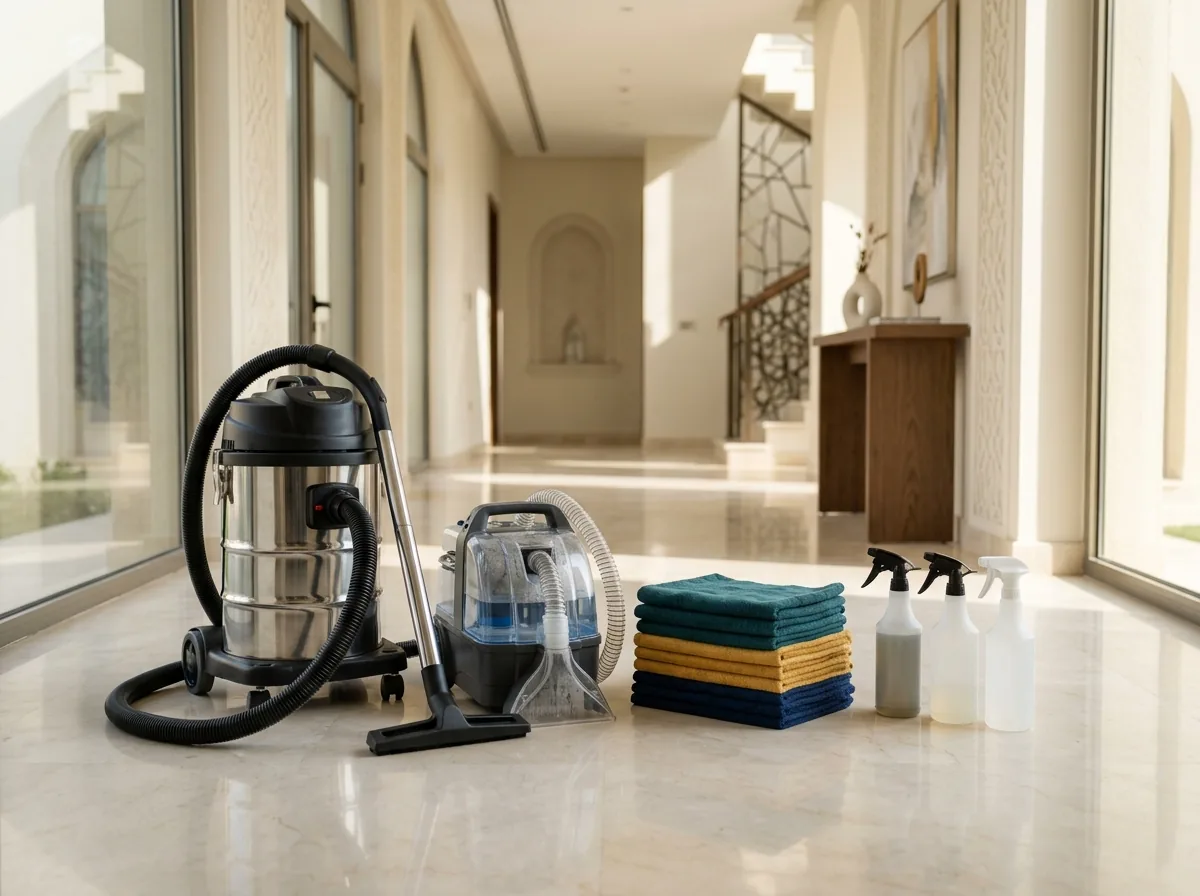
Professional cleaning equipment kit used for in-place AC and facility hygiene
Calibrated pressure washers, containment accessories, and detailing tools ensure safe, effective in-place AC cleaning.

Wall-Mounted Split Units, Concealed Ducted Units, Cassette Units & Window AC Units

Wall-mounted split units are the most common cooling systems in bedrooms, living rooms, and individual offices. Servicing these units involves removing the front fascia panel, mesh filters, and motorized louver vanes to expose the angled evaporator coil and the horizontal cylindrical blower wheel beneath it. Because the unit stays mounted on its wall bracket, our technician fits a contoured wall catchment bag around the chassis, allowing thorough pressurized washing of both the coil and blower cylinder without disturbing refrigerant connections.

Ceiling-recessed cassette units and concealed ducted (central mini-split) systems—frequently installed in open-plan villas, reception halls, retail showrooms, and commercial offices—demand specialized access. For 4-way ceiling cassettes, the technician removes the lower decorative grille and filters, suspends a wide square ceiling catchment funnel beneath the unit, and washes the perimeter coil heat exchanger and condensate collection area while protecting the surrounding gypsum ceiling. For concealed ducted units located above false ceilings, work is performed through the existing ceiling access hatch to clean the return filters, accessible coil face, and drain pan, alongside wiping external supply and return grilles.

For traditional window AC units, where the evaporator, condenser, fan, and compressor share a single metal chassis, the cleaning approach adapts to the installation. Where appropriate, the front grille and filter are removed for in-place coil and drain tray cleaning, or the chassis is slid out of its wall sleeve and washed in a designated outdoor or wet wash area within the property so both the indoor evaporator fins and rear condenser coils are flushed completely free of sand and lint.

  • In-place deep washing for wall-mounted split units without disconnecting copper refrigerant pipes.
  • Wide-funnel containment setup for 4-way ceiling cassette units in halls, showrooms, and offices.
  • Inspection-hatch servicing for concealed ducted units including return filter, coil face, drain pan, and exterior grilles.
  • Dual-coil (evaporator and condenser) flushing and base-pan cleaning for window AC units.
  • Careful handling of louver swing motors, plastic retaining clips, and thermistor sensor probes across all unit types.

In-Place Washing Protocol: Waterproof Catchment Bags, Electronic Board Shielding & Furniture Protection

A major concern for homeowners and facility managers when booking indoor AC cleaning is the risk of dirty water streaking painted walls, ruining textured wallpaper, or dripping onto upholstered furniture and flooring. To eliminate this risk, our protocol starts with dry containment before a single drop of water is sprayed. The technician fits an elastic-rimmed waterproof catchment bag around the entire perimeter of the indoor unit, inserting protective sealing lip guards between the upper chassis and the wall surface.

Simultaneously, protecting the air conditioner’s internal electronics is critical. Modern inverter and standard split units house sensitive printed circuit boards (PCBs), display receivers, and high-voltage terminals on the right side of the chassis. After switching off the electrical breaker, the technician wraps the control box, wiring conduits, and louver motors in waterproof plastic sheeting and absorbent barriers, ensuring water is strictly confined to the mechanical heat-exchange and drainage zones.

Below the unit, the floor and any nearby non-movable furniture are covered with protective drop cloths. The catchment bag’s bottom drain funnel connects via a heavy-duty hose straight into a sealed collection bucket. This closed-loop setup allows us to wash heavily soiled AC units inside fully furnished bedrooms, formal majlis rooms, and equipped offices while leaving the surrounding walls and floors completely dry and spotless.

  • Full-perimeter waterproof wash bags with rear wall lip guards to prevent water seepage behind the mounting plate.
  • Complete electrical isolation at the breaker followed by multi-layer waterproofing of the PCB control box.
  • Shielding of digital temperature displays, infrared receivers, and motorized louver connections.
  • Floor and furniture drop-cloth protection directly beneath the work zone and hose path.
  • Contained collection of all dirty wash effluent for safe disposal in designated sanitary drains.

Evaporator Fins, Cylindrical Blower Wheel & Condensate Drain Line Flushing

True AC restoration requires cleaning the three components that govern airflow and moisture management: the evaporator coil fins, the cylindrical blower wheel, and the condensate drainage pathway. When airborne dust coats the closely spaced aluminum fins of the evaporator, it acts as thermal insulation and turns into wet mud as moisture condenses. We apply a coil-safe surfactant followed by vertical pressure washing that flushes dirt out from between the fin plates, restoring direct contact between room air and the cooling surface.

Just behind and beneath the evaporator sits the cylindrical cross-flow blower wheel. Even a thin 2-millimeter layer of wet dust or mold inside the curved blades reduces the fan’s air-moving capacity dramatically and causes noisy, unbalanced rotation. By rotating the cylinder manually while directing a focused water jet across its full width, our technician strips away caked black grime until every blade pocket is clean, immediately restoring strong, quiet airflow.

Finally, all loosened debris and standing slime must be cleared from the drainage system to prevent indoor water leaks. The technician washes the internal condensate drain trough and flushes the drain pipe to expel gelatinous biofilm plugs. Before reassembling the casing, clean water is poured into the trough to verify smooth, unrestricted gravity flow to the exterior drain point.

  • Vertical hydraulic flushing of evaporator fins to restore thermal transfer without bending soft aluminum.
  • Blade-by-blade cleaning of the cylindrical blower wheel to eliminate black mold crusts and restore air velocity.
  • Scrubbing and rinsing accessible sections of the internal condensate drain pan to remove standing sludge.
  • Pressurized flushing of the condensate drain pipe to clear gelatinous biofilm blockages and stop water leaks.
  • Sanitizing and drying removable mesh filters and directional louvers to prevent musty startup odors.

Clear Distinction Between Professional AC Hygiene Cleaning vs. Technical HVAC Repair / Refrigerant Charging

We believe in complete technical transparency so clients book the right service for their situation. Professional AC cleaning is a specialized hygiene and preventive maintenance service designed to remove physical blockages—dust, mud, biofilm, and drain sludge—that restrict airflow, reduce heat exchange, and cause water overflow in an otherwise mechanically functional air conditioner.

For instance, if your air conditioner turns on, the outdoor compressor engages, and cold air can be felt right at the grille, yet the air throw barely reaches across the room, or water is dripping down the indoor wall, or a damp smell fills the room—these are classic hygiene and drainage symptoms that our deep washing service resolves effectively.

Conversely, if the indoor fan blows strongly and cleanly, but the air is completely warm because the outdoor compressor fails to start, or refrigerant gas has leaked from a copper pipe joint, or the unit trips the electrical breaker, or a fan motor bearing is grinding loudly—those are mechanical or electrical HVAC failures. We do not perform refrigerant recharging, copper brazing, or electronic part replacement. If our technician identifies a mechanical fault during the pre-wash check, we inform you honestly before proceeding.

  • AC Cleaning Solves: Weak air throw, dirty blower wheels, clogged coils, indoor water dripping, and musty odors.
  • HVAC Repair Solves: Low refrigerant (Freon) leaks, faulty capacitors, dead compressors, and PCB error codes.
  • Pre-service operational check conducted before washing to verify electrical and fan functionality.
  • Honest, upfront communication if a unit shows signs of a mechanical or refrigerant issue rather than dirt buildup.
  • Focused specialization in mess-free indoor coil, fan, filter, and drain hygiene.
Technical Decision Infographic

The 4 Critical Internal Zones Targeted During Deep AC Cleaning

Complete airflow restoration and leak prevention require cleaning the entire air and condensation pathway:

Zone 01

Filters, Louvers & Front Fascia

Primary Intake & Air Direction
  • Detaching and washing mesh intake filters free of surface lint.
  • Cleaning horizontal and vertical motorized directional louvers.
  • Washing the outer plastic shell and intake grille slots.
  • Drying components thoroughly before reinstallation.
Zone 02

Evaporator Coil Fins

Core Thermal Exchange Surface
  • Applying aluminum-safe cleaner to emulsify grease and dust.
  • Flushing vertically with calibrated pressure to open air channels.
  • Removing insulating dirt blankets that reduce cooling transfer.
  • Preserving delicate fin alignment without bending metal plates.
Zone 03

Cylindrical Blower Wheel

Engine of Indoor Airflow Velocity
  • Stripping heavy wet dust and black mold from curved fan blades.
  • Rotating and pressure-flushing the full length of the cylinder.
  • Restoring fan balance to eliminate muffled noise and vibration.
  • Recovering strong, even air throw across the entire room.
Zone 04

Condensate Pan & Drain Line

Defense Against Indoor Water Leaks
  • Rinsing loosened mud and debris out of the internal drain trough.
  • Pressure-flushing the condensate pipe to expel biofilm slime plugs.
  • Pour-testing clean water to confirm smooth outward drainage.
  • Eliminating stagnant moisture pockets that cause musty smells.
Key Technical Takeaway: Cleaning all four zones together inside a waterproof catchment system restores airflow strength, improves indoor air freshness, and prevents wall-damaging water leaks.

Factors That Determine AC Cleaning Quotes in Makkah

Rather than offering vague flat estimates that overlook system complexity, we base our AC cleaning quotes on clear, verifiable technical factors:

Factor 1

Type of AC Units Installed

Wall-mounted split units, ceiling-recessed cassettes, concealed ducted units above false ceilings, and window units each require different containment gear and disassembly steps.

Impact on Quote: Ceiling cassettes and concealed ducted units require more setup and access time per unit than standard wall-mounted splits.
Factor 2

Total Quantity of Units at the Property

Crew mobilization and equipment setup are shared across the visit when servicing multiple units in an apartment, villa, or office.

Impact on Quote: Servicing multiple AC units in a single scheduled visit lowers the effective per-unit cost compared to a single-unit callout.
Factor 3

Level of Internal Soiling & Post-Construction Dust

Units maintained seasonally wash out faster than units neglected for years or coated internally with thick gypsum plaster and paint dust after renovations.

Impact on Quote: Heavy sludge or post-construction dust requires extended soaking and multi-pass rinsing per unit.
Factor 4

Mounting Height & Physical Accessibility

Units installed high in double-height foyers, above fixed cabinetry, or accessed through tight ceiling maintenance hatches require additional safety and positioning measures.

Impact on Quote: High-reach ladder setups or complex furniture shielding beneath fixed installations adds to on-site labor time.
Factor 5

Inclusion of Safely Accessible Outdoor Condensers

Outdoor units located on accessible balconies, courtyards, or flat roofs can be washed alongside indoor units where water access permits.

Impact on Quote: Scope is tailored based on how many outdoor condenser units are safely reachable and require exterior coil flushing.
Factor 6

Residential vs. Commercial Off-Hours Scheduling

Commercial offices, medical clinics, and retail showrooms often require multi-technician teams working outside standard business hours.

Impact on Quote: Crew size and shift timing are scaled to complete commercial unit batches within your available downtime window.

Get a Transparent Quote for Restoring Airflow & Hygiene with In-Place AC Cleaning in Makkah in Makkah

All pricing is confirmed clearly based on unit count and types before any work begins, with zero hidden charges.

Local Operational Context — Makkah

Local Operational Context for AC Cleaning in Makkah

Need this service in Jeddah? Switch city

In Makkah, air conditioning systems operate under intense, prolonged thermal demand during the long hot months and peak hospitality seasons, combined with fine dust carried by dry winds and surrounding terrain. Because units run continuously for extended periods, large volumes of dust-laden air are drawn through indoor units every day.

Over time, this fine particulate buildup packs tightly between evaporator coil fins and coats the blades of the cylindrical blower wheel, noticeably reducing air throw velocity and cooling output when residents and visitors need it most. When heavy dust washes down into the condensate tray, it also forms mud plugs that block drain pipes and cause indoor water overflow.

Our Makkah teams focus on deep hydraulic flushing of dust-impacted coils, blower wheels, and drain pans across family homes, multi-story villas, administrative offices, and hospitality support facilities, offering flexible scheduling before and after peak seasonal periods.

Scheduling & Site Access Notes in Makkah

  • Flexible morning and evening appointment windows available across Makkah for both residential and commercial clients.
  • Please share the approximate count and types of AC units (split, cassette, concealed, window) when booking so our crew brings the appropriate catchment bags and ladders.
  • For commercial towers or gated residential compounds requiring visitor work permits, please arrange security gate clearance prior to the scheduled arrival time.
  • On-site access to a clean water tap and electrical power is required to operate the washing pump and perform post-cleaning verification.

Property Types We Service in Makkah

Family Homes, Apartments & Multi-Story Villas in Makkah

Comprehensive in-place washing for split and window AC units with full protection for Arabic majlis seating, carpets, and walls.

Large Reception Halls & Concealed Duct Installations

Deep cleaning of ceiling cassettes and concealed air handlers plus condensate drain flushing to maintain strong airflow during family gatherings.

Administrative Offices & Commercial Centers

Multi-technician deployment to clean multiple commercial AC units efficiently during off-peak hours.

Seasonally Prepared Residential & Support Facilities

Pre-season and post-season AC hygiene overhauls to clear heavy dust accumulation and restore peak airflow readiness.

Pre-Visit Preparation

How to Prepare Your Space Before the AC Technician Arrives

Following these simple steps helps our crew set up quickly and ensures maximum protection for your room furnishings:

1

Clear a Small Floor Space Directly Beneath Each AC Unit

Please move lightweight chairs, small side tables, or floor decor about 1 meter away from the wall directly below the AC unit so the technician can position the step ladder and drain bucket safely.

2

Relocate Portable Electronics and Documents Below the Unit

If a television, computer monitor, power strip, or paperwork sits on a desk directly under the indoor unit, moving them temporarily to the side provides an extra layer of peace of mind.

3

Locate the Main Electrical Breaker Panel

Knowing where your apartment or villa distribution board is located allows the technician to isolate power to the AC units safely before dismantling the casing.

4

Ensure Ceiling Access Panels Are Unobstructed (For Concealed Units)

If you have concealed ducted AC units, please verify that the ceiling maintenance hatch (usually in corridors or bathrooms) is not blocked by high storage or fixed shelving.

5

Provide Access to a Water Tap and Floor Drain

The technician will need a nearby bathroom or kitchen tap to fill the clean water pump reservoir, and a sanitary drain to dispose of the collected dirty wash water afterward.

6

Share Specific Symptoms for Each Unit Upfront

Let the technician know if any specific unit has been dripping water, making unusual fan noise, or emitting odors so extra attention can be directed to its drain line and blower wheel.

Related Problem-Solution & Diagnostic Guides

Technical & Diagnostic Guides to Help You Make the Right Decision in Makkah

AC Hygiene & Drainage Guide9 min read

Why Split ACs Smell Musty or Drip Water Indoors: In-Place Coil, Blower & Drain Cleaning Guide

How coastal humidity and dust create blower-wheel biofilm and condensate drain blockages, how waterproof catchment bag washing works, and how AC cleaning differs from mechanical HVAC repair.

  • Damp, sour, or moldy odor blowing from the indoor unit when first switched on
  • Water dripping down the interior wall from the bottom edge of the split AC unit
Read Full Diagnostic Guide
Upholstery Problem-Solution9 min read

How to Safely Remove Coffee, Oil Stains & Musty Odors from Sofas & Majlis in Jeddah & Makkah

Technical field guide to treating Arabic coffee, tea, and oil stains on velvet, linen, chenille, and microfiber upholstery without causing water rings or damp foam odors.

  • Yellowish water rings appearing after wiping a spill with household soap and water
  • Persistent damp or musty smell from sofa foam cushions in humid coastal weather
Read Full Diagnostic Guide
Post-Construction Handover Guide10 min read

Post-Construction Marble & Porcelain Cleaning Guide: Removing Grout Haze & Paint Without Acid Damage

Why acidic cleaners permanently etch natural marble and corrode stainless steel drains, and how HEPA dry extraction plus pH-balanced mechanical scrubbing safely restores new floors.

  • Cloudy white cement grout film that reappears as soon as mopped porcelain or marble dries
  • Fine gypsum dust embedded in sliding aluminum window tracks and ceiling coves
Read Full Diagnostic Guide
Service-Specific Answers

Frequently Asked Questions About AC Cleaning

We wash wall-mounted split AC units right in place on the wall without disconnecting copper refrigerant lines or removing the chassis in standard situations. Our technician removes the outer plastic casing, filters, and louvers, then attaches a sealed waterproof catchment bag around the unit to capture and drain all wash water safely.

Dedicated Service for Makkah

Ready to Schedule Restoring Airflow & Hygiene with In-Place AC Cleaning in Makkah in Makkah?

Call our coordination desk, send a pre-filled WhatsApp message for this exact service, or complete the request form below.

Unified Service Request Builder

Share Your Request Details for Scheduling & Transparent Pricing

Enter your basic contact details, select your city (Jeddah or Makkah), and choose the service you need. This form organizes your inquiry for immediate coordination.

We respect your privacy. Your information is used strictly to respond to your service inquiry.
CallWhatsAppGet Quote