
Serving Jeddah & Makkah
Carpet guide10 min readJeddah

Carpet Cleaning Methods: Which Suits Your Home in Jeddah?

Extraction, dry foam and low-moisture cleaning compared

When you book carpet cleaning, you may be asked which method you prefer. Many people do not know the difference between extraction, dry foam and low-moisture cleaning, so they leave the whole choice unasked. It matters, because the method affects how clean the carpet gets, how long it takes to dry, and how safe the colours and fibres are.

This guide explains the most common methods in plain language and compares them by fibre type, humidity and how soiled the carpet is. It also suggests questions to ask the team before the visit, without claiming that any one method suits every carpet.

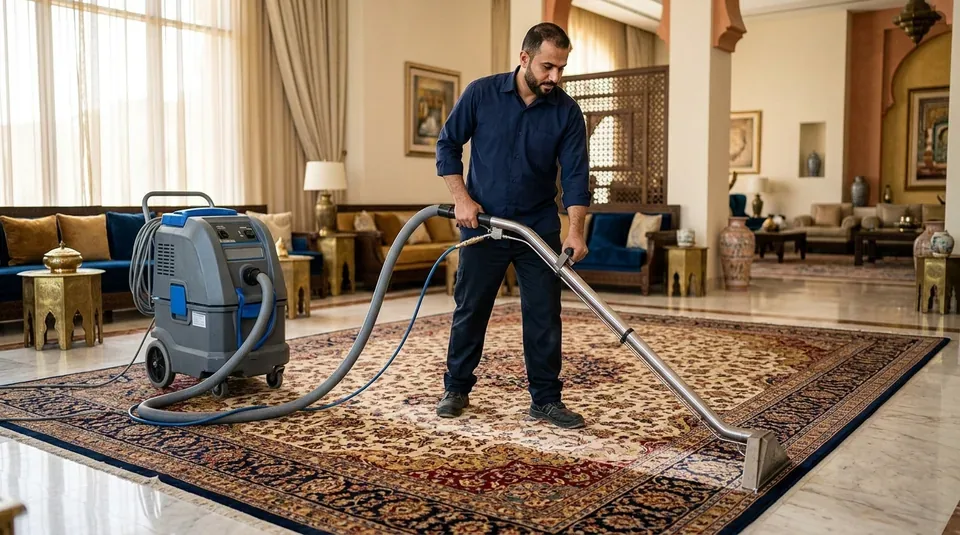
Extraction machine used for home carpet cleaning in Jeddah

Quick Summary

  • Extraction goes deeper but leaves more moisture
  • Dry foam dries faster but reaches less deep soil
  • The method depends on fibre and soiling level
  • Jeddah humidity favours fast drying
  • Ask the team about the method before the visit
Quick table

Quick comparison of carpet cleaning methods

General characteristics; the final choice depends on inspecting the actual carpet.

MethodSuitsWatch out for
Hot-water extractionDeep soil and durable synthetic carpetLonger drying time
Dry foamLight to medium soiling and water-sensitive carpetMay not reach deep soil
Low-moisture cleaningOffices and regular maintenanceNot a substitute for extraction when needed
Dry compoundQuick treatment of lightly soiled carpetMust be vacuumed thoroughly or residue remains
Spot hand treatmentSpecific stainsDoes not treat general soiling
Specialist hand-rug serviceHand-knotted and antique rugsDone after dye testing
In detail

Nineteen points to help you choose a method

Read them before you call; knowing the options makes the conversation with the team clearer.

Basics

Why the method matters at all

Carpet is not a smooth surface but a floor of millions of tangled fibres, and each method treats those fibres differently. Some wash with water; others lift soil by gathering it into foam.

The method affects three things you should know about: how deep it reaches, how much water stays inside, and the risk to colour and fibre.

So we do not say one method is better than another in every case, only that each has a place where it fits.

Extraction

Hot-water extraction

A cleaning solution and water are sprayed onto the carpet and then pulled out forcefully by an extraction machine, taking soil with the water. It is among the methods that reach deepest into the fibres.

Its strength is removing built-up soil and odours; its drawback is that it leaves moisture that needs time to dry, which matters in Jeddah humidity.

It usually suits durable synthetic carpet, while wool and delicate weaves need controlled heat and water.

Foam

Dry foam

A low-moisture foam is spread over the carpet and worked in gently to lift soil, then vacuumed up after drying or shortly after. Very little water is used.

Its advantages are quick drying and suitability for some delicate fabrics, but it may not reach deep soil in a heavily soiled carpet.

It is a good option for regular upkeep between deeper extractions.

Low moisture

Low-moisture cleaning

It relies on a cleaner that wraps around soil and dries into crystals that are vacuumed up later. It is common in offices because it is quick and keeps rooms usable.

Its strengths are low water use and fast return to service; its weakness is that heavy soil and old stains may not clear fully.

If your home is not heavily soiled it can suit maintenance; otherwise extraction once a year is usually better.

Powder

Dry powders and compounds

A treated dry material is scattered on the carpet, worked in with a brush and vacuumed up. It is quick and uses almost no water.

But if it is not vacuumed thoroughly, residue can irritate allergies or attract dust later, so ask how the team removes it completely.

It does not suit deep soil or large greasy stains.

Vacuuming

Pre-vacuuming: a step never to skip

Before any method, the carpet must be vacuumed well, because dry sand and dust turn into mud once wetted and then are harder to remove.

A good team does not jump straight to water; it starts with slow vacuuming from different directions.

If you want to help, vacuum the carpet yourself the day before the visit.

Pre-treat

Pre-treating stains

Local stains such as coffee or grease need treatment before general cleaning; otherwise they spread or do not lift. This treatment depends on knowing what the substance was.

Before the visit, tell the team what was spilled, where and how long ago, since the information changes the method chosen.

Do not treat stains with strong products of your own before the visit; you may complicate the job.

Fibre

Fibre type decides the method

Nylon and polypropylene usually tolerate extraction, while wool and silk need care with water, heat and alkaline cleaners.

Some natural fibres such as jute and sisal react to water and may change colour or distort, so dry cleaning is usually preferred for them.

That is why a team should inspect the carpet before choosing a method, and one method should not be applied to every carpet.

Fitting

Fitted carpet versus loose rugs

Wall-to-wall carpet is hard to lift, so it is treated in place, and controlling water matters more so that it does not reach the floor.

A loose rug can sometimes be treated elsewhere or turned over to clean the back, and it is easier to dry hung or raised.

In both cases ask how much water is expected and how seepage to the lower layer is prevented.

Drying

Drying time and the method

The more water, the longer the drying. Long drying in humid air raises the chance of stuffy smells and changes in texture.

So ask the team: roughly how long will drying take, and what can I do to speed it up? Be wary of anyone promising fixed hours before seeing the carpet.

Opening windows, running the air conditioner or a fan at a suitable angle usually speeds drying.

Jeddah

Jeddah humidity and your choice

In humid months it helps to rely on methods that use less water, or on good extraction that removes as much water as possible, followed by ventilation.

If the room is poorly ventilated, beware of too much water, and make sure the carpet is not lying on a damp floor to begin with.

If a smell appears after cleaning, do not ignore it; it may mean drying was incomplete.

Questions

Questions to ask before the visit

Ask: which method do you propose for my carpet and why? About how much water is used? Will stains be pre-treated? Do you test colourfastness?

Also ask about the products if there are children or allergies at home, and whether there is a final rinse step.

A team that answers clearly and explains its choice deserves more trust than one that says all methods are the same.

Result

Visible clean versus deep clean

A carpet can look clean after a surface method while soil and odour remain below. The reverse also happens: a carpet may look lighter after deep extraction because old dirty tones disappeared and its true colour returned.

So do not judge the result after an hour, but after full drying and a few days of use, watching smell and the feel of the fibres.

If you want quick upkeep choose a light method; if you want to restore a carpet after a year or more, choose a deep one.

Prep

Preparing the room

Clear small items and light furniture if possible, vacuum the carpet, and tell the team where the stains are.

Keep children and pets in another room during cleaning and until the carpet is dry.

If heavy furniture sits on the carpet, ask whether it can be moved or protected so it does not stain.

After

What is normal and what is not afterwards

It is normal to notice a slight change in texture, or for an old stain to partly reappear, because some stains wick up from deeper layers after drying.

It is not normal to smell a strong musty odour, to find the carpet still damp after days, or to see new patches of colour. These call for contact with the team quickly.

Never ignore any concern, and take a photo, which helps assessment.

Mistakes

Common mistakes in choosing a method

Common errors include choosing the cheapest or fastest option without asking, requesting the same method for every carpet, or ignoring fibre type.

Others include over-wetting sensitive carpet, or relying on light methods alone for years without a deep extraction.

Better to balance: regular light upkeep with a deep clean at the right time.

Odours

Persistent odours: is a light method enough?

If a carpet smells of pets, child accidents or old damp, light dry methods may mask the smell for a while without removing its source deep in the carpet.

In such cases extraction with suitable treatment helps, and the lower layer or floor may need checking if the source is deep.

Tell the team about the odour and when it began; that shortens diagnosis.

Factors

What affects the cost of the service

We do not quote prices here, because price varies with area, number of pieces, soiling level, method requested, stains needing treatment and the carpet’s location in the home.

Ask for a clear quotation showing what is included, whether stain pre-treatment is part of it, and whether a final rinse is covered.

Compare offers by what is actually delivered, not by the figure alone; a cheap service that does not remove soil is expensive in the end.

Protection

After cleaning: keeping the result

After cleaning avoid walking on the carpet in shoes before it is fully dry, and place a board or cloth under heavy furniture legs so rust or marks do not form.

Vacuum once completely dry so the pile stands again, and avoid covering it tightly with plastic that traps moisture.

Resume the weekly routine of vacuuming and treating stains at once, which keeps the result for longer.

Common questions

Frequently asked questions about carpet cleaning methods

General answers; inspecting the actual carpet decides the best method.

What is the best way to clean carpet?+

No method is best for everyone. Extraction goes deeper, dry foam dries faster, and the choice depends on fibre, soiling and humidity.

Does extraction damage carpet?+

It does not harm durable synthetic carpet when heat and water are controlled, but wool and delicate weaves need care.

Is dry foam enough on its own?+

It suits light upkeep but may not remove deep soil, so a dirty carpet still needs extraction at the right time.

How long does carpet take to dry?+

It depends on the method, the amount of water, ventilation and humidity, and fixed hours should not be promised before inspecting the carpet.

Should I clean a hand-knotted rug with water?+

Consult a specialist before using any water, since some dyes and weaves react to water and heat.

What if a smell remains after cleaning?+

Ventilate the room and check that the carpet is fully dry; if the smell persists, contact the team with a photo and details.

Do I need to clear the room?+

Clear small items and light furniture and vacuum the carpet beforehand, and ask the team about heavy furniture.

How do I know the best method for my carpet?+

Send us the carpet type, a clear photo and the soiling level, and we will suggest a rough method without exaggerated promises.

Want to know the best method for your carpet?

Send us the carpet type, a clear photo and how soiled it is, and we will suggest a suitable step without exaggerated promises.

CallWhatsAppGet Quote