
Serving Jeddah & Makkah
Practical guide9 min readJeddah

How to Clean Ceiling Fans, Chandeliers and Light Fixtures Safely in Jeddah Homes

Dust sitting on a fan or chandelier never stays put; the first time you switch it on, it drifts through the room and settles on surfaces you just cleaned.

In Jeddah, dry dust quickly turns into a sticky film on anything hanging from the ceiling. Coastal humidity, airborne cooking oil and salt in the air bind to the dust and glue it in place, so a quick dry wipe only pushes it around. Fans and chandeliers need a method that traps dust instead of scattering it.

This guide sets out a safe order of work: isolate the electricity first, pick the ladder and tools, clean according to the type of fan or fitting, then dry and restart. It also covers the mistakes that crack crystal, damage motors or drop dust on your furniture.

It is general household-cleaning information, not a substitute for an electrician when something is faulty, buzzing or loosely fixed. If the ceiling is high or the fitting is heavy, do not take the risk yourself.

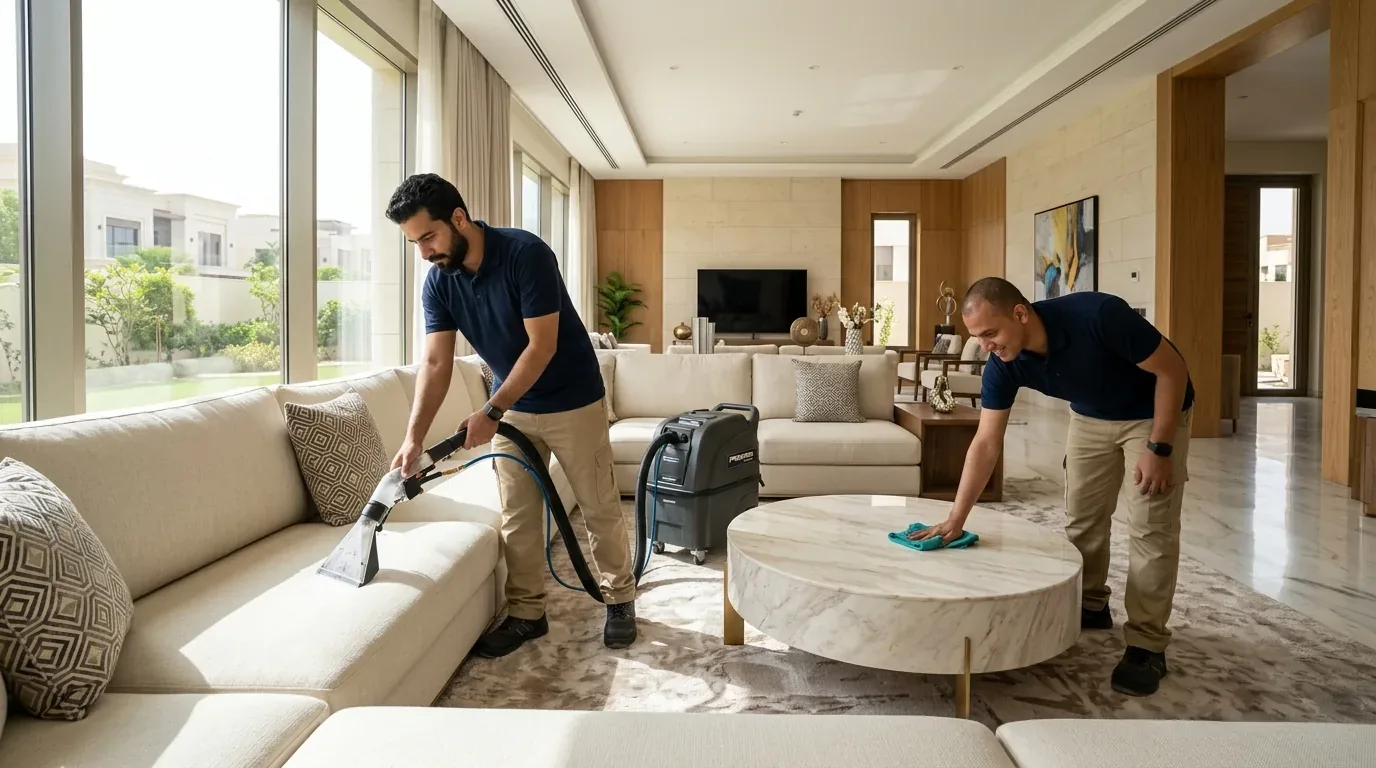
A clean, well-ventilated living room in a Jeddah home

Quick Summary

  • Switch off the room breaker before touching anything, not just the wall switch.
  • Use a stable ladder and a second person when needed; never stand on a chair or table.
  • Trap dust with a pillowcase or a slightly damp microfibre cloth instead of flicking it.
  • Never wet the motor, wiring or lamp holders.
  • Heavy crystal chandeliers and high ceilings are best left to a team with the right equipment.

Dry in the morning, sticky by evening

Coastal air carries humidity almost all year. When fine dust lands on a blade or a metal chandelier arm, it absorbs that moisture and sticks. During dust-storm days the load on the ceiling is higher than on the floor, because warm air rises and leaves what it carries on the upper surfaces.

In homes where a lot of cooking happens, oil vapour reaches the ceiling and coats the blades with a thin greasy layer that grabs dust like glue. A dry cloth alone will not remove that layer.

Things that make dust stick harder

  • Coastal humidity and condensation when the air conditioner runs
  • Cooking vapour from an open kitchen nearby
  • Salt in the air leaving a pale film on metal
  • Running a fan for many hours in an unventilated room
  • Incense smoke and oily air fresheners

What a dirty fan really does

A fan covered in dust throws some of it into the air on every turn, and it settles on furniture, curtains and electronics. Uneven weight on the blades can also make the fan wobble and hum, which people often mistake for a motor fault.

On light fittings, dust on bulbs traps heat and dulls the light, and on crystal it shows up as a haze that hides the sparkle even when the glass is perfectly sound.

Signs cleaning is overdue

  • Dark streaks along blade edges or on the ceiling above
  • Specks of dust falling when the fan is started after a pause
  • A visible haze on crystal or frosted glass
  • A smell of burnt dust when hot bulbs are switched on

Switch off at the breaker

Turning off a wall switch does not always isolate the circuit, because some wiring stays live at the junction. The safer way is to switch off the breaker for that room or circuit, confirm the light and fan are dead, and stick a note on the panel so nobody switches it back on while you work.

Let the bulbs cool completely. Halogen and incandescent bulbs can burn you and may crack if a damp cloth touches them while hot.

Checklist before climbing

  • Breaker off and marked with a note
  • Bulbs fully cool
  • Ladder on a level, dry floor
  • A second person steadying the ladder at height
  • Tools in a hanging pouch, not in your hand

Ladders and height

A folding step ladder with wide treads is far safer than a chair, table or sofa. Keep your body between the ladder rails and do not overreach; if you cannot reach the blade, climb down and move the ladder.

In rooms with double-height ceilings or above a staircase, this becomes real work-at-height, and that is the point to avoid taking chances and ask a team equipped with proper access gear.

When not to do it yourself

  • A ceiling beyond the safe reach of a household ladder
  • A heavy chandelier or one hung by an unclear fixing
  • Exposed wires or a lamp holder that is discoloured or scorched
  • A fan that shakes hard or leans away from the ceiling
Plan

Quick cleaning matrix by type of fitting

A table to help you choose the right tools before you start.

Type of fittingSafe methodWatch out for
Ceiling fan with wooden bladesPillowcase or slightly damp microfibre, then a dry clothDo not soak wood or use solvents
Fan with metal or plastic bladesMild soap solution, rinse cloth, dryDo not press down on the blade and bend it
Crystal chandelierCotton gloves; wipe each piece in place or remove carefullyNever dunk it while it hangs on wiring
Frosted glass shadeDamp microfibre with a little glass cleanerDo not spray liquid directly onto the bulb
Recessed spotlightsSoft brush and dry cloth around the frame onlyNo water into the opening
LED fittings and plastic coversSlightly damp soft cloth once coolAvoid strong alcohol on plastic

Trapping dust in a pillowcase

Slide each blade fully inside an old pillowcase and pull it slowly toward the tip so the dust is collected in the fabric rather than flying off. Repeat for each blade, then shake the case outdoors or wash it.

If there is a greasy film, use a microfibre cloth dipped in warm water with a drop of liquid soap, wipe again with a cloth dipped in clean water only, and dry so that dust does not re-stick straight away.

Order of work

  • Cover furniture and floor under the fan with an old sheet
  • Clean both sides of each blade
  • Wipe the motor housing and hanging rod with a barely damp cloth
  • Check the screws feel snug without over-tightening
  • Remove the sheet, switch the breaker on and run the fan on low

Vents and motor

Never soak the motor or try to open it. Cleaning the outer grilles and vents with a soft brush and a dry cloth is enough, and then you can listen for any unusual noise afterwards.

If the fan has a light kit, switch it off, remove the glass shade if it comes off easily, wash it in the sink in warm soapy water and dry it completely before refitting.

Common mistakes

  • Spraying water on the motor
  • Pressing blades the wrong way so they bend
  • Leaving the glass shade damp so spots appear
  • Forgetting the top surface of the blade, where most dust collects

Crystal and glass chandeliers

Wear clean cotton gloves to avoid fingerprints and wipe pieces one at a time with a microfibre cloth that is barely damp with a very weak glass cleaner. If the chandelier can be dismantled, photograph it first so you remember the order, and lay the pieces in a box padded with cloth.

Do not put crystal into suddenly hot water, which can crack it, and do not use abrasives. After cleaning dry every piece at once so moisture does not leave white spots.

Crystal rules

  • Work over a surface covered with a towel to soften any knocks
  • Avoid pulling on fine wires
  • Never spray cleaner straight onto the chandelier
  • Take a photo before dismantling so you can refit accurately

Small fittings and shades

Fabric shades are cleaned with a soft clothes brush or a suitable lint roller; glass shades with a damp cloth and a dry finish. For recessed lights, wipe the outer frame only.

If you see dark marks around a light opening or smell burning, stop and call an electrician instead of carrying on with the cleaning.

Leave these to an electrician

  • Removing or rehanging a chandelier
  • Replacing wires or connectors
  • Any short, flicker or unusual crackle
  • Very heavy pieces on high ceilings

A suggested rhythm by room

In bedrooms and little-used majlis rooms a pillowcase wipe every two to three weeks is enough, with a deeper clean every three months. Near the kitchen or where incense or smoking is common, make it weekly.

In dust-storm and rainy seasons, add fan wiping to your after-storm cleaning, because fine dust slips through gaps and settles high up first.

Quick reminders

  • Pair fan wiping with your seasonal air-conditioner service
  • Clean chandeliers before Ramadan, Eid and the guest season
  • Check the fan mounting at each deep clean
  • Note the date of the last clean on your phone

Things that spoil the result

Oily polish sprays on blades make them attract dust faster, and so does leaving the blade damp after washing. Dry thoroughly and use only a little cleaner.

Another mistake is cleaning the ceiling and fan without covering the furniture below, which turns one job into a whole-room clean.

Avoid

  • Oily polish on the blades
  • Harsh cleaners on wood and paint
  • Plenty of water near the electrical base
  • Putting off cleaning until the greasy film sets
FAQ

Common questions about humidity and mold in Jeddah

Short answers to what homeowners ask most.

Can I clean a ceiling fan while it is running?+

No. Switch off the breaker first and wait until the blades stop completely. Cleaning a moving fan is dangerous for your hands and for the fan, and it throws dust around the room.

How often should I clean fans in Jeddah?+

It depends on use: every two weeks to a month for rarely used rooms, and weekly near the kitchen, in rooms where the fan runs daily, and during dust seasons.

What is the best tool for catching dust without scattering it?+

An old pillowcase or a lightly damp microfibre cloth, because both lock the dust inside the fabric. A feather duster just moves it from one place to another.

Can I use water on a chandelier?+

On crystal and glass, yes, but only a very small amount on a cloth that is damp, not wet, followed by immediate drying. Electrical parts, sockets and wires must never touch water.

Why does my fan get dirty again so quickly?+

Usually a greasy film or humidity is holding the dust. Wash with a mild soap solution, dry well, ventilate the kitchen and room, and avoid running the fan for hours in a closed room.

Should I take the chandelier down to clean it?+

Not always. Light ones can sometimes be wiped in place, but heavy or complex ones are safer in a technician's hands. If you do decide to dismantle one, photograph it first.

Can I use glass cleaner on every light fitting?+

On clear glass yes, sprayed onto the cloth, not the bulb. Some plastics react to alcohol, and fabric shades need a dry brush rather than liquid.

When should I contact a cleaning team instead of doing it myself?+

For high ceilings, heavy chandeliers or lots of crystal, or when you do not have a stable ladder and a second person. Message us on WhatsApp and we will agree a time and the details of the space.

Ready to clean the ceiling and lighting without taking risks?

Send us the type of fan or chandelier, the ceiling height and the number of pieces, and we will reply on WhatsApp with what suits your home in Jeddah.

CallWhatsAppGet Quote