
Serving Jeddah & Makkah
Home guide10 min readJeddah

Cleaning Your Home for Dust Sensitivity in Jeddah

Reducing allergy triggers at home depends on regular routines and controlled humidity, not on strong chemicals.

Many families in Jeddah notice sneezing, a blocked nose in the morning and itchy eyes indoors, and think of dust. Fine dust, house dust mites and humidity often play a part, and how you clean affects all three.

This guide gives general cleaning information, not medical advice. It covers where dust collects, a weekly routine for the bedroom, soft furnishings, carpets and air conditioning, what to avoid, and when to see a doctor.

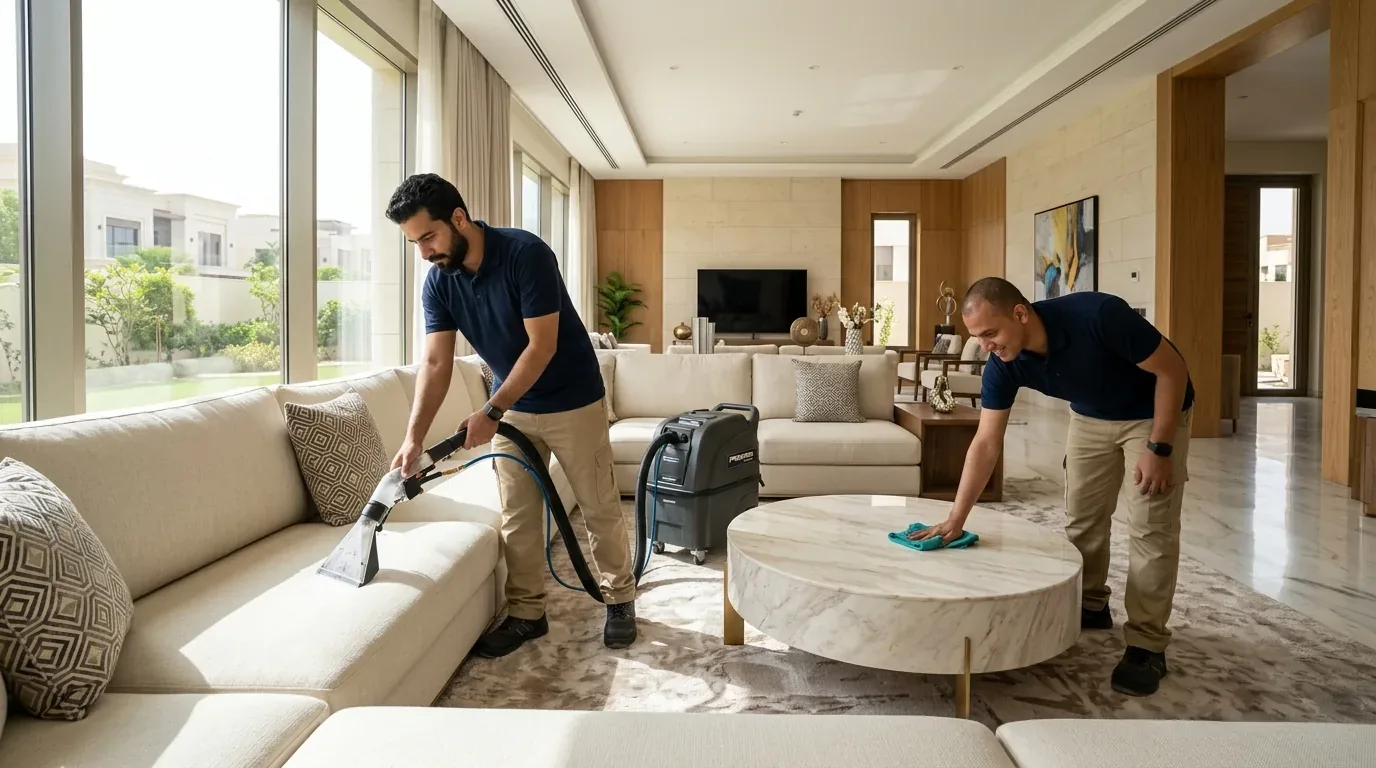
Tidy living room in a Jeddah home prepared and cleaned to reduce dust

Quick Summary

  • No single interval suits every home
  • Kids and pets shorten the gap between cleans
  • Regular vacuuming stretches the interval
  • Smell and colour change are late warning signs
  • One deep clean a year is the minimum for most homes
Quick table

Quick table: a routine to reduce dust

A practical schedule to organise your chores, to be adjusted for each family member and your doctor’s advice.

TaskSuggested frequencyNote
Wash sheets and pillowcasesWeeklyWarm water per fabric label, then dry fully
Wipe surfaces with a damp clothTwo to three times a weekDamp wiping beats dry dusting
Vacuum floors and carpetsTwo to three times a weekPrefer a machine with a good fine-dust filter
Wash pillows and heavy coversEvery two to three monthsAs far as the fabric allows
Clean the AC filterPer use, often monthly in summerSwitch the unit off while cleaning
Clean sofas and curtainsAbout every six monthsSooner if dust or smell appears
In detail

How to clean your home to ease dust and allergy triggers

Read through them in order and compare each with your own home; the right timing usually becomes clear.

Basics

What is house dust and what are dust mites?

House dust is a mix of fabric fibres, skin flakes, hair, food crumbs, pollen and soil that comes in from outside. In Jeddah it is joined by fine sand and seasonal dust storms.

House dust mites are microscopic creatures that live in bedding and soft furnishings and feed on skin flakes. Their remains and droppings can be a trigger for some people.

You cannot remove mites completely, but you can reduce numbers and the amount of dust through regular cleaning and controlled humidity, which is what this page focuses on.

Note

The limits of this guide

We are a cleaning company, not a medical provider. This page covers household cleaning habits; it does not diagnose anyone and does not replace a doctor’s assessment or treatment for allergies or asthma.

If a family member has breathlessness, wheezing, or severe or recurring symptoms, seeing a doctor comes first, to find out what is causing them, rather than relying on cleaning alone.

Regular cleaning may help reduce exposure to some triggers, but it does not promise a cure or a specific result, and every home is different.

Humidity

Humidity: the key factor in Jeddah

Dust mites thrive in warmth and high humidity, and Jeddah offers that combination most of the year. Controlling indoor humidity is therefore part of the plan, not a side issue.

A small hygrometer in the bedroom and living room helps, and it is best not to let humidity stay high for long periods. Good air conditioning and a dehumidifier can help with sensible ventilation.

Drying laundry and soft furnishings fully matters too. For more detail, see our guide on coastal humidity and mould prevention in homes.

Bedroom

The bedroom comes first

We spend many hours in bed, so it is a major source of exposure. Wash sheets and pillowcases weekly in warm water as the fabric label allows, and dry them thoroughly before remaking the bed.

Tightly woven mattress and pillow covers limit how much dust passes through and are worth asking about. Clean the bed frame and the space beneath it regularly.

Reduce what collects dust in the room: lots of fabric toys, heavy curtains and crowded open shelves. Every soft surface holds more dust than a smooth one.

Bedding

Pillows, duvets and mattresses

Pillows and duvets need periodic washing if the label allows, and complete drying in indirect sun or a dryer. Do not put back a pillow that is still damp inside.

Mattresses cannot be washed, but they can be vacuumed on both sides with an upholstery tool about monthly, aired where possible and covered with a washable protector. Some may benefit from specialist steam cleaning.

For washing bedding in a humid climate, see our guide to caring for bed linen, pillows and duvets in Jeddah.

Surfaces

Wiping surfaces: damp first

Dry dusting with a cloth or feather duster throws dust into the air and it settles again. Use a slightly damp microfibre cloth that traps dust, and wash it after use.

Work top to bottom: shelves, fans and frames, then tables, then floors, so dust does not fall onto what you have just cleaned. Do not forget cabinet tops and door edges.

Clean the outer surfaces of air conditioners and fans carefully too; our guide to ceiling fans and light fixtures explains a safe method.

Floors

Floors and carpets

Smooth floors release dust more easily than carpet, but carpet can trap a lot. Vacuum slowly in two directions with a machine that has a good filter, and empty the bin outside the room.

Damp mopping hard floors after vacuuming picks up remaining fine dust. Use water and a mild cleaner, and do not overdo scented products, since strong fragrance can bother sensitive people.

For rugs, see our guides to the vacuuming routine and to how often carpets should be cleaned, to decide when to add deep extraction.

Sofas

Sofas and curtains

Soft fabrics such as velvet and heavy curtains hold dust and release it when disturbed. Vacuum sofas weekly with an upholstery tool, mind the seams and arms, and shake loose cushions well away from the room.

Light washable curtains can be washed every few months; heavy ones are vacuumed gently or steam cleaned by a specialist. Fewer layers in the bedroom can help if dust is a concern.

Easy-wipe materials such as leather can be simpler to maintain than fabric, but furniture choice is a personal decision and not something we push.

Air conditioning

AC units, filters and vents

An AC unit moves the air in your room, so a dirty filter or coil can spread dust and odours. Clean filters regularly as the manual says, with the unit switched off.

Check the vents and fans for visible dust and wipe them with a damp cloth. For split units, our guide to cleaning the AC filter before summer covers the basics.

If a musty smell or damp comes from the unit, it needs inspection and cleaning of the unit itself. Do not just freshen the room with fragrance.

Entrance

Reducing dust that comes in from outside

Place a mat at the door and leave shoes outside living and sleeping areas, which reduces the sand and dust carried in. Close windows during dust storms and open them on clear days for ventilation.

After a storm, wait for the dust to settle then clean from top to bottom. See our guides to cleaning after dust storms and to the shoe area and doormat.

A small air purifier can help some people in the bedroom, but it is a supplement and its filters need regular cleaning or replacement, or it becomes a problem itself.

Products

Choosing cleaning products

Stronger smell does not mean cleaner. Strong fragrances, bleach and sprays can irritate people with respiratory sensitivity, so choose milder cleaners, use less, and ventilate during and after cleaning.

Never mix different cleaning products, since some combinations release harmful gases. Follow the label and keep products away from children.

If someone is very sensitive, it is best that they leave the room while cleaning and return after airing, and that someone else handles the dustiest tasks.

Mistakes

Common mistakes that increase dust

Typical errors include shaking blankets and rugs inside the room, piling items on open surfaces, drying laundry only partly, ignoring humidity, and putting off the AC filter until symptoms appear.

Others are using strong fragrance to hide an old smell instead of finding its cause, and vacuuming with a machine without a suitable filter, which blows fine dust back into the air.

Fixing these habits is usually cheaper than buying new products and mainly takes consistency and sharing tasks between household members.

Help

When to bring in a cleaning team

Professional help makes sense for heavy jobs: extraction cleaning of sofas, majlis seating and carpets, AC cleaning, and deep cleaning after a long gap, after finishing work or after dust storms.

At Al Awael we provide home, sofa, carpet and AC cleaning in Jeddah. We ask about your household’s needs and sensitivities so we can choose methods and products as suitably as we can.

We do not give medical diagnoses or promise cures. We talk about cleaning the space, and we advise seeing a doctor for any lasting symptoms.

Common questions

Cleaning and dust allergy FAQ

General answers; an inspection of your carpet sets the exact interval.

Does cleaning cure dust allergy?+

No. Regular cleaning may reduce exposure to some triggers at home, but it is not a treatment. Diagnosis and treatment are for a doctor; we only speak about cleaning the space.

How often should I wash bed sheets?+

About weekly in warm water as the fabric label allows, with full drying. Pillowcases too. Pillows and heavy duvets every two to three months if their labels permit.

Is damp wiping better than dusting?+

Usually yes. Dry dusting lifts dust that then settles again, while a damp microfibre cloth traps it. Wash the cloth after use.

Do I need an air purifier?+

It may help some people as a bedroom supplement, but it does not replace vacuuming, wiping and humidity control, and its filters need cleaning or replacing. Ask a doctor if symptoms are severe.

What humidity is best indoors?+

It is best not to leave humidity high for long periods, and a small hygrometer helps you track it. Dehumidifiers, air conditioning and sensible ventilation are practical tools in Jeddah.

Are strong cleaners better for allergies?+

No. Strong fragrances and bleach can irritate sensitive airways. Use mild products, ventilate, and never mix cleaning products together.

How often should sofas and carpets get extraction cleaning?+

Roughly once or twice a year, sooner with children, pets or lots of dust. See our guide on carpet cleaning frequency for details.

When should I see a doctor?+

If there is breathlessness, wheezing, or severe, recurring or non-improving symptoms. Do not rely on cleaning alone, and tell the doctor if symptoms tie to particular rooms.

Need help with deep cleaning?

Send us what you need cleaned, such as sofas, carpets and AC units, and tell us about your household’s sensitivities so we can suggest suitable methods and products in Jeddah.

CallWhatsAppGet Quote