
Serving Jeddah & Makkah
Carpet guide9 min readJeddah

Vacuuming Carpets in Jeddah: A Routine for Sand and Fine Dust

Good vacuuming is the cheapest way to extend a carpet’s life, but Jeddah’s fine dust needs more care than a quick pass.

Fine sand that comes in on shoes and through the air settles deep in the pile and acts like tiny sandpaper every time someone walks across it. Many people vacuum only the surface, so the rug looks clean while grit builds up below.

Here we cover how often to vacuum, which direction and speed to use, how to treat edges, fringes and heavy-traffic zones, how to look after the machine and its filter, and how to tell when it is time for deep extraction instead.

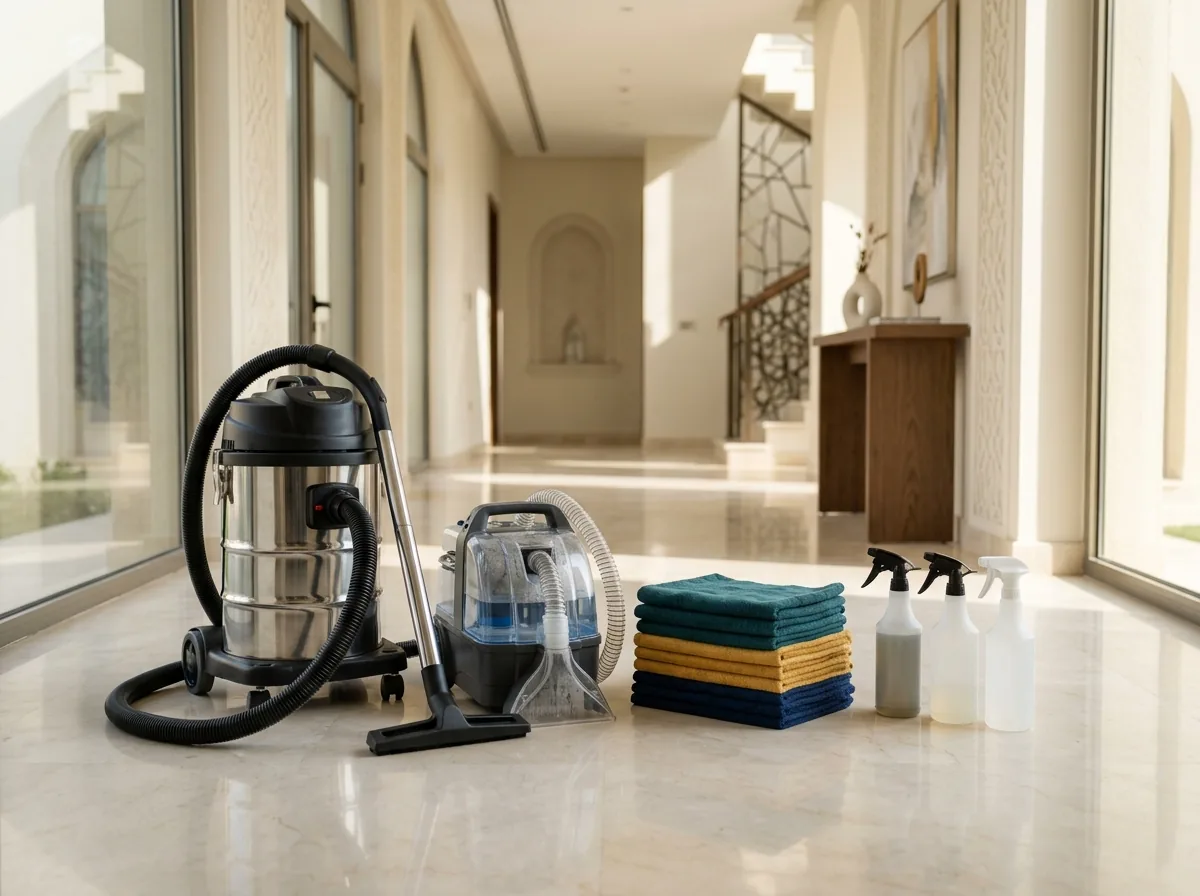
Vacuum and cleaning equipment used for carpet care in Jeddah homes

Quick Summary

  • No single interval suits every home
  • Kids and pets shorten the gap between cleans
  • Regular vacuuming stretches the interval
  • Smell and colour change are late warning signs
  • One deep clean a year is the minimum for most homes
Quick table

Quick table: how often to vacuum, by area

Treat these numbers as a starting point to adjust for how your home is actually used, not a fixed rule.

AreaSuggested vacuumingNote
Entrance and hallway rugsDaily or every other dayThe area that receives most of the sand
Living roomTwo to three times a weekFocus on the main walking paths
BedroomsOnce a weekPay attention to both sides of the bed and beneath it
Majlis after guestsAfter every large gatheringCrumbs attract insects if left
Closed guest roomAbout every two weeksCheck the back and edges now and then
After a dust stormThe day after, once dust settlesVacuum twice with a few hours between
In detail

How to vacuum carpets properly in Jeddah

Read through them in order and compare each with your own home; the right timing usually becomes clear.

Basics

Why does sand damage carpet?

Hard grains of sand and dust sink between fibres and grind against them with every step. This friction slowly cuts the pile, dulls its sheen and makes walking paths look faded and flat before their time.

The damage does not show in a week. You see it after months, when the entrance path looks lighter than the rest of the room and the pile there feels shorter and rougher to the touch.

So removing grit before it works its way deep matters more than trying to restore appearance after the fibres have flattened. Vacuuming is the everyday tool for that.

Frequency

How often should we actually vacuum?

A useful rule is to follow footfall rather than the calendar. A hallway that twenty people cross daily is a different case from a closed guest room, even inside the same house.

Start with the table above and adjust. If you notice sand on the floor beside the rug or visible footprints, increase the frequency; if a room has not changed in two weeks, you can ease off.

After big hosting days and in dust season, an extra pass is better than postponing, because crumbs and dust are easier to remove while dry and recent.

Technique

Direction and speed: why go slowly?

A fast pass lifts only surface dust, while grains deep in the pile need time to shake loose and reach the nozzle. Move as slowly as you can, roughly two seconds per head-width of distance.

Vacuum in two crossing directions, lengthways then across. The first pass lifts what sits on top and the second reaches what has hidden along the lean of the fibres.

Do not press hard on the head. Too much pressure restricts airflow, lowers efficiency and can damage fringes. Let the machine work at its own suction.

Equipment

Rotating brush: when to use it and when to switch it off

A rotating brush head agitates the fibres and lifts dust from deep down. It is excellent for synthetic carpet with short or medium pile and good at removing pet hair and trapped sand.

On hand-knotted wool rugs with fringes, long-pile carpet and silky weaves, it is better to switch the brush off or use a soft attachment. Aggressive rotation can pull threads and tug on fringes.

If you are unsure what you have, check the manufacturer’s advice or test a hidden corner, and read our guide to carpet fibre types to understand what you are dealing with.

Edges

Edges, fringes and corners

Rug edges and the strip next to walls are real dust traps because the main head does not reach them well. Use the crevice tool and run it slowly along the edge.

Vacuum fringes gently along their length. Avoid lifting the machine over them or letting them wrap around the brush. If they are very dirty, have them washed carefully or left to a specialist.

Lift a rug corner from time to time and vacuum the floor beneath. Dirt that collects under a carpet works its way back up into the fibres with every step.

Furniture

Under and beside furniture

The area under sofas, chairs and coffee tables sees less traffic but still collects dust over time. Move light pieces every two weeks, or use a long nozzle or flat head instead.

Watch where heavy legs stand. Constant pressure leaves deep dents, and shifting a piece a few centimetres now and then spreads the load and lets fibres recover.

If you move heavy furniture, protect the rug with a board or cloth so the pile is not dragged and the backing does not tear.

Filter

Filter and bag: keeping the machine healthy

Weak suction is usually a full bag or blocked filter, not a weak motor. Empty the bin before it is completely full, and wash or replace the filter as the maker advises, refitting it only when fully dry.

Empty dust outside or into a sealed bag, since fine dust returns to the air if shaken out in the room. A good filter also reduces how much fine dust is blown back into the room while you vacuum.

Clean the rotating brush of hair and wound threads now and then. Built-up hair slows rotation, reduces cleaning and in some machines can overheat the belt.

Moisture

Never vacuum a damp carpet

A carpet that is damp after a leak, wash or spill should dry first. Dry vacuuming a wet rug harms the machine, may draw water into the motor and drags wet fibres.

In Jeddah a rug can hold moisture in poorly ventilated rooms. Check with your hand before vacuuming; if it feels cool or damp, open windows or run a dehumidifier until dry.

For what to do after washing and drying, our guide on damp smell after sofa and carpet cleaning is useful.

Storms

Vacuuming after a dust storm

Do not rush to vacuum while the air is still loaded. Wait for it to calm and the dust to settle, then crack the windows and work from top to bottom: shelves and curtains first, then floors and rugs.

Vacuum carpets twice with a few hours between. The first pass lifts visible dust and the second picks up what settles back onto the surface. Clean or replace the filter afterwards because it will be loaded.

For the full set of steps after storms, see our guide to home cleaning after dust storms.

Entrance

Stop the sand before it comes in

The easiest vacuuming is the kind you never need. Put a coarse mat outside the door and a softer one inside, and keep shoes at the entrance. A large share of the sand on a foot drops off at this step.

Vacuum the entrance mat and the rug next to it more often than the rest, and clean or rotate the mat regularly. It acts as a filter and takes what would otherwise reach the living-room carpet.

For practical detail, read our guide on the shoe area and doormat in homes.

Pets

Pet hair and animals

Hair wraps around the brush and sinks into the pile. Use a pet-hair head or a rubber brush to gather it first, then vacuum slowly in several directions.

If you have cats or dogs, increase the frequency and pay attention to where they sleep, because hair and dander collect there and feed pests and odours if left.

For more on hair, dander and smells, see our guide to carpets and furniture in homes with pets.

Robots

Robot vacuums: what they do and do not replace

A robot is useful for daily upkeep on flat surfaces and short pile, and reduces dust build-up between manual passes. But it does not reach edges and corners and does not dig into thick pile.

It may also snag on fringes, cables and thin rugs. Lift or secure fringes before running it and watch the first run in each room.

Treat it as a supplement, not a replacement, and keep a weekly manual pass with the edge tool and under furniture. Empty its bin after every run.

Limits

When vacuuming is not enough

If a carpet still looks dull after good vacuuming, feels rough despite looking clean, or smells of old dust, greasy soil and stuck grime probably cannot be lifted by air alone.

Warm-water extraction with a cleaner suited to the fibre helps here, washing between the fibres and pulling out the dirty water. We explain the options in our guide to carpet cleaning methods.

If you notice recurring allergies, smell or signs of pests, do not wait. Vacuuming alone will not solve a problem that has built up over a long time.

Help

When to contact Al Awael

If your last deep clean was a long time ago, or the rug sits in a home with children, pets or a sandy, busy entrance, extraction once or twice a year puts the fibres back in better shape.

We provide carpet cleaning in Jeddah using extraction, and we review the rug type, its condition and your concerns before choosing a method, without exaggerated promises or prices given before inspection.

Send us a photo of the rug on WhatsApp with its approximate size and type if you know it, and we will suggest the right next step.

Common questions

Carpet vacuuming FAQ

General answers; an inspection of your carpet sets the exact interval.

How often should I vacuum carpets in Jeddah?+

It depends on the area: entrance and hallway daily or every other day, the living room two to three times a week, bedrooms weekly. After dust storms or large gatherings, vacuum the next day.

Should I vacuum in one direction or two?+

Two crossing directions are better, lengthways then across, slowly. The second pass picks up grit that hid along the lean of the fibres.

Does a rotating brush damage carpet?+

Usually not on short synthetic carpet, but it can pull threads on hand-knotted wool and tug on fringes. Switch it off or use a soft attachment for those.

Why does my carpet look dirty even after vacuuming?+

The soil may be greasy or stuck deep in the fibres where air cannot lift it. That calls for warm-water extraction with a method suited to the fibre, not more vacuuming alone.

Can I vacuum a damp carpet?+

No. Let it dry completely first, since dry vacuuming on a wet rug harms the machine and drags the fibres. Open windows or use a dehumidifier if needed.

Does a robot vacuum replace manual vacuuming?+

No. It is great for daily upkeep on flat surfaces but does not reach edges and corners or dig into thick pile, so keep a weekly manual pass.

How often should I wash the vacuum filter?+

Follow the maker’s instructions, but in Jeddah’s dust check it about monthly and clean or replace it when needed. Refit it only when completely dry.

When do I need deep carpet cleaning?+

When the rug feels rough or looks dull despite vacuuming, smells of old dust, causes repeat allergies, or it has been a long time since the last clean. Send us a photo on WhatsApp for guidance.

Want your carpet to look alive again?

Send us a photo of the rug, where it sits in the home and how many people walk on it, and we will suggest the best way to clean it in Jeddah.

CallWhatsAppGet Quote