
Serving Jeddah & Makkah
Practical guide8 min readJeddah

Entrance and Shoe Area in Jeddah Homes: Stop Sand and Dust at the Door

The cheapest way to cut indoor dust is to stop it from coming in, and the entrance is your first line of defence.

Most of the fine sand in Jeddah homes arrives on shoe soles, in clothing folds and through the door itself, then spreads across hallways where it turns into tiny scratches on marble and porcelain.

A practical fix has three layers: a rough outdoor mat that knocks sand off, an indoor shoe zone with an easy-to-wipe floor, and a short daily routine for the entrance.

No expensive fittings are required. What matters is that the zone is clear and comfortable enough for the whole household to actually use it.

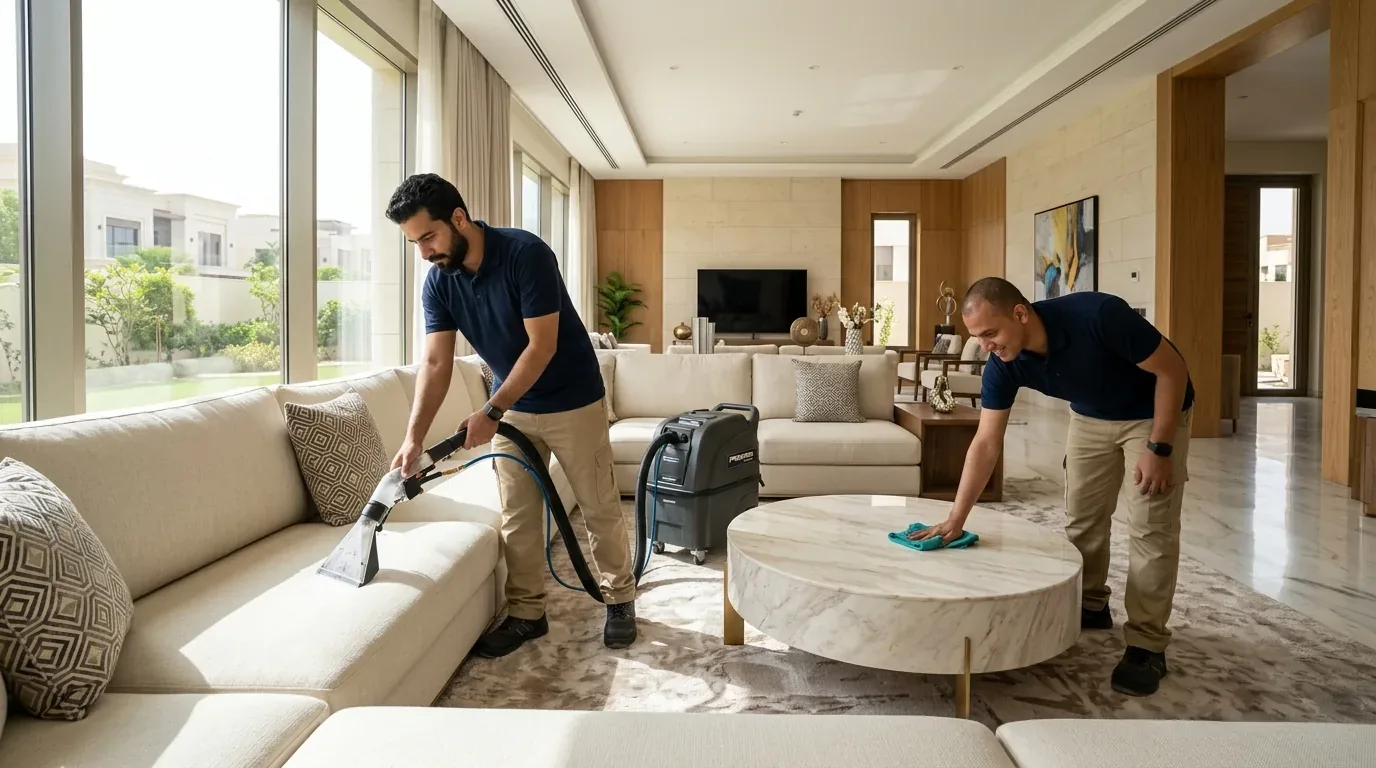
A clean, well-ventilated living room in a Jeddah home

Quick Summary

  • Rough mat outside the door to shake off sand
  • A ventilated shoe cabinet, not a sealed box
  • Wipe the entrance daily before other floors
  • Clean shoes outside rather than inside the home
  • Avoid heavy water on marble at the door

How fine sand gets in

Dust in Jeddah is different from inland dust: it is a mix of fine sand, sea salt and humidity. Whatever sticks to a sole or the bottom of a door travels inside with every step. Small grains lodge in the grooves of shoe soles and in rough floor joints, and stay there until they drop onto a rug or polished marble.

Even with windows shut, some dust slips in through the door each time someone enters or leaves, so indoor cleaning alone is never enough. The less that crosses the threshold, the less effort you spend wiping afterwards.

Signs your entrance needs attention

  • A thin film of sand by the door hours after mopping
  • Visible footprints on glossy marble
  • Fine scratches and lost shine near the threshold
  • A damp smell from the shoe cabinet
  • A stiff or worn-out entrance mat

What gets damaged when sand is left

Dry sand is abrasive. When it is walked across polished marble, granite or glossy porcelain it behaves like very fine sandpaper, and over time the surface loses shine, especially along the first walking lines. These scratches rarely show right after mopping, but the floor looks dull and holds dirt more easily.

Rugs and carpet near the entrance absorb sand deep into the fibres, where an ordinary vacuum cannot lift all of it, so the fabric wears from the inside. That is why effort is best spent on prevention before treatment.

Surfaces most affected

  • Polished marble and granite near the door
  • Wood or parquet flooring
  • Small rugs and carpet tiles
  • Tracks of sliding doors
  • Lift floors and shared corridors

Layer one: before the door

Place a rough outdoor mat large enough for at least two steps; a small mat stepped on once knocks off almost nothing. Choose a sun- and moisture-resistant material with short stiff fibres or perforated rubber so sand falls through rather than sitting on top.

Shake the mat every day or two at the edge, away from the door, and lift it weekly to clear what has collected underneath, because trapped sand finds its way back to the threshold. If the entrance is covered from rare rain, make sure the mat dries fully so it does not become a mould haven.

A good outdoor mat should have

  • A size that allows two consecutive steps
  • A non-slip base that tolerates sun
  • Rough fibres or openings for sand to fall through
  • Easy shaking and rinsing with a hose
  • No blocking of drainage paths

Layer two: just inside the door

Define a clear space for taking shoes off, even a washable rubber mat or a low-rimmed tray. The point is to keep fallen sand in one place that is easy to sweep rather than spread across the whole floor. Make removing shoes here a fixed household habit and explain to children that shoes stop at this line.

The cabinet should be partly open or perforated: shoes keep moisture after a humid day or a trip to a garden, and a tightly sealed cabinet quickly becomes an odour source. Keep dirty shoes on the bottom shelf and dry sports shoes before storing them.

A healthy shoe cabinet

  • A bottom shelf for dirty or outdoor shoes
  • Ventilation holes or perforated doors
  • Covered starch or charcoal pouches to absorb moisture
  • Damp shoes dried before storage
  • A monthly wipe inside with a slightly damp cloth

The daily and weekly sequence

Always remove dry sand before any water: a soft-bristle broom or dry dust mop, then a vacuum with a hard-floor attachment. Mopping dry sand turns it into an abrasive paste that scratches the surface and is hard to remove. After that, wipe with a slightly damp cloth and a mild cleaner suitable for your floor type.

Weekly, take up the mat and tray and wash them, check the door edges and the lower tracks of sliding doors, and wipe the wall base near the shoes. If the entrance is marble, avoid acidic cleaners and vinegar because they can dull the finish, and follow the stone manufacturer’s instructions.

A short entrance sequence

  • Remove dry sand first
  • Shake the outside mat and empty the tray
  • Wipe with a damp, not soaking, cloth
  • Dry the floor straight away to prevent slips
  • Weekly: wash the mat and check the door edges

What to avoid

Avoid flooding the entrance with water. Marble and porcelain are slippery when wet, and water can seep into tile joints or wooden doors. Do not mix cleaning products, especially those containing chlorine or ammonia, because the fumes are harmful in a small space.

Avoid leaving damp shoes in the cabinet for days or covering odours with strong fragrances without fixing the cause. If persistent damp or mould appears on the wall or at the bottom of the door, the source of water usually needs to be checked before any cleaning.

Common mistakes

  • Wiping dry sand with a wet cloth
  • Using vinegar or lemon on marble
  • A tiny mat that slides when you enter
  • A sealed cabinet for damp shoes
  • Putting off shaking the entrance mat for weeks

A suggested schedule for most homes

On ordinary days, shaking the outdoor mat and sweeping the entrance before mopping the rest of the floor takes about two minutes. During heavy dust weeks, sweep twice a day and check the threshold and the bottom of the door, because sand collects there faster than anywhere else.

Once a month, empty the shoe cabinet completely, wipe the shelves and sort out shoes you no longer wear, airing any that hold strong odours. Each season, check whether the outdoor mat has worn smooth: a tired mat knocks off nothing and simply becomes another source of grit.

A short follow-up list

  • Daily: shake the door mat and sweep the entrance
  • Weekly: wash the tray and the indoor mat
  • Monthly: empty the cabinet and wipe the shelves
  • Seasonally: assess the mat and alternatives
  • After each dust event: check the threshold and tracks

When specialist help makes sense

If the floor near the entrance is polished marble, it may eventually need a thorough clean with suitable equipment to restore a clean look without harming the surface. If you have carpet near the door, it may need deep extraction to remove sand packed into the fibres, which usually needs equipment most homes do not have.

Either way, never experiment on a material you cannot identify: ask the floor manufacturer for care instructions, and test any strong product on a hidden corner before using it widely. If you are unsure of the stone type, ask a specialist before trying a new cleaner.

Signs a thorough clean is due

  • Lost shine despite regular mopping
  • Sand embedded in carpet fibres near the door
  • Dark grout lines at the threshold
  • A damp smell that ventilation does not clear
  • Guests or a property handover coming up
Comparison

Comparing entrance materials: which suits your home?

No single material suits everyone; choose by use and by how much dust you get.

OptionStrengthsNotes
Perforated rubber matReleases sand and tolerates sunNeeds regular hose rinsing
Rough-fibre matLooks better and traps sandNeeds frequent shaking and drying
Washable indoor matCollects what falls off shoesWash weekly depending on use
Rimmed shoe trayProtects floor from water and sandEmpty daily and wipe
Ventilated cabinetReduces damp and odoursDo not fill with wet shoes
FAQ

Common questions about humidity and mold in Jeddah

Short answers to what homeowners ask most.

Is banning shoes indoors necessary?+

Not mandatory, but it noticeably cuts sand and dirt, especially on glossy floors. If that is hard to enforce, keep a pair of indoor shoes or make the entrance a clearly marked shoe-removal zone.

How many mats do I need at the entrance?+

Two usually do it: a rough outdoor mat and a washable indoor one. A single large mat does not replace both because each does a different job.

Can I mop a marble entrance with vinegar?+

It is best avoided, because acids may dull marble. Use a neutral cleaner suitable for natural stone and follow the manufacturer’s guidance.

How do I get rid of shoe cabinet odour?+

Take the shoes out, dry the cabinet, wipe it with a slightly damp cloth and mild cleaner, and leave it open to dry. Add a moisture absorber and check any shoes that hold dampness before putting them back.

Does dust still get in on high floors?+

Yes, in smaller amounts, mainly on shoes, clothes and through doors. A shoe area stays useful on every floor.

How often should I shake the outdoor mat?+

Daily or every other day during dusty periods and weekly in calm spells, plus lifting it periodically to clean underneath.

When should I call a cleaning team for the entrance and floors?+

When you notice scratches or build-up that is hard to remove, or you need a thorough clean before guests or after a strong dust event. Send us the floor type and area and we will arrange the right details.

Need entrance and floor cleaning at your Jeddah home?

Send us the property type, floor type and area on WhatsApp and we will arrange the details and preparation that suit you.

CallWhatsAppGet Quote