
Serving Jeddah & Makkah
Kitchen guide10 min readJeddah

Cleaning a Gas Stove in a Jeddah Kitchen: Burners, Grates, Glass and Knobs Without Damage

The gas stove takes more spills and burnt grease than anything else in the kitchen, and neglecting it leads to a weak or uneven flame, burnt smells and hard lighting. This guide shows how to clean burners, grates, the cooktop surface and knobs in the right order, how to lift burnt-on grease without scratching, and what you must never do near gas.

It includes a quick table of dirty-stove warning signs, the safety steps if you suspect a gas leak, a daily and weekly routine that suits Jeddah kitchens, and advice on when a trained team should handle a deep kitchen clean.

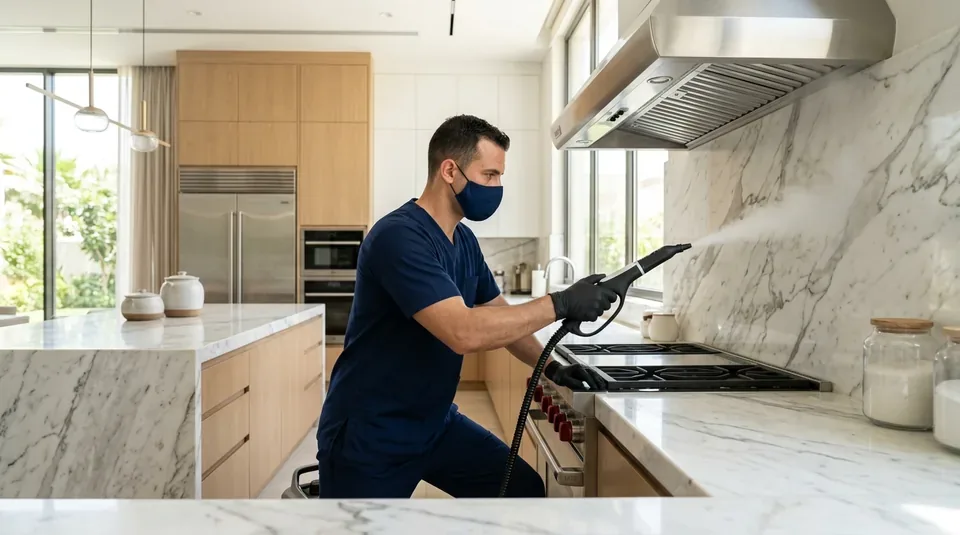
Home kitchen after a deep clean of the counters and cooktop

Quick Summary

  • Turn the gas off and let the stove cool completely before any cleaning.
  • Clear burner ports with a soft brush or a wooden pick, never steel wire or a sharp pin.
  • Soak grates and caps in warm soapy water and dry cast iron fully to prevent rust.
  • Keep water out of knobs and the igniter; use a barely damp cloth.
  • If you smell gas, touch no electrical switch; close the valve, open windows and leave.
Quick table

Quick table: what you notice on the stove and the first move

The table helps you react calmly to an unusual sign. It does not replace a technician's check whenever gas is in doubt.

SignLikely explanationFirst step
Flame is patchy or uneven around the burnerSome ports are blocked by grease or food residueTurn gas off, let it cool, clear the ports with a soft brush and dry them
Persistent yellow flameIncomplete combustion, dirt or an air-gas mix problemClean the burner; if it continues, ask a qualified technician to inspect
Smell of gas in the kitchenPossible leak at the hose, fittings or valveClose the valve, open windows, avoid switches and get help
Igniter clicks but no flameDirty igniter head or moistureDry the area and clean the igniter with a dry cotton swab
Black burnt patches on the glassSpilled grease burnt on repeatedlyWarm damp cloth first, then a plastic scraper; avoid sharp tools
Rust on iron gratesMoisture left after washingDry thoroughly and wipe a thin film of oil on cast iron
In detail

Caring for a gas stove in Jeddah conditions

Read in order or go straight to the section you need; each one covers a specific part of cleaning a gas stove.

Basics

Why does a gas stove get dirty so fast in Jeddah kitchens?

Daily cooking with oil and spices throws a fine spray of grease onto the cooktop and everything around it. Each time you cook it bakes on a little more until it becomes a hard black layer, and in humid Jeddah that grease also binds dust to the surface.

So stove care is not a luxury: it keeps the flame even, reduces odours and risk, and makes cleaning easy when you do a light wipe daily instead of facing a heavy job every couple of months.

Safety

Safety first: turn off the gas and let it cool

Before cleaning, switch off every burner, close the gas valve if you will take parts apart, and let the stove cool fully. Spraying a hot surface can burn you or crack glass. If the unit has an electric ignition, unplug it too.

Avoid spraying liquid straight onto the stove. Put the cleaner on a cloth and wipe instead, which stops liquid running into the burner, the igniter and the wiring, and lets you control how much you use.

Burners

Burners and flame ports: careful cleaning that does not cause faults

Lift off the burner cap and base and soak them in warm soapy water to loosen grease, then brush the flame ports with an old toothbrush or a wooden pick. Avoid steel wire and sharp pins, which can widen or deform the ports and change the shape of the flame.

After rinsing, towel the parts dry and let them air-dry completely before refitting, because water left in the ports prevents lighting. Make sure the cap sits correctly and the burner is centred before you switch the gas on.

Grates and caps

Grates, caps and drip trays

The grates carry the heaviest burnt-on grease. Soak them in a basin of warm water with dish soap for a good while, then scrub with a non-abrasive sponge. Cast iron needs drying right away to prevent rust, and a thin coat of oil protects it.

Enamel coating on some grates can chip if scraped hard or shocked by dropping a hot piece into cold water. Some types are not dishwasher safe either, so check the manufacturer's guidance.

Cooktop surface

The cooktop surface: glass, stainless steel or enamel

Glass scratches easily with harsh scourers, while stainless steel shows a grain direction and looks best wiped along it. Start by clearing crumbs, then wipe with a microfibre cloth dampened in warm water and a drop of dish soap.

For burnt spots, lay a warm wet cloth over the area for a few minutes to soften it, then lift with a plastic scraper or an old card. Avoid wire wool and gritty cleaners that leave scratches where grease collects later.

Knobs and igniter

Knobs, the igniter and the electrical area

Knobs pick up grease and fingerprints but connect to delicate parts. Wipe them with a barely damp cloth, never soak them, and if they are removable follow the maker's instructions without pouring water into the hole behind.

The igniter head gets coated in food residue and weakens. With the gas off and the stove cool, wipe it with a dry cotton swab, or one lightly dampened with alcohol, and let it dry before testing. If the spark stays weak you may need a technician.

Burnt-on carbon

Stubborn carbon and burnt-on stains

Old stains turn into a hard carbon crust. Patience beats force: spread a paste of baking soda and a little water over a hard, non-delicate surface, leave it long enough, wipe with a damp cloth and lift what remains with a plastic scraper.

Do not mix this paste with vinegar, bleach or another product on the same spot; use one product and rinse well. Our guide on never mixing household cleaners explains which combinations to avoid.

Behind the stove

The gaps around, behind and under the stove

Grease creeps into the gap between the stove and the cabinet and under the grates. Remove any removable trays or panels and wipe the edges, using a slim brush for corners and narrow openings. A stove connected to a gas hose must not be dragged forcefully.

If the stove is fixed in place and you want to clean behind it, do not move it yourself if that strains the hose. Ask a trained team who know how to handle connections without taking risks.

Cylinder and hose

The gas cylinder, hose and regulator

Do not clean the hose or fittings with strong chemicals; just wipe the outside with a dry or barely damp cloth. Inspect the hose by eye for cracks, dryness or unusual softness, and check the expiry date if one is printed on it.

Never use a flame to look for a leak. If you doubt the hose or a joint, close the valve and call a qualified technician or your gas supplier to replace it rather than relying on a home test.

Routine

A daily, weekly and monthly routine for Jeddah kitchens

Daily: wipe the surface once it has cooled with a damp cloth and deal with spills at once. Weekly: soak grates and caps and clean the burners. Monthly: check the flame ports, the igniter and the hose, and clean around and behind the stove.

If you fry often or host many guests, check more frequently. This small habit prevents the build-up that is hard to remove later and keeps the flame steady and the surface bright.

Common mistakes

Common mistakes around gas

Typical errors include using steel wool on glass, spraying water on a hot stove, covering burners with foil to protect them from grease, which can block air and gas flow and cause incomplete combustion, and leaving grates wet after washing.

Others are mixing cleaners for extra strength, or getting water into knobs and electrical openings. Keep to a simple rule: one product, a barely damp cloth, full drying, then test the lighting carefully.

Smell of gas

What to do if you smell gas

Do not strike a match or lighter, and do not switch any electrical switch or phone on or off inside the space. Close the gas valve if you can do so safely, open windows and doors, and get everyone out of the house.

Once outside, call the relevant authority or Civil Defense on 998, and do not go back in until a professional confirms it is safe. Do not try to find the leak with a flame.

Professional help

When to bring in a team for a deep kitchen clean

If burnt grease has built up on the stove, the range hood, the cabinets and the walls, or you want the kitchen ready before hosting or after a long absence, a trained team can save time and choose suitable products for each surface.

Send us photos of the stove and kitchen and tell us the surface type (glass, stainless steel or enamel), and we will suggest the right step. For gas and fittings, inspection stays the job of a qualified technician.

Common questions

Frequently asked questions about cleaning a gas stove

Short answers to what Jeddah homeowners most often ask about stove cleaning.

Should I clean the stove while it is warm or after it cools?+

After it has cooled completely. Spraying a hot surface can burn you or crack glass, and cleaners evaporate quickly and leave marks. Turn the gas off and wait before you start.

Can I wash the grates in the dishwasher?+

Some types handle it and others do not, especially enamel-coated ones. Check the manual, and if you are unsure, soaking by hand in warm soapy water is the safer choice.

My flame is yellow; is it dirt or a fault?+

Dirty ports can be the cause, so clean and dry the burner. If the yellow flame continues or black soot appears on pots, have a qualified technician inspect it and do not ignore it.

Can I use baking soda on a glass cooktop?+

A light paste can be used gently on a non-delicate surface, but avoid hard scrubbing because it may scratch glass. Test a small corner first and rinse well afterwards.

How do I clean the knobs without damaging them?+

Only with a barely damp cloth; do not soak them or spray directly onto them. If they come off, follow the manufacturer's directions and dry them before refitting.

Can I cover the burners with foil to protect them?+

It is not recommended, because it can restrict air and gas flow and cause incomplete combustion or damage. It is safer to clean the removable parts regularly.

How often should I check the gas hose?+

Make a visual check part of your monthly routine, and replace it as the maker or supplier advises or whenever you see cracks, dryness or unusual softness.

Is stove cleaning something your team can help with?+

You can message us photos of the kitchen and the condition, and we will explain the right step and what a home or kitchen cleaning visit can cover for your situation.

Want a deeper clean for your kitchen or stove in Jeddah?

Send photos of the stove and kitchen and tell us the surface type and the grease level, and we will suggest the right next step.

CallWhatsAppGet Quote