
Serving Jeddah & Makkah
Kitchen guide9 min readJeddah

How to Clean Kettles, Coffee Machines, Air Fryers and Blenders of Limescale and Grease in Jeddah Homes

Small appliances are the most used and least cleaned items in the kitchen, and the scale and grease on them affect not just taste but the life and performance of the appliance.

In a Jeddah kitchen hardly a day passes without the kettle, coffee machine, air fryer and blender. With water that leaves white deposits after heating, and grease that sprays from hot-air frying, layers build up that are hard to remove if cleaning is delayed.

This guide explains how to remove scale from the kettle and coffee machine with safe steps, how to clean the air fryer, blender and toaster of grease and smells, and how to set a simple schedule that keeps appliances healthy for longer.

It is general home-cleaning information; your manufacturer’s manual remains the first reference for any cleaning product or descaling method.

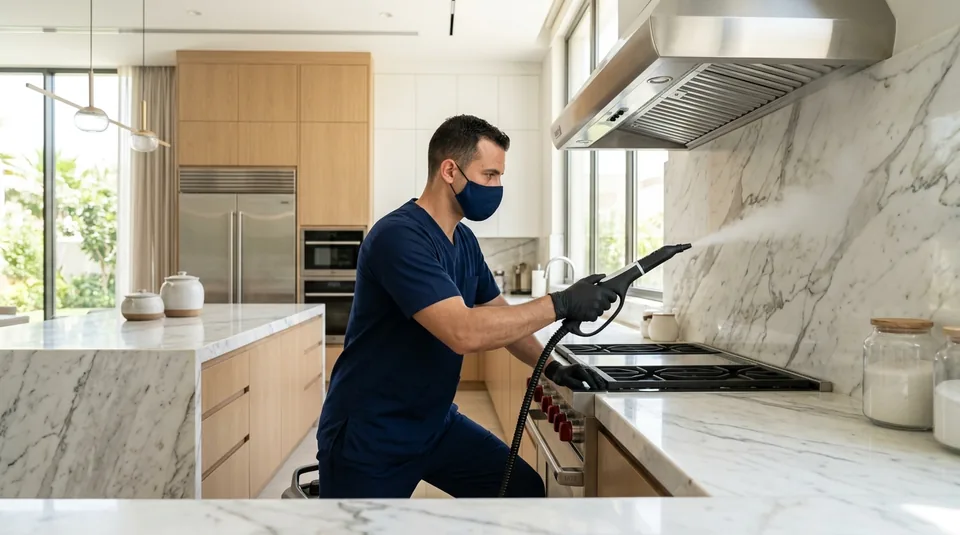
A tidy clean kitchen in a Jeddah home after cleaning small appliances

Quick Summary

  • Unplug the appliance and let it cool before any cleaning.
  • Use the descaler the manufacturer recommends, and never mix several products together.
  • Rinse thoroughly after descaling so no taste or smell remains in water or coffee.
  • Never submerge the electrical base, and only dishwasher-wash parts the maker approves.
Causes

Why deposits and grease build up on small appliances

Repeated heating and daily use make these appliances collect deposits and grease faster than others.

Scale from heated water

Each time you heat water some evaporates and leaves the dissolved minerals on the inner surface of the kettle and the coffee machine tank, forming a hard white or grey layer. Over time heating becomes less efficient, boiling takes longer and the appliance gets louder.

The thickness depends on the water used and how often you heat it, which is why regular checks beat waiting until white flakes appear in the tea or coffee.

Signs of scale buildup

  • White flakes floating in water or coffee.
  • Longer boil times or weak pressure in the coffee machine.
  • A hard white layer on the element or the kettle base.
  • A louder boiling sound than usual.

Grease and residue on hot appliances

An air fryer throws oil mist onto the lid, fan and basket, leaving a sticky film that oxidises with heat into brown stains. In a blender, fruit and milk residue clings around the blade at the bottom, and crumbs collect in the toaster.

The problem worsens in coastal homes because humidity makes grease stick to surfaces rather than dry and flake off.

Appliances left damp after washing also develop small musty smells, so dry parts before refitting and store them away from heavy cooking steam.

Places to always check

  • The air-fryer basket, fan and lid.
  • The base of the blender jar and around the blade.
  • The toaster crumb tray.
  • The rubber sealing ring in containers.
Scale

Safely removing scale from the kettle and coffee machine

Safety first: cleaning a cool, unplugged appliance and then rinsing well are the two most important points.

The electric kettle

Once unplugged and cooled, fill it to a suitable level with a descaling solution suitable for food appliances following the maker’s directions, and leave it for the recommended time. Scrub soft deposits with a soft brush, then empty and rinse the kettle several times.

Boil clean water once or twice and discard it before using the kettle, to be sure any taste or smell has gone.

Kettle steps

  • Unplug and wait for it to cool.
  • Fill with a suitable solution for a set time.
  • Scrub soft deposits with a soft brush.
  • Rinse well, then boil clean water and discard it.

The coffee machine and capsules

Check the machine’s manual, since many makers recommend their own descaler and a set cleaning cycle. Do not use strong chemicals or bleach in the tank and pump channel, and never mix two chemical products.

After the cycle rinse the tank and run the machine with clean water several times so every trace of cleaner leaves, then wipe the outside and tray with a cloth.

Coffee-machine precautions

  • Follow the manufacturer’s guide on descaler type.
  • Never use bleach or harsh chemicals in the pump.
  • Run rinse cycles with clean water afterwards.
  • Clean the tray and capsule holder without excess water.

When to repeat descaling

There is no single schedule that suits everyone, since the mineral content of water and daily heating differ from home to home. The practical rule is to look inside the kettle and machine tank from time to time, and when you see a noticeable white layer or a change in taste it is time.

It also helps to empty leftover water after use and not leave the appliance full for days, since standing water adds deposits and may leave an unwanted smell.

Indicators that it is time

  • A visible white layer inside the appliance.
  • A change in the taste of water or coffee.
  • Longer heating time or more noise.
  • Small flakes appearing in the cup.
Grease

Cleaning the air fryer, blender and toaster

A greasy appliance smokes and smells of old food, and regular cleaning prevents this and protects the electrical parts.

The air fryer

Once the unit has cooled, take out the basket and tray and wash them in warm water with dish soap, soaking if needed. Wipe the inside chamber, lid and around the fan with a lightly damp cloth, and avoid flooding the unit or spilling water on the heating element.

It is best to clean it after every very greasy use instead of waiting, as fresh stains are far easier.

Air-fryer tips

  • Soak the basket and tray in warm soapy water.
  • Wipe the inside with a damp, not wet, cloth.
  • Do not spray water on the heating element.
  • Dry fully before reassembling.

The blender and toaster

Half-fill the jar with warm water and a drop of dish soap and run it for a few seconds, then rinse, taking care with the sharp blade. If the base has a rubber ring, take it out to wash and dry.

For the toaster, pull out the crumb tray and shake it out, and wipe the outside with a damp cloth once it is unplugged and cool.

Steps for blender and toaster

  • Half-fill the jar with warm soapy water and run for seconds.
  • Remove and wash the rubber ring.
  • Shake out the toaster crumb tray regularly.
  • Dry completely before storing.

Plastic containers and lingering smells

Plastic containers, lids and rubber rings hold on to food smells, especially after strongly spiced dishes. Wash them straight after use with warm water and soap, and let them dry well in the air away from damp.

If a smell remains, soak them for a while in warm water with mild detergent, and avoid mixing bleaches or using harsh materials that scratch the surface and make odours stick.

Tips for removing smells

  • Wash straight after strong-smelling food.
  • Soak in warm water with soap.
  • Dry well before closing the lid.
  • Do not mix chemical cleaners.
Mistakes

Common mistakes when cleaning small appliances

Some actions shorten an appliance’s life or expose you to danger, and avoiding them saves a lot.

Mistakes that repeat in homes

Among the most dangerous are submerging the electrical base in water or cleaning the unit while it is plugged in. Others include harsh tools that scratch non-stick coatings so food sticks and is hard to clean later.

Another is using more than one descaling product at once, leaving the solution in the appliance longer than recommended, or skipping a thorough rinse so the cleaner taste remains.

And storing appliances damp inside closed cupboards, where smells and mould develop, especially in Jeddah’s humid air.

If you use chemical cleaners, read the label, never mix two products, open a window or run the extractor while you work, and wash your hands afterwards.

What to do instead

  • Unplug and cool the appliance before cleaning.
  • Use a soft cloth and brush on non-stick surfaces.
  • Stick to one product and the recommended time.
  • Dry the appliance fully before storing.
Routine

A routine that keeps appliances clean and long-lived

Short regular care is better than a late deep clean.

Daily and weekly habits

Use filtered water if possible to reduce deposits, and do not leave water in the kettle or tank for days. After each use wipe the outer surfaces, shake out crumbs and empty the trays.

It helps to fix one day a week to review small appliances: wipe the fronts, check cords and plugs, and make sure there are no cracks or signs of damage. If children are around, keep hot appliances and cleaning out of reach and do not leave cords hanging over the counter edge where the unit could be pulled down.

A suggested routine

  • Empty water from the kettle and tank after use.
  • Wipe surfaces and clean trays weekly.
  • Descale when needed, not only when problems show.
  • Inspect cords and plugs for any damage.
Schedule

A follow-up schedule for small kitchen appliances

A simple table showing what to clean and how often, so appliances stay clean with little effort.

ApplianceWhat to doHow often
Electric kettleDescale and rinseEvery month or two
Coffee machineDescaling cycle per the manualAs recommended
Air fryerWash basket and tray, wipe insideAfter every greasy use
BlenderWash jar and rubber ringAfter every use
ToasterEmpty crumb tray and wipe outsideWeekly
FAQ

Common questions about humidity and mold in Jeddah

Short answers to what homeowners ask most.

How do I remove limescale from an electric kettle?+

Unplug it and let it cool, fill it with a descaling solution suitable for food appliances according to the maker’s directions and leave it for the recommended time, scrub soft deposits, empty and rinse well, then boil clean water and discard it.

Is vinegar suitable for cleaning a coffee machine?+

Some makers do not recommend it, and it may affect rubber parts or leave a smell. It is better to follow the appliance manual, use the recommended descaler and never mix two products.

How often should I clean an air fryer?+

Ideally wash the basket and tray after every greasy use and wipe the inside regularly. The longer cleaning is delayed, the more grease builds up and the harder it is to remove.

Can I wash appliance parts in the dishwasher?+

Only if the appliance manual states that the part is dishwasher-safe. Some non-stick-coated parts do not tolerate machine washing.

Why does a taste remain after descaling?+

Usually because the rinse was not thorough. Repeat rinsing with clean water, and boil water and discard it until the taste and smell are fully gone.

Do you clean small appliances?+

Our published services in Jeddah are general home cleaning, AC, sofa, carpet and water-tank cleaning, post-construction and office cleaning, and pest control. We do not service small appliances specifically, and you can message us to ask.

What should I avoid when cleaning?+

Avoid submerging the electrical base, cleaning while plugged in, using rough tools on non-stick coatings and mixing descaling products. Always check the manufacturer’s guide.

Want help with the kitchen and the rest of the home?

Send your property type and area in Jeddah and what you want cleaned, and we will reply on WhatsApp with the next step.

CallWhatsAppGet Quote