
Serving Jeddah & Makkah
Practical guide9 min readJeddah

How to Clean Shower Heads, Taps, Aerators and Water Heater Scale Safely in Jeddah Homes

Weak water pressure and white limescale on a tap usually do not mean a plumbing fault; they are small deposits blocking the holes, and they need simple cleaning.

In some homes, white or grey scale forms on shower heads, taps and around basins. It is made of mineral deposits that water leaves behind when it evaporates. With heavy daily use and high temperatures, the layer builds up, blocks the spray holes and makes the water spray unevenly or weakly.

This guide explains how to remove deposits safely from a shower head, tap and aerator, with warnings that protect chrome, gold-tone and coated finishes, what belongs to the water heater and must be left to a plumber, and how to slow the scale returning once you have cleaned.

It is general cleaning advice. The appliance manual or a technician's advice remains the final word for cleaning a heater tank or any job involving gas or electricity.

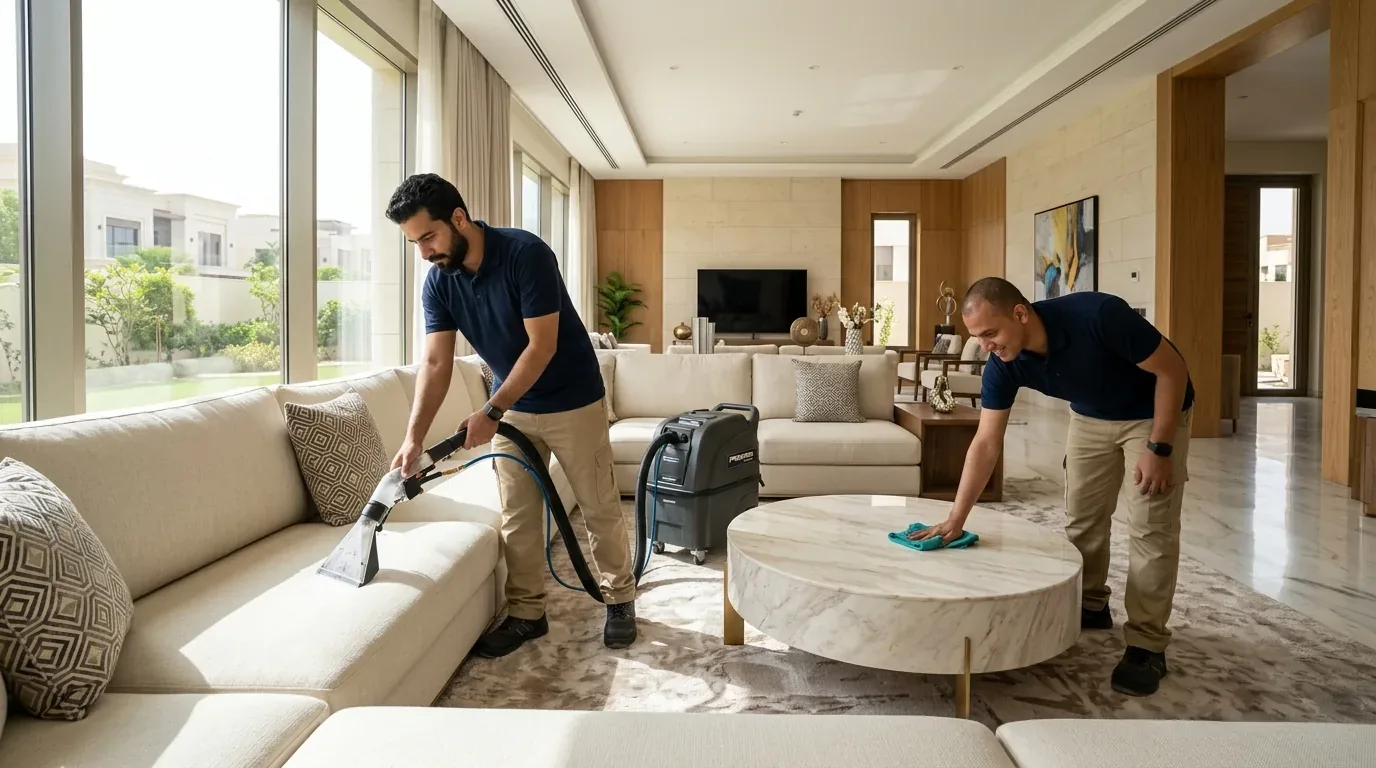
A clean, well-ventilated living room in a Jeddah home

Quick Summary

  • Soak the shower head and aerator in diluted white vinegar for a short time, then rinse.
  • Test any cleaner on a small hidden spot of polished or gold-tone finishes first.
  • Never open the water heater or touch its electrical or gas parts yourself.
  • Never mix vinegar with bleach or other cleaners.
  • Wiping and drying after a shower slows the scale returning.

Mineral deposits, not only bacteria

When water evaporates from a tap or shower head it leaves the dissolved minerals on the surface, which build up gradually into a hard white layer. The hotter the weather and the more often the fitting is used, the faster it forms, especially on surfaces that are not dried after use.

Limescale can also mix with soap and shampoo residue and form a sticky film that a dry wipe will not remove.

Where it appears

  • The holes of the shower head
  • The aerator at the end of the tap
  • The tap base and surround
  • Shower glass and basin corners
  • Sometimes the outside of the heater

Signs it is time

Clear signs are a spray that veers or weakens, a head that sprays in several directions, noise when you open the tap, or white grains when it starts. These usually call for cleaning the aerator before anything bigger.

If the weakness remains after cleaning, the cause may be the pressure source or the water line, and that is when a plumber is called.

Cleaning signs

  • A scattered or slanted spray
  • A sudden weak flow
  • White grains in the water
  • Visible scale round the holes

Soaking and removing scale

Unscrew the head if you can, by hand or with a spanner over a cloth to protect the chrome. Place it in a bowl of white vinegar diluted about half and half with water for twenty minutes to an hour, then scrub with an old toothbrush and clear the holes with a toothpick.

If it cannot be removed, fill a bag with diluted vinegar and tie it around the head with a band, leave it for the same time, then wipe and rinse with plenty of water.

Practical order

  • Remove the head or wrap it in a vinegar bag
  • Soak for a limited time
  • Scrub with a soft brush
  • Rinse and run water to clear the holes
  • Dry with a soft cloth

Finishes that dislike acid

Some finishes suffer from vinegar over time, such as gold-tone, polished brass, plated nickel and nearby natural stone. Do not extend the soak, test on a hidden spot, and read the maker's instructions.

For delicate finishes, a dedicated descaler for sensitive metals or mild soap with gentle rubbing may be better.

Cautions

  • Test on a small spot first
  • Do not leave it for hours
  • Do not use abrasive tools
  • Rinse well and dry

Removing and cleaning the aerator

Turn the water off or leave the tap barely open, then turn the aerator anticlockwise with a cloth or your fingers. Take out the small screen and washer, soak them in diluted vinegar and scrub gently before refitting in the same order.

Note the order of the parts and photograph them before dismantling, and make sure the rubber washer goes back so it does not leak.

Quick steps

  • Photograph the order before removing
  • Soak the small parts
  • Scrub with a soft brush
  • Refit snugly, not over-tight
  • Run the water and check for leaks

The tap body and surround

For the base and surfaces, wipe with a cloth dipped in diluted vinegar or a dedicated descaler, then rinse and dry. For stubborn scale, wrap a vinegar-soaked cloth round it for about half an hour, then rub gently.

After every shower or wash, wipe the tap with a dry cloth; this habit alone cuts scale formation a great deal.

Habits that reduce scale

  • Wipe the tap after use
  • Dry shower glass
  • A quick weekly clean
  • Do not let water evaporate on surfaces
Plan

What to clean and what to leave to a technician

A table showing the limits of what suits the home and what needs a specialist.

ItemHome careTechnician
Outside of the heaterWipe with a damp cloth after switching off the power—
Hot-water outlet (shower head and aerator)Soak and clean as above—
Draining the tank and removing sedimentNot advised without experienceA plumber or electrician depending on the type
Heating element and thermostatDo not touchA qualified technician
Safety valve and leaksWatch onlyA technician immediately if it leaks or makes noise
Gas heaterNever open itAlways a certified technician

What you can do safely

Switch off the power before wiping the outside and never touch it with wet hands. Watch for unusual boiling noises, water leaks or rust spots at the connections, and tell the technician at once if they appear.

If the heater is old, scheduled maintenance by a qualified technician is better than trying to clean inside it yourself.

Simple monitoring

  • Constant boiling or ticking noises
  • Leaks or damp around the connections
  • Weak or intermittent hot water
  • An unusual smell when it runs

What not to do

Do not open the heater cover or remove its parts, do not pour strong chemicals into the tank and do not disable the safety valve. These actions can cause electric shock, a gas leak or burns.

If you suspect a gas leak, do not switch the heater on; open the windows, step away and call the responsible authority.

Never

  • Open the casing
  • Put strong chemicals in the tank
  • Disable the safety valve
  • Run it if you suspect a gas leak

A short routine after showers

Wipe the walls, shower glass and tap with a squeegee or cloth for a few seconds. If scale forms quickly, make the shower head and aerator part of a fixed monthly clean.

Ventilating the bathroom after a shower helps too, because slow evaporation is what leaves the minerals on the surface.

Suggested schedule

  • After every shower: a quick wipe
  • Weekly: taps and corners
  • Monthly: soak shower head and aerator
  • Seasonally: have the heater checked by a technician

When cleaning is not enough

If weak water continues after cleaning the head and aerator, or brown colour or sand appears in the water, the cause may be the water tank or the pipes. See our guide to water-tank sediment, and you may need a plumber.

Likewise, if scale builds up widely and fast, consult a water-treatment specialist before buying devices or products.

Signs that need checking

  • Brown or sandy water
  • Continued weakness after cleaning
  • Scale covering several fixtures quickly
  • Leaks or rust in the pipes
FAQ

Common questions about humidity and mold in Jeddah

Short answers to what homeowners ask most.

Is white vinegar safe for cleaning a shower head?+

Yes for most chrome and plastic heads for a short time and diluted. Do not prolong the soak on gold-tone, brass or coated finishes, test on a small spot first and rinse well.

How long should I soak the head in vinegar?+

Usually twenty minutes to an hour depending on how heavy the scale is, then scrub with a soft brush. For delicate finishes, make it shorter and keep watching.

Why is the pressure weak after cleaning the head?+

The cause could be the aerator, the hose, a stop valve or the water pressure itself from the tank or the network. If it stays weak, consult a plumber.

Can I mix vinegar with bathroom cleaner?+

No. Never mix vinegar with bleach, ammonia or other cleaners, because mixing can release harmful fumes. Use each product separately and rinse in between.

Should I open the heater to remove deposits?+

We do not advise it. Cleaning the inside of the tank and the elements needs experience and involves electrical and gas risks, so a qualified technician should do it.

How do I stop the scale coming back so fast?+

Wipe the tap and glass after use, ventilate the bathroom and soak the head and aerator monthly. Light, regular wiping cuts the need for hard scrubbing.

Are bathrooms part of your cleaning services?+

Message us on WhatsApp describing the bathrooms, how heavy the scale is and a photo if possible, and we will tell you what can be arranged within our listed cleaning services.

When should I call a plumber?+

For leaks, rust, weakness that continues after cleaning, brown water, and any problem with an electric or gas heater.

Do your bathrooms need a thorough clean and scale removal?

Send us a description of the bathrooms, how heavy the scale is and a photo if you can, and we will reply on WhatsApp with what suits your home in Jeddah.

CallWhatsAppGet Quote