
Serving Jeddah & Makkah
Sofa Guide9 min readJeddah

Milk, Spit-Up and Child Accident Stains on Sofas: What to Do First in Jeddah

Safe first aid for the fabric, then the decision on professional cleaning

Living with young children means the sofa will sooner or later meet spilled milk, juice, spit-up and the occasional toilet-training accident. The stain is only half the problem; the smell that lingers once liquid reaches the foam is usually what families notice most.

Jeddah heat and humidity speed up the breakdown of milk and make sour odours develop faster, so the first ten minutes matter a great deal. This guide explains what to do straight away, what to avoid, and when a professional clean is cheaper than repeated home attempts.

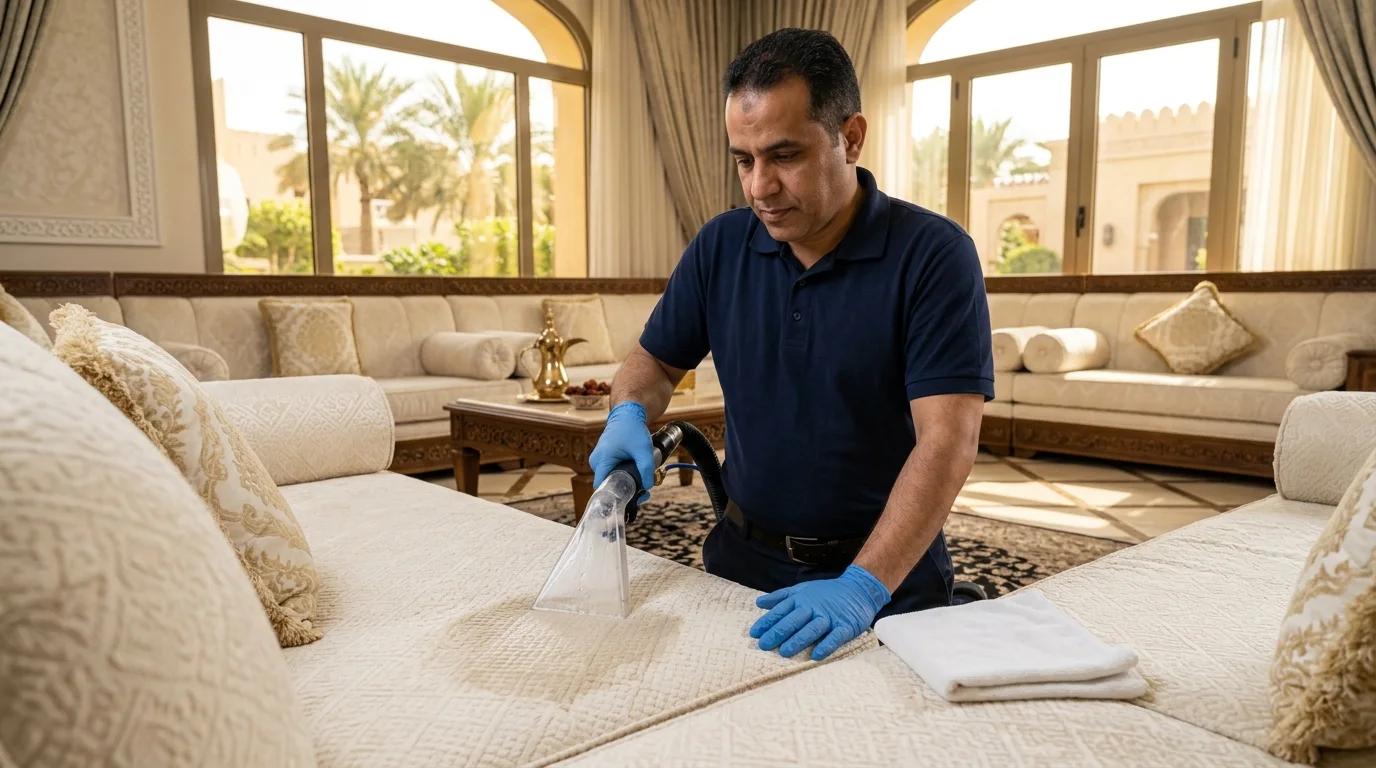
Extracting a stain from a fabric sofa after a child accident

Quick Summary

  • Blotting with pressure, not scrubbing, is the right first move
  • Milk and spit-up turn sour quickly in warm rooms
  • Liquid that reaches the foam is not fixed by surface wiping
  • Test any cleaner on a hidden spot before using it
  • Urine and deep odours need extraction, not fragrance
Quick table

Types of child accidents and how handling differs

A general table separating the common incidents. Every fabric reacts differently, so read the care label before doing anything.

Type of accidentWhy it is difficultSafe first response
Baby bottle or formula milkFats and proteins break down and turn sourBlot the excess with a clean towel, then ventilate
Infant spit-upStomach acid and partly digested milk leave a mark and odourLift solids gently, then blot the moisture
Urine accidentCan reach the foam and return as odour with humidityBlot at once with a dry cloth, no rubbing
Juice or sugary drinkSugar leaves a sticky film that attracts dustBlot, then wipe lightly with a cloth dampened in lukewarm water
Chocolate or greasy foodFat spreads and can change fabric colourScrape off solids with a soft edge, no pressure
Small scrape or blood spotProteins set with heatUse cold water only and avoid hot water
In detail

Twelve points that settle how to handle child accidents

From first aid to deciding when to bring in a specialist team, these are the ideas that make the difference on family sofas.

Causes

Why do children’s stains feel harder than others?

Milk and spit-up stains are not just colour on fabric. They are organic materials made of proteins, fats and sugars. Once dry they bond to the fibres, and while damp they feed the bacteria that create odour.

Child accidents usually happen while you are busy, so the mark is found late. The longer it sits, the harder removal becomes, which is why this guide stresses both speed and the right technique together.

The goal is not a sterile sofa. It is a clean fabric with an acceptable smell that is comfortable for the family, without colour loss or damage to the weave.

Causes

The first ten minutes: what really matters

Move the child away, then lift any solid or thick material with a spoon or clean paper towel, working from the edges toward the centre so the mark does not spread. Do not press hard or the liquid will sink into the foam.

Next, press a dry white cotton towel over the spot, lift it, and repeat with a clean section until little moisture comes out. White cloth prevents dye from transferring onto the sofa.

Avoid pouring a lot of water at this stage. Extra water widens the stain, carries contamination deeper into the cushion, and lengthens drying time in a humid city like Jeddah.

Causes

Milk: the smell is worse than the mark

Milk leaves a pale stain, but the sour smell is the real issue because fats and proteins decompose quickly in warm air. A sofa can feel dry on top while the odour stays inside the foam.

Blot the excess right away, then use a cloth lightly dampened with lukewarm water to dilute the mark from the outside inwards, and press dry. If the fabric does not tolerate water, leave it to a specialist.

Avoid strong perfumes over milk. They mask the odour for a while and then blend with it, making it heavier. The solution is removal, not covering up.

Causes

Baby spit-up and stomach acid

Spit-up combines partly digested milk with stomach acid, so it can leave a mark or affect some dyes if it stays for long. Remove solids first, then blot the liquid with a clean towel.

Then treat the area with a light wipe of lukewarm water and a very diluted drop of mild liquid soap if the fabric allows, pressing and lifting rather than rubbing. Follow with a cloth dampened with plain water to remove soap residue.

Do not use bleach or harsh products on coloured fabric. Acidity alone can weaken a dye, and a strong chemical can leave a bigger mark than the original one.

Causes

Urine accidents: from the surface to the foam

Urine reaches the foam quickly and can leave an odour that disappears in dry air and returns with humidity. That is why a visible wipe is not enough on a sofa with repeated accidents.

The fastest step is to absorb with a folded dry cloth and press with your palm several times, then ventilate and move air with a fan, without direct heat. This limits how far the liquid spreads and shortens how long it stays.

If a smell remains after drying, the liquid has gone deeper. That calls for water extraction with the right cleaner, not more spraying.

Causes

Juice and sugary drinks

Sugar leaves a sticky film that attracts dust and makes the area darker over time, even after the colour has gone. Blotting followed by a lukewarm-water wipe limits that effect.

Coloured juices such as berry or pomegranate may leave dye, so speed is vital. Do not use hot water because it can fix colour in some fibres.

If a pale halo remains around the spot after drying, it is usually a water ring. The cure is cleaning the whole panel evenly, not one small patch.

Causes

Chocolate and greasy food

Chocolate melts in Jeddah’s heat and spreads, making the mark look bigger. Let the solid part firm up slightly, then lift it with a soft plastic edge without dragging it across the fabric.

Greasy stains need a cleaner that breaks down fat, not just water, so test the product on a hidden area first. If there is no clear care label, asking for advice is wiser.

Soft fabrics like velvet react to rubbing and the pile changes. Pressing and lifting is safer than any circular motion on the weave.

Causes

Common mistakes that make things worse

Hard rubbing pushes the contaminant inward and opens the fibres, so the area looks lighter or rougher. Hot water sets proteins, and direct steam can effectively cook milk inside the fabric.

Spraying perfume or room freshener on a damp spot mixes smells rather than removing them. Covering the spot with a throw before it dries traps moisture and raises the chance of odour and mould.

Finally, using a new product without testing is a common cause of colour change. A hidden-spot test takes a minute and avoids permanent damage.

Causes

Testing a hidden spot before any product

Choose an unseen area such as the lower edge or behind the sofa, place a drop of the diluted solution and press a white cloth on it. If colour transfers or the surface feel changes, stop.

Wait until the spot is fully dry before judging, because some fabrics look fine when wet and show a halo afterwards.

The care label on the sofa (W, S or X) tells you which cleaners are allowed. If it says X, avoid liquids altogether and consult a specialist.

Causes

Good drying prevents the odour returning

After first aid, do not shut the room on a damp sofa. Move air with a fan or open windows in the drier hours of the day, and avoid direct heat because it can change the fabric’s feel.

In Jeddah, drying can lag on humid days, so check the smell and touch after a full day. Foam that still feels cool and damp inside needs more time or professional treatment.

For more on drying, see the guide on how long a sofa takes to dry after cleaning on this site.

Causes

When is professional cleaning better than repeated attempts?

If accidents repeat, a smell remains after drying, or a halo spreads, the contaminant has probably reached the foam. Professional cleaning relies on injecting water and cleaner and extracting them by suction, followed by controlled drying.

Sensitive fabrics like velvet, suede and leather also need a tailored method. Random attempts can leave permanent marks, while an initial assessment tells you what is realistic.

At Al Awael we offer sofa and majlis cleaning in Jeddah, and we prefer to receive a photo of the spot and the fabric type before promising any result.

Causes

Everyday prevention for family sofas

Encourage children to eat and drink away from the sofa where possible, and use a washable throw on the most-used seats. A throw protects the fabric and is easy to launder.

Keep a white cotton towel, a bottle of lukewarm water and a mild liquid soap nearby, because quick response solves half of the problem. A dedicated spot for changing infants away from the majlis also helps.

Also read the guide on preparing the home and choosing child-safe cleaning products so you pick items that do not harm fabric or little ones.

Causes

How we handle your request

When you message us on WhatsApp, send a photo of the spot and the care label if there is one, and tell us what happened and how long ago. That helps us choose the right method before we arrive.

We tell you what is realistic: the mark may disappear completely, it may fade, or a light halo may remain on certain fabrics. We do not promise a guaranteed result before seeing the fabric.

If the sofa is new or under a manufacturer warranty, check the warranty terms before any cleaning to make sure it does not conflict with them.

Common questions

Common questions about children’s stains on sofas

General answers; each fabric has its own sensitivity.

Should I use hot water on a milk stain?+

We do not recommend it, because heat sets proteins and can make the smell harder to remove. Lukewarm or cold water with blotting, followed by good drying, is better.

Is a quick wipe enough after a urine accident?+

A surface wipe is not enough if the liquid reached the foam, because the smell can return with humidity. Immediate blotting and ventilation are a good first step; if an odour remains, extraction is more suitable.

Should I spray freshener over the spot?+

No. Freshener mixes smells and does not remove the source, and it may leave a mark on the fabric. Removing the cause matters more than hiding the odour.

Can I use bleach on a spit-up stain?+

We do not recommend bleach on coloured or unknown fabrics because it may leave a larger mark. Test a mild product on a hidden spot or ask a specialist.

How long should I wait before sitting on the sofa after treatment?+

Wait until the area is completely dry and no longer cool and damp inside. The time varies with fabric and weather, and we do not promise a fixed number of hours.

Will every stain disappear?+

Not always. Some stains clear completely, some fade and a light halo can remain depending on fabric and how long the stain sat. We give a realistic expectation after seeing the fabric.

What should I send before booking?+

Send a photo of the spot and the fabric, the care label if available, the type of accident and when it happened. This helps us suggest the right method.

Do you use child-friendly products?+

We choose products suited to the fabric and the home, and we recommend ventilating the room and keeping children away during the work until it dries. Ask us about the product before we start if anyone has sensitivities.

A child accident on the sofa and want advice before cleaning?

Send a photo of the spot and the fabric type and we will tell you the right steps and what is realistically possible.

CallWhatsAppGet Quote