
Serving Jeddah & Makkah
Practical guide9 min readJeddah

A Daily Cleaning Routine for Small Shops in Jeddah: From the Shopfront to the Stockroom

A customer judges a shop within seconds of the door: the glass, the floor, the smell and the shelves, and a small daily routine affects all of them.

Small shops in Jeddah, from groceries and salons to perfume, clothes, gift and phone shops, face street dust, constant foot traffic, heat and humidity, so the front and the floors get dirty quickly and a shopkeeper working alone struggles to balance selling with cleaning.

This guide gives a short practical routine for each stage: before opening, during the day and after closing, then a weekly and monthly schedule, with detail on the frontage, floor, shelves, checkout, toilet and stockroom, and common mistakes that give a poor impression for no reason.

It is general small-business cleaning guidance. Health regulations and licences for each activity, such as food or salons, have their own authorities and conditions, and this guide does not replace them.

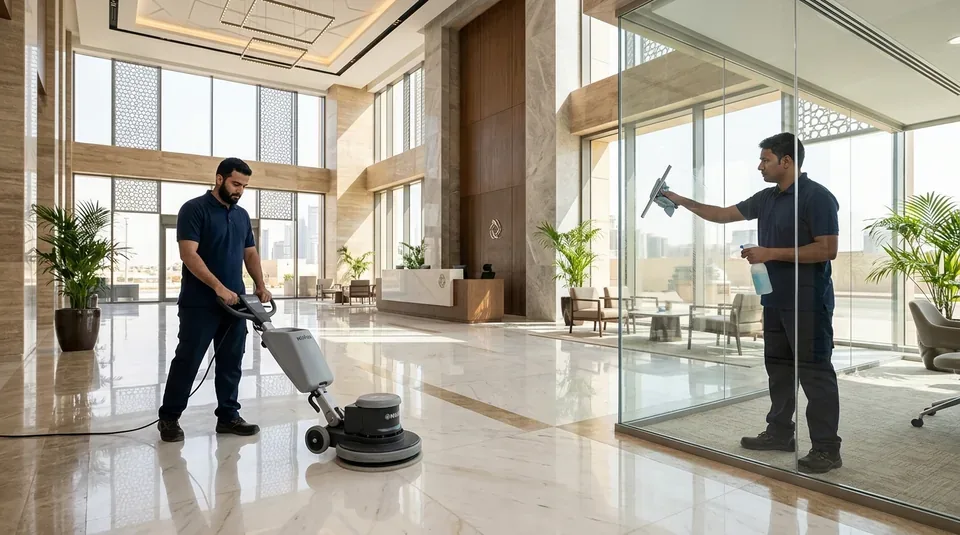
A cleaning team working inside an office in Jeddah

Quick Summary

  • Split cleaning into before opening, during the day and after closing, with short defined tasks.
  • Start with the frontage, door and the floor nearest it, because the customer sees them first.
  • Wipe payment surfaces, handles and screens daily with a suitable cloth.
  • Organise the stockroom so it is easy to sweep and has fewer insects and less dust.
  • Keep a simple sheet that whoever does each task signs.

The first-seconds impression

The customer forms an impression at the door: is the glass clear or covered in prints, is the floor shiny or dusty, does it smell acceptable or damp. That impression decides whether they enter, stay and come back, and they rarely tell you the reason if they leave.

In small shops, where the distance between door and goods is short, any dirt shows up more clearly than in large stores.

What customers notice first

  • The shopfront glass and door
  • The entrance floor
  • The smell
  • How tidy and clean the shelves are
  • The checkout area

Challenges of a small shop in Jeddah

Street dust, frequent opening of the door, summer humidity and the heat of floors near the glass frontage all multiply the effort. In shops that display goods outside, pavements and external shelves get dirty quickly.

If the owner is both seller and cleaner, they need a short, organised routine that does not eat into selling time.

Causes of quick dirt

  • Street dust and traffic fumes
  • Constant customer movement
  • Summer humidity
  • Goods displayed outside
Plan

The time and the short tasks

A brief table the owner or an assistant can carry out in minutes.

WhenTaskApprox. time
Before openingWipe the glass and door, sweep the entrance and ventilate10–15 minutes
During the dayWipe the checkout area and handles and empty the bin when full2–3 minutes every two hours
Before closingSweep and mop the floor and tidy the front shelves15–20 minutes
WeeklyClean shelves, dust and clean the toilet30–45 minutes
MonthlyClean the stockroom, air conditioner, lighting and floor drainOne to two hours
SeasonallyDeep-clean floors, glass and ceilingsDepends on shop size

Shopfront glass and door

Wipe the glass inside and out with glass cleaner and a squeegee; streaks appear when you use the wrong cloth or work in direct sun. It is best in early morning or evening, and fingerprints on the door and handle should be removed several times a day.

If the front is exposed to street dust, brush off the coarse dust before wiping so it does not scratch the glass.

Glass tips

  • Work out of direct sun
  • Wipe the door and handle every two hours
  • Remove old stickers
  • Clean the frame and edges

The entrance floor

Put a mat at the door to catch dust and shake it out daily. Sweep before you mop, use little water and a cleaner suited to the floor type, and dry it quickly to avoid slips and keep customers' shoes clean.

If the entrance is rough tile or marble, ask about the right cleaner for it so it does not lose its shine.

For the floor

  • A mat at the door
  • Sweep before mopping
  • A cleaner that suits the floor
  • Dry it at once

Shelves and goods

Dust the shelves weekly with a microfibre cloth before a layer builds up, lift the goods to clean underneath and get rid of empty cartons that collect dust and insects. In food shops keep food away from cleaning products and keep display surfaces clean.

Watch the expiry dates and do not leave expired items on the shelf, as they become a source of smell.

Shelves

  • Weekly dusting
  • Lift goods when cleaning
  • Remove empty cartons
  • Keep cleaners away from food

Checkout area and toilet

The checkout is the most-touched area: wipe the screen, payment device, pen and counter with a soft cloth slightly dampened with a suitable cleaner, and never spray liquid onto electronics. A toilet, if there is one, should be cleaned daily with ventilation, a suitable cleaner and soap provided.

Avoid strong fragrances inside the shop because they can bother customers; rely on ventilation and cleanliness instead of heavy air freshener.

Touch points

  • Wipe screens and devices with a soft cloth
  • Soap and paper in the toilet
  • Empty the bins
  • Ventilate rather than use heavy fragrance

Organising to make cleaning easier

Raise boxes off the floor on shelves or pallets, and leave a gap between the wall and the goods to allow sweeping and ventilation. Get rid of old cartons and bags and check corners for signs of insects or damp.

If the stockroom holds food, close bags and tins and do not leave open leftovers.

Stockroom order

  • Boxes lifted off the floor
  • A gap for airflow and sweeping
  • Remove old cartons
  • Check corners monthly

Lighting, air conditioning and ventilation

Clean the air-conditioner filter monthly and dust the lighting, since dirty lights make the shop look duller and trap heat. Open the back door or a window slightly where you can to refresh the air.

If you notice a damp smell or a leak, call an air-conditioning or plumbing technician before it worsens and affects the stock.

Quick maintenance

  • Filter monthly
  • Dust the lights
  • A short daily airing
  • Check for leaks

Repeated mistakes

Common mistakes include leaving all cleaning until the end of the day, using a dirty mop, mopping while customers move about with no warning sign, and neglecting the corners of the front and the back door. Storing cleaners next to food or sensitive goods is another.

Leaving dust on displayed goods also suggests they are old, even when they are new.

Avoid

  • Leaving cleaning until the end of the day
  • A dirty mop
  • A wet floor with no sign
  • Cleaners beside food

How to organise the routine

Write a short list posted in the shop with daily and weekly tasks, decide who does each and have them sign it. Give tools and cleaners a fixed place and keep gloves, bags and spare cloths on hand.

In larger or multiple shops you can agree an outside team for a regular deep clean, and you can message us with a description of the shop and its size so we can tell you what suits within our listed services.

Simple organisation

  • A posted list with sign-off
  • A fixed place for tools
  • Spare gloves and bags
  • A seasonal deep clean
FAQ

Common questions about humidity and mold in Jeddah

Short answers to what homeowners ask most.

How long does a small shop's daily routine take?+

About fifteen to twenty minutes before opening, a few minutes during the day and around twenty minutes before closing, depending on the size and the type of business.

How do I clean shopfront glass without streaks?+

Use glass cleaner and a squeegee or clean microfibre cloth, avoid cleaning in direct sun and brush off coarse dust first so it does not scratch the glass.

Which surfaces need the most frequent wiping?+

The checkout area, handles, device screens, counters and any seating, because they are touched many times a day.

Does the stockroom need cleaning as often as the shop?+

Not daily, but at least monthly, with boxes organised and lifted off the floor and corners checked for damp.

How do I deal with a damp smell in the shop?+

Ventilate daily, clean the air-conditioner filter, check for leaks, avoid storing damp cartons and do not mask the smell with heavy fragrances.

Can I use an outside cleaning team?+

Yes, for a regular deep clean or after fit-out work. Message us with a description of the shop, its size and photos of the condition and we will tell you what can be arranged within our listed services.

What is the biggest mistake small shops make?+

Leaving dust and fingerprints on the shopfront, handles and entrance floor, which are what the customer sees first and which give a quick negative impression.

Does this guide replace health requirements?+

No. Health requirements and licences for each activity have their own authorities; this guide is for general cleaning organisation only.

Does your shop need a thorough clean or a regular schedule?

Send us a description of the shop, its size and photos of the condition, and we will reply on WhatsApp with what suits your business in Jeddah.

CallWhatsAppGet Quote