
Serving Jeddah & Makkah
Diagnostic Fly Management in Makkah — House Flies, Drain Moth Flies & Fruit FliesMakkah

Fly Control in Makkah for Homes, Villas, Kitchens & Courtyards

Properties across Makkah—ranging from family villas and multi-story apartment buildings to high-turnover hospitality residences—face intense fly pressure driven by warm temperatures, enclosed service lightwells, active waste corridors, and heavily used drainage systems. At Al Awael, we provide specialized fly management in Makkah that combines deep drain and waste-zone source remediation with targeted exterior resting-surface treatments and doorway exclusion protocols.

Inspection & Safety Reassurance:We never spray chemical pesticides over food preparation counters or exposed cookware; our technicians target underlying larval breeding substrates, exterior resting zones, and entry points using SFDA-registered public-health products.
Complete field coverage across Makkah districts
Accurate species diagnosis: House, Drain & Fruit Flies
Drain biofilm remediation & exterior waste-zone control
SFDA-registered public-health formulations & food-safe protocols
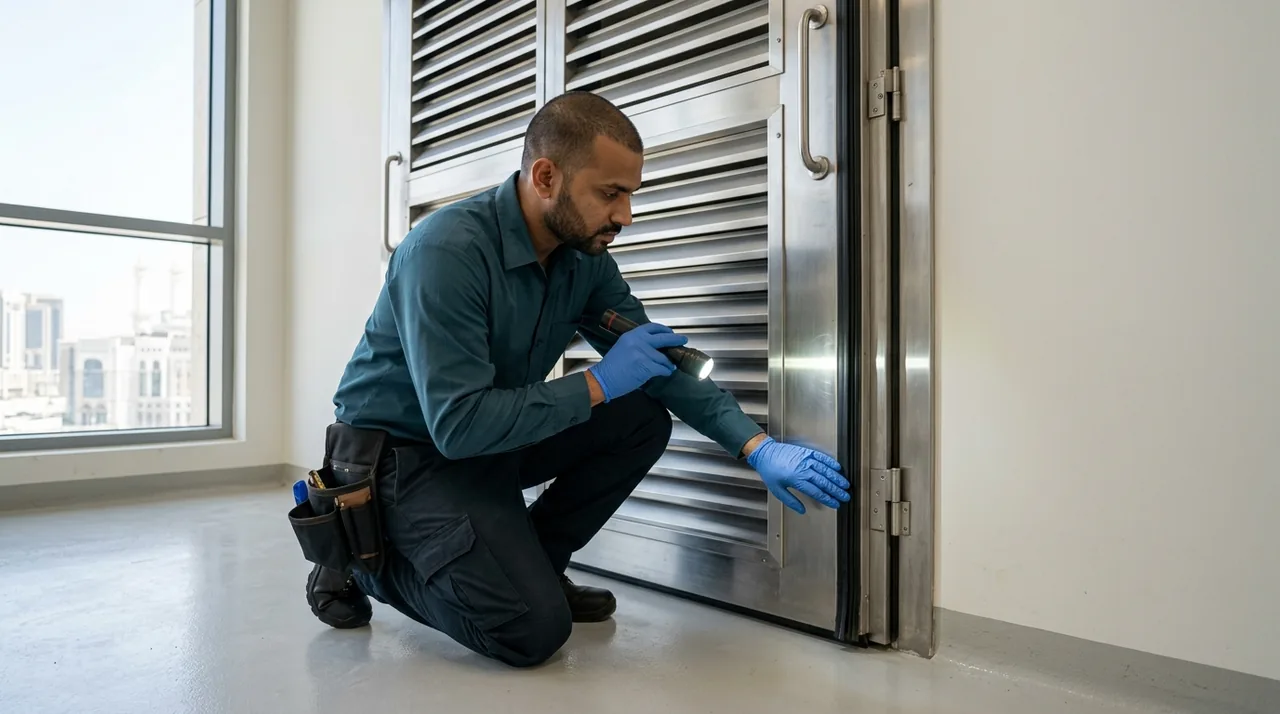
Specialist conducting sanitation and entry-point inspection for fly control in Makkah

Diagnostic inspection of floor drains, kitchen perimeters, and exterior entryways for fly control in Makkah.

Real-World Problem Analysis

Why Do Flies Keep Returning in Makkah Kitchens, Bathrooms & Courtyards After Spraying?

Flies are among the most disruptive and unhygienic pests affecting residential villas, apartments, and hospitality spaces in Makkah. Beyond the constant nuisance of insects buzzing around dining tables and guest seating areas, flies pose a direct sanitation concern because they move repeatedly between decaying organic waste, floor drains, and household surfaces. Many homeowners spray aerosol insecticides daily or pour bleach down bathroom drains, only to watch a new wave of flies appear the very next morning.

The primary reason DIY sprays fail is that "flies" inside a building usually belong to three biologically distinct groups with completely different breeding habitats: (1) Common House Flies (Musca domestica), which breed in outdoor garbage bins, pet waste, and garden compost before flying indoors through open doors; (2) Drain Moth Flies (Psychodidae), which breed inside the slimy organic biofilm coating the interior walls of bathroom and kitchen drain pipes; and (3) Fermenting Fruit Flies (Drosophila species), which develop in microscopic sugary spills under appliances, sink overflows, and overripe produce.

When a treatment merely knocks down flying adults in the air without diagnosing the species and neutralizing the larval breeding substrate, protected maggots inside the drain pipe or waste bin continue emerging by the dozens every 24 hours. At Al Awael, our fly control service in Makkah starts with precise entomological identification so we can dismantle the exact breeding cycle at its source.

Guest bathrooms, master showers, laundry rooms & kitchen floor traps01

Tiny Moth-Like Flies Resting on Bathroom Walls and Shower Tiles (Drain Flies)

Small, fuzzy, dark-gray insects with heart-shaped wings appear motionless on ceramic bathroom walls every morning. They hop or fly short distances when disturbed and keep emerging from floor drain grates regardless of daily mopping.

Courtyards, building entrances & waste corridors in Makkah02

House Flies Swarming Outdoor Kitchens, Patios, and Main Entrances

Large, fast-flying house flies congregate around exterior kitchen doors, barbecue patios, and courtyard seating areas, darting indoors into dining rooms and majlis spaces every time a door is opened.

Indoor kitchens, pantries, office breakrooms & trash cabinets03

Persistent Clouds of Tiny Fruit Flies Around Kitchen Sinks and Coffee Stations

Tiny tan-to-brown flies with red eyes hover persistently around fruit bowls, sink strainers, dishcloths, and under refrigerators where hidden fermenting liquid films sustain rapid multi-generational breeding.

Field Observation & Identification Guide

Field Diagnostic Guide: Distinguishing House Flies, Drain Flies & Fruit Flies

Effective fly control depends entirely on knowing which species is active on your property. A protocol designed for outdoor house flies will not resolve an indoor bathroom drain fly infestation. Review our field indicators and diagnostic comparison table below:

Single Wing Pair + Large Compound Eyes (2–7 mm)

Clinical anatomical reference schematic for preliminary visual distinction

Diptera — House Flies, Drain Flies & Fruit Flies
Typical Size Range:
2–4 mm (Drain/Fruit Flies) | 6–7 mm (Adult House Fly)
Movement & Activity Pattern:
House flies hover around entryways and food; drain flies make short hopping flights near bathroom tiles.
Anatomical Profile: Compact thorax, large compound eyes, single pair of functional wings, and sponging mouthparts.
Key Distinguishing Sign: Identifying house fly vs. fuzzy moth-like drain fly pinpoints whether the source is exterior waste or plumbing biofilm.
Important Note on Visual Indicators & Confirmation:Educational Disclaimer: This guide is provided to help property owners recognize common fly behaviors and breeding zones; our field technician performs a comprehensive on-site visual inspection to confirm the exact sources and establish a tailored treatment plan.
Internal Plumbing Biofilm Indicator

Fuzzy, Heart-Shaped Insects on Bathroom Walls (Drain Moth Flies)

Small (2–4 mm) grayish-brown insects with broad, hairy wings held roof-like over the body, creating a distinct heart outline at rest. They hover weakly near floor drains, sink overflows, and damp tile grouting.

Inspection Note: Pouring liquid bleach down the center of the pipe rarely removes the side-wall gelatinous slime where their larvae live.
Exterior Sanitation & Exclusion Pressure Indicator

Fast-Flying Dark Flies Buzzing Around Entrances and Dining Areas (House Flies)

Medium-to-large (6–8 mm) gray-black flies with four dark longitudinal stripes on the thorax. They fly aggressively during daylight hours, attracted by cooking aromas, outdoor waste bins, and organic garden fertilizers.

Inspection Note: Requires combining exterior waste-corridor treatment and targeted baits with tight doorway and window screening.
Fermenting Organic Residue Indicator

Tiny Hovering Gnats Around Produce, Sinks & Trash Bins (Fruit Flies)

Minute (2–3 mm) yellowish-brown flies—often with bright red eyes—that hover slowly around ripe bananas, tomatoes, onions, wet sponges, recycling bins, and under kitchen appliances.

Inspection Note: A single forgotten potato or a thin film of spilled juice under a refrigerator can generate hundreds of adults within days.
Nocturnal Fly Resting Zone Indicator

Clusters of Tiny Dark Specks on Upper Walls, Light Fixtures & Window Frames

Pinhead-sized dark spots (fly regurgitation and fecal specks) concentrated along upper wall corners, pendant light cords, and window screen frames where house flies congregate to rest overnight.

Inspection Note: Helps technicians pinpoint exact structural resting zones for targeted residual or bait application away from living surfaces.

Side-by-Side Comparison: House Flies vs. Bathroom Drain Flies & Kitchen Fruit Flies

Comparison CriterionCommon House Fly (Musca domestica)Drain Moth Fly (Psychodidae) & Fruit Fly (Drosophila)
Body Size & Visual ProfileMedium-large (6–8 mm), dull gray body with four dark thoracic stripes and prominent compound eyes.Very small (2–4 mm); drain flies are fuzzy and moth-like, whereas fruit flies are tan/amber with red eyes.
Primary Activity Zones in PropertyCourtyards, exterior doorways, waste rooms, outdoor kitchens, and indoor dining/living rooms.Drain flies stay inside bathrooms, showers, and utility rooms; fruit flies cluster around kitchen sinks and pantries.
Larval Breeding Substrate (Root Source)Exposed household garbage, leaking waste bins, pet feces, and uncomposted organic garden manure.Gelatinous organic slime inside drain pipes/traps (drain flies) or fermenting sugars/produce/wet mops (fruit flies).
Flight Pattern & MovementStrong, rapid, long-distance flight capable of traveling hundreds of meters from exterior waste sites.Drain flies make short, jerky hopping flights along walls; fruit flies hover slowly in tight circles over food/drains.
Core Remediation StrategyExterior resting-surface residuals + targeted fly baits + waste-bin sanitation + doorway/window exclusion.Mechanical/enzymatic drain biofilm removal + insect growth regulators (IGRs) + elimination of hidden fermentation.
Root Causes & Environmental Drivers

Why Fly Infestations Develop in Makkah Properties

Chronic fly activity is always linked to specific moisture, organic residue, or structural entry vulnerabilities. Based on our field inspections across Jeddah and Makkah, four primary factors drive indoor and outdoor fly outbreaks:

01

Gelatinous Organic Biofilm Inside Floor Drains and Plumbing Traps

Over months of daily use, soap scum, cooking grease, hair, and organic sediment coat the vertical interior walls of floor drain pipes above the water trapline. This damp, gelatinous biofilm shields drain fly eggs and larvae from ordinary water flushing and surface disinfectants.

Common Vulnerable Spots: Bathroom shower drains, rarely used guest toilet floor traps, kitchen floor drains, and sink overflow channels.
02

Unsealed Waste Bins and Organic Leachate in Service Setbacks

When garbage bags tear or liquid food waste accumulates at the bottom of outdoor plastic wheelie bins and service corridors, female house flies lay batches of over 100 eggs at a time. In warm Saudi temperatures, these eggs hatch into larvae within 12 to 24 hours.

Common Vulnerable Spots: Side setbacks, exterior garbage enclosures, near back kitchen doors, and municipal bin collection points.
03

Hidden Fermenting Spills and Moisture Under Kitchen Equipment

Microscopic films of spilled fruit juice, milk, syrup, or food debris trapped beneath refrigerators, dishwashers, stove bases, and inside sink strainers—as well as sour wet mop heads—create ideal yeast fermentation sites for fruit flies.

Common Vulnerable Spots: Under kitchen appliances, bottom of indoor trash cans, vegetable storage baskets, and wet utility closets.
04

Unscreened Entryways and Raw Organic Garden Fertilizers

Propping open kitchen or courtyard doors without secondary mesh screens, torn window screens, and applying untreated organic manure to villa flowerbeds attract heavy populations of exterior house flies right up to the building envelope.

Common Vulnerable Spots: Garden flowerbeds, outdoor pet/bird enclosures, patio sliding doors, and unscreened exhaust vents.
Diagnostic-First Inspection Protocol

Our 5-Step Diagnostic Inspection Workflow Before Fly Treatment

Because treating drain flies inside bathroom plumbing requires a completely different approach from controlling house flies around a villa courtyard, every Al Awael visit begins with a rigorous five-step diagnostic audit:

01

Entomological Species Identification

Our technician inspects active insects and resting traces on-site to determine whether you are dealing with house flies, bathroom drain moth flies, kitchen fruit flies, soil fungus gnats, or a multi-species infestation.

Client Value:Ensures treatment targets the exact biological source rather than wasting time spraying unaffected rooms.
02

Internal Drain, Trap & Appliance Biofilm Audit

We open floor drain grates in bathrooms, laundry rooms, and kitchens, and inspect sink overflows, garbage disposals, and spaces beneath refrigerators and ovens using high-lumen flashlights to locate organic slime and larval stages.

Client Value:Uncovers hidden indoor breeding pockets inside pipes and under cabinets that surface cleaning misses.
03

Exterior Waste Corridor, Setback & Garden Inspection

We examine outdoor garbage bins, service setbacks, drainage manholes, animal enclosures, and fertilized garden beds to identify where house flies are breeding or congregating outside the building.

Client Value:Stops exterior fly populations at the source before they can pressure your doorways and windows.
04

Building Envelope Exclusion & Airflow Evaluation

We check window mesh screens, door sweeps, sliding patio door alignments, exhaust fan louvers, and exterior lighting positions that may be drawing flying insects toward open entrances.

Client Value:Provides clear, actionable steps to seal entry gaps against flies arriving from neighboring areas.
05

Food-Safe Action Plan & Pre-Treatment Briefing

Before applying any product, we walk you through the exact treatment zones, food-protection precautions, drain care steps, and post-service ventilation intervals.

Client Value:Guarantees a safe, predictable, and transparent service around your kitchen and family spaces.
Case-Driven Treatment Selection

Professional Fly Control Methods & Integrated Remediation Protocol

At Al Awael, our Integrated Fly Management (IFM) program strictly avoids indiscriminate chemical spraying over kitchen countertops or dining tables. Instead, we combine targeted larval habitat disruption, precision baiting, exterior resting-zone residuals, and non-chemical trapping tailored to the specific fly species identified during inspection.

Depending on your property’s needs, our technicians deploy the appropriate combination of the following four technical interventions:

Factors Determining the Site Treatment Plan:

  • Identified fly species (exterior house flies vs. plumbing drain flies vs. kitchen fermentation fruit flies).
  • Proximity of active fly breeding or resting zones to food preparation, storage, and dining areas.
  • Condition of floor drains, plumbing traps, and organic biofilm accumulation across bathrooms and kitchens.
  • Size and layout of exterior courtyards, waste storage rooms, and landscaped garden perimeters.
  • Presence of young children, pets, or commercial food-handling requirements necessitating enclosed bait stations or glue traps.
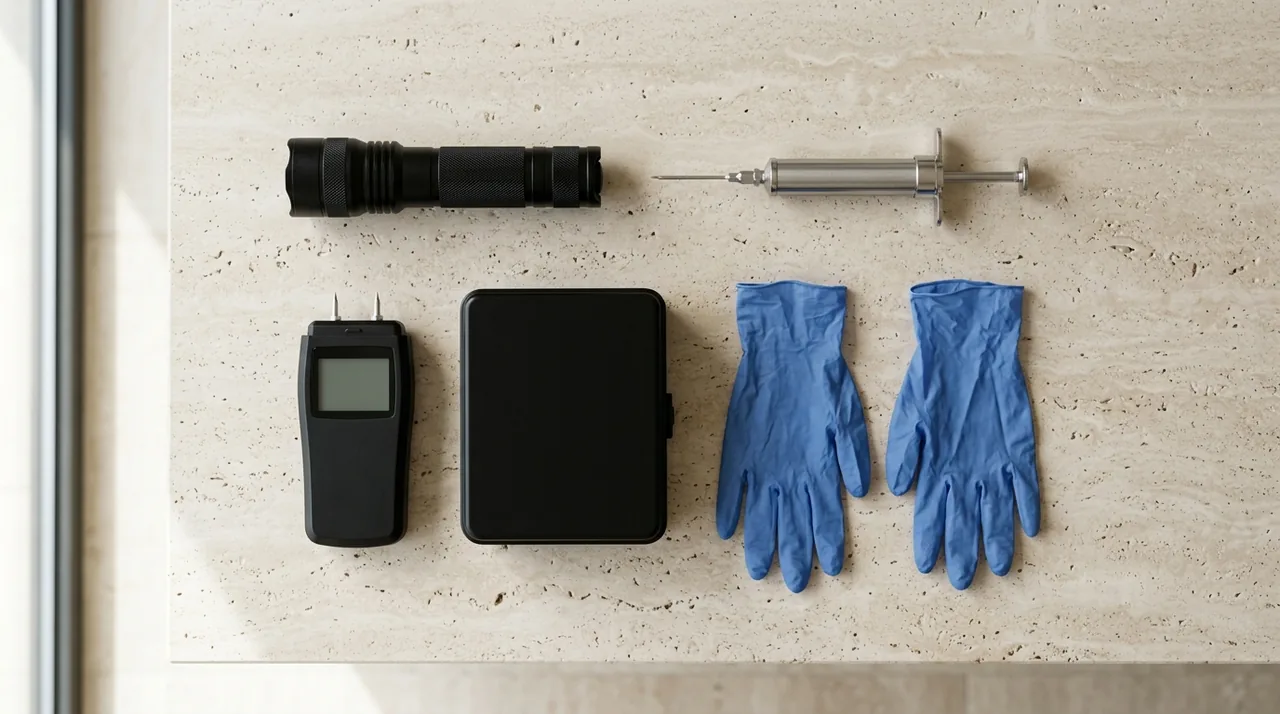
Diagnostic inspection kit and targeted application tools for professional fly control

Specialized drain inspection lights, precision sprayers, and targeted baiting tools ensure accurate, food-safe fly remediation.

Drain Biofilm Remediation & Targeted Larval Growth Regulation (IGRs)

Bathroom drain moth flies, kitchen floor drains, sink overflows, and damp utility traps

To eliminate drain and fruit flies breeding in plumbing, we target the gelatinous organic film coating interior drain walls and apply specialized insect growth regulators (IGRs) and drain treatments directly into affected traps, preventing larvae from maturing into flying adults.

Safety Consideration: Confined directly within drain lines and floor traps with zero airborne mist in occupied bathrooms or kitchens.

Targeted Phagostimulant Fly Bait Applications

Exterior waste corridors, side setbacks, carports, and outdoor service perimeters for house flies

We apply SFDA-registered granular or paint-on fly baits formulated with specific attractants in secure stations or high out-of-reach resting spots around exterior garbage zones and service entrances, rapidly reducing adult house fly numbers.

Safety Consideration: Strictly placed outside food preparation zones and out of reach of children and domestic pets.

Precision Residual Treatment on Exterior Fly Resting Surfaces

Exterior doorway perimeters, sunny morning walls, pergola eaves, and garbage room walls

House flies spend a large portion of the day resting on walls, eaves, and door frames near entrances and waste bins. Applying a calibrated low-pressure residual barrier to these specific exterior surfaces eliminates flies before they slip indoors.

Safety Consideration: Applied selectively to structural resting surfaces away from dining tables, grills, and exposed food.

Non-Chemical Glue Traps, UV Monitoring & Physical Exclusion Guidance

Indoor kitchens, pantries, dining foyers, and commercial hospitality entrances

Inside sensitive kitchen and indoor areas, we utilize non-toxic sticky traps and advise on proper placement of shatterproof glue-board UV light traps (away from food prep counters and exterior glass visibility), paired with mesh screen and door-sweep sealing.

Safety Consideration: Provides continuous 24/7 chemical-free capture and monitoring suitable for food-adjacent environments.
Clear Service Scope Distinction

Detailed Service Scope: The 5 Phases of Our Fly Control Visit

To give you complete clarity on what to expect, every Al Awael fly control appointment is structured around five transparent operational phases:

1. Pre-Service Assessment

Included in Standard Visit

Reviewing where flies are observed (bathrooms, indoor kitchen, outdoor patio, majlis), visual characteristics of the insects, and household waste or drainage patterns.

Scope Note: Allows our technician to prepare the right combination of drain treatments, exterior baits, and traps.

2. On-Site Inspection

Included in Standard Visit

Inspecting bathroom and kitchen floor drains, sink overflows, appliance undersides, indoor trash cabinets, exterior waste bins, side setbacks, garden beds, and window/door screens.

Scope Note: Covers all accessible interior and exterior zones within your property boundary.

3. Targeted Treatment

Included in Standard Visit

Executing species-specific control: drain trap treatment and larval growth regulation for drain/fruit flies, plus targeted exterior baits and residual resting-zone treatments for house flies.

Scope Note: We never spray chemical pesticides onto countertops, dishes, or exposed food items.

4. Follow-up Review

Per Agreed Service Plan

Monitoring population decline after larval cycle disruption and assessing whether high-pressure sites (such as large villas or commercial kitchens) require scheduled follow-up or ongoing maintenance.

Scope Note: Follow-up terms or periodic service schedules are clearly outlined in your quotation before work starts.

5. Preventive Guidance

Included in Standard Visit

Delivering a clear, site-specific sanitation and exclusion checklist detailing which drains require periodic mechanical brushing, how to position waste bins, and where to seal doorway or screen gaps.

Scope Note: Sub-slab plumbing repairs, broken tile grouting, or installing new hinged screen doors are structural tasks handled by plumbing/maintenance contractors.

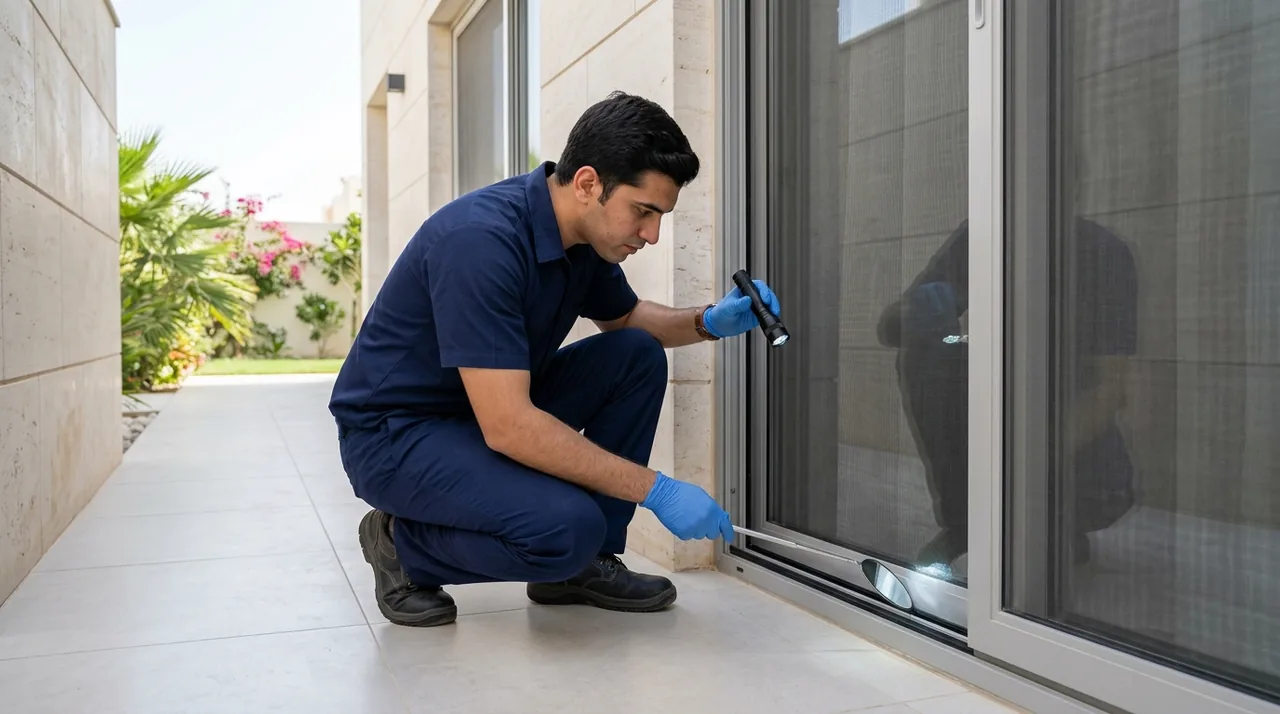
Inspection and targeted fly control treatment around entryways and drains in Makkah
How Al Awael connects species identification, internal biofilm sanitation, exterior baiting, and physical entry barriers

4-Stage Diagnostic Fly Remediation & Exclusion Matrix

Stage 01 — Species Diagnosis

Identifying the Exact Fly Group

  • •House Flies (6–8 mm): Fast-flying outdoor/indoor intruders drawn to garbage and cooking odors.
  • •Drain Moth Flies (2–4 mm): Fuzzy, heart-winged insects resting on bathroom and shower walls.
  • •Fruit Flies (2–3 mm): Tiny red-eyed hoverers around sinks, fruit bowls, and under appliances.
  • •Outcome: Directs treatment to the true breeding source instead of blind air spraying.
Stage 02 — Indoor Plumbing & Kitchens

Eliminating Drain & Fermentation Sources

  • •Breaking down gelatinous organic biofilm inside bathroom and kitchen floor drain pipes.
  • •Treating affected traps with targeted insect growth regulators (IGRs) to halt larval emergence.
  • •Cleaning sink overflows, strainer baskets, and fermenting liquid films beneath refrigerators.
  • •Outcome: Stops internal breeding of drain flies and fruit flies inside the home.
Stage 03 — Exterior Perimeters

Controlling Waste Zones & Resting Surfaces

  • •Sealing outdoor garbage bags inside tight-lidded bins and sanitizing waste-corridor floors.
  • •Applying SFDA-registered fly baits in elevated or enclosed stations in service setbacks.
  • •Treating sunny morning walls, pergola eaves, and doorway frames with residual barriers.
  • •Outcome: Rapidly suppresses adult house fly populations outside the building.
Stage 04 — Physical Exclusion

Sealing Entries & Non-Chemical Monitoring

  • •Repairing torn window mesh screens and installing rubber sweeps under courtyard doors.
  • •Adding self-closing screen doors or air curtains on high-traffic kitchen entrances.
  • •Positioning glue-board UV light traps in entry corridors away from open food prep.
  • •Outcome: Protects indoor dining and living spaces without airborne chemical residues.

Sustainable fly control requires matching the intervention directly to the specific fly species and its hidden larval breeding substrate.

Specialized Technical Reference

Comprehensive Technical Guide: Fly Species Biology, Drain Biofilm Sanitation & Integrated Exclusion

To help homeowners and facility managers in Jeddah and Makkah achieve lasting freedom from flies, our technical team has compiled this detailed reference covering the four pillars of professional fly control:

التفريق التشخيصي الحاسم بين الذباب المنزلي، ذباب الصرف في الحمامات، وذباب الفاكهة في المطابخ

Differentiating House Flies, Drain Moth Flies, and Fruit Flies

The single biggest mistake in residential fly control is treating every flying insect as if it flew in from the street. In urban entomology, the three primary fly groups encountered inside Saudi homes—house flies, drain moth flies, and fermenting fruit flies—occupy completely different ecological niches. The common house fly (Musca domestica) is a robust, strong-flying insect that breeds primarily outdoors in decaying garbage, animal waste, or damp organic compost, entering homes through open doors and unscreened windows in search of food and cool air.

By contrast, the small dark insects frequently seen resting motionless on bathroom ceramic tiles—commonly called bathroom flies or drain moth flies (Psychodidae)—rarely come from outdoors. Instead, they breed right inside the building’s own plumbing system. Female drain flies lay their eggs in the gelatinous organic film lining the interior walls of shower drains, floor traps, and sink overflows. Their larvae feed on this slimy layer, and newly emerged adults crawl up through the drain grate to rest on nearby walls.

The third group, fermenting fruit flies (Drosophila species), are tiny tan insects (typically with red eyes) that specialize in yeast and sugar fermentation. While overripe fruit on a counter can introduce them, persistent indoor infestations usually trace back to hidden fermenting films: spilled juice beneath a refrigerator, sour wet mop heads in a utility closet, a rotting onion in the back of a pantry, or organic buildup inside a kitchen sink drain.

  • House Flies (6–8 mm): Active during daylight around patios, kitchens, and dining rooms; controlled via exterior sanitation, baits, residuals, and door exclusion.
  • Drain Moth Flies (2–4 mm): Fuzzy heart-shaped wings, weak hopping flight on bathroom walls; controlled strictly by removing internal drain pipe biofilm.
  • Fruit Flies (2–3 mm): Hover slowly around ripe produce, trash bins, coffee stations, and kitchen sinks; controlled by eliminating fermenting spills and residues.
  • Fungus Gnats (1.5–3 mm): Dark delicate gnats hovering around overwatered indoor houseplants—often mistaken for fruit flies or drain flies.
  • Clear Cup Diagnostic Test: Placing an inverted clear plastic cup coated lightly with petroleum jelly over a suspect floor drain overnight confirms whether flies are emerging from that specific pipe.
معالجة الطبقة العضوية داخل الصفايات ومجاري الأحواض ومناطق تجميع النفايات

Eliminating Organic Biofilm Inside Floor Drains, Sink Overflows & Garbage Corridors

Homeowners dealing with bathroom drain flies often express frustration: "We poured gallons of boiling water, bleach, and disinfectant down the bathroom floor drain, yet new flies appear on the tiles every morning!" The scientific explanation lies in the structure of organic drain biofilm. Over time, soap residue, body oils, cooking grease, and organic sediment adhere to the vertical interior walls of the drain pipe above the standing water line of the U-trap, forming a tough, water-resistant gelatinous matrix.

When liquid bleach or hot water is poured down the drain, it rushes straight down the center of the pipe and into the sewer line within seconds—never stripping away the sticky biofilm clinging to the upper pipe walls. Protected inside this slime, drain fly larvae breathe through specialized siphon tubes and continue pupating undisturbed. True eradication requires physically and enzymatically breaking down that side-wall biofilm with a stiff cylindrical drain brush and specialized bio-enzymatic cleaners, followed by applying an insect growth regulator (IGR) to halt larval development.

The exact same principle applies to hidden kitchen and exterior hotspots: the narrow overflow slot near the top of bathroom and kitchen sinks, the rubber gasket around garbage disposals, and the concrete floor joints inside outdoor garbage enclosures where liquid waste (leachate) seeps into porous grout. Removing the organic breeding matrix is what turns temporary knockdown into permanent resolution.

  • Remove floor drain grates and scrub the vertical interior walls of the riser pipe using a stiff long-handled drain brush and degreasing/enzymatic cleaner.
  • Apply SFDA-registered insect growth regulators (IGRs) into cleaned floor traps to prevent any remaining larvae from developing into adult flies.
  • Flush and brush out the upper overflow slots on bathroom basins and kitchen sinks where dark organic slime accumulates out of sight.
  • Wash and sanitize the interior bottoms of plastic wheelie bins and outdoor waste-room floors to eliminate liquid food leachate.
  • Check for cracked tile grout or loose mortar around floor drain collars where organic water can seep into the sand bed beneath the bathroom floor.
الحواجز الفيزيائية، شبك الحماية، ومصائد الرصد الضوئية في المداخل بعيداً عن الأغذية المكشوفة

Physical Exclusion, Mesh Screens, Door Seals & Non-Chemical UV Monitoring Traps Away from Food Prep

In professional Integrated Fly Management, physical exclusion serves as the primary barrier keeping exterior house flies out of kitchens and living spaces. House flies are strongly guided by visual light cues and airflow plumes carrying kitchen cooking aromas. Whenever an exterior kitchen door, patio slider, or service entrance is left propped open—even for a few minutes while carrying groceries or serving outdoor guests—dozens of waiting flies can slip indoors.

During our property audit, we inspect the entire building envelope for entry vulnerabilities: punctured or loose window mesh screens, gaps between sliding glass door panels, missing rubber sweeps beneath service doors, and unscreened exhaust fans. For high-traffic villa kitchens and hospitality prep zones, installing self-closing hinged screen doors or properly angled overhead air curtains dramatically reduces fly entry.

When using ultraviolet (UV) insect light traps indoors, selecting the right technology and placement is critical for food safety. Traditional high-voltage electrocuting bug zappers ("fryers") should never be hung above or near food preparation counters because exploding insects scatter microscopic body fragments and bacteria up to two meters away. Instead, professional protocols rely on UV light units equipped with concealed internal sticky glue boards, mounted in entry corridors 1.5 to 2 meters above the floor, away from open food prep and out of direct line-of-sight of exterior windows so they do not lure street insects toward the building.

  • Use silent glue-board UV light traps rather than high-voltage exploding bug zappers in corridors leading to kitchens and dining areas.
  • Mount UV glue-board traps in entry hallways away from exposed food counters and angled so the UV glow is not visible through exterior glass doors.
  • Repair all holes in window mesh screens and ensure sliding screen frames seal tightly against the window track.
  • Install automatic hydraulic door closers and bottom rubber door sweeps on exterior kitchen and service corridor doors.
  • Use non-toxic sticky ribbons or discreet baited traps inside pantries and utility rooms instead of spraying aerosols near stored food.
الترابط الوثيق بين مكافحة الذباب والتنظيف العميق للمطابخ والأحواش وغرف النفايات

Synergy Between Fly Control and Deep Kitchen/Courtyard Sanitization

No household pest illustrates the vital connection between deep sanitization and pest control more clearly than flies. Even the most advanced, SFDA-registered residual insecticide or bait cannot compensate for an unsealed garbage bin baking in the sun, a layer of fermented grease trapped underneath a kitchen stove, or a bathroom floor drain choked with organic sludge.

From a chemical standpoint, accumulated grease, dust, and organic grime on walls and floors act as a physical barrier that absorbs or deactivates residual insecticides, sharply reducing their effective lifespan. Furthermore, strong competing food odors from uncleaned waste bins or greasy drains will overpower commercial fly baits, causing flies to ignore the bait and continue feeding and breeding on the waste.

Because Al Awael operates as a unified provider of both professional pest control and deep residential/villa cleaning services in Jeddah and Makkah, we help clients close the loop completely. Pairing targeted entomological treatment with deep kitchen degreasing, drain sanitization, and courtyard washing removes both the active insect population and the environmental conditions that invited them.

  • Deep degreasing beneath and behind refrigerators, ovens, and dishwashers eliminates hidden breeding films for both fruit flies and cockroaches.
  • Pressure-washing and sanitizing exterior waste corridors and courtyards removes competing odors and improves residual barrier adhesion on walls.
  • Periodic mechanical and enzymatic cleaning of bathroom and kitchen floor drains prevents drain fly biofilm from re-forming.
  • Using heavy-duty tied trash liners inside tight-fitting lidded bins—and washing bins weekly—breaks the outdoor house fly breeding cycle.
  • Coordinating professional home or villa deep cleaning alongside pest control delivers the highest standard of household hygiene.
Client Readiness Checklist

Client Preparation & Aftercare Guide: Before, During & After Fly Control

Because fly treatments frequently involve kitchens, bathrooms, and entry perimeters, following these six practical steps ensures maximum safety and long-lasting results:

1. Before the Visit

Store All Exposed Food and Cover Kitchen Utensils & Appliances

Please place all fruit, vegetables, bread, and open food into the refrigerator or sealed containers, and clear countertops of plates, cutlery, and coffee makers before the technician arrives.

Empty Trash Bins and Clear Access to Floor Drains

Remove tied garbage bags from indoor and outdoor bins, and move bathmats, laundry baskets, or small storage racks covering bathroom and kitchen floor drains so they can be inspected and treated.

2. During Service

Vacate Active Treatment Zones and Keep Children & Pets Away

While our technician treats drains, exterior setbacks, or doorway perimeters, please keep family members and pets in separate rooms away from wet surfaces and bait placement points.

Point Out Rarely Used Bathrooms or Utility Floor Traps

Let the technician know about any guest bathrooms, maid rooms, or storage drains that are rarely used, as evaporating water traps in unused rooms are prime sources for drain flies.

3. Post-Service Care

Ventilate Treated Areas and Wipe Down Food Prep Surfaces Before Use

Once the recommended drying time has passed, ventilate treated rooms through screened windows and wipe down kitchen food-contact countertops with mild soap and water before preparing meals.

Avoid Flushing Treated Drains with Boiling Water or Bleach for 24 Hours

If bathroom or kitchen floor drains were treated with larval growth regulators or specialized drain formulations, avoid pouring heavy water or harsh chemical cleaners down those drains for at least 12 to 24 hours.

Safety Standards & Responsible Practice

Food-Zone Safety Standards & Saudi Regulatory Alignment

Fly control demands uncompromising safety discipline because flies naturally gravitate toward kitchens, dining rooms, and food preparation counters. At Al Awael, we never make reckless claims such as "100% harmless chemical sprays safe to mist over food," nor do we perform indoor chemical fogging inside occupied homes.

Instead, our safety protocol is built on strict zone separation: non-chemical exclusion, trapping, and enclosed drain remediation indoors, paired with targeted baiting and residual barrier applications in exterior service zones.

Strict Protection of Food Preparation & Dining Surfaces

We never apply residual liquid pesticides to kitchen countertops, dining tables, pantries, or food-contact equipment. Indoor kitchen interventions focus strictly on hidden drains, underside crevices, and non-toxic traps.

Child & Pet Security for Exterior Fly Baits

Whenever granular or paint-on house fly baits are used in exterior setbacks or waste corridors, they are applied in tamper-resistant stations or elevated zones inaccessible to children and pets.

Source-First Sanitation Over Excessive Chemical Use

By targeting organic drain biofilm and waste-bin breeding grounds alongside physical doorway exclusion, we achieve durable fly reduction while minimizing chemical load on the property.

Label-Compliant Dilution & Protective Protocols

All applications are mixed strictly to manufacturer specifications by trained technicians wearing full PPE, with clear re-entry and ventilation instructions provided on every visit.

Saudi Regulatory Alignment Note:Saudi Regulatory Alignment: Al Awael exclusively utilizes public-health insecticides, insect growth regulators, and fly baits registered with the Saudi Food and Drug Authority (SFDA), operating in full alignment with environmental sanitation and pest control guidelines set by the Ministry of Municipalities and Housing (MOMAH / Balady) in Jeddah and Makkah.

Factors Determining Fly Control Pricing in Makkah

Resolving a localized bathroom drain fly issue in an apartment requires a very different scope of work from managing heavy exterior house fly pressure around a large landscaped villa or commercial kitchen. Our pricing is transparently structured around six factors:

Target Fly Species (House Flies, Drain Flies, Fruit Flies, or Combined)

Different fly species require distinct materials—such as internal drain biofilm treatments and IGRs for drain flies versus exterior baits and perimeter barrier sprays for house flies.

Number of Bathrooms, Kitchens & Floor Drains Requiring Remediation

For indoor drain fly and fruit fly cases, technician time scales with the total number of floor traps, sink overflows, and kitchen prep areas that must be inspected and treated.

Size of Exterior Courtyards, Setbacks & Waste Storage Zones

Large standalone villas, rest houses, and multi-unit buildings with expansive outdoor seating areas and central garbage rooms require broader exterior resting-zone treatment.

Infestation Severity & Organic Buildup Depth

Long-standing infestations backed by heavy organic sludge in drains or neglected exterior corridors may require multi-modal treatment and follow-up evaluation.

Optional Non-Chemical Monitoring & Glue-Board Trap Installations

If a residential or commercial client requests ongoing sticky traps or glue-board UV monitoring consumables for service corridors, these are itemized clearly.

Single Diagnostic Visit vs. Ongoing Preventive Maintenance

We offer both standalone diagnostic treatment visits for homes and scheduled preventive programs for villas and hospitality facilities facing continuous neighborhood fly pressure.

Transparent Pricing Commitment: We do not publish misleading teaser rates. You receive a clear, itemized cost assessment based on your property’s actual layout and pest profile before any work begins.

Request Assessed Quote
Local Environmental Context — Makkah

Fly Control in Makkah: Courtyards, Seasonal Hospitality Waste Turnover & Multi-Unit Entrances

Makkah’s high temperatures and dense residential and hospitality infrastructure create intense, year-round pressure from flying insects. In warm weather, exposed organic waste ferments rapidly, generating strong odor plumes that draw house flies toward building entrances, courtyards, and service corridors within minutes.

Across Makkah’s diverse districts—including Al Awali, Al Sharaie, Al Naseem, Batha Quraish, Al Shawqiyah, Al Aziziyah, and Al Kakiyah—buildings often feature enclosed ventilation lightwells (manawir), multi-family entrances, and high-usage kitchens and bathrooms. During peak Umrah, Ramadan, and Hajj periods, high occupancy and rapid food-waste turnover place heavy stress on waste rooms and floor drainage networks, frequently triggering both exterior house fly pressure and indoor bathroom drain fly emergences.

Our Makkah technicians focus heavily on inspecting ventilation shafts, waste collection corridors, and high-use bathroom/kitchen floor drains, pairing targeted larval and bait treatments with practical doorway exclusion strategies suited for busy residential and hospitality properties.

Key Local Factors in Makkah

  • High ambient temperatures in Makkah accelerating maggot development in unsealed garbage bags and waste rooms.
  • Heavy kitchen, bathroom, and waste-corridor turnover during peak Umrah, Ramadan, and Hajj hospitality seasons.
  • Enclosed building lightwells (manawir) and shared drainage shafts retaining heat, moisture, and organic sediment.
  • Dry or stagnant plumbing traps in seasonally unoccupied apartments or guest bathrooms allowing drain flies to emerge from main sewer lines.
  • Frequent foot traffic through multi-unit residential entrances allowing house flies to slip into lobbies and ground-floor units.

Property Types Served in Makkah

  • Villas and courtyard homes in Al Awali, Al Sharaie, Al Naseem, Batha Quraish, and across Makkah
  • Multi-story residential apartment buildings, ground-floor units, and shared lightwell corridors
  • Seasonal hospitality buildings, pilgrim housing support facilities, and family rest houses
  • Catering prep kitchens, staff dining facilities, and waste-management zones
  • Administrative buildings, educational centers, and community facilities
Scheduling & Dispatch

We schedule fly control inspections and treatments across Makkah outside your peak meal-preparation hours whenever possible, allowing thorough access to kitchen drains, appliances, and exterior entrances without disrupting household routines.

Need This Service in Jeddah?

Switch directly to our dedicated Jeddah page for this exact pest service.

Diagnostic Fly Management in Makkah — House Flies, Drain Moth Flies & Fruit Flies in Jeddah
Interactive Pest Service Finder (6 Quick Steps)

Pest Service Finder

Select your city, apparent pest issue, property type, and location to reach the right specialized service page or prepare a structured inspection inquiry.

Note: This tool provides preliminary service routing and does not replace on-site professional inspection.
1

Step 1 — Select Your City:

2

Step 2 — Apparent Pest or Issue Type:

3

Step 3 — Property Type:

4

Step 4 — Where Is the Problem Observed?

Steps 5 & 6 — Preliminary Match & Next Action

Recommended Service Page: Flies Control in Makkah

We matched your selection to Flies Control in Makkah (Apartment — Kitchen). View the full service guide for inspection steps and safety protocols, or send your inquiry now.

View Flies in Makkah
Related Problem-Solution & Diagnostic Guides

Technical & Diagnostic Guides to Help You Make the Right Decision in Makkah

Mosquito & Drain Fly Guide9 min read

Courtyard Mosquitoes & Bathroom Drain Flies in Jeddah & Makkah: Source Reduction & Integrated Control Guide

How to distinguish bathroom drain moth flies breeding in pipe biofilm from kitchen fruit flies and courtyard mosquitoes, combining larval source management with targeted resting-zone control.

  • Tiny fuzzy moth-like drain flies resting on bathroom wall tiles despite surface floor washing
  • Evening mosquito activity around shaded courtyard shrubs, pergolas, and ground-floor entrances
Read Full Diagnostic Guide
Cockroach Diagnostic Guide10 min read

Why Small Cockroaches Appear in Kitchen Cabinet Hinges & Appliances Despite Daily Cleaning—And How to Stop Them

Distinguishing German kitchen cockroaches from American drain cockroaches, why supermarket aerosol sprays scatter infestations, and how precision syringe gel baiting breaks the egg-case cycle.

  • Tiny tan cockroaches and pinhead nymphs clustering inside metal cabinet hinges and warm appliance motors
  • Dark pepper-like droppings and empty light-brown egg capsules (oothecae) in drawer corners
Read Full Diagnostic Guide
Pest Identification & Decision Guide10 min read

Bed Bugs vs. Fleas in Mattresses & Carpets: Practical Field Identification & Treatment Guide for Jeddah & Makkah

Field comparison of nocturnal crawling bed bugs in mattress seams versus jumping fleas in carpet fibers, explaining inspection checkpoints, thermal steam integration, and follow-up protocols.

  • Tiny dark fecal spots, shed skins, or flat reddish-brown insects tucked inside mattress piping and headboards
  • Fast-jumping minute insects springing from carpet pile or patio thresholds toward ankles and lower legs
Read Full Diagnostic Guide
Direct Technical Answers

Frequently Asked Questions About Fly Control in Makkah

Practical, science-backed answers on eliminating bathroom drain flies, kitchen fruit flies, and outdoor house flies safely

Those are drain moth flies, which breed inside the gelatinous organic biofilm coating the interior walls of bathroom floor drains and sink pipes. Simply spraying the air or pouring liquid bleach down the drain does not remove the side-wall slime protecting their larvae. Our technicians resolve the issue by breaking down the internal drain biofilm and applying specialized insect growth regulators (IGRs) directly inside the affected traps.

Eliminate Flies from Your Kitchen, Bathrooms & Courtyards in Makkah

Species-specific diagnosis, deep drain biofilm and waste-zone remediation, and food-safe perimeter protection delivered with complete transparency.

All visits are scheduled in advance using SFDA-registered public-health products and strict food-zone safety standards.

Unified Service Request Builder

Share Your Request Details for Scheduling & Transparent Pricing

Enter your basic contact details, select your city (Jeddah or Makkah), and choose the service you need. This form organizes your inquiry for immediate coordination.

We respect your privacy. Your information is used strictly to respond to your service inquiry.
CallWhatsAppGet Quote