
Serving Jeddah & Makkah
Carpet guide10 min readJeddah

Carpet Moths and Wool Pests in Jeddah: Spot Them and Stop Them

Protecting wool starts with regular checks, clean fibres and sensible storage, not with harsh chemicals.

Many Jeddah households only discover moth damage when they unroll a rug that has been stored since summer and find thin patches and silky threads. The problem was building quietly for weeks in a dark, undisturbed corner.

This guide covers the signs of infestation, the difference between clothes moths and carpet beetles, how to check, vacuum and air a rug, how to store it without trapping humidity, and when the job is bigger than a home fix.

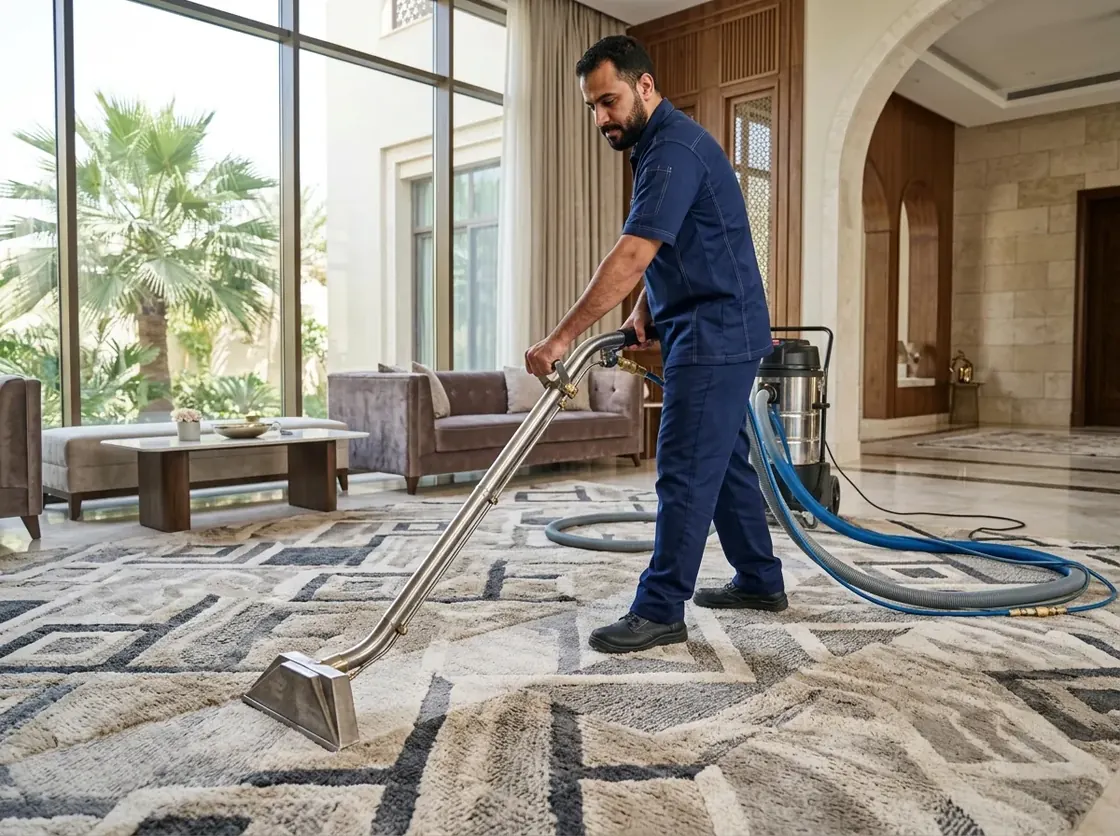
Wool rug being inspected and cleaned to protect it from moths in a Jeddah home

Quick Summary

  • No single interval suits every home
  • Kids and pets shorten the gap between cleans
  • Regular vacuuming stretches the interval
  • Smell and colour change are late warning signs
  • One deep clean a year is the minimum for most homes
Quick table

Quick table: signs of infestation and your first step

Use this table to react calmly when something looks wrong. It does not replace looking at the rug yourself or asking a specialist.

What you seeLikely meaningFirst step
Thin or clipped patches in the pileLarvae feeding on woolTurn the rug over and check the back and edges
Silky threads or tiny tubes on fibresWebbing from clothes moth larvaeVacuum hard, then inspect nearby items
Small brown bristly casingsShed skins of carpet beetle larvaeVacuum and clear dust from edges and cracks
Small golden moths that avoid lightAdult clothes mothsSet a pheromone trap and check storage
Fine sand-like grains under the rugLarval droppingsLift the rug and inspect the floor below
Mouldy smell with damp patchesMoisture attracting pests and fungiDry the area before any treatment
In detail

What to know about carpet moths and wool pests

Read through them in order and compare each with your own home; the right timing usually becomes clear.

Basics

What does moth damage look like on a rug?

Most people first notice a spot where the pile looks thinner or clipped, sometimes down to the backing. It may start as small as a coin and widen over a few weeks if nobody moves the rug or looks underneath.

The damage is not done by the adult moth but by larvae feeding on animal fibre. So look for feeding marks rather than flying insects. You can have an active problem without ever seeing a single moth.

Other common signs are fine silky threads or tiny tubes stuck to the fibres, and dark grains that are larval droppings. These tend to collect under heavy furniture.

Identify

Clothes moths versus carpet beetles

The clothes moth is a small golden moth that avoids light and flies weakly. Its larvae are pale and spin silky cases. Carpet beetles are small, rounded beetles with mottled patterns, and their larvae are hairy and brown.

The difference matters because beetles often arrive from outside, from flowers, bird nests or dead insects on balconies. Clothes moths usually come in with second-hand items, old furniture or stored textiles.

You do not always need to settle the species. The approach is much the same: remove food, remove hiding places, keep things dry, then monitor. If unsure, photograph the larvae and ask a specialist.

Why

Why do pests go for wool?

The larvae feed on keratin, a protein found in wool, hair, feathers and silk. That makes wool, hand-knotted and wool-blend rugs more vulnerable than purely synthetic ones.

Synthetic rugs are not immune, though. If dust, human hair, pet hair and food crumbs build up on them, larvae can feed on those deposits and damage the fibres nearby.

This is why knowing your fibre type helps. Once you know a rug contains wool, you can raise the standard for checking, storage and routine cleaning.

Jeddah

Does Jeddah’s climate help infestations?

Warmth and coastal humidity create comfortable conditions for insects indoors. Humidity also softens fibres, which makes feeding easier, and it encourages mould that weakens wool as well.

Constant air conditioning in closed guest rooms creates a stable, quiet spot where nobody moves things. That stillness, with darkness and accumulated dust, is exactly what larvae look for.

None of this is a reason to panic, only to be consistent. A home that is vacuumed well and where furniture and rugs are occasionally moved rarely lets a passing insect become a full infestation.

Places

Where do larvae hide at home?

They favour what is rarely seen or touched: beneath sofas and heavy cabinets, along skirting and corners, inside folds of stored rugs, and behind doors or long curtains that brush the floor.

They also like wool fringes and tassels because these hold dust. Checking the fringe is part of the routine, as are decorative rugs under side tables that seldom get lifted.

If you find a sign somewhere, inspect at least a one-metre circle around it. Infestations are rarely confined to one spot and can reach woollen clothing in a nearby wardrobe.

Routine

A two-minute weekly check with no tools

Once a week, spend two minutes per room. Lift a corner, look at the back and edge, run your palm over the pile to feel thin or rough areas, and shine a phone torch under furniture.

In seasons when a room is rarely used, such as a guest room after Eid or Ramadan, check twice a month and open the curtains so light and movement disturb any insects.

Take a quick photo of anything suspicious. Comparing pictures two weeks apart shows whether a patch is widening, which is clearer than trusting memory.

Vacuuming

Good vacuuming is the best prevention

Vacuuming removes food, eggs and visible larvae and breaks the life cycle. Go slowly in two crossing directions and spend extra time on edges, corners and the zone beneath furniture using a crevice tool.

Lift or move light furniture where you can; otherwise use a long nozzle under it. When finished, empty the bag or bin outside the home, because leftover debris may carry eggs back in.

Good vacuuming does not replace deep cleaning, but it reduces how often you need it and makes any small infestation much easier to handle.

Airing

Airing and sunlight: when do they help?

Light, movement and changing conditions disturb larvae, so shaking small rugs and airing them in open shade helps. Long direct Jeddah sun can fade colours and dry fibres, so keep it short and do not leave rugs out for hours.

Do not beat an old or valuable rug hard, as hand-knotted structures can suffer. Move it gently, then vacuum both sides, ideally early morning or before sunset.

After airing, check the back again on a clean surface, since larvae or casings may drop when the rug moves. Clean the spot where it was lying before returning it.

Cleaning

When does deep extraction cleaning help?

Warm-water extraction removes dust, stains, food residue, sweat and oils that attract larvae, and pulls a large share of debris from deep in the fibres. It is particularly useful before storing a rug for a long period.

But cleaning alone is not a guaranteed cure for an active infestation, and too much water without proper drying raises humidity and encourages mould. Complete drying is essential, as covered in our guide on damp smells after cleaning.

Valuable hand-made pieces may need a gentler approach matched to their fibres and dyes. Never try strong chemicals on them without testing a hidden corner first.

Storage

How to store seasonal rugs correctly

Clean the rug first and dry it completely. Storing a dirty or damp rug invites pests and mould. Then roll it around a cardboard tube with the pile inward rather than folding, to avoid breaking fibres.

Wrap it in cotton cloth or clean paper that lets air through. Avoid sealing it in an airtight plastic bag for long periods in Jeddah because moisture can condense inside. Keep it on a raised shelf rather than a damp floor.

Check it every month or two while it is stored. Storage is not forgetting; it is quiet monitoring, and those few minutes can save a valuable piece before damage spreads.

Monitoring

Pheromone traps: monitoring, not treatment

Pheromone traps attract male clothes moths to a sticky surface and tell you whether there is activity. A few catches mean you should inspect more closely; no catches do not prove the space is clear, because a trap monitors rather than treats.

Place one in the storage room, near woollen wardrobes or in the corner of a closed room, write down the date, and replace it per the product instructions. If numbers jump suddenly, look for the source instead of adding traps.

Do not rely on traps alone. The real source is accumulated food and hiding places, and without cleaning those, insects will return however often you change traps.

Repellents

Repellents: what helps and what to avoid

Cedar and lavender scents may make a space less attractive but they are weak deterrents and will not kill larvae already present. Their effect fades over time. Treat them as a supplement, not a plan.

Mothballs and similar products are strong chemicals that can harm health, and the smell clings to fibres, especially a concern with children, pets or anyone with respiratory sensitivity. If used at all, follow the label carefully; in an occupied home it is better to avoid them.

Avoid spraying off-the-shelf insecticides on a rug without knowing the product, since it may stain or harm dyes. If chemical treatment is needed, let a specialist who understands the product and ventilation handle it.

Action

What to do if you find an infestation

Start by isolating the affected piece and its surroundings without spreading it to other rooms. Vacuum both sides well, empty the vacuum outside, and clean or wash nearby woollens, upholstery and curtains.

Small items may be suitable for freezing for several days in a sealed bag if the piece can tolerate it, while a large rug needs deep cleaning and treatment of the area. Do not put it back until it is fully dry and the floor beneath is clean.

Check again after two weeks with a trap and by inspecting the back. If signs return or spread, do not repeat the same step endlessly; ask for help.

Help

When to bring in a specialist team

If the problem appears in more than one room, has reached clothes or curtains, returns after weeks of home treatment, or involves a valuable or antique piece, acting early saves damage and cost.

At Al Awael we provide carpet cleaning in Jeddah using extraction, and household pest control. We look at the rug type, its condition and where the activity is, then suggest suitable steps without exaggerated promises.

Send us a photo of the sign and the rug’s back on WhatsApp, with the rug type and roughly how long you have noticed it. This helps us give you a sensible first view.

Common questions

Carpet moth FAQ

General answers; an inspection of your carpet sets the exact interval.

How do I tell moth damage from ordinary wear?+

Wear usually shows in walking paths and is fairly even. Moth damage appears as scattered patches with silky threads and tiny droppings, often in dark places. Turn the rug over and check the back and fringe.

Can moths affect synthetic carpets?+

Pure synthetics are less attractive to larvae, but dust, hair and food crumbs on them can still draw pests. Regular vacuuming and cleanliness matter for synthetic rugs too.

Is sunlight enough to kill moths?+

Short sun exposure may disturb larvae but does not guarantee anything, and long exposure can fade colours. Use it for airing and checking, not as the only treatment for a visible infestation.

Should I store rugs in airtight plastic?+

Not for long periods in Jeddah, since moisture may condense inside. Use cotton cloth or clean paper that breathes, and store the clean, dry rug on a raised shelf.

Are mothballs a good idea?+

We suggest avoiding them in occupied homes. They are strong chemicals with a lingering smell that can affect health, especially with children or allergies. Inspection, vacuuming and proper storage work better.

How often should I check a stored rug?+

A quick check every month or two is enough, and more often if you have already seen a sign. Look at the back, edges, the area beneath and the storage space around it.

Does deep cleaning get rid of an infestation?+

It removes much of the food and debris and helps a lot, but on its own it is not a cure for an active problem. You also need to inspect, dry the area and monitor afterwards.

When should I contact Al Awael?+

When signs appear on more than one rug or room, return after treatment, or affect a valuable piece. Send a clear photo of the rug’s back on WhatsApp and we will suggest the next step.

Think your rug has moths?

Send us a photo of the piece and its back, with the approximate type, and we will explain the right way to clean or protect it in Jeddah.

CallWhatsAppGet Quote