
Serving Jeddah & Makkah
Cleaner guide10 min readJeddah

Cleaning With Vinegar, Baking Soda and Lemon in Jeddah: What Suits Each Surface and What Damages It

Home recipes with vinegar, baking soda and lemon spread because they are cheap and always at hand, and some really do help with limescale and odours. Used on the wrong surface, though, they can leave dull patches on marble, wear down washing machine seals or scratch glass. This guide explains what each ingredient does, where it fits and where you should stop.

You will find a quick table of surfaces and whether vinegar suits them, an explanation of what these ingredients cannot disinfect, tips for pets and odours, and when a dedicated product or a trained team is the better choice.

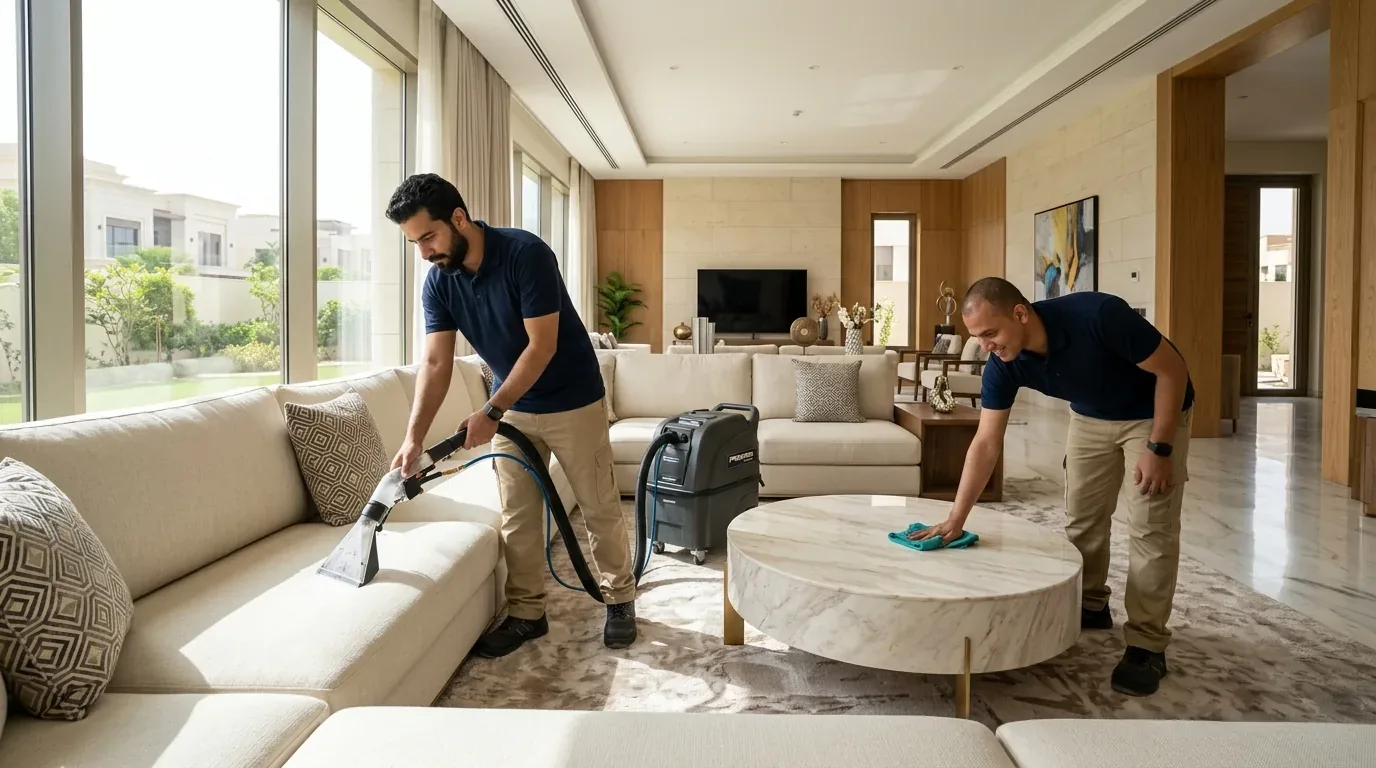
Home cleaning in Jeddah with suitable tools and cloths

Quick Summary

  • Vinegar is a mild acid: good on scale, bad on marble, natural stone and some rubber seals.
  • Baking soda is a gentle abrasive and deodoriser, not a disinfectant, and it scratches shiny surfaces if scrubbed hard.
  • Lemon is an acid too; it leaves stickiness and harms natural stone, and it is no substitute for a disinfectant.
  • Test in a hidden spot, rinse well, and never mix vinegar with bleach or ammonia.
  • Warm water and dish soap is enough for most everyday surfaces.
Quick table

Quick table: is vinegar right for this surface?

This is general guidance; check the manufacturer's instructions for the surface or appliance when you have them.

SurfaceDoes vinegar suit it?Better option
Marble, travertine and limestoneNo; acid etches the surface and leaves dull marksA pH-neutral stone cleaner, water and a soft cloth
Sealed granite and quartzBetter avoided; repeated use may wear down the sealerMild soap and water or a cleaner made for engineered stone
Ceramic and porcelain tileYes with care on non-delicate tiles, then rinseWarm water and a neutral floor cleaner
Rubber seals in washing machinesAvoid long contact; it can dry out rubberA damp cloth and mild cleaner, then dry the edge
Stainless steelA little, then rinse; may leave streaksMicrofibre cloth and dish soap, then dry
Finished wood and parquetNo; acid and moisture harm the finishA barely damp cloth and a wood-safe cleaner
In detail

Using natural cleaners wisely in Jeddah homes

Read in order or jump to the section you need; each answers a common question about natural household cleaners.

Basics

What do we mean by "natural cleaners" and why are they popular?

Usually this means vinegar, baking soda, lemon, hydrogen peroxide and dish soap. They are popular because they are easy to find and cheaper than specialist products, and people feel they are gentler on the home and family.

But "natural" does not mean safe for every surface or capable of every job. Each ingredient has its own chemistry, whether acidic, alkaline or abrasive, and knowing it is what separates a good result from a damaged surface.

Vinegar

Vinegar: a mild acid that helps with scale but not stone

White vinegar is diluted acetic acid. It dissolves the limescale left by hard water on taps and shower heads, a common issue in Jeddah homes, so it is useful there as long as it does not sit long on delicate surfaces.

Use it briefly, rinse and dry, and keep it off natural stone or anything you cannot identify. Acid cannot tell scale from the surface beneath if that surface is reactive.

Marble and stone

Surfaces vinegar damages: marble, travertine and limestone

These stones are made of calcium carbonate, which reacts with acid, so vinegar or lemon etches the surface and leaves dull marks called acid etching that wiping will not remove and that may need professional polishing.

Sealed granite resists better, but repeated acid can wear the sealer down. Use a pH-neutral stone cleaner, and see our guide to kitchen surfaces and floor care if you have marble or quartz.

Seals and appliances

Rubber seals and appliances

Some rubber seals in washing machines, fridges and kitchen equipment can be affected by long contact with acid and may dry out or crack over time. It is better to clean them with a damp cloth and mild cleaner and dry them.

If you descale a kettle or coffee machine with vinegar, follow the maker's instructions and rinse several times until taste and smell are gone before using it again.

Baking soda

Baking soda: a gentle abrasive and deodoriser, not a disinfectant

Baking soda (sodium bicarbonate) is a fine, mildly alkaline powder that absorbs some odours and helps scrub stains. It suits hard, non-delicate surfaces and containers, and can be sprinkled in shoes or drawers to freshen them.

Hard scrubbing can scratch shiny glass and stainless steel, and it does not kill germs the way people claim, so do not rely on it for sanitising. The fizz when vinegar meets it looks dramatic but adds no cleaning power, since one cancels the other.

Lemon

Lemon juice and citric acid

Lemon juice is an acid containing citric acid. It removes some scale and light stains and smells pleasant, but it leaves sugars and stickiness that attract dust and ants, and it harms natural stone just as vinegar does.

Pure citric acid sold for cleaning is better than juice for descaling kettles and equipment if you follow directions and rinse well. Avoid long contact with coloured or copper surfaces.

Peroxide and soap

Hydrogen peroxide and dish soap

Hydrogen peroxide is a mild bleach that can lighten fabric colours and tinted grout, so test first. It must not be mixed with vinegar in one container, as we explain in our guide to cleaner safety.

Dish soap in warm water is the quiet hero: it lifts grease and dust from most hard surfaces safely. For daily routines it is often all you need, without any complicated recipe.

Disinfecting

Does vinegar or baking soda disinfect? The limits

Vinegar cleans and may reduce some microbes, but it is not a reliable disinfectant like products whose labels state that and give a contact time. Baking soda is not relied on for disinfecting either.

Where you need real disinfection, such as prep surfaces after raw meat or door handles during illness, use a suitable product with clear directions, avoid mixing, and rinse food surfaces.

Floors and wood

Floors, wood and parquet

Vinegar and water may suit some ceramic and porcelain tiles that are not delicate, but it harms parquet and finished wood because acid and moisture weaken the protective layer and leave marks. Wood care is best left to dedicated products.

Do not forget grout made of natural stone or cement, which acid can affect. Our floor-types guide can help you identify the surface before you try any recipe.

Glass and steel

Glass, mirrors and stainless steel

A vinegar and water mix often gives a good shine on glass, but it can leave streaks unless buffed with a soft cloth, and it should be kept away from delicate wooden or metal frames. On mirrors, wipe from top to bottom.

Stainless steel tolerates a little vinegar followed by rinsing and drying, but long contact can leave marks. Use microfibre and follow the grain, and see our guide on water spots on stainless steel.

Fabrics

Sofas, carpets and fabrics

Do not try vinegar or lemon on a sofa or rug without testing a hidden corner, as it can change colour, leave a ring or affect fibres such as silk. Baking soda can leave a white film if it is not vacuumed up well.

For stains on fabric, follow simple first aid: blot the liquid with a clean cloth, avoid hard rubbing, use little water, and ask a team for help if the piece is valuable or the fabric delicate.

Testing

How to test a new recipe safely

Pick a hidden corner, apply a little product, wait as long as you normally would, then rinse, dry and check whether colour or shine changed. The test takes minutes but can prevent a costly mistake.

Do not combine two products in the test. If you do not know the surface, use warm water and mild soap only, or ask a specialist instead of gambling.

Pets and smells

Pets, odours and sensitivities

Not every "natural" product is safe for pets; some essential oils and acids can irritate the skin or airways of cats and dogs. Let surfaces dry before animals return and avoid saturating a room with strong scents.

Vinegar smells strong in closed AC rooms in summer and may bother people with sensitivities. Ventilate afterwards, and if an unusual household smell persists, look for its source instead of masking it.

Professional help

When do you need a dedicated product or a trained team?

If surfaces are valuable (marble, parquet, delicate fabrics) or deposits are old and heavy, a dedicated product or an experienced team can be cheaper in the long run than trying recipes that may damage the surface.

Send us photos of the surface and tell us what you have tried, and we will suggest the right step. You can also ask any company which products it uses and which surfaces it avoids.

Common questions

Frequently asked questions about vinegar and baking soda cleaning

Short answers to what Jeddah homeowners most often ask.

Can I clean marble with vinegar?+

It is not recommended, because acid reacts with marble and leaves dull marks that are hard to remove. Use a pH-neutral stone cleaner, water and a soft cloth.

Does vinegar kill germs?+

It may reduce some, but it is not a reliable disinfectant like products labelled as such with a contact time. For surfaces that need real disinfection, use a suitable product and follow the label.

Is baking soda safe on a glass cooktop?+

A little, gently, on a non-delicate surface, but hard scrubbing can scratch it. Test a small corner and rinse well, and do not rely on it for shiny sensitive surfaces.

Should I mix vinegar and baking soda for more power?+

There is no real benefit; they neutralise each other and the fizz does not mean stronger cleaning. Use each on its own for what it suits.

How do I remove scale from a tap with vinegar?+

Hold a cloth soaked in vinegar on it briefly, then rinse and dry, and avoid this on plated or delicate finishes. For old deposits ask a specialist.

Is lemon better than vinegar?+

It smells milder but is also an acid that harms natural stone and leaves stickiness. It is not automatically better; what matters is choosing the right tool for the surface.

Are natural cleaners safe for my pets?+

Not all are; some essential oils and acids can irritate skin or breathing. Let surfaces dry before animals return, ventilate, and read product warnings.

When should I stop home recipes and ask for help?+

With valuable surfaces, old deposits, delicate fabrics, or when you do not know the surface. You can message us photos and we will suggest the right step.

Not sure which product suits a surface in your Jeddah home?

Send photos of the surface and tell us what you have tried, and we will suggest the right next step.

CallWhatsAppGet Quote