
Serving Jeddah & Makkah
Tank Guide9 min readJeddah

Tank Contamination Worries in Jeddah: What to Do After a Leak, Flood or Backflow

If a pipe burst, floodwater or a sewage backflow could have reached your tank, the safe move is to stop using the water for drinking and cooking until the tank is checked and professionally cleaned.

Contamination worries usually start with an event: heavy rain that floods a ground tank room, a damaged supply pipe near the tank, a blocked drain that backs up, or a cracked tank wall that lets outside water in. Sometimes the first sign is only a smell or a change in water color.

This guide explains the first safe steps, what to look for, what a professional cleaning involves in these cases and how to restart safely. It does not replace instructions from the relevant authorities. For the cleaning service itself, see our water tank cleaning in Jeddah page.

Inspecting a water tank after a suspected leak in Jeddah

Quick Summary

  • Stop using the water for drinking, cooking and brushing teeth until the tank has been checked.
  • Do not simply refill: shut the inlet, photograph the situation and find the entry point first.
  • A thorough cleaning removes silt and organic matter, and disinfection should follow professional practice.
  • If there is a real health concern, follow guidance from the relevant authorities and a qualified lab.
Quick reference

First steps by situation

A quick guide for the most common events. When in doubt, treat the water as unsuitable for drinking until checked.

SituationFirst stepWhat to checkThen
Flooding reached the tank roomShut the inlet and stop drinking useLid, vent, floor drain and wall cracksProfessional cleaning before reuse
Sewage backflow near the tankStop all use and keep people away from the areaWhether the tank or fill point was reachedProfessional cleaning and follow authority advice
Burst pipe near tankIsolate the pipe and the inletSediment, mud and damaged fittingsRepair, then clean the tank
Cracked tank wall or lidStop filling and avoid using the waterEntry point and water level changesRepair or replace the tank, then clean
Smell or color change with no clear causeStop drinking use until inspectedTank, then pipes and filtersClean if the tank is the source
In-depth guide

Seven points to handle a contamination worry properly

Follow these in order. They are about safe handling, not about diagnosing health risks.

Factor 1

Stop using the water for drinking and cooking

Until the tank has been inspected, assume the water is not fit for drinking, cooking, brushing teeth or washing food. Use bottled or other water from a trusted source for these purposes.

Washing and toilet use can often continue at your own discretion, but if there is a strong smell or visible dirt you may prefer to limit use until the tank is checked.

Tell everyone in the house or building, including tenants and staff, so no one drinks from a tap out of habit.

Factor 2

Isolate and document before doing anything else

Close the inlet valve so more water does not enter, and note the water level. Take photos of the lid area, the room, the floor and any damage. This record helps with repairs, insurance conversations and landlord discussions.

Do not drain the tank without a plan. Draining the water to a safe point, away from people and drains that could back up, is part of the work the cleaning team organizes.

Write down the time of the event and when you first noticed a change. It helps the team judge how far contamination could have spread.

Factor 3

Find the entry point

Cleaning a tank without fixing the entry point only invites the same problem. Check the lid seal, the vent screen, the overflow pipe, the tank walls and the room drainage.

An overflow or vent pipe that ends near a drain or low point can pull dirty water back in when pressure changes. Fittings that look minor can be the cause.

If you cannot find the entry point safely, say so when you book. The team can inspect while the tank is empty.

Factor 4

What professional cleaning involves in this case

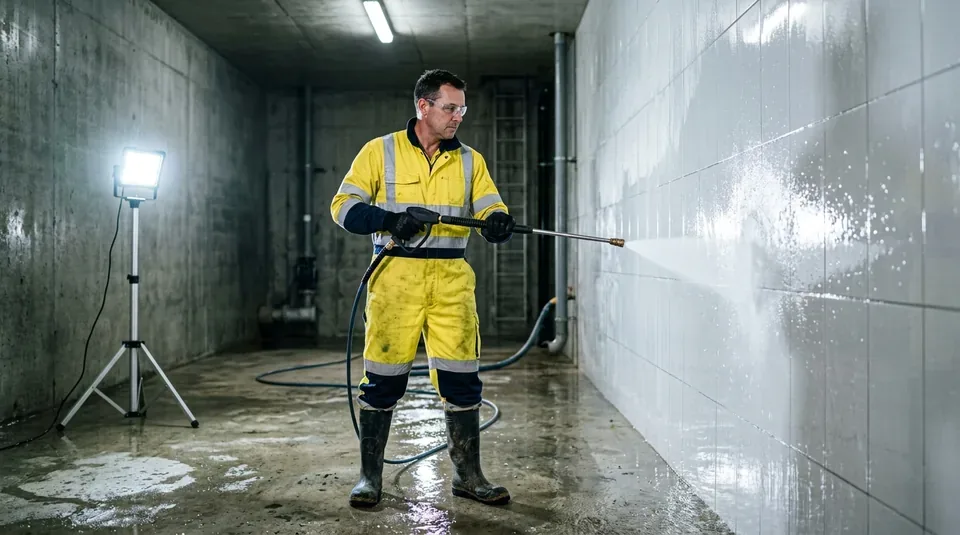
The tank is emptied safely, the floor and walls are scrubbed to remove silt, organic film and residue, then rinsed thoroughly. Dirty rinse water is removed, not left in the tank.

Fittings such as the float valve and inlet are inspected, and damaged parts are flagged for repair. Disinfection follows according to professional practice, with proper rinsing and handling of any chemicals.

Do not mix household chemicals in a tank yourself. The wrong combination can be dangerous, and tanks are confined spaces.

Factor 5

Pipes, filters and appliances

The tank is only part of the system. Pipes, home filters, water heaters and rooftop lines may carry residue after an event.

After the tank is cleaned and refilled, run taps for a while, replace filter cartridges if they were exposed, and watch the water for color and smell over the next days.

Our guide on tap water color, smell and taste explains how to tell whether a recurring problem comes from the tank or from the pipes.

Factor 6

Restarting safely and when to ask for testing

Refill only after the entry point is fixed and the tank has been cleaned and rinsed. Let the first fill settle, then check color and smell before using it for drinking.

If anyone is unwell, or the event involved sewage, follow the guidance of the relevant health and water authorities. They can advise on testing, and an accredited laboratory can test a sample if you need a result.

We clean tanks. We do not claim to certify water quality, and this guide is general information rather than medical or legal advice.

Factor 7

Preventing a repeat

Seal and raise vulnerable fittings where possible, keep the tank room drains clear, make sure the overflow and vent are screened and positioned away from low, dirty points, and check the room after heavy rain.

Add the tank to your regular inspection routine and keep photos of its normal condition. Changes are much easier to spot when you know what normal looks like.

Choose a cleaning interval that reflects your tank location, exposure and use, and shorten it after an incident.

Common Questions

Frequently asked questions

Short answers to what tank owners in Jeddah ask most.

Can I drink the water after a leak near the tank?+

Not until the tank has been checked. Use bottled or other trusted water for drinking and cooking until the source of the problem is found and the tank is cleaned.

Should I drain the tank myself?+

We advise against improvising. Draining and cleaning involve confined space, chemicals and where the dirty water goes, so it is safer to have a trained team do it.

Is cleaning enough, or do I need to repair something?+

Both may be needed. Cleaning removes dirt, but if a crack, lid gap or vent problem let contamination in, it must be repaired or it will happen again.

Do you test the water?+

We clean tanks and do not issue water quality certificates. If you need test results, an accredited laboratory can test a sample, and the authorities can advise.

How soon should I book after an event?+

As soon as practical. Stop drinking use, close the inlet, take photos and message us on WhatsApp with what happened.

Do I need to replace my filters?+

If filters or cartridges were exposed to the problem water, replacing them after the tank is cleaned is a sensible precaution. Follow the maker instructions.

What if the smell comes back after cleaning?+

Check the pipes, filters and any other source. If the tank is still involved, ask for another inspection.

Worried about contamination? Book a cleaning

Send us what happened, the tank type and a few photos on WhatsApp, or call us.

CallWhatsAppGet Quote