
Serving Jeddah & Makkah
Carpet guide10 min readJeddah

Rug Pads Under Rugs on Marble and Tile in Jeddah: Choosing One and Handling Humidity

The pad under a rug stops slipping and protects the floor, but the wrong type can trap moisture or leave a mark on marble.

Many rugs in Jeddah homes sit directly on tile, marble or parquet, sometimes with a non-slip pad beneath. That thin layer looks like a small detail, yet it affects safety, the life of the rug, the condition of the floor and even smell.

This guide explains the common pad types, how to pick size and thickness, what coastal humidity does under a rug, how to clean the pad and the floor beneath, and when it is better to replace a pad than to try to save it.

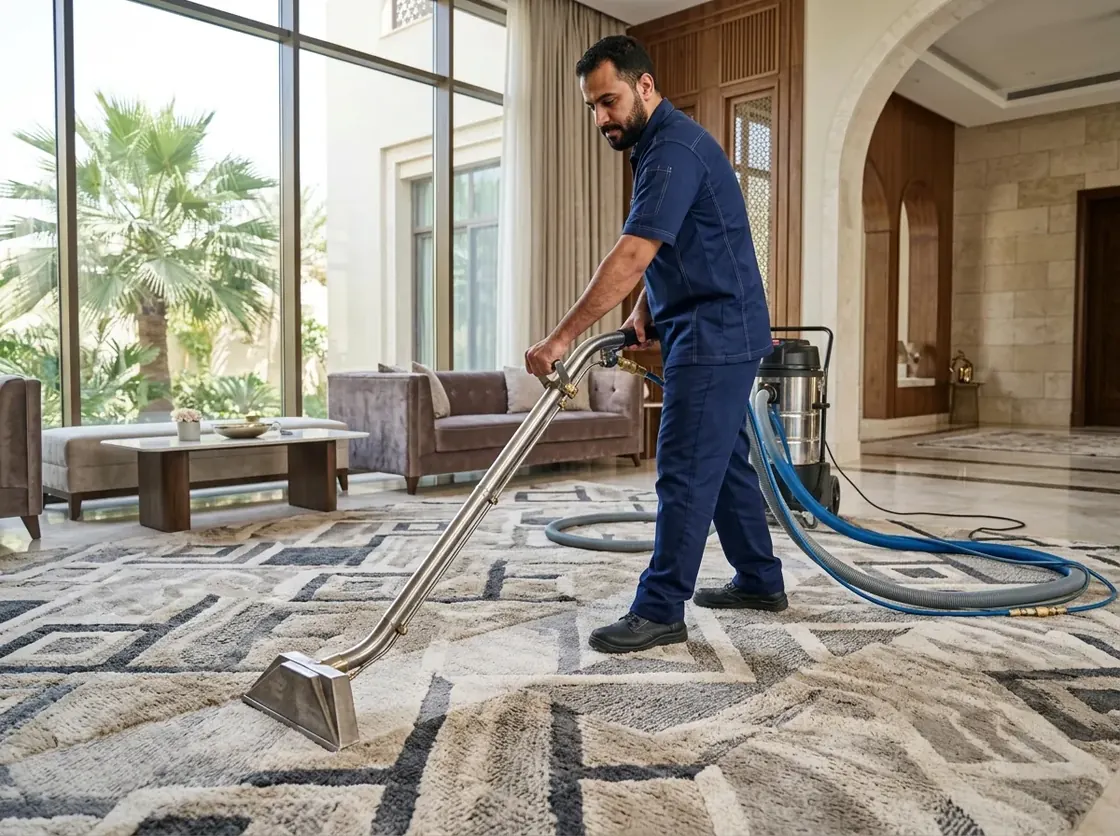
Wool rug lying on a marble floor with a non-slip pad underneath

Quick Summary

  • A good pad stops slipping and reduces the friction that wears the rug backing.
  • Some synthetic pads can stick to a floor or leave a mark with heat and time.
  • Moisture under a rug turns into odour and stains, so let the floor breathe.
  • Choose a pad slightly smaller than the rug on every side so the edge never shows.
  • Lift the rug and pad regularly, clean the floor below and dry it fully.
Quick table

Quick reference: what you notice under the rug and the first step

Use this table to react when something under the rug looks wrong. It does not replace checking the floor yourself or asking a specialist.

What you seeLikely reasonFirst step
Rug slides when you walk on itNo pad, a smooth pad, or a worn-out oneFit a suitable pad and make sure the floor is clean and dry
Damp smell when you lift the rugMoisture trapped between rug and floorLift it, clean and dry the floor and move air through the room
Dark or sticky mark on marblePad material reacting with the floor or leftover cleanerRemove the pad and speak to a stone specialist before using strong products
Crumbling pad or small flakesMaterial breaking down with age or heatReplace the pad; do not try to glue it
Rug edge curls upPad is larger than the rug or laid unevenlyTrim the pad or pick a better size
Water marks under the rugLiquid soaked through or a small leakLift and dry the area and look for the water source
Heavy dust under the rugAir movement and dust building up over timeVacuum the floor and the pad, then lay them again
In detail

Everything about rug pads on Jeddah home floors

Read in order or jump to what matters to you. Each section covers a single point of choosing and caring for a rug pad.

Basics

Why put a pad under a rug at all?

A pad does three jobs: it keeps the rug from sliding, gives it a soft cushion that eases pressure on the fibres, and separates the backing from the floor so there is less scratching. Those three together extend the life of both rug and floor.

On smooth floors such as marble and porcelain it is a safety matter before it is a style matter, because a sliding rug can cause a fall for a child or an older person. So a pad is not a luxury.

But not just any pad will do. Material, thickness and size decide whether it protects or harms, and the next sections go through each.

Types

Common pad types and how they differ

The usual choices are felt, which is dense and soft and absorbs impact but grips less, natural rubber, which grips well, open-weave mesh made mostly from synthetic material, and combination products with felt on top of rubber.

No single type suits every floor. Felt with rubber is a popular choice for heavy rugs, and open mesh suits floors that need more airflow, but it is best to follow what the rug and floor makers recommend.

Be aware that a cheap, thin pad may crumble or stick over time, and removing it afterwards is an annoying job.

Marble

Pads on marble and tile: what to watch for

Some pad materials, particularly certain synthetic plastics, can react with polish or wax on a floor and leave a dull or sticky mark after long periods of heat and pressure. It does not happen with every product, but the risk is worth respecting.

If you are unsure, test a small piece in a hidden corner for a few weeks and ask the seller whether it is compatible with natural marble or porcelain. Natural marble is relatively porous and reacts to moisture and chemicals.

If an odd mark shows up after lifting a pad, do not scrub hard. Speak to a stone specialist before using strong products that may deepen the damage.

Humidity

Coastal humidity and what happens under the rug

Jeddah is humid for much of the year, and if a rug with a pad that cannot breathe covers a large part of the floor, moisture may get trapped beneath. The result is a stale smell, marks on the rug backing and possibly mould on the pad.

To reduce that, do not leave a rug undisturbed for many months, keep the air moving in the room, and never lay a rug over a floor that is still damp from mopping. The floor must be completely dry first.

In poorly ventilated ground-floor rooms, check more often and look at the edges first, because moisture shows there before anywhere else.

Size

Choosing the right pad size

The common rule is that the pad should be a few centimetres smaller than the rug on every side so that its edge never shows or trips anyone, while still covering most of the rug and holding it in place.

For a small rug the pad can cover the whole underside. For a large heavy one, strips around the edge and through the middle sometimes do the job. Do not cut the pad at an angle or unevenly because that creates pressure points.

Check that the rug lies flat afterwards. Curling edges are a sign the size or the way it was laid is wrong.

Thickness

How thick should a pad be?

A thin pad grips but gives little cushion, while a thick one feels soft but can lift the rug, make doors rub on it or create a step that people trip over. A moderate thickness suits most rooms.

For flat-woven rugs such as kilims, a slightly thicker pad can add cushion. For dense pile rugs a thin pad is usually enough, because the rug itself is the cushion.

If there are doors or thresholds near the rug edge, measure the clearance before you buy.

Cleaning

Cleaning the pad and the floor underneath

Lift the rug and pad every few months, vacuum the floor beneath, wipe it with a lightly damp cloth and dry it thoroughly. Any sticky residue should be treated carefully according to the floor type.

Some pads can be wiped or vacuumed, while others cannot take much water and get ruined. Follow the maker’s instructions, and if you do not have them, stick to vacuuming and light blotting.

Do not put the pad back until the floor is fully dry, otherwise you trap moisture all over again.

Washing

Washing the rug itself and how the pad matters

When a rug is washed by extraction or taken away to be cleaned, the pad has to come out first. It is not normally washed with the rug. After washing, make sure the rug is completely dry before it goes back on the pad.

Placing a damp rug on a pad over a closed floor is a quick way to create smell and stains, because the moisture has nowhere to go. It is better for the rug to dry flat or hanging depending on its type, with air moving around it.

If you book a cleaning service, mention that there is a pad under the rug and what the floor is, so drying can be planned properly.

Safety

Safety for children and older people

A sliding rug is one of the common causes of falls at home. The right pad reduces that risk but does not remove it, so also keep edges flat and do not leave cables or objects on the rug.

Check grip now and then by pushing the rug with your foot. If it moves easily, the pad needs replacing or changing to another type. After mopping, do not lay the rug back until the floor is dry.

In children’s rooms avoid very thick pads that can create a step, and choose something that holds the rug without lifting its edges.

Odours

Smells coming from under the rug

A smell can come from a mouldy pad, from liquid residue on the floor, or from a nearby vent. Lift the rug and sniff the pad and the floor to find the source.

If the pad is the cause, replacing it is better than trying to clean it. If the floor is the source, clean and dry it and ventilate the room for a few days.

Do not rely on fragrance under a rug. It hides the smell for a while and may react with the materials and leave a mark.

Replacing

When to replace the pad

Replace a pad when it crumbles, sticks to the floor, loses its springiness, grows mould or keeps smelling after cleaning. Do not try to glue or patch a damaged pad.

The life of a pad varies with quality, use and room temperature. Check it every time the rug is lifted; replacing early costs less than repairing a floor or rug.

When you remove the old one, take off residue carefully to avoid scratching the floor, and avoid sharp tools on marble.

Parquet

Parquet, wood floors and pads

Wood and parquet are more sensitive to moisture and marks, so choose a pad recommended by the floor maker and avoid anything that may stick or change colour. The more valuable the floor, the more worthwhile a trial piece is before a permanent layout.

It also helps to shift the rug slightly from time to time. The floor under a rug gets light differently and may show a colour difference.

If in doubt ask a flooring specialist. Our advice here stays within cleaning and rug care and is not an inspection of the floor.

Buying

Questions to ask before buying a pad

Ask: is it suitable for my type of floor? Does it breathe or trap moisture? How thick is it and does that suit my rug size? Can it be cut? What are the cleaning instructions?

Compare by material, not price alone. A cheap pad can cost more if it damages a floor. If possible buy a small sample and try it.

Also notice the smell when you open the pack. A strong chemical odour means it will need airing and may not suit a closed bedroom.

Routine

A short care routine for the rug and its pad

Weekly: vacuum the rug on both sides. Every month or two: lift a corner and check for damp and smell. Each season: lift the rug and pad, clean the floor and dry it.

Yearly or as needed: decide whether the rug needs deep washing, check the pad condition and replace it if needed. Before summer, make sure the room has good airflow.

These are guide intervals that vary with humidity, foot traffic and whether children are around.

Common questions

Rug pad FAQ

Short answers to what Jeddah homeowners ask most about the pad under a rug.

Do I need a pad under every rug?+

On smooth floors such as marble and tile it is usually advised, to stop slipping and protect the rug. On rough floors or very heavy rugs it may not be essential, but a pad still protects the backing from friction.

Can a rug pad damage marble?+

Some materials can leave a mark with heat and time, especially certain synthetic plastics. Choose a product compatible with your floor, try a small piece first, and speak to a floor specialist if a mark appears.

How often should I lift the rug to check underneath?+

Every few months as a rule, and more often in damp or poorly ventilated rooms. If you notice smell or sliding, check straight away.

Is the pad washed with the rug?+

No, it normally comes off before washing, and some types cannot take water. Read the product instructions; if there are none, vacuum and blot lightly.

Why is there a damp smell under my rug?+

Usually moisture trapped between rug and floor, or a mouldy pad. Lift it, dry the floor, move air through the room and replace the pad if mould appears or the smell stays.

What is the best pad size?+

Slightly smaller than the rug on every side so the edge does not show, while covering most of the area. For large heavy rugs, strips around the edge and centre may be enough.

Does a pad suit rugs on parquet?+

It needs more care. Pick what the floor maker recommends and avoid sticky materials. The more valuable the floor, the more worthwhile it is to test a small piece first.

Do you inspect the floor under the rug?+

We offer carpet and home cleaning and advice on caring for them. A structural floor inspection or repair needs the relevant specialist, but you can send us photos and we will explain what applies to cleaning.

Want your rug cleaned and its condition checked in Jeddah?

Send a photo of the rug and what is under it if you can, and we will suggest the right cleaning or care step.

CallWhatsAppGet Quote