
Serving Jeddah & Makkah
Carpet guide10 min readJeddah

Cleaning Stair Carpet and Hallway Runners in Jeddah Homes: Vacuuming, Stains and Humidity

Stairs and hallways take more footsteps than anywhere else in the house, so their carpet gets dirty fast and wears in set places. Regular care slows that down.

In many Jeddah villas and homes, carpet or fitted pile runs up the inside staircase or along the hallway that leads to the bedrooms. It takes every step in the house, plus shoes, sand, children, bags and moved furniture, so it needs different attention from a room rug.

This guide covers how to vacuum stairs without struggle, how to handle stains, sand and humidity, how to keep slipping risks down, and when a specialist cleaning visit makes more sense than home attempts.

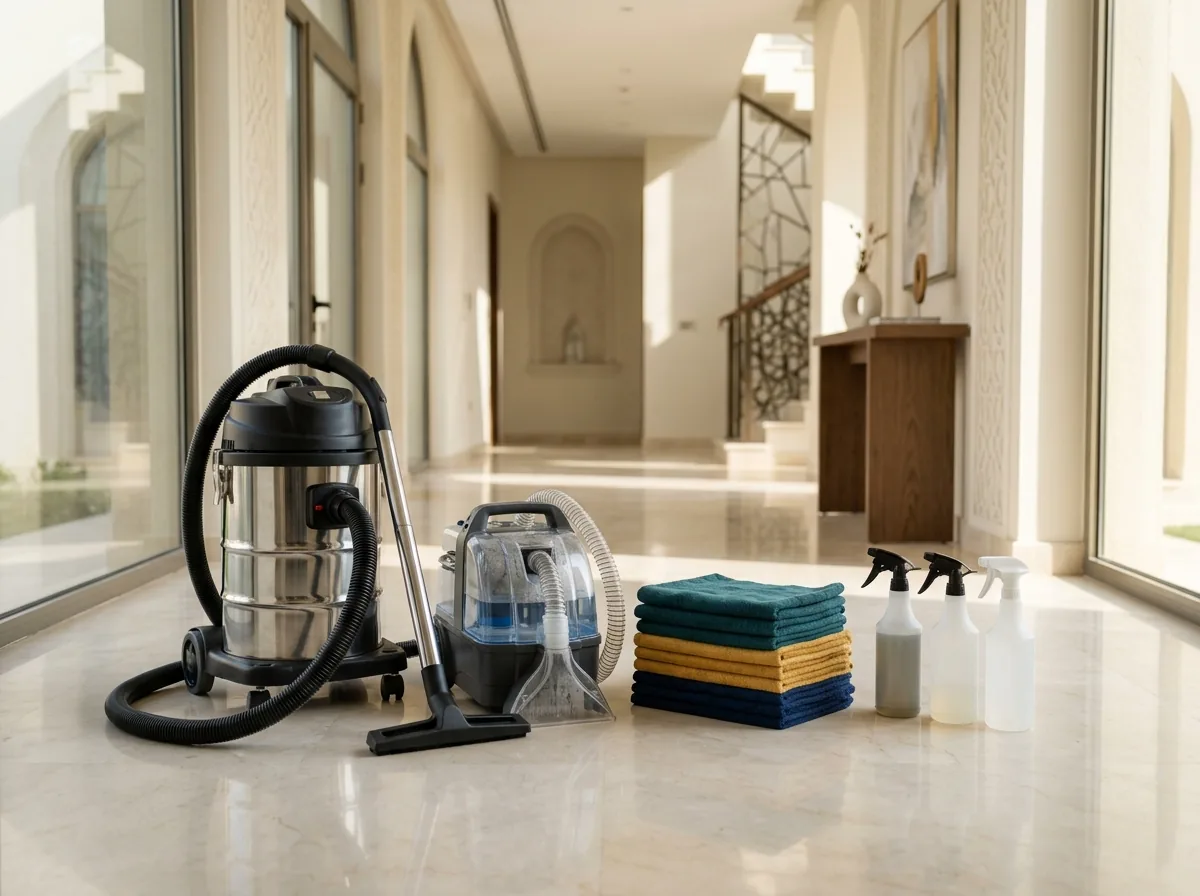
Vacuum and cleaning equipment used on stair and hallway carpet

Quick Summary

  • Stairs get dirtiest along the edge of each tread, so vacuum the edges carefully.
  • Work from the top down so dust does not fall back onto what you cleaned.
  • Never leave stair carpet wet; poor drying brings odour and slipping.
  • Safety first: secure the carpet and edges, and keep wet stairs out of use.
  • For long staircases and heavy soiling a trained team saves time and effort.
Quick table

Quick reference: what you see on stair carpet and the first step

Use this table to react calmly when something looks wrong. It does not replace checking the stairs yourself or asking a specialist.

What you seeLikely reasonFirst step
Dark lines along each tread edgeDust packed in at the edge under foot pressureVacuum the edge with a crevice tool, then spot clean
Shiny or flattened centre of treadsFoot pressure and packed-in gritVacuum with a suitable brush and avoid hard scrubbing
A stain that fades as it goes downLiquid spilled or carried on shoesBlot at once and treat with a little water
Damp smell near the bottom of the stairsGround-floor humidity or a leakVentilate and look for the moisture source before cleaning
Loose or lifted carpet edgeWeak fixing or wearDo not walk on it; repair the fixing to avoid falls
Pet hair tangled in cornersFur building up in the crevicesRubber glove first, then vacuum with a rotating brush
Dark patches on turnsShoe friction and direction changesSpot clean and rotate a runner if it is a loose piece
In detail

Looking after stair and hallway carpet in Jeddah’s climate

Read in order or jump to what matters. Each section deals with one point of stair carpet care.

Basics

Why stair carpet is different from room carpet

Stair carpet takes pressure and friction at specific points: the edge of every tread and the walking line down the middle. Much of it is held by metal grippers or rods and wraps around the nosing, so it cannot be treated like a rug you lift and shake.

A staircase is also a safety area. Looseness, moisture or slipping is a direct risk for children and older people, so care here means cleanliness and safety together.

Check the fixing before any cleaning. Carpet that is not well secured should not be pulled or dragged while you clean.

Vacuuming

How to vacuum stairs step by step

Begin at the top tread and work down, because dust that drops while you vacuum lands on steps you have not done yet. A handheld vacuum or a flexible hose is easier than a heavy upright on stairs, which is tiring and unsafe.

Do the tread face, then the front edge, then the corner where tread meets riser, because dust gathers in those creases. Move the nozzle slowly so it pulls from deeper in the pile.

Finish with the landing or hallway at the bottom to catch what fell, and clean the vacuum filter before it clogs.

Dust

Sand and dust on stairs in Jeddah

Fine dust and light sand come in on shoes and get ground between the sole and the fibres. That speeds wear on the edges and turns the colour grey.

The best step is to reduce how much sand arrives at all: an outdoor mat, then an inside doormat, then shoes off at the entrance if you can. Every time less dust arrives, deep cleaning is needed less often.

Rain in Jeddah brings mud in on shoes, so let it dry and vacuum it before using any water, otherwise it turns into a stain.

Stains

Handling stains on stairs

Blot a fresh stain with a white cloth using pressure rather than rubbing, and change the cloth as it picks up colour. Do not pour a lot of water on stairs, because it runs to the treads below and soaks the underlay.

For grease, sprinkle a light absorbent such as cornflour for a few minutes and vacuum it. For coloured stains use lukewarm water with a very small amount of mild soap, and test on a hidden spot first.

Never mix cleaning products and avoid bleach on coloured carpet.

Humidity

Humidity and drying stair carpet

Stair carpet can dry more slowly because air does not move through it the way it does in a room. If the staircase is near a damp entrance or in a poorly ventilated ground floor, moisture builds up.

After any wash, point a fan at the stairs and open nearby windows or run the AC in dry mode. Keep everyone off until the surface is dry, for their safety.

If you notice a rotting smell or repeating stains near the bottom, look for a water source; the cause may be a nearby leak rather than the carpet.

Safety

Staying safe from slipping while cleaning and afterwards

Wet stairs are dangerous. Before cleaning, arrange another route if you can, and afterwards keep the stairs out of use until completely dry. Do not clean stairs while carrying things in your hands.

Make sure the carpet is firm and the edge is not lifting; loose carpet is a common cause of tripping. Exposed grippers or protruding tacks should not be ignored.

In homes with small children, a safety gate at the top of the stairs while they dry can help.

Edges

Tread edges: the hardest-working spots

The front edge of each tread carries the most pressure and shows dark marks first. Vacuuming it with a crevice tool matters more than vacuuming the middle.

When spot cleaning, use a soft brush with short strokes in one direction so the pile does not fuzz. If the carpet wraps around the edge, do not pull the wrap.

If a worn edge has lost fibre, cleaning cannot restore the shape, but it can stop the dirt from getting worse.

Hallway

Hallway runners: what makes them different

A hallway runner is like a staircase in that foot traffic follows one line, but it is flat, so extraction cleaning is easier than on stairs. It also takes door dust first.

If the runner is a loose piece you can lift it and clean the floor below; otherwise treat it like fitted carpet and ventilate afterwards. Turning a loose runner around spreads wear.

A suitable pad under a loose runner stops it sliding. See our guide on rug pads before choosing one.

Pets

Hair and pets

Hair tangles in the corners and creases and is hard to vacuum. Use a damp rubber glove or rubber brush to gather it before vacuuming.

If you have a pet, clean the stairs more often, since odour can build up in the fibres quickly. Treat accidents at once by blotting.

Avoid strong perfumed cleaners, which may disturb the animal and leave a residue on the fibres.

Methods

Extraction or dry foam on stairs

Extraction cleans deeper but needs water control so liquid does not travel down the treads and soak the underlay. Dry foam leaves less moisture and suits slow-drying areas.

Small handheld machines help on stairs, while large machines are hard to use. The choice depends on fibre type, soiling and ventilation.

You can read our guide comparing cleaning methods to see the differences before you decide.

Children

Stairs in homes with children

Children sit on stairs, eat on them and play on them, so small drink and food stains are common. Quick blotting stops them setting and reduces the need for strong products.

Choose mild cleaners, rinse with a little water and dry well, because a child may touch the carpet and then touch their mouth. Do not leave sticky residue on the treads.

Keep children away during cleaning and drying, and never leave buckets or tools on the steps because they can cause a fall.

Team

When to call a specialist team for stairs

If the staircase is long, curved or awkward to reach, or the soiling is deep or the odour keeps returning, a team with suitable equipment can work safely and quickly.

The same applies if you cannot climb the stairs safely with tools in your hands, or if the household includes older people. Safety is worth more than saving on cleaning.

Send us photos of the stairs and hallway on WhatsApp and we will explain what can be improved and what cleaning may not fix.

Moving

Stairs at move-out or after finishing work

Before handing back a rented home or after building work, very fine dust settles on stairs. Start with careful repeated vacuuming before any moisture, because fine dust plus water turns into a muddy film.

Photograph the carpet before and after cleaning so you can show what was improvable and what was long-standing wear.

This does not replace the tenancy agreement. Who is responsible for carpet condition is for the parties to settle.

Routine

A short routine for stair carpet

Daily or every other day: a quick vacuum of the top treads and edges. Weekly: a full vacuum from top to bottom including creases. Monthly: check fixing, damp and stains.

Seasonally: look over the stairs after rain and before summer. When needed: deeper cleaning by extraction or dry foam depending on condition.

These are guide intervals that change with household size, children and pets.

Common questions

Stair and hallway carpet FAQ

Short answers to what Jeddah homeowners ask most about stair carpet.

Can I clean stair carpet myself?+

Yes for regular vacuuming and small stains. A full wash on stairs needs care because water can seep to the treads below, and safety on stairs matters, so use a team if the staircase is long or awkward.

Where do I start when vacuuming stairs?+

At the top tread and work down so dust does not fall onto cleaned steps. Do the tread face, the edge and the corner, then the landing at the bottom.

How long does stair carpet take to dry?+

It varies with water used, ventilation and humidity, from some hours to a day or more. Use a fan and the AC, and keep everyone off until the surface is dry.

Why are there dark lines at the edge of each tread?+

Dust collects there and is pressed by feet, and the edge takes the most friction. Careful vacuuming with a crevice tool and spot cleaning reduce it.

Is extraction suitable for stair carpet?+

It can be done with suitable equipment and little water, but it needs control so water does not travel down. In some cases dry foam is a better fit. It depends on the fibre and condition.

How do I prevent slipping after cleaning?+

Do not use the stairs until fully dry and check the carpet and edges are firmly fixed. If the carpet is loose pieces, use a suitable pad and check the fixing.

Do you clean narrow or curved staircases?+

Send us photos of the stairs, the number of treads and the shape, and we will say whether cleaning is practical and how. The real situation decides the method.

Can steam damage stair carpet?+

High heat may damage some fibres and adhesive backings. Ask a technician or the manufacturer before using steam on stairs.

Want your stair or hallway carpet cleaned in Jeddah?

Send photos of the stairs and hallway and any stains or smells, and we will suggest the right cleaning step.

CallWhatsAppGet Quote